Comparing objects Normal Worksheets for Ages 4-8
4 filtered results
-
From - To
Discover our engaging "Comparing Objects Normal Worksheets" designed for children aged 4 to 8! These interactive worksheets help young learners develop essential comparison skills by identifying similarities and differences between various objects. Each worksheet features colorful illustrations and age-appropriate activities that make learning fun and accessible. Whether it's comparing sizes, colors, or shapes, these resources support early cognitive development and boost critical thinking skills. Perfect for home or classroom use, our worksheets enhance problem-solving abilities while promoting visual discrimination. Download now to provide your child with a fun learning experience that lays the foundation for understanding concepts in the world around them!
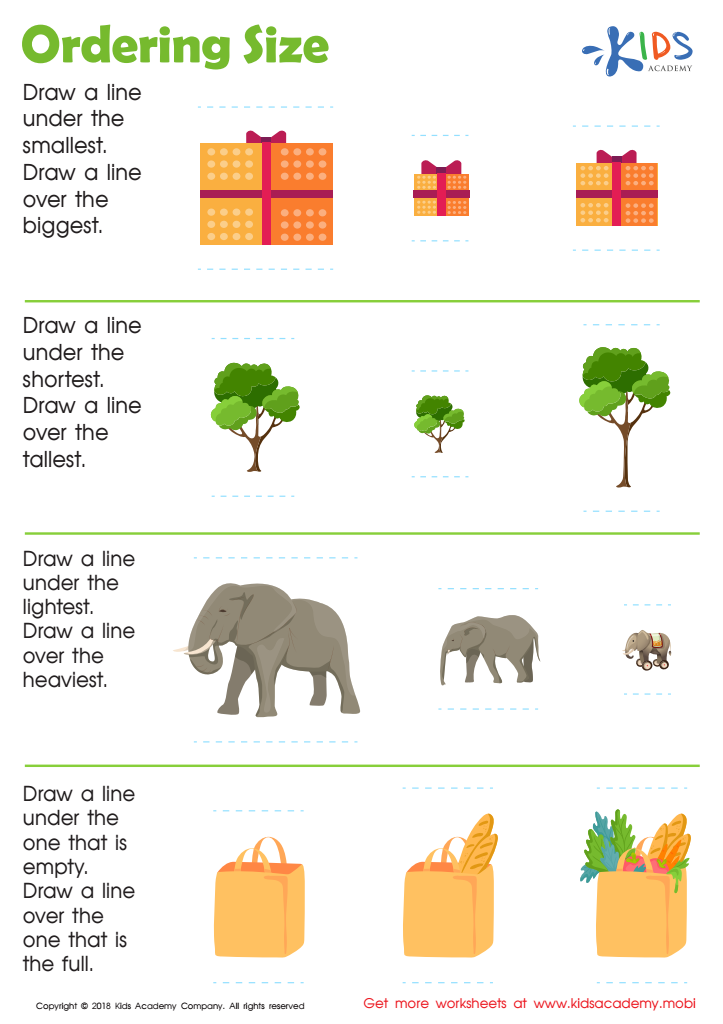
Ordering Size Worksheet
 Assign to My Students
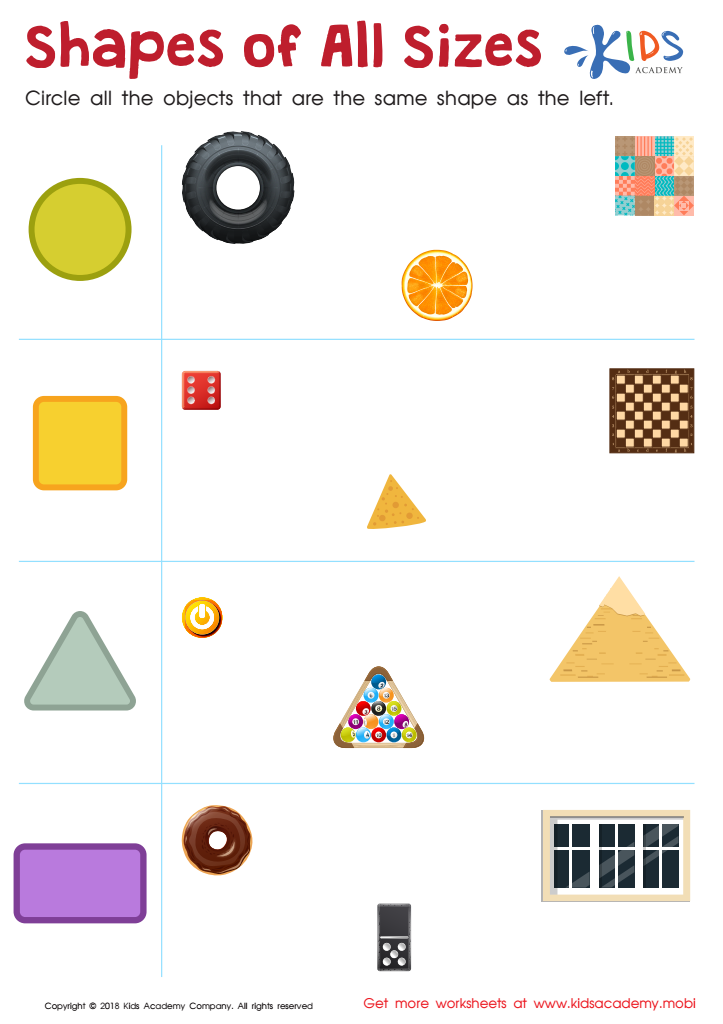
Shapes of All Sizes Worksheet
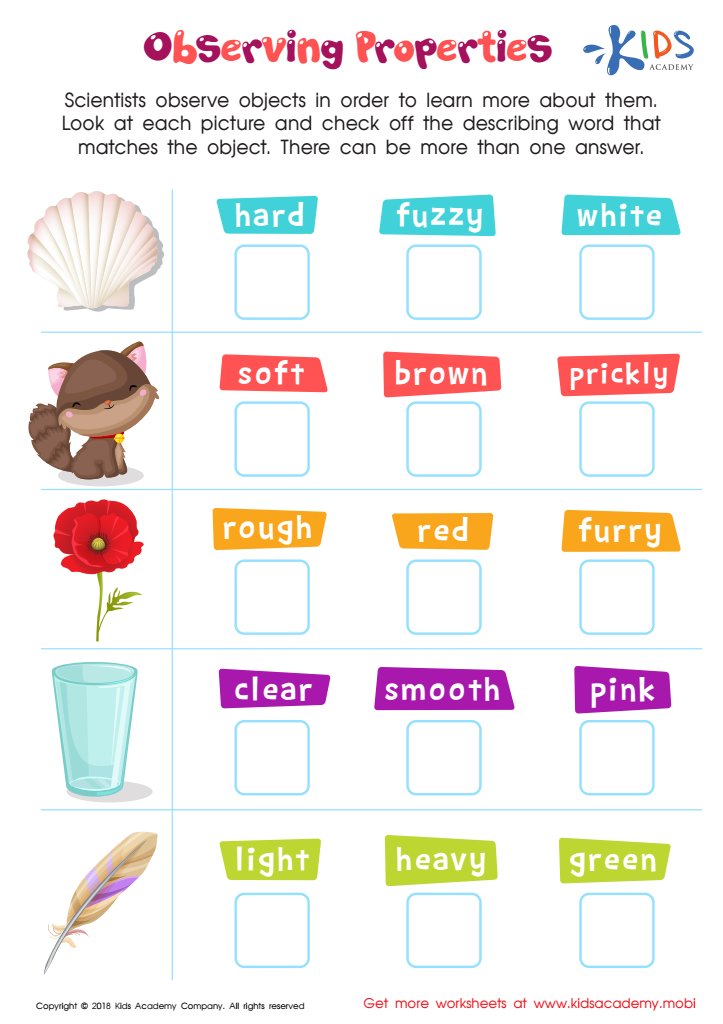
Observing Properties Worksheet
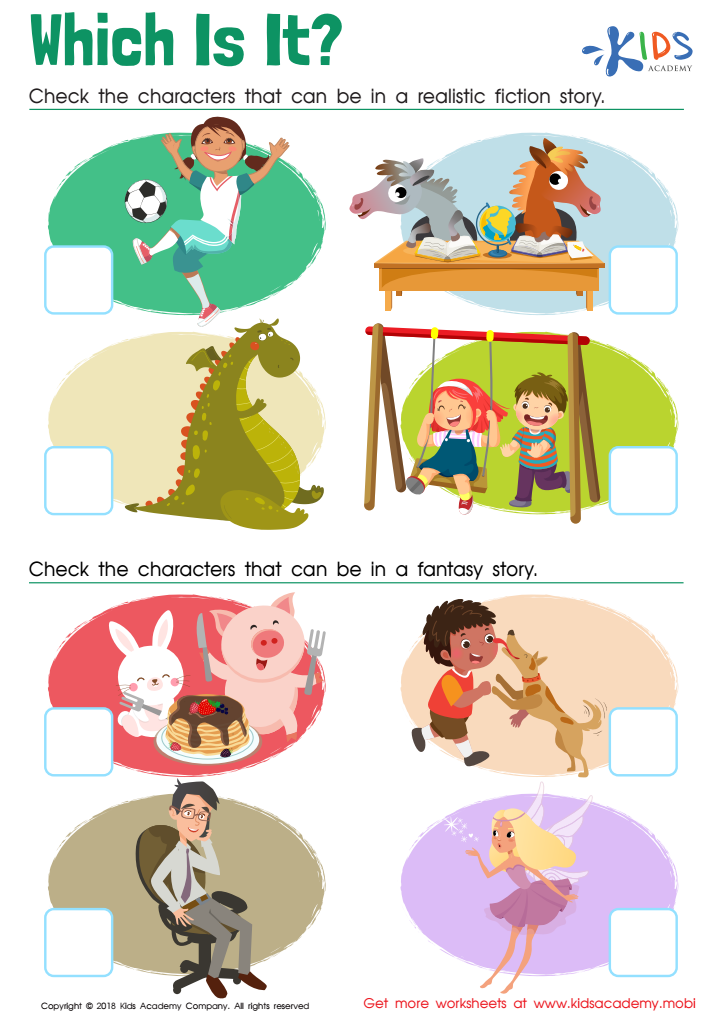
Which Is It? Worksheet





Comparing objects is an essential skill for children aged 4-8, as it lays the foundation for foundational math and critical thinking abilities. From a young age, children engage in comparisons—whether estimating which item is heavier, longer, or larger. This skill fosters observational abilities and enhances cognitive development by teaching children to notice differences and similarities within their environment.
For parents and teachers, promoting comparing objects is beneficial because it encourages hands-on learning and interactive experiences. Through playful activities, such as sorting toys or comparing fruits, children can grasp concepts like measurement and categorization in a fun, engaging way. These activities not only bolster mathematical skills but also enhance vocabulary choices, as children learn to articulate their observations.
Moreover, this practice promotes social skills as children can engage in discussions with peers or family about their comparisons, cultivating language development and critical reasoning. Additionally, recognizing differences helps children develop decision-making skills that are crucial for problem-solving at higher levels of education.
In summary, fostering object comparison skills empowers young children to become confident learners, setting the groundwork for more complex intellectual pursuits and promoting lifelong analytical and communication skills. Parents and teachers play a pivotal role in helping children along this development path.








