Detail identification Normal Worksheets for Ages 4-8
3 filtered results
-
From - To
Our "Detail Identification Normal Worksheets for Ages 4-8" are thoughtfully crafted to develop your child’s attention to detail and observation skills. These engaging printables make learning fun and educational for kids in their early developmental stages. With colorful illustrations and age-appropriate exercises, each worksheet promotes critical thinking and attention by challenging young minds to discern subtle differences and identifying specific details. Through playful activities and hands-on practice, children enhance their cognitive abilities and build strong foundations for lifelong learning. Ideal for home or classroom settings, our worksheets support various learning styles for an enriching educational experience.
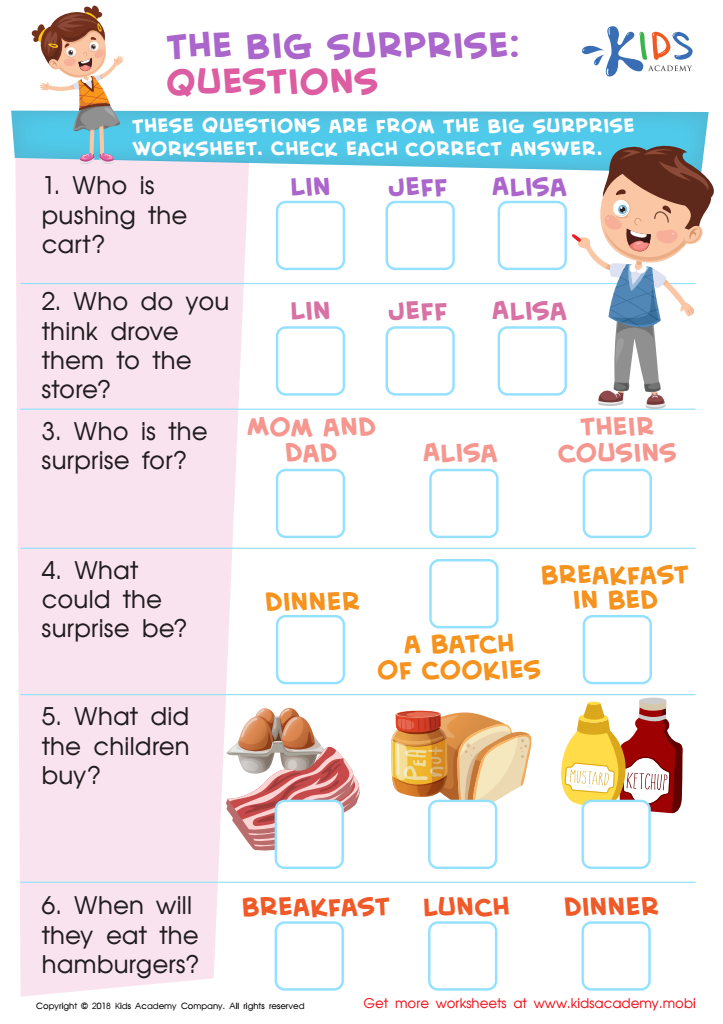
The Big Surprise: Questions Worksheet
 Assign to My Students
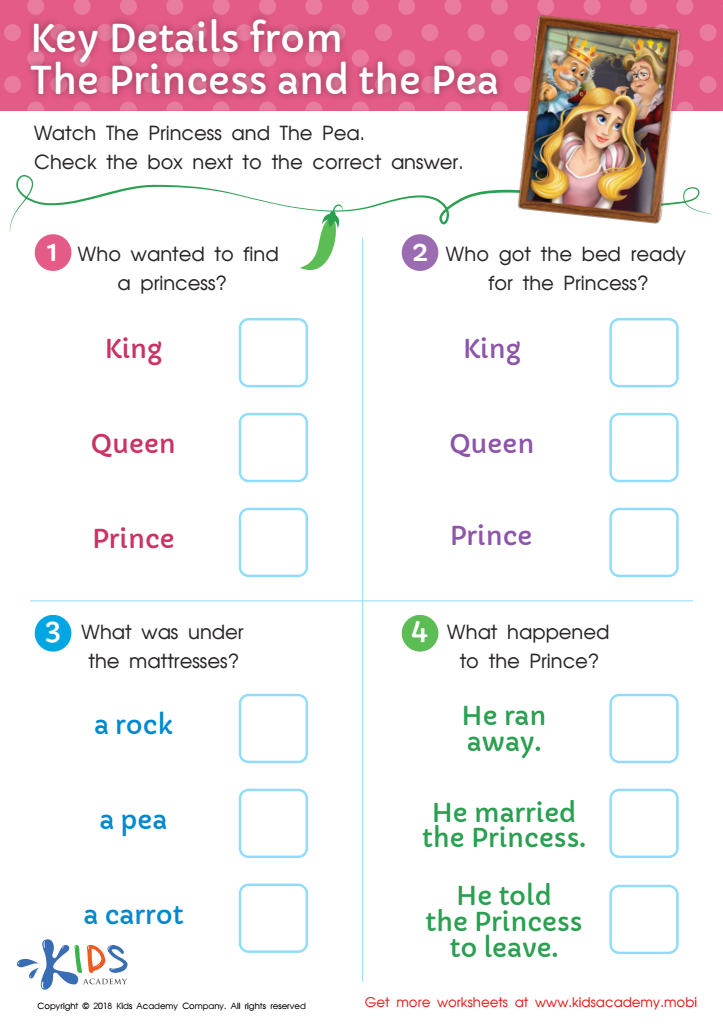
Key Details from the Princess and the Pea Worksheet
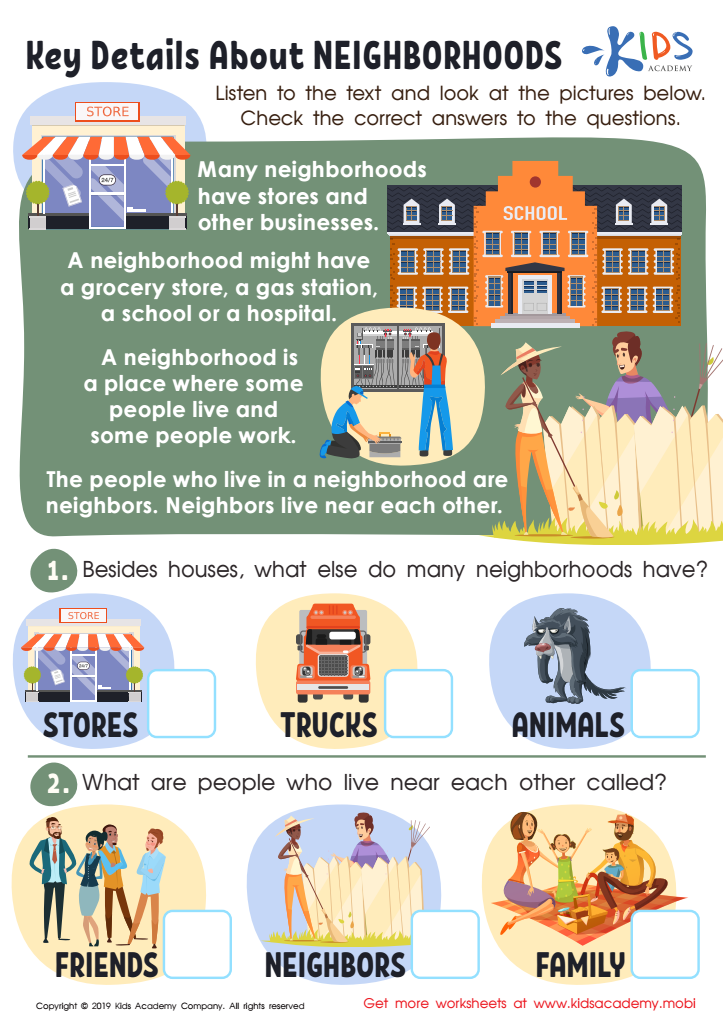
Key Details Neighborhoods Worksheet








Detail identification is a crucial skill for young children aged 4-8 because it lays the foundation for successful reading comprehension and critical thinking. At this stage, children are transitioning from simple word recognition to understanding more complex sentences and stories. Identifying details helps students remember and organize information, making it easier for them to understand and retell stories accurately. This skill not only supports academic success in subjects like reading and writing but also enhances problem-solving abilities and attention to detail in everyday tasks.
For parents and teachers, encouraging detail identification can be achieved through engaging activities such as picture walks, reading aloud, and asking specific questions about stories. Helping children focus on what characters are doing, where events are taking place, and other story elements nurtures their ability to concentrate and pay attention. This skill is especially important in today's fast-paced world, where information is abundant, and the ability to discern relevant details from distractions is highly valuable.
Moreover, strong detail identification equips children with the confidence to participate in conversations and classroom discussions, fostering social skills and teamwork. By nurturing this ability early on, parents and teachers provide children with a robust foundation for lifelong learning and effective communication.








