Geographic Understanding Normal Worksheets for Ages 4-8
3 filtered results
-
From - To
Explore our engaging Geographic Understanding Normal Worksheets designed specifically for children ages 4-8! These worksheets are perfect for young learners to develop essential geographic skills through fun and interactive activities. Children will learn to identify continents, countries, and basic map skills while enhancing their critical thinking and spatial reasoning. Each worksheet is age-appropriate, fostering curiosity about the world and its diverse cultures. With vibrant illustrations and relatable concepts, your little ones will enjoy discovering new places and geographical features. Perfect for classroom use or homeschooling, our worksheets are a fantastic resource to support early geographic education. Start your child’s adventure today!
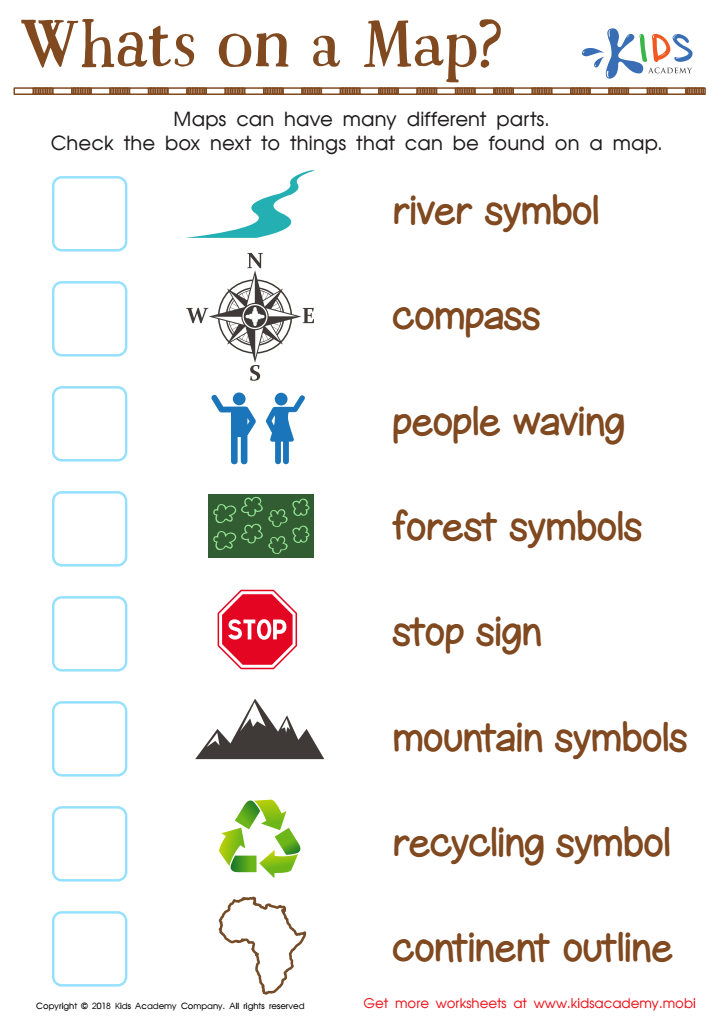
Whats on a Map? Worksheet
 Assign to My Students
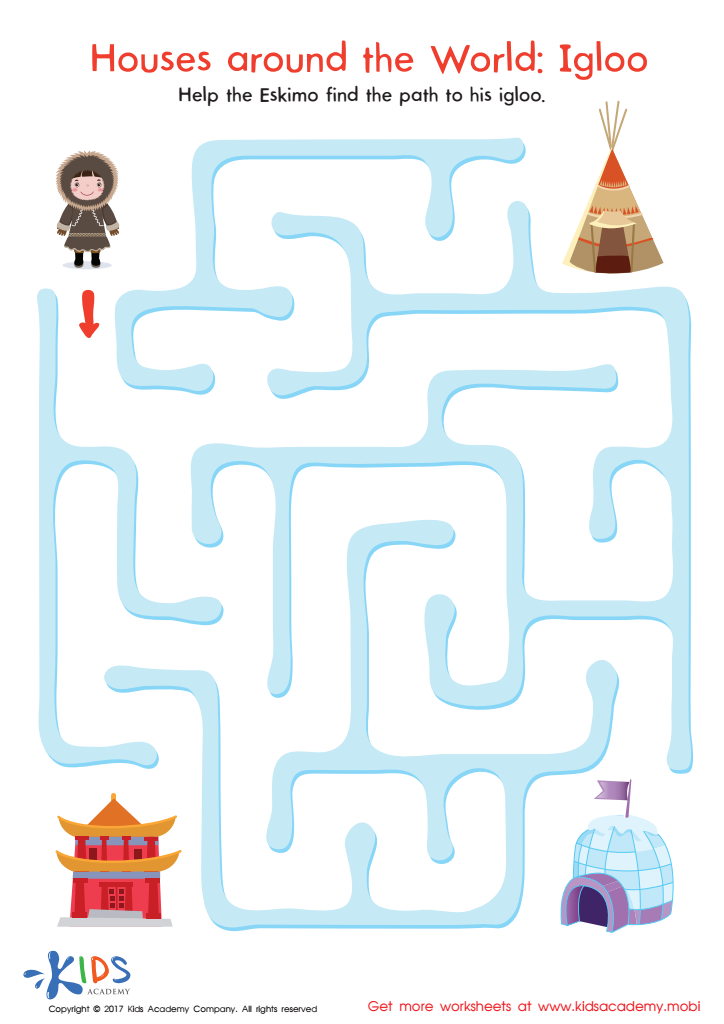
Houses Around the World: Igloo Printable
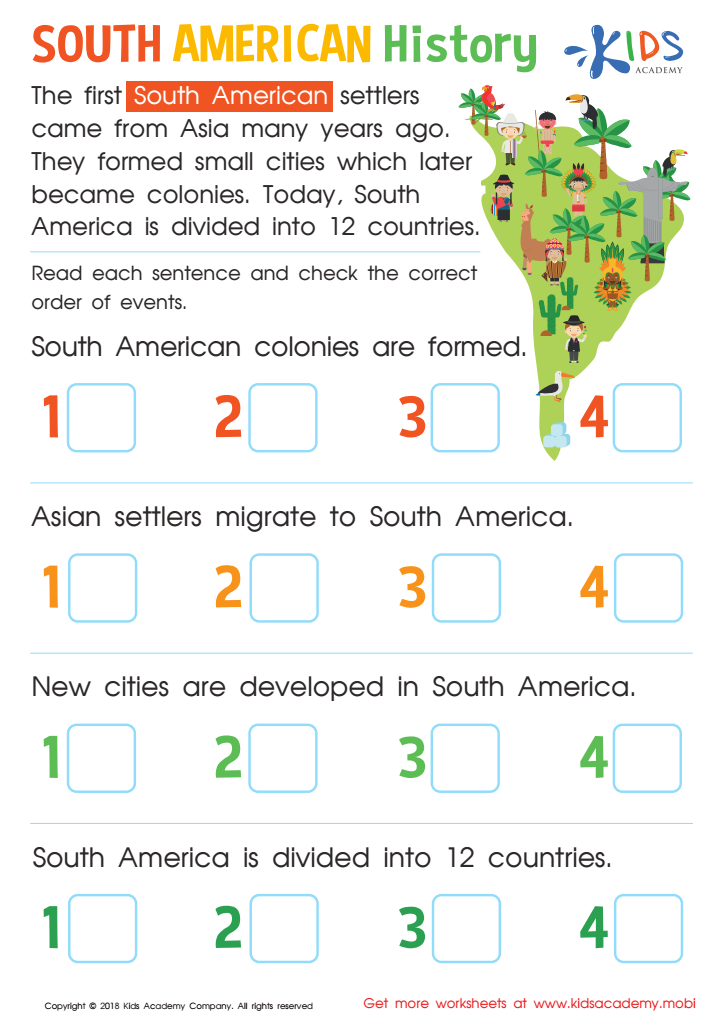
South American History Worksheet




Geographic understanding is crucial for children aged 4-8, as it lays the foundation for their awareness of the world around them. At this formative age, children are naturally curious and eager to learn about different places, cultures, and environments. Engaging them in geographic concepts fosters critical thinking and spatial awareness. Parents and teachers play a pivotal role in nurturing this curiosity.
By introducing children to geography, adults help them develop a sense of identity and belonging while promoting empathy towards others. Understanding diverse cultures and environments results in an appreciation for both local community and global interconnectedness. Recognizing where they live in relation to other places enables children to develop problem-solving skills that are applicable not only in academics but in daily life scenarios.
Moreover, geographic literacy enhances communication skills, as children learn to describe locations and understand key concepts like direction and distance. As society becomes increasingly interconnected, fostering geographic understanding empowers children to be informed global citizens. Parents and teachers should therefore prioritize geography in early education, as it not only enriches children’s knowledge but also encourages responsible, well-rounded individuals who can navigate the complexities of an ever-changing world.








