Identifying story elements Normal Worksheets for Ages 4-8
3 filtered results
-
From - To
Unlock your child's imagination with our "Identifying Story Elements Normal Worksheets" designed for ages 4-8! These engaging worksheets introduce young learners to the fundamental elements of storytelling, including characters, setting, plot, and main events. Each activity encourages critical thinking and comprehension skills, making learning fun and interactive. Ideal for classroom use or at-home practice, these worksheets promote creativity and help children build a strong foundation in understanding narratives. Inspire a love for reading while enhancing their ability to identify and analyze story elements effortlessly. Download now and watch your child's storytelling abilities flourish!
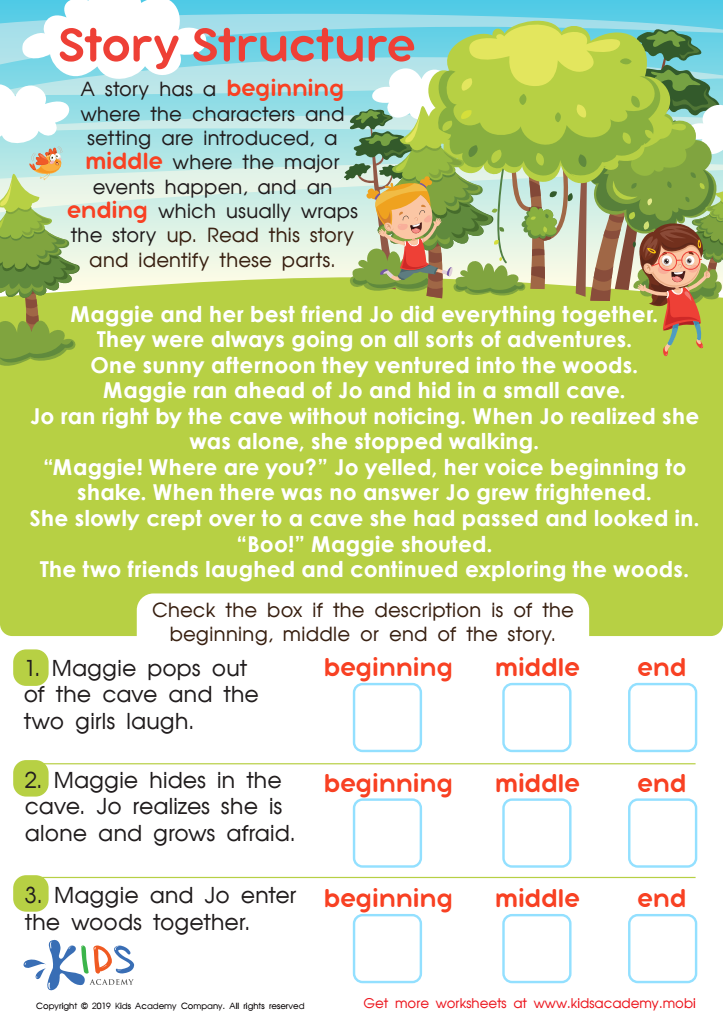
Story Structure Worksheet
 Assign to My Students
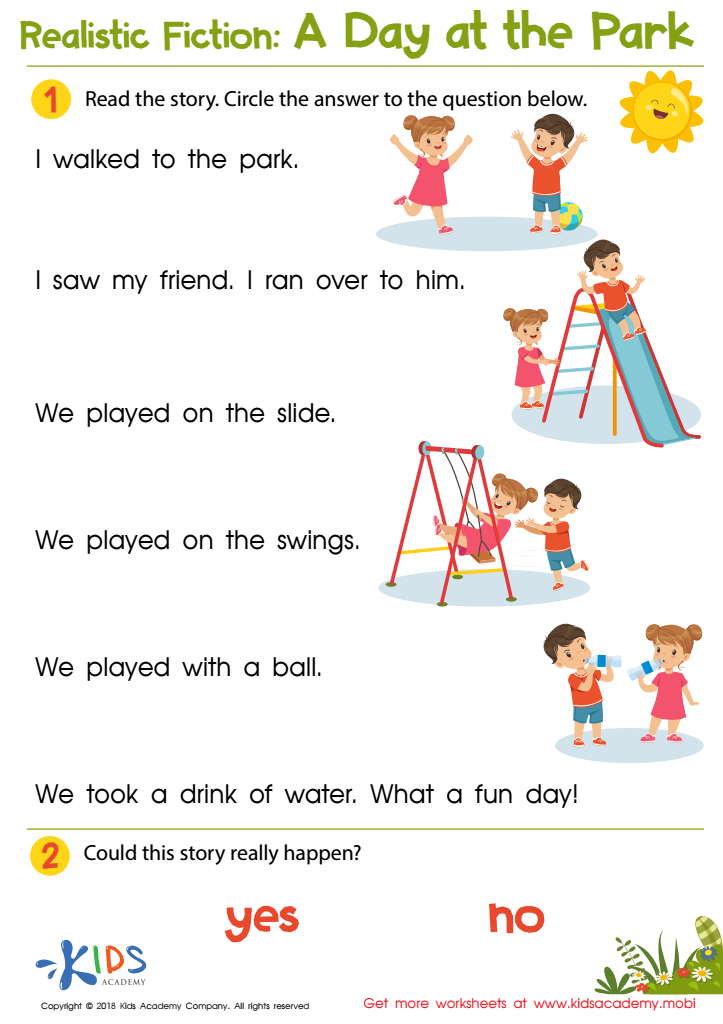
A Day at the Park Worksheet
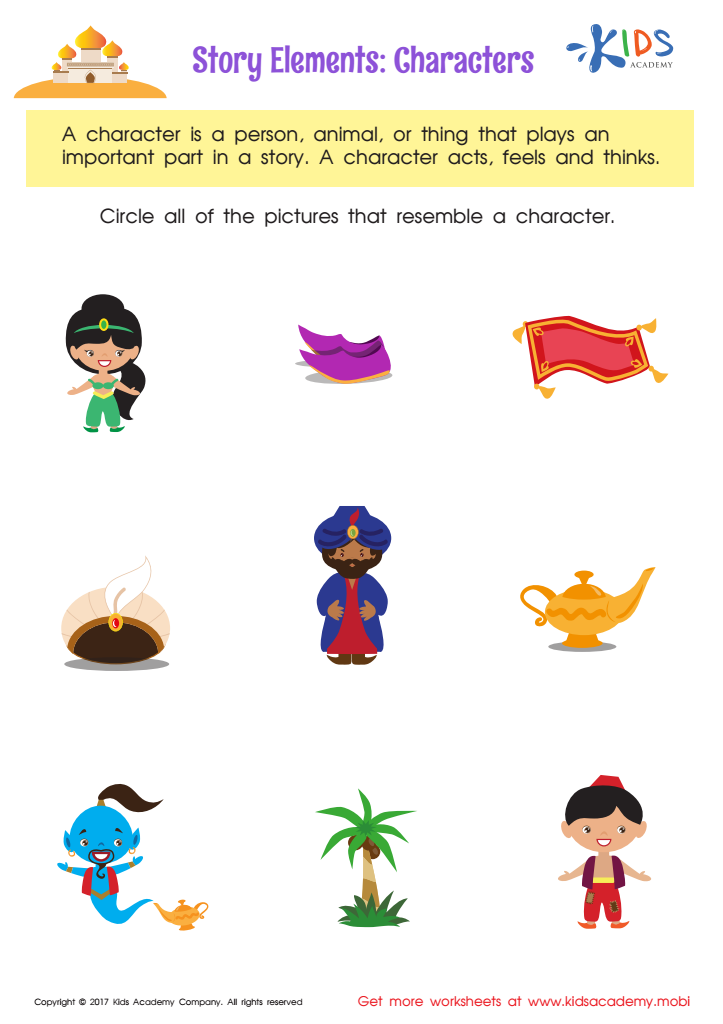
Story Elements Printable







Identifying story elements is crucial for children aged 4-8 as it lays the foundation for their reading and comprehension skills. Story elements such as characters, setting, plot, conflict, and resolution help young readers understand the structure of narratives. By recognizing these elements, children can connect with stories on a deeper level, making reading a more enjoyable and meaningful experience.
For parents and teachers, fostering this understanding promotes critical thinking. When children analyze story elements, they learn to ask questions about what they read, enhancing their ability to comprehend and retain information. This analytical skill becomes invaluable not just in literacy but across all subjects, supporting their overall academic growth.
Moreover, discussing story elements encourages creativity and imagination. Children learn to create their own stories by reimagining characters and settings or altering plots, which nurtures their narrative skills and expressive abilities.
Finally, identifying story elements promotes a shared experience between adults and children. Reading together and engaging in discussions about the characters and events strengthens relationships and cultivates a love for reading. Thus, recognizing and teaching story elements is a vital aspect of nurturing young readers and fostering a lifelong affinity for literature.








