Letter tracing skills Normal Worksheets for Ages 4-8
6 filtered results
-
From - To
Enhance your child's handwriting with our Letter Tracing Skills worksheets, designed specifically for ages 4-8! These engaging and interactive worksheets provide children with the opportunity to practice tracing uppercase and lowercase letters, helping to build their fine motor skills and familiarize them with the alphabet. Each sheet is colorful, inviting, and perfect for early learning environments, making letter tracing enjoyable. By regularly using these normal worksheets, your child will gain confidence in their writing abilities and develop essential literacy skills. Ideal for at-home education or classroom activities, these resources create a fun learning experience that paves the way for reading success!
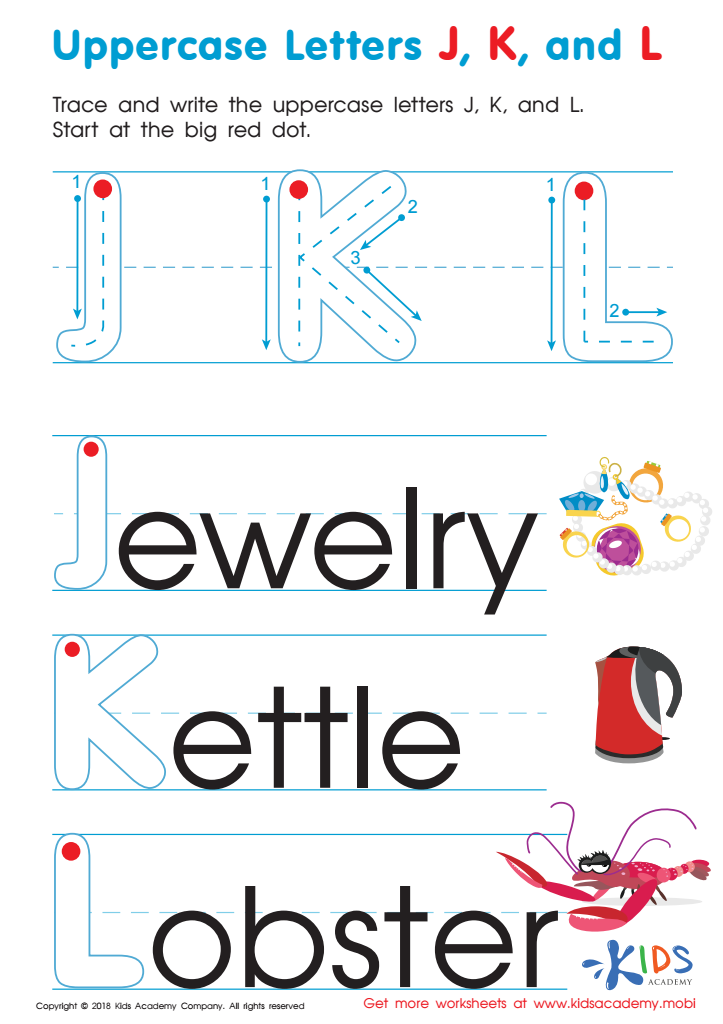
Uppercase Letters J, K, and L Worksheet
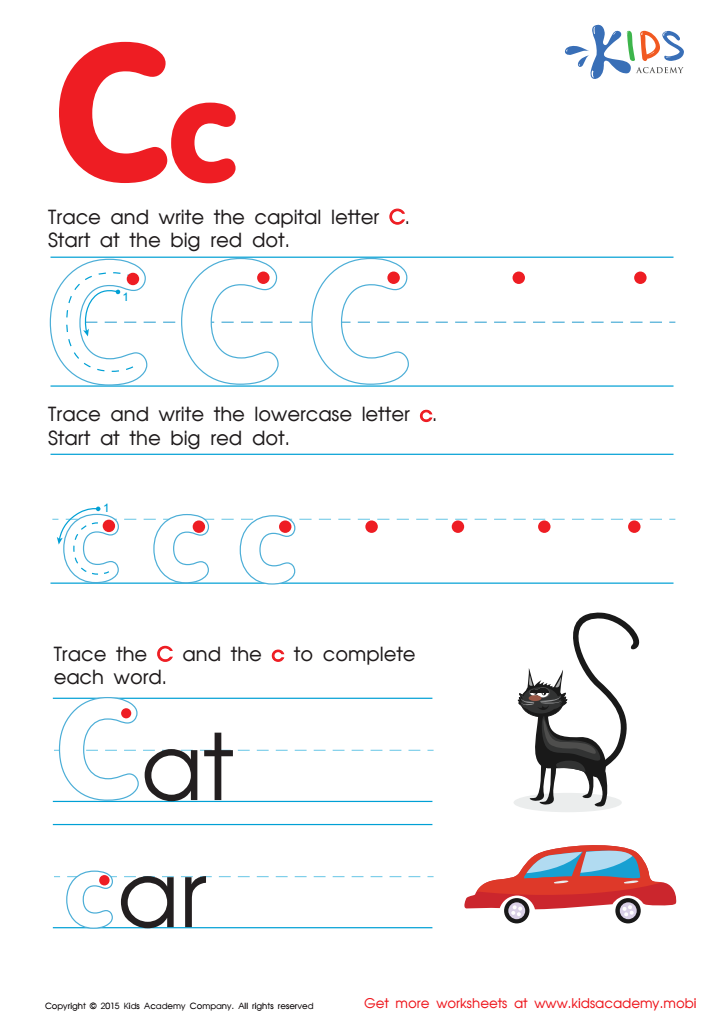
Letter C Tracing Page
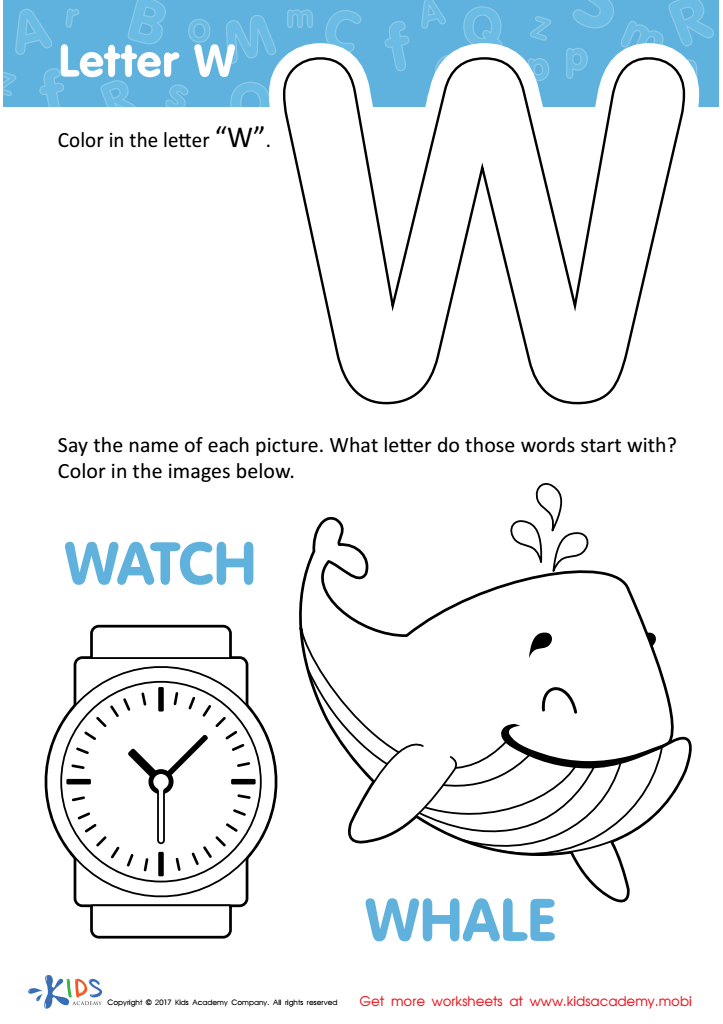
Letter W Coloring Sheet
 Assign to My Students
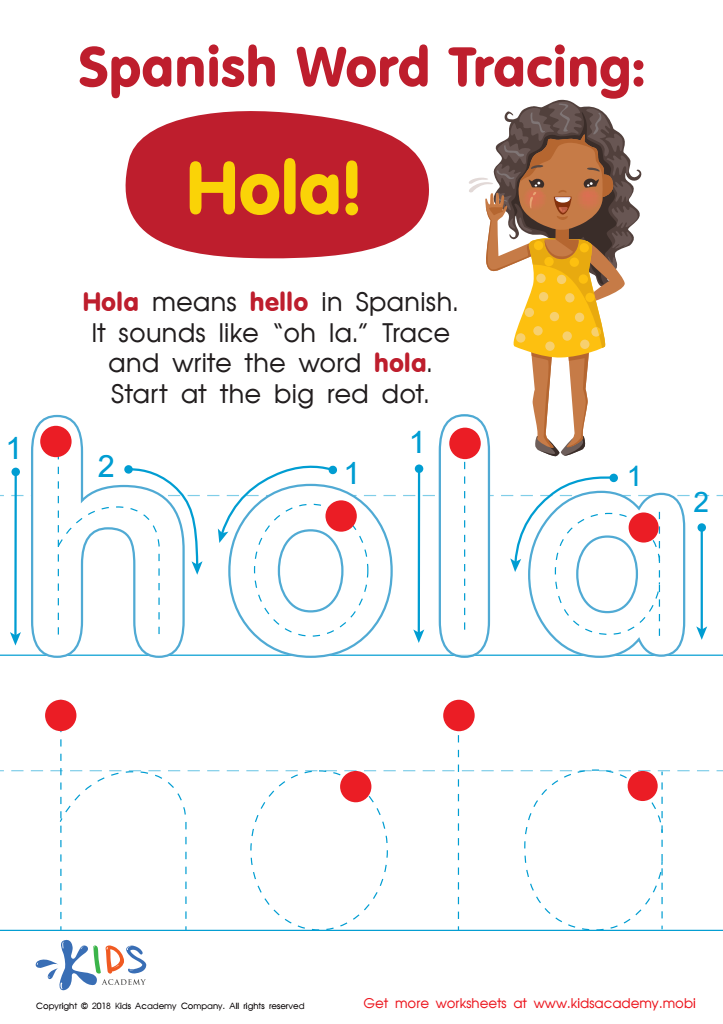
Spanish Word Tracing: Hola Worksheet
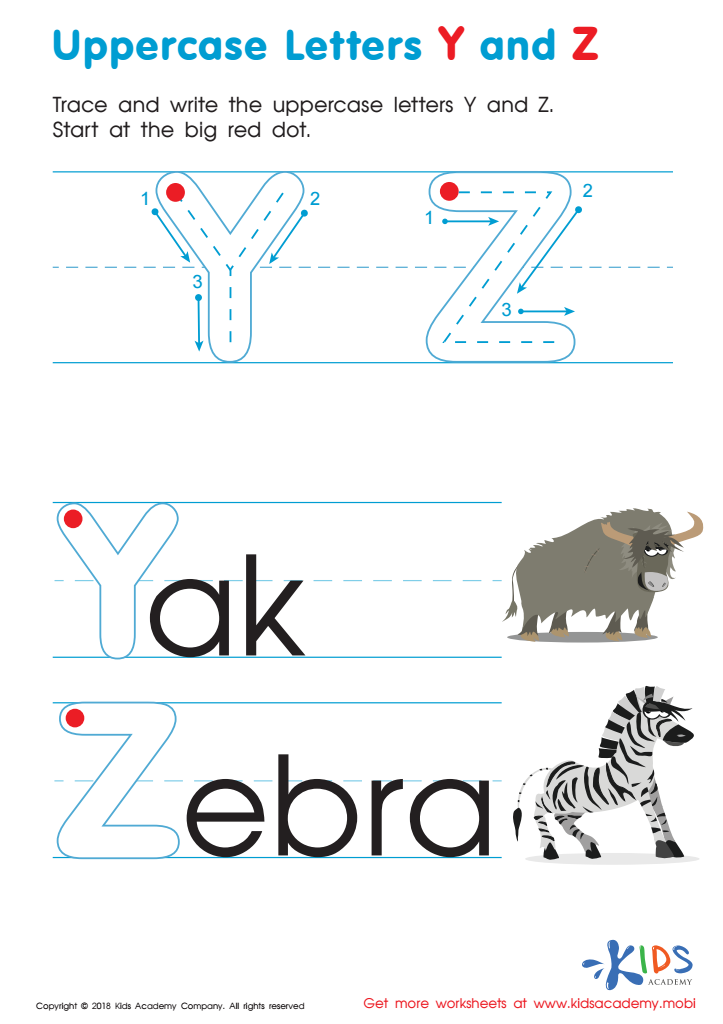
Uppercase Letters Y Z Worksheet
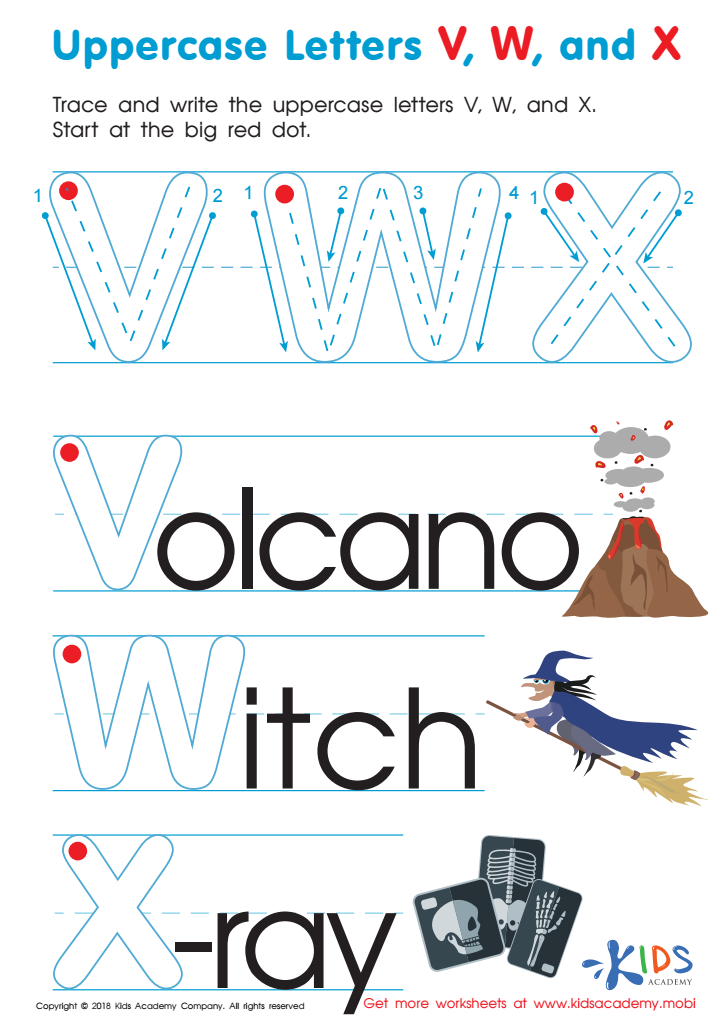
Uppercase Letters V, W, and X Worksheet








Letter tracing skills are a crucial aspect of early childhood education, particularly for children aged 4 to 8. At this developmental stage, children are not only honing their fine motor skills but also solidifying their understanding of letters and their formations. Letter tracing helps strengthen hand-eye coordination and dexterity, foundations that are essential for writing and other academic tasks later in life.
Additionally, mastering letter formation through tracing supports literacy development. This practice reinforces recognition of letter shapes and improves phonemic awareness, aiding in reading readiness. As children trace letters, they also begin to associate shapes with sounds, enhancing their ability to decode words, which is vital for early reading success.
For parents and teachers, supporting letter tracing activities fosters a positive attitude toward learning. This hands-on approach decreases frustration often associated with writing tasks, making learning enjoyable and engaging. Moreover, it provides opportunities for positive reinforcement and boosts a child's confidence in their abilities.
In summary, promoting letter tracing skills is essential for developing critical academic skills, fostering independence, and nurturing a love for learning at an early age. Thus, it is vital for parents and teachers to prioritize these activities in children's educational experiences.








