Mental arithmetic skills Normal Worksheets for Ages 4-8
3 filtered results
-
From - To
Enhance your child's mental arithmetic skills with our specially designed worksheets for ages 4-8! These engaging resources encourage early mathematical thinking and help build a strong foundation in arithmetic. Our worksheets provide a variety of fun and interactive activities tailored to develop addition, subtraction, and number recognition in a playful way. Each worksheet is designed to effectively challenge young learners while ensuring they enjoy the learning process. Perfect for at-home practice or classroom activities, these normal worksheets promote cognitive agility and confidence in math. Explore our collection and watch your child's mental math skills flourish!
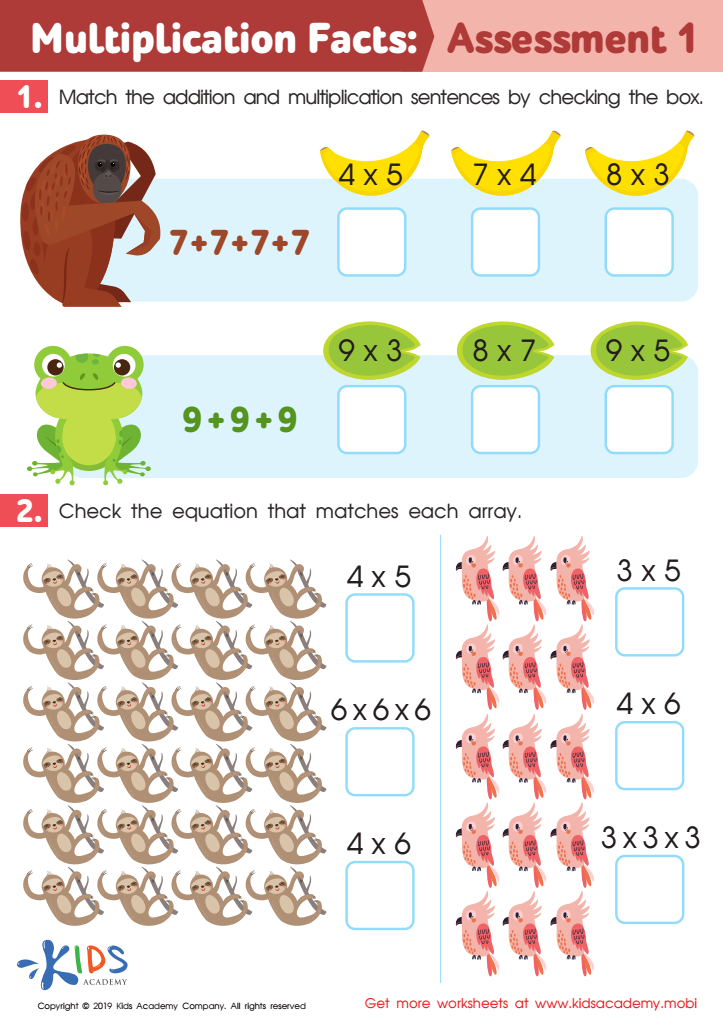
Multiplication Facts: Assessment 1 Worksheet
 Assign to My Students
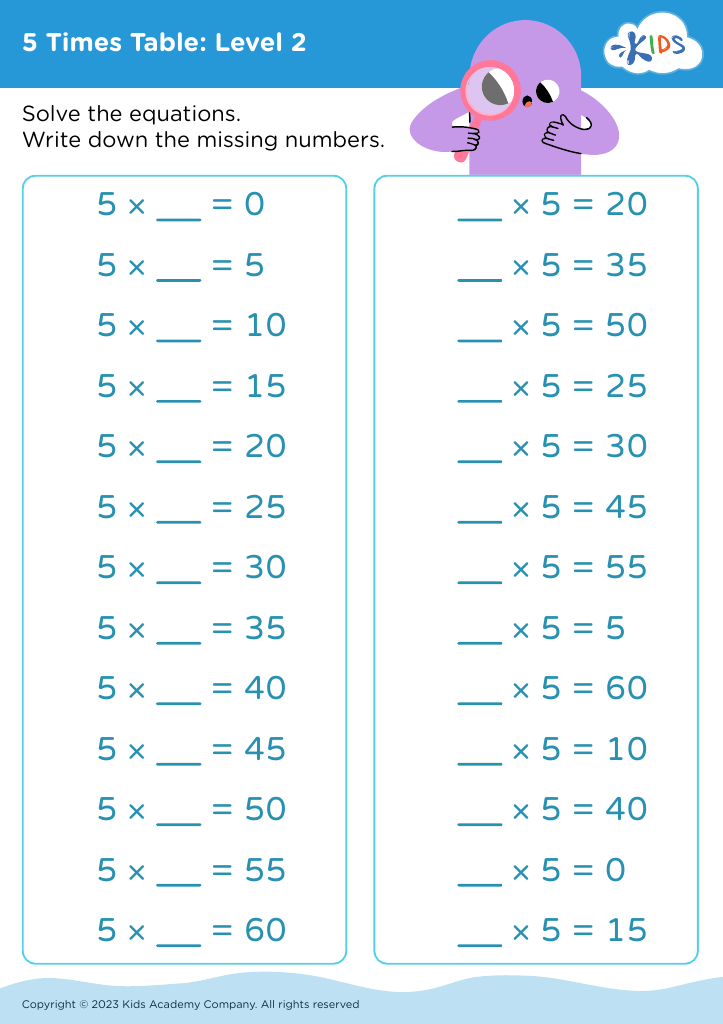
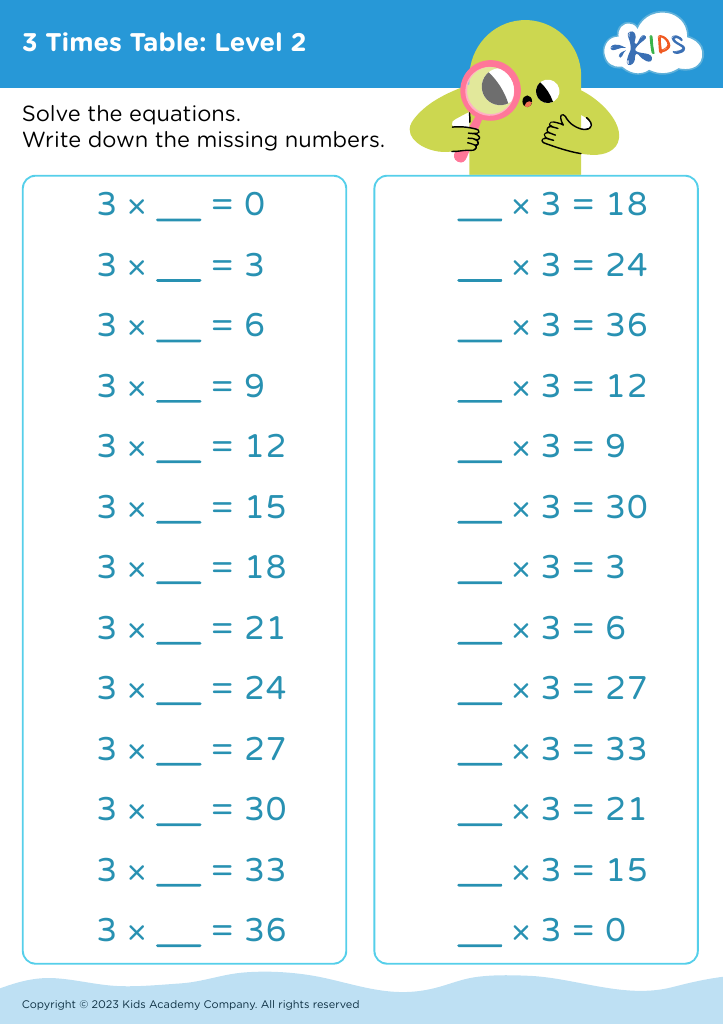





.jpg)


Mental arithmetic skills are crucial for children ages 4-8 as they lay the foundation for future mathematical understanding and confidence. At this developmental stage, children begin to grasp basic concepts of numbers, addition, subtraction, and even more complex operations. Strong mental arithmetic skills enable children to easily perform calculations in their heads, which not only enhances their problem-solving abilities but also promotes logical thinking and academic achievement.
Parents and teachers should care about these skills because they contribute significantly to a child’s overall cognitive development and self-esteem. Mastery of mental arithmetic fosters a sense of accomplishment, encouraging children to engage more enthusiastically with math and related subjects. Furthermore, proficiency in mental math assists in everyday situations, like shopping or time management, teaching practical life skills.
Additionally, cultivating a positive attitude toward math at a young age can counteract the anxiety many children experience as they advance through their education. By prioritizing mental arithmetic, adults play a pivotal role in building confident learners who view math as a fun and essential part of life, rather than a daunting subject. Thus, early support in mental arithmetic can lead to lifelong benefits both in academics and everyday situations.








