Phonics development Normal Worksheets for Ages 4-8
3 filtered results
-
From - To
Enhance your child's phonics skills with our engaging Phonics Development Normal Worksheets, designed for children ages 4-8. Our worksheets are carefully crafted to boost reading proficiency and phonemic awareness through fun activities and exercises. Each worksheet introduces young learners to essential sound-letter relationships, blending, and decoding skills in an exciting and easy-to-understand manner. Our resources support both classroom and at-home learning, making phonics accessible and enjoyable. Visit us today to download and print these valuable educational tools, and watch your child’s reading abilities flourish while they have fun learning!
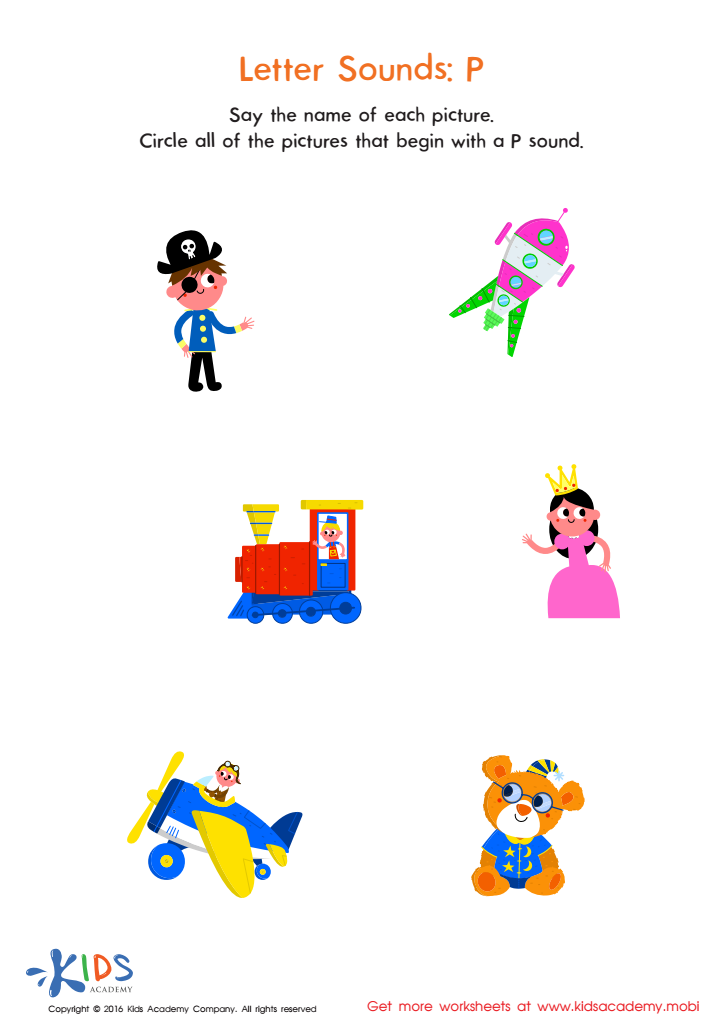
Letter P Sound Worksheet
 Assign to My Students
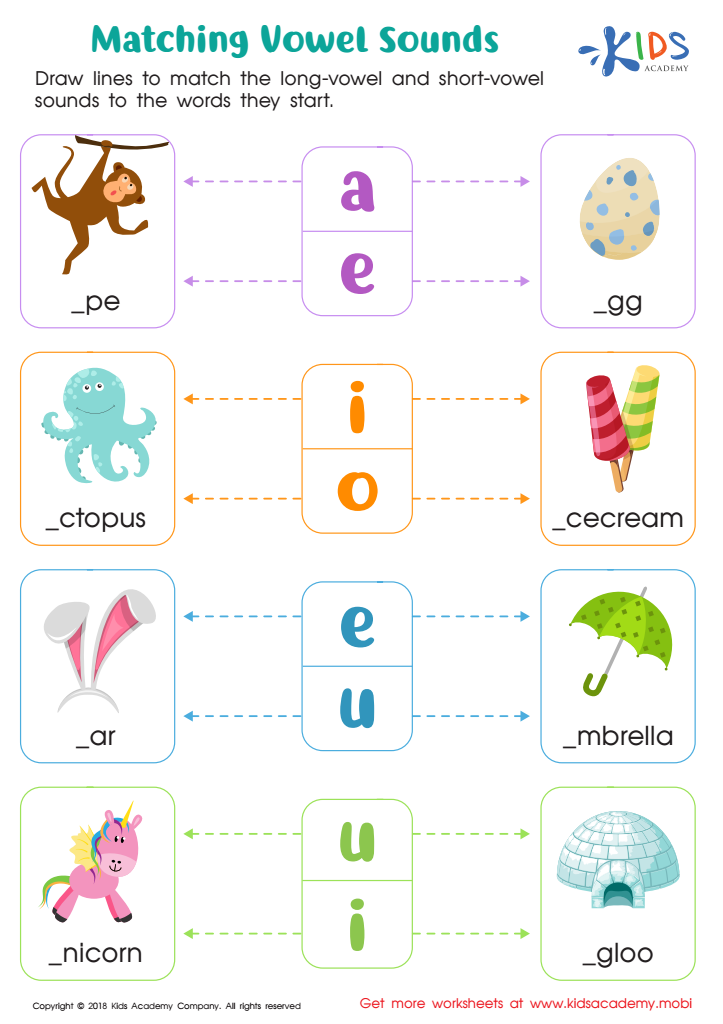
Matching Vowel Sounds Worksheet
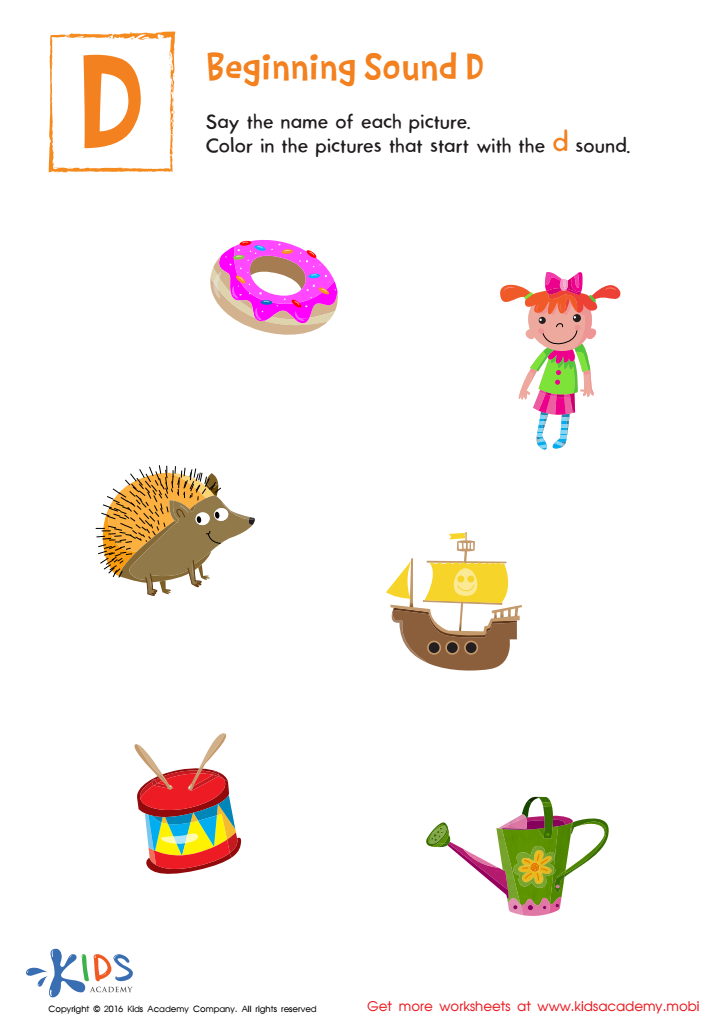
Beginning Sound D Worksheet


.jpg)



.jpg)
Phonics development is a crucial element of early childhood education for children ages 4-8, as it lays the foundational skills required for reading and writing. For parents and teachers, understanding and promoting this aspect of literacy is vital. Phonics involves the relationship between letters and sounds, enabling children to decode words effectively, a critical step towards fluent reading.
First, early phonics skills foster greater confidence and independence in young readers. As children understand how to sound out words, they become more competent and enthusiastic about reading. This, in turn, ignites a lifelong love for books and learning.
Second, research shows that strong phonics skills correlate with better academic performance not only in literacy but across various subjects. Reading proficiency underpins the ability to grasp mathematical word problems, follow written instructions, and absorb new information, all foundational qualities for a successful educational journey.
Third, early identification and support for children struggling with phonics can prevent later difficulties. Early interventions can address gaps, ensuring no child falls behind. Effective phonics education supports long-term language development, cognitive abilities, and critical thinking skills.
Thus, parents and teachers who emphasize phonics development are investing in their children's future success by equipping them with essential literacy skills that will serve as building blocks for lifelong learning and achievement.








