Sound differentiation Normal Worksheets for Ages 4-8
4 filtered results
-
From - To
Welcome to our Sound Differentiation Normal Worksheets for Ages 4-8! Our engaging worksheets are specifically designed to help young learners identify and differentiate sounds, enhancing their auditory processing skills. This vital learning foundation supports reading and language development, making it essential for early education. Each worksheet features fun activities tailored to different skill levels, ensuring that children stay motivated while they learn. From phonics practice to interactive sound identification games, these worksheets provide a comprehensive approach to sound differentiation. Ideal for both classroom and at-home use, our resources are perfect for fostering a love of learning in young minds. Download and explore today!
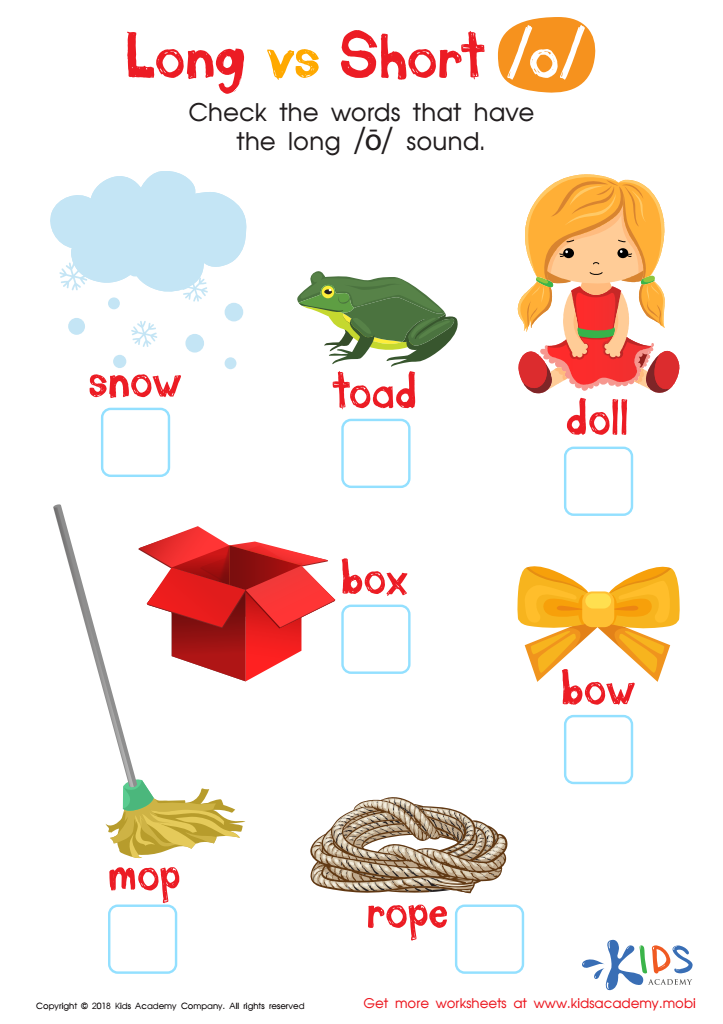
Long vs Short O Reading Worksheet
 Assign to My Students
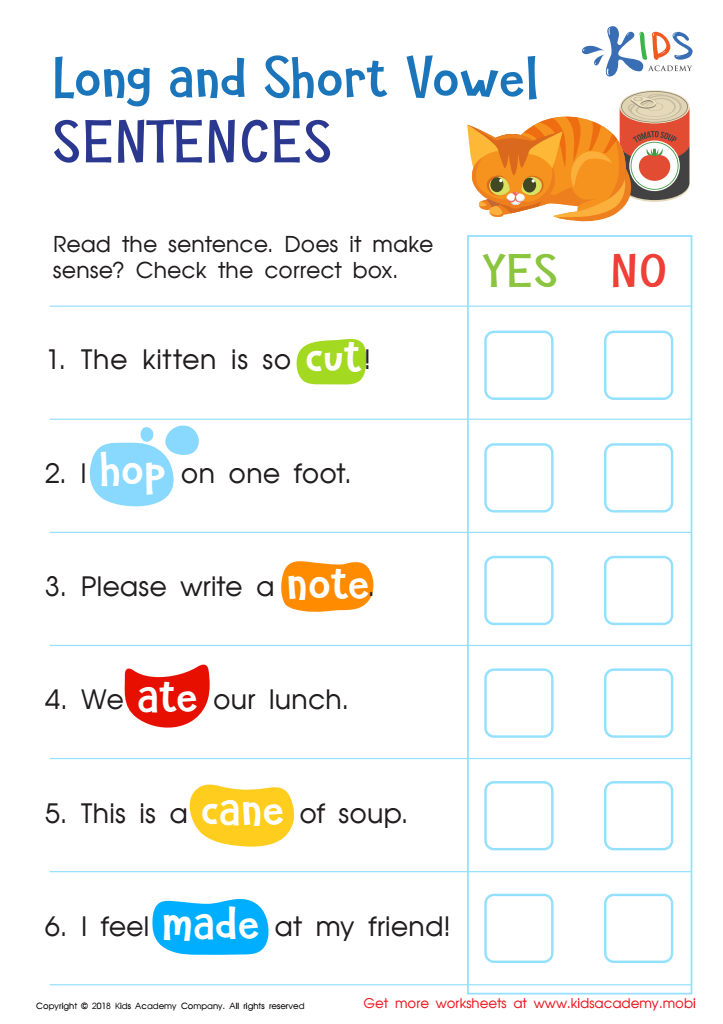
Long and Short Vowel Sentences: Assessment Worksheet
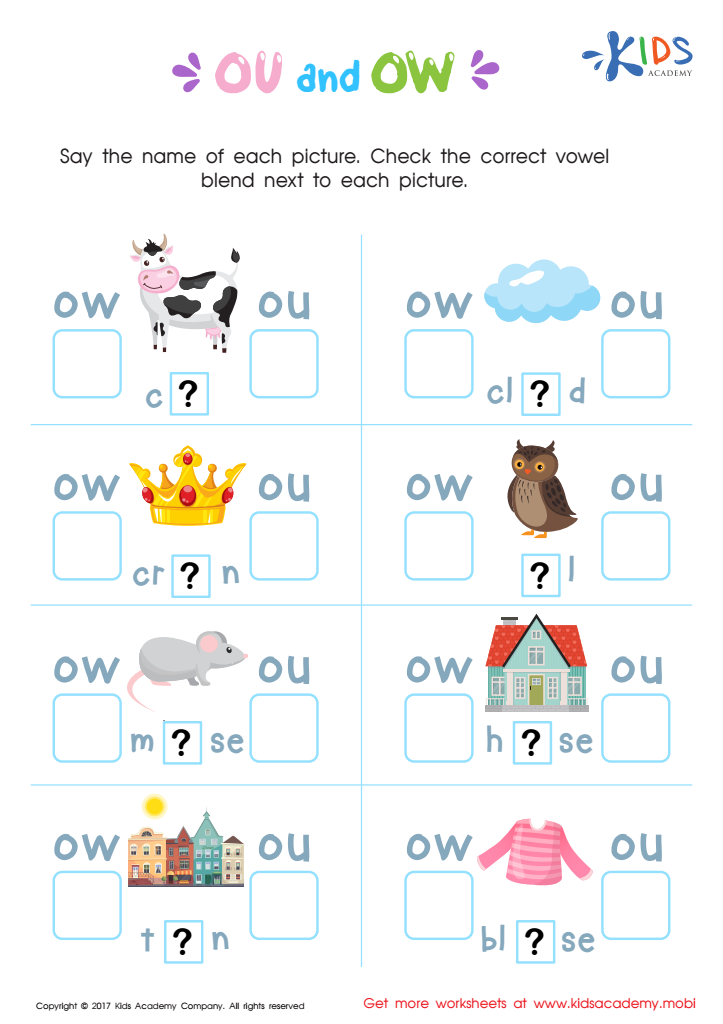
OU and OW Words Worksheet
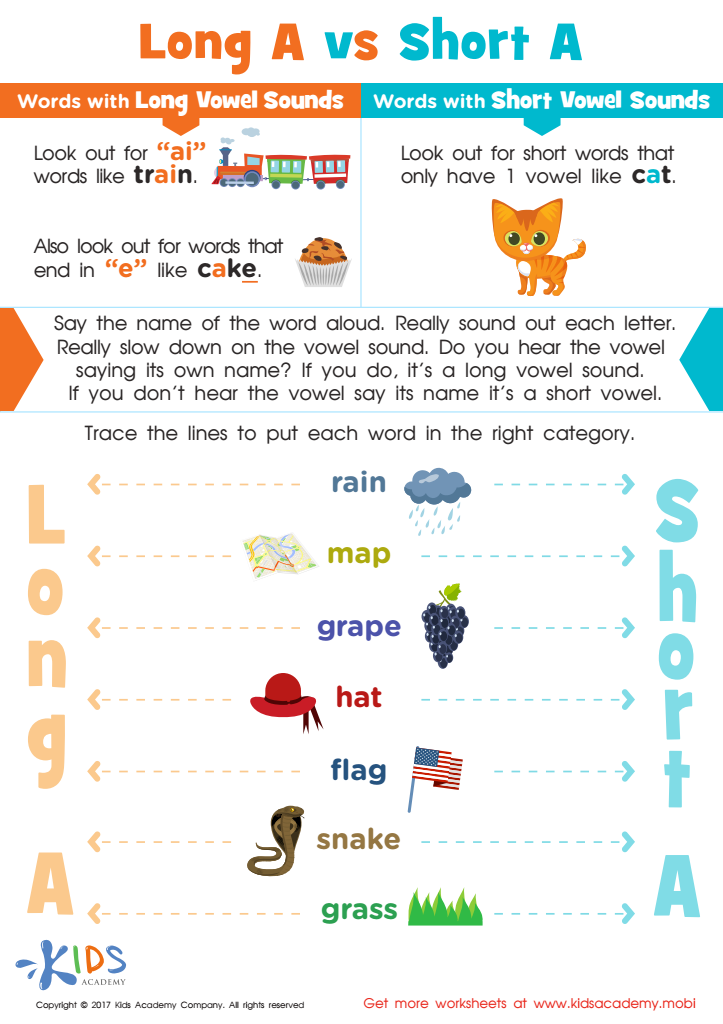
Long and Short Vowel A Spelling Worksheet








Sound differentiation is a crucial skill for children ages 4-8, as it lays the foundation for effective reading and language development. During this developmental stage, children are incredibly receptive to auditory stimuli. Teaching them to distinguish between different sounds—be it phonemes in language or various auditory environments—enables them to identify letters, words, and ultimately, meanings, facilitating fluent reading skills.
For parents and teachers, understanding and supporting sound differentiation can lead to improved phonemic awareness, which is directly linked to literacy success. Children who are adept at differentiating sounds are better equipped to decode words and comprehend text, essential skills for lifelong learning. Furthermore, this ability enhances listening skills, aiding in responsive communication, social interaction, and academic performance.
Engaging children in sound games, rhymes, and phonics activities promotes active learning and cognitive development. Parents and teachers who prioritize sound differentiation contribute to building a strong educational foundation, ultimately motivating children to develop a love for reading and learning. Paying attention to this aspect in early education ensures that children not only progress academically but also gain confidence in their communication abilities, fostering a lifelong advantage in both academic and social settings.








