Sound discrimination Normal Worksheets for Ages 4-8
3 filtered results
-
From - To
Enhance your child's auditory learning with our Sound Discrimination Normal Worksheets designed for ages 4-8. Perfect for early learners, these engaging worksheets promote critical listening skills by helping children distinguish between sounds. Featuring a variety of fun activities, including matching, identifying, and practicing phonetic sounds, your little ones will gain confidence in their verbal abilities. Each worksheet is tailored to promote cognitive development while keeping learning enjoyable. Explore our collection to support literacy skills in a playful and interactive way. These resources are ideal for teachers and parents looking to enrich their child's educational journey. Start fostering sound recognition today!
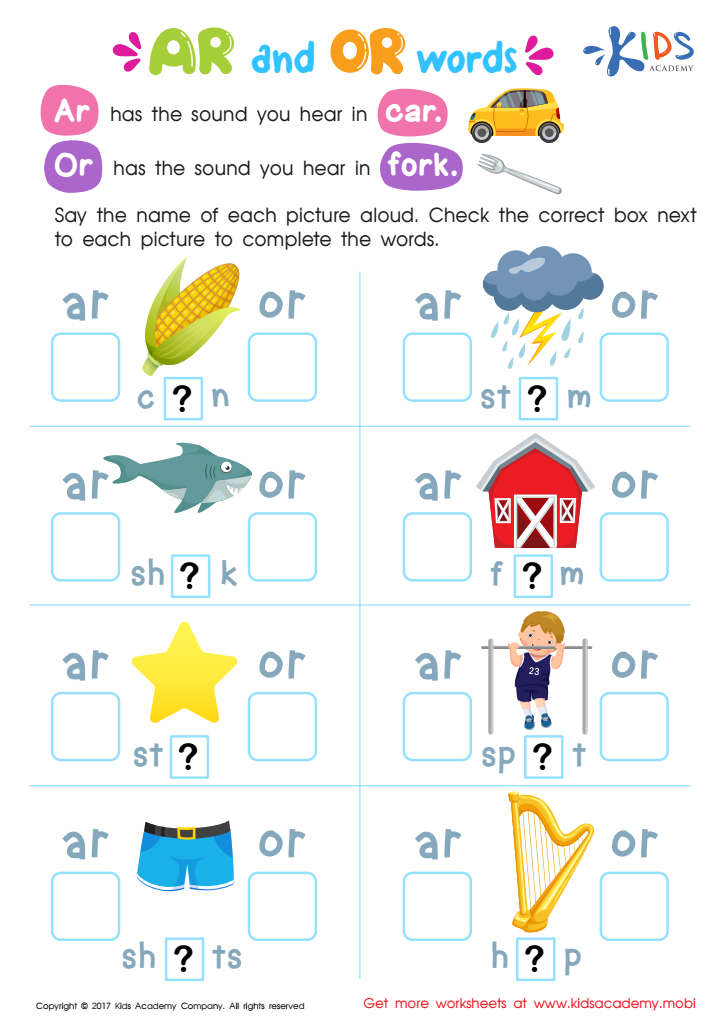
Ar and Or Words Phonics Worksheet
 Assign to My Students
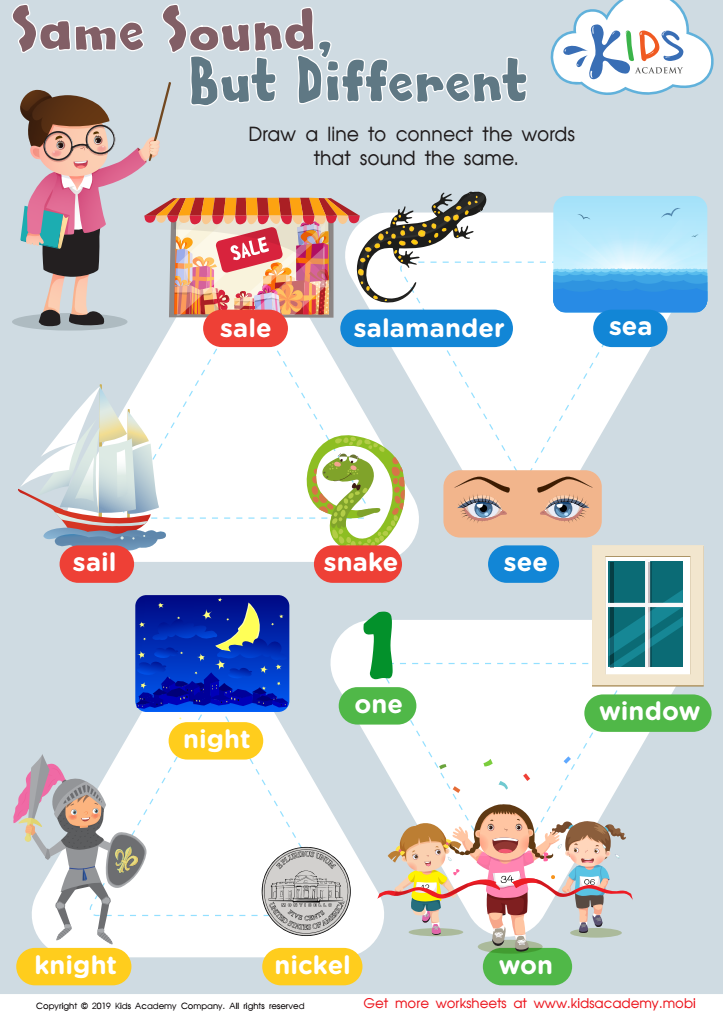
Sound Different Worksheet
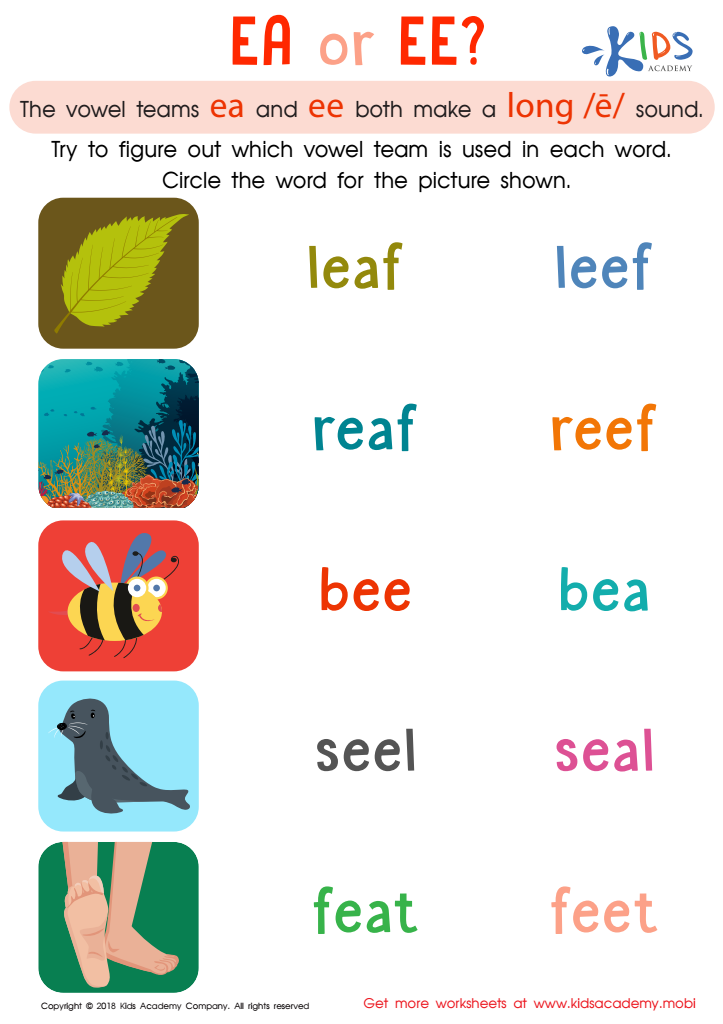
Reading: EA and EE Worksheet


.jpg)





Sound discrimination is a crucial skill for children aged 4-8 that lays the foundation for effective communication and literacy development. This skill involves the ability to recognize and differentiate between various sounds in their environment, which is vital for processing language and understanding speech.
Parents and teachers should prioritize sound discrimination because it directly impacts reading and spelling abilities. As children learn to identify different phonemes—the distinct units of sound in language—they become more adept at phonics, the cornerstone of reading. Proficient sound discrimination also boosts language comprehension, allowing children to follow instructions, engage in conversations, and express their ideas clearly.
Moreover, enhanced listening skills foster social interactions and emotional awareness by enabling children to interpret tone, pitch, and nuances in speech, which are essential for building strong relationships with peers and adults.
Without strong sound discrimination, children may struggle academically and face challenges in social situations. By focusing on this skill, parents and teachers can support children in becoming confident, competent communicators, laying the groundwork for future educational success and positive social interactions. Engaging in activities like rhyming games, sound matching, and listening exercises can sharpen this ability and make learning enjoyable and effective.








