Spatial reasoning Normal Worksheets for Ages 4-8
5 filtered results
-
From - To
Enhance your child's spatial reasoning skills with our engaging worksheets designed specifically for ages 4-8. Our Spatial Reasoning Normal Worksheets promote critical thinking and problem-solving abilities through fun activities that challenge young minds. Each worksheet includes colorful visuals and interactive exercises ideal for learning to identify and manipulate shapes, understand patterns, and develop essential cognitive skills. Whether at home or in the classroom, these worksheets provide an effective way for kids to strengthen their foundation in spatial awareness. Download our worksheets today and unlock your child's potential for creativity and logical reasoning while they enjoy charting a path through their learning journey!
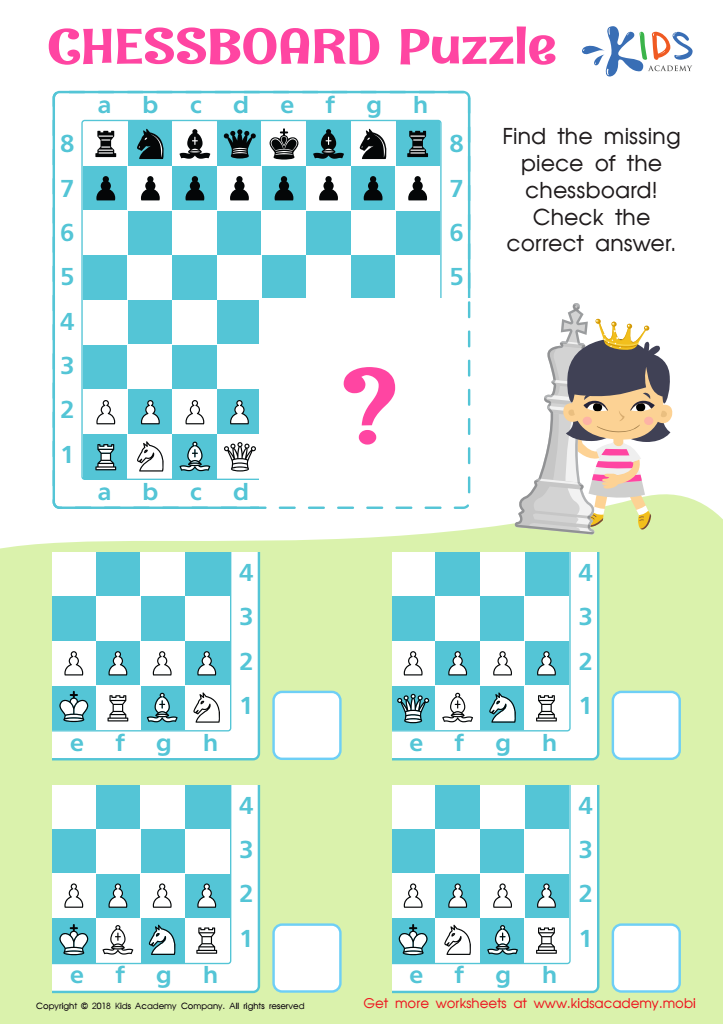
Chessboard Puzzle Worksheet
 Assign to My Students
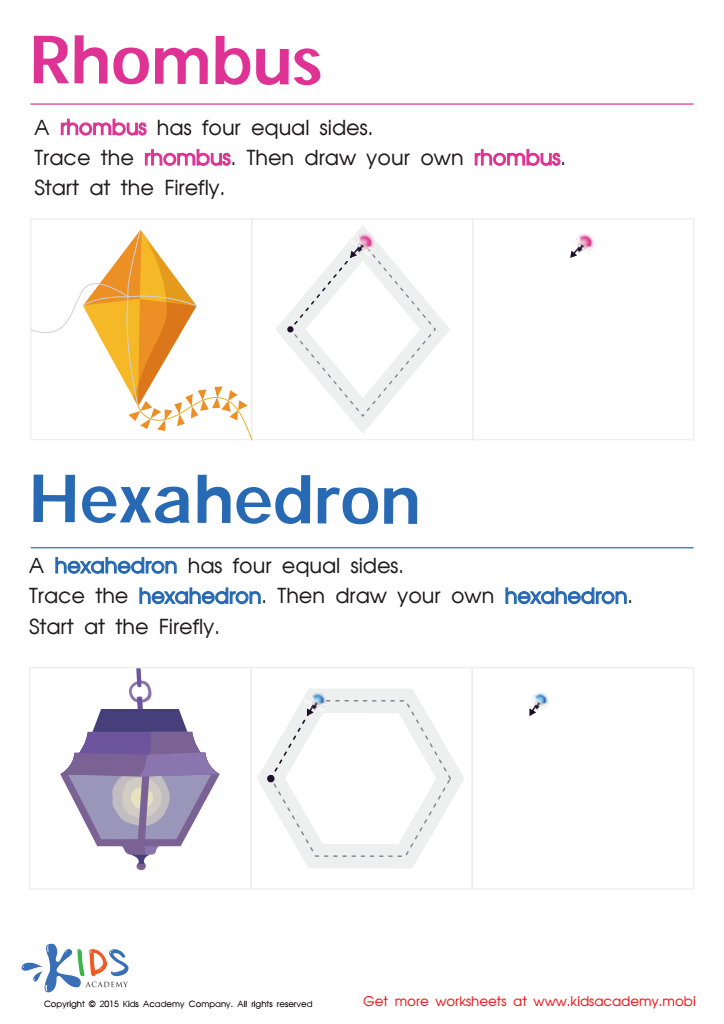
Draw a Rhombus And a Hexahedron Printable
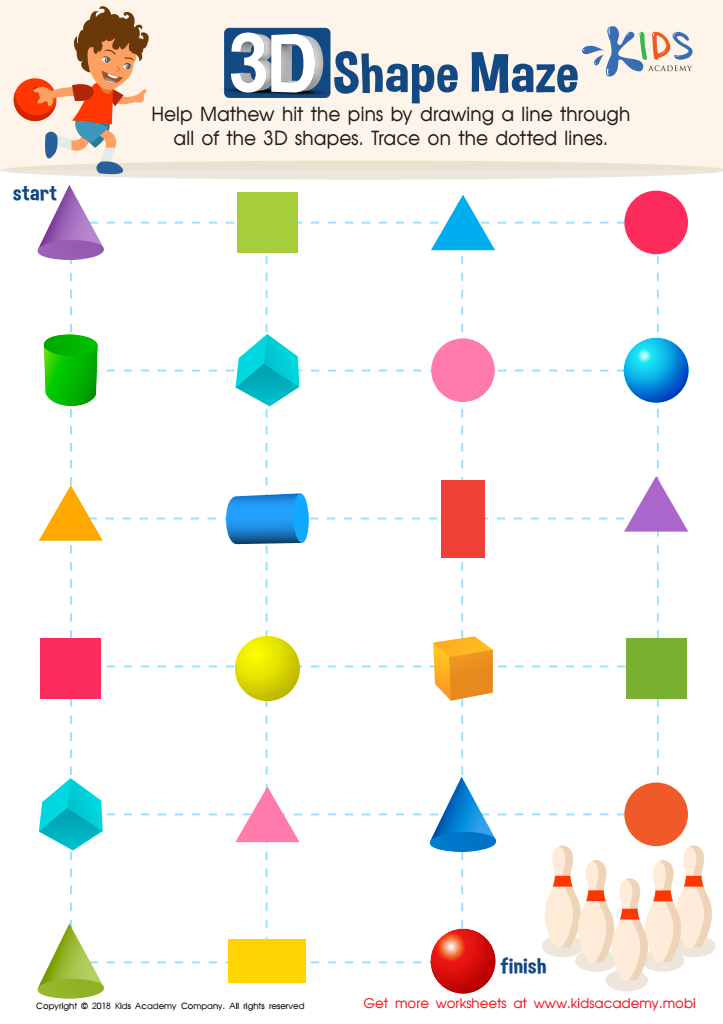
Shapes Maze Geometry Worksheet
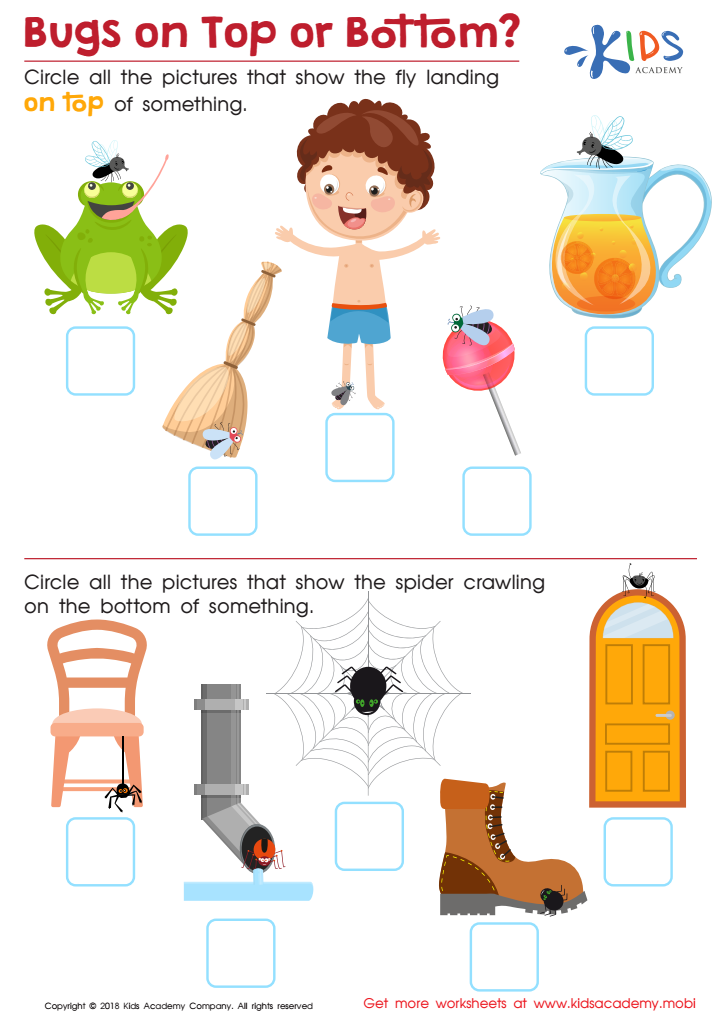
Bugs on Top or Bottom? Worksheet
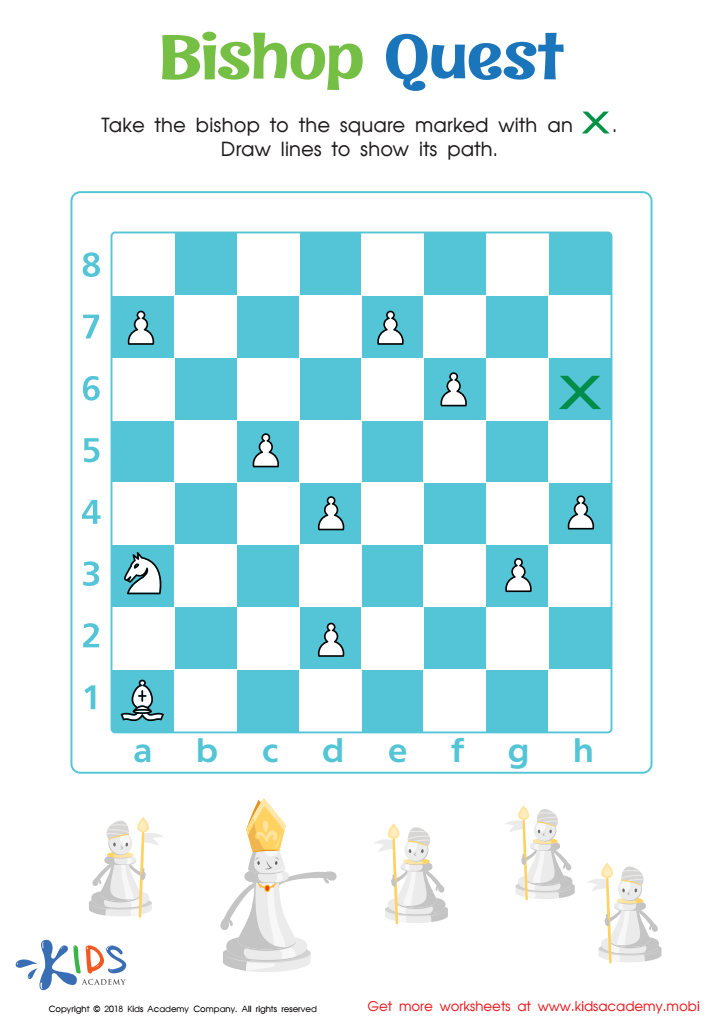
Bishop Quest Worksheet







Spatial reasoning is a crucial cognitive skill that significantly contributes to a child’s overall academic success and everyday functioning. For children aged 4 to 8, developing spatial reasoning skills is particularly essential, as it lays the groundwork for understanding geometry, mathematics, science, and even reading. When children can visualize and manipulate objects in their mind, they enhance their problem-solving abilities and creativity.
Parents and teachers should care about developing spatial reasoning because it directly influences children's learning trajectories. High spatial reasoning skills forecast better performance in STEM (Science, Technology, Engineering, Mathematics) fields, which are increasingly vital in our technology-driven world. Additionally, these skills support the understanding of key concepts such as measurement, symmetry, and spatial awareness.
Furthermore, children with well-developed spatial reasoning skills are better equipped to grasp everyday tasks, such as reading maps, assembling objects, and visualizing the layout of their environment, which promote independence and confidence.
Ultimately, fostering spatial reasoning in early childhood empowers children to thrive academically and socially. Engaging activities like puzzles, building blocks, and drawing can play an integral role in nurturing these skills, making it essential for teachers and parents to prioritize them in their educational strategies.








