Time recognition Normal Worksheets for Ages 4-8
5 filtered results
-
From - To
Discover our engaging Time Recognition Normal Worksheets designed specifically for children ages 4-8. These worksheets help young learners develop essential skills in telling time with fun, interactive activities. Through vibrant illustrations and age-appropriate exercises, kids will explore both analog and digital clocks, enhancing their understanding of hours, minutes, and daily routines. Ideal for home or classroom use, our printable resources encourage independent learning while building a solid foundation in time-telling skills. Foster confidence and competence in your child's understanding of time with our carefully crafted worksheets, perfect for all early learners eager to master this vital life skill!
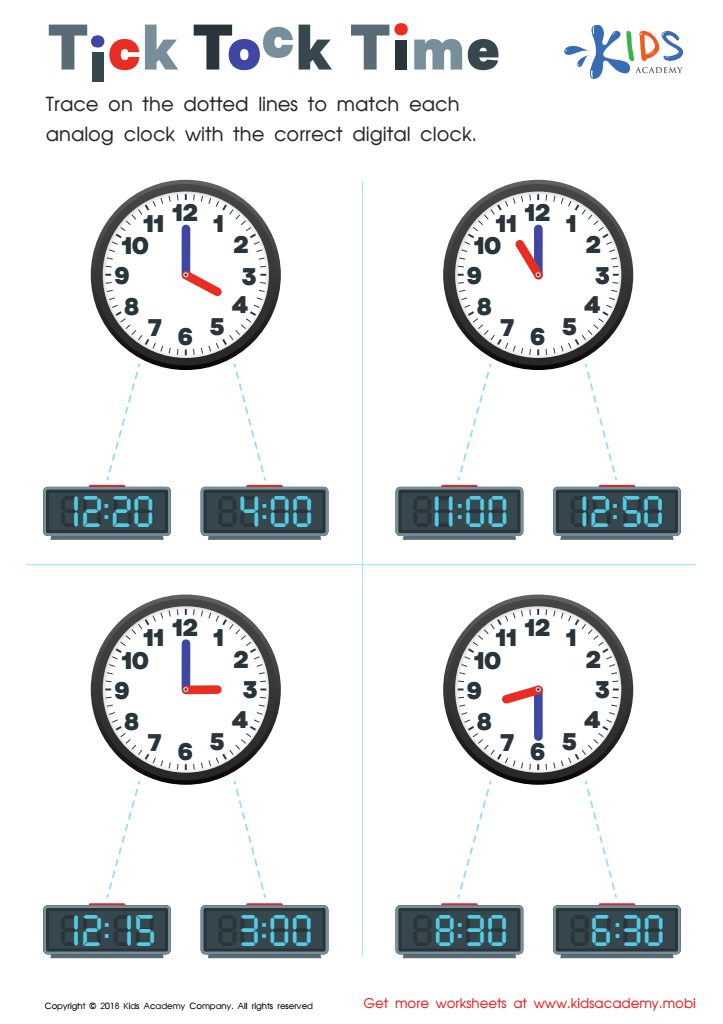
Tick Tock Time Worksheet
 Assign to My Students
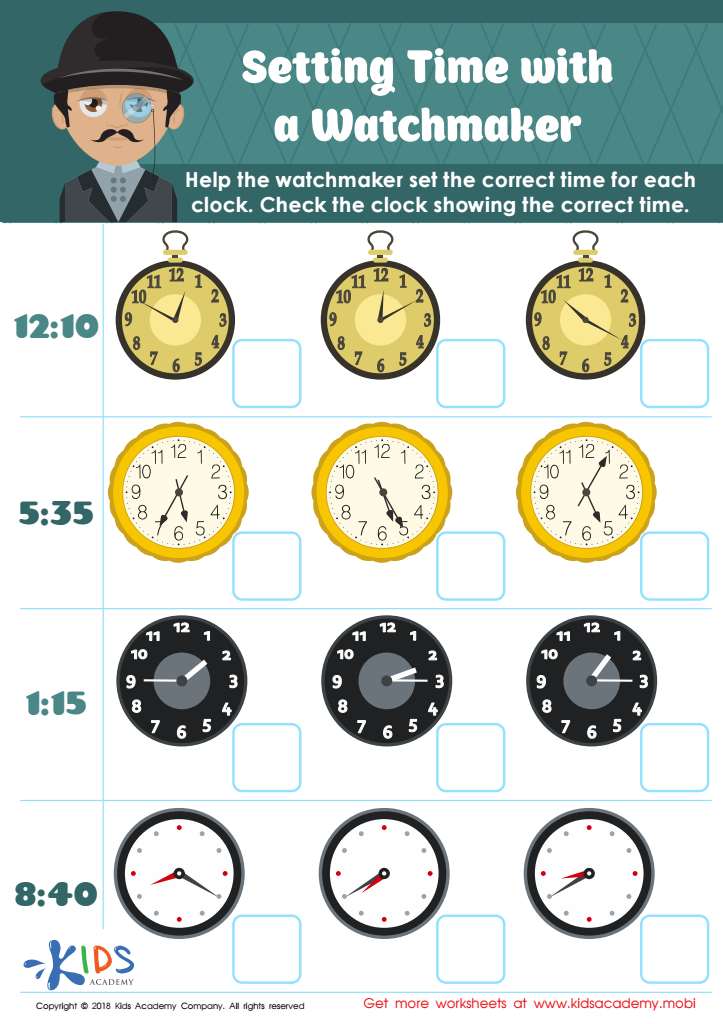
Setting Time with Watchmaker Worksheet
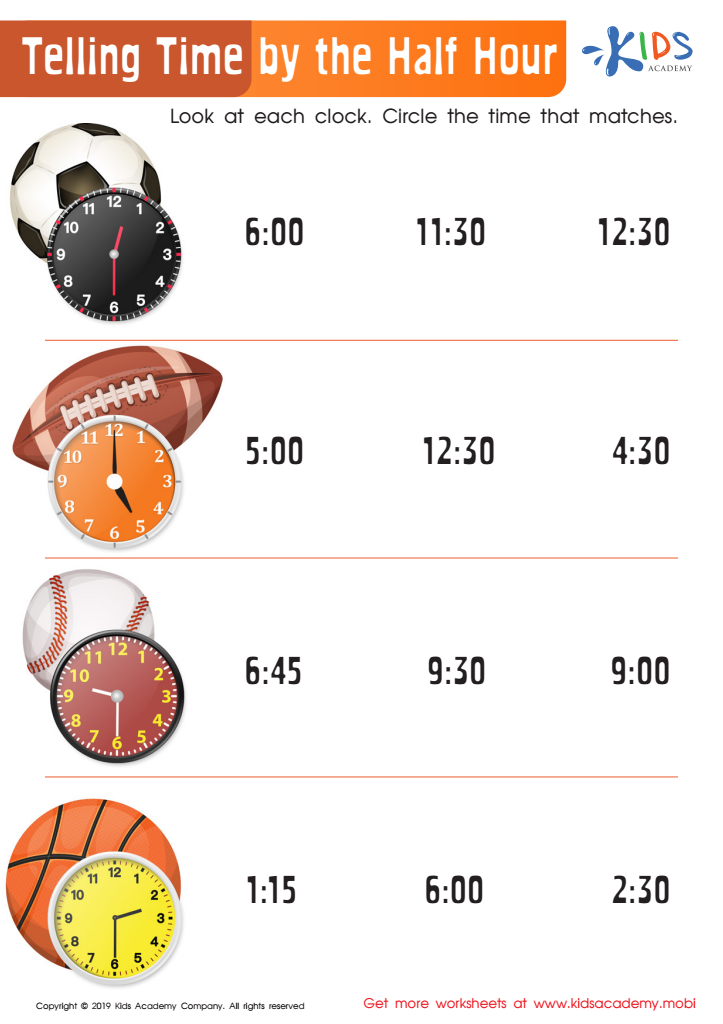
Telling Time by the Half Hour Worksheet
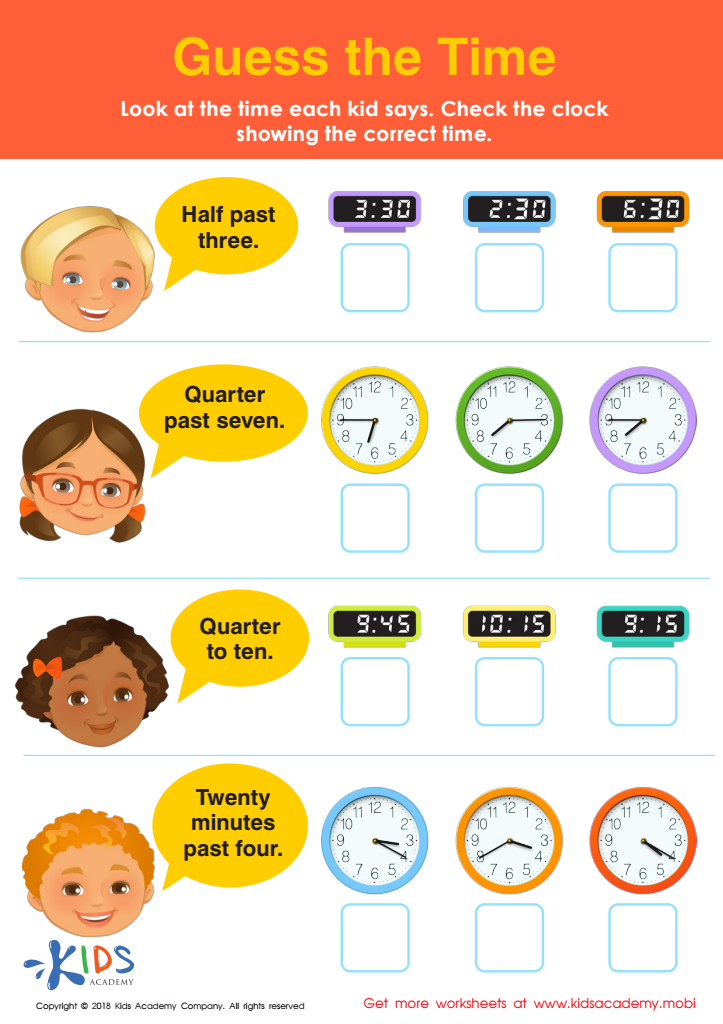
Guess the Time Worksheet
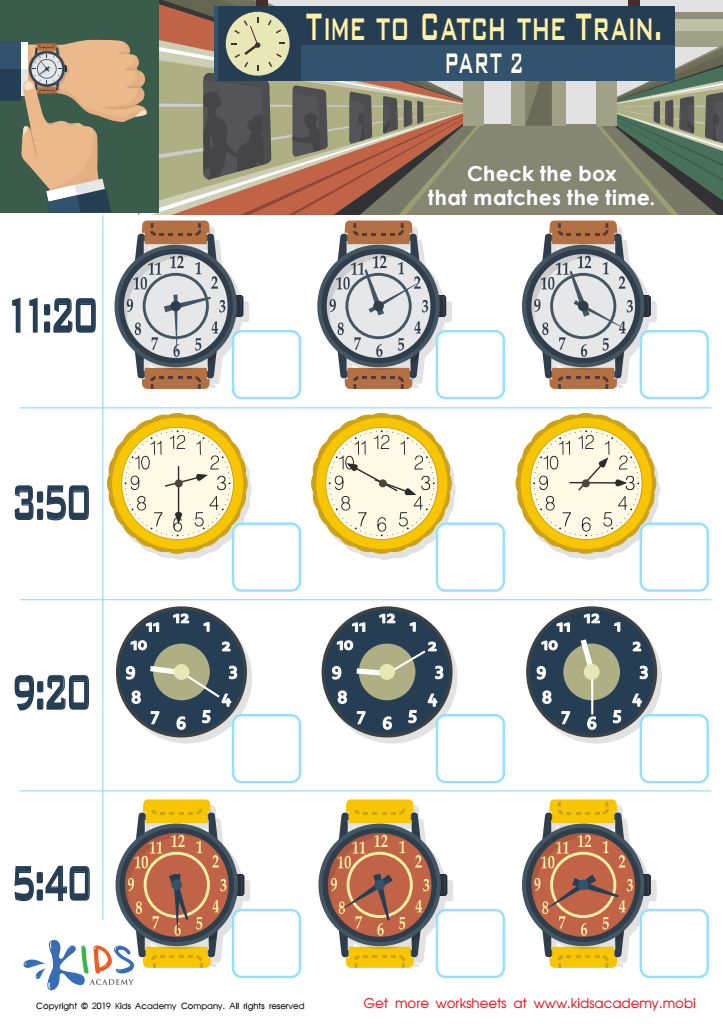
Time to Catch the Train Part 2 Worksheet








Time recognition is a fundamental skill for children ages 4-8 that lays the groundwork for their understanding of routines, schedules, and the passage of time. Teachers and parents should prioritize this skill because it enhances children's ability to manage their daily activities effectively, fostering independence and responsibility.
Understanding time helps children grasp concepts such as sequencing events, distinguishing between past, present, and future, and measuring durations. These abilities are not only necessary for academic success but also contribute to essential life skills. For instance, knowing how to tell time enables children to make timely choices, like knowing when to start completing homework or get ready for bed.
Moreover, time recognition supports the development of numeracy skills, as it involves counting and understanding numerical concepts. This early training in time awareness can translate to better mathematical abilities later in life.
Additionally, discussing time-related topics fosters conversations that improve language and cognitive development. Engaging with children about their daily schedules highlights the importance of predictability while helping to establish a sense of security and structure. Therefore, parents and teachers should actively nurture time recognition during these formative years for well-rounded growth.








