Time-telling skills Normal Worksheets for Ages 4-8
3 filtered results
-
From - To
Enhance your child’s time-telling abilities with our expertly designed worksheets for kids aged 4-8. These engaging and interactive printables make learning to read both analog and digital clocks fun and effective. Perfect for building foundational skills, our worksheets cover hours, half-hours, and quarter-hours concepts, helping children grasp time-telling with ease. Each activity is crafted to strengthen their understanding, ensuring they gain confidence in their abilities. Ideal for both classroom and at-home practice, our comprehensive collection supports early learners in mastering this essential life skill while making learning enjoyable. Unlock their potential with our time-telling skills normal worksheets today!
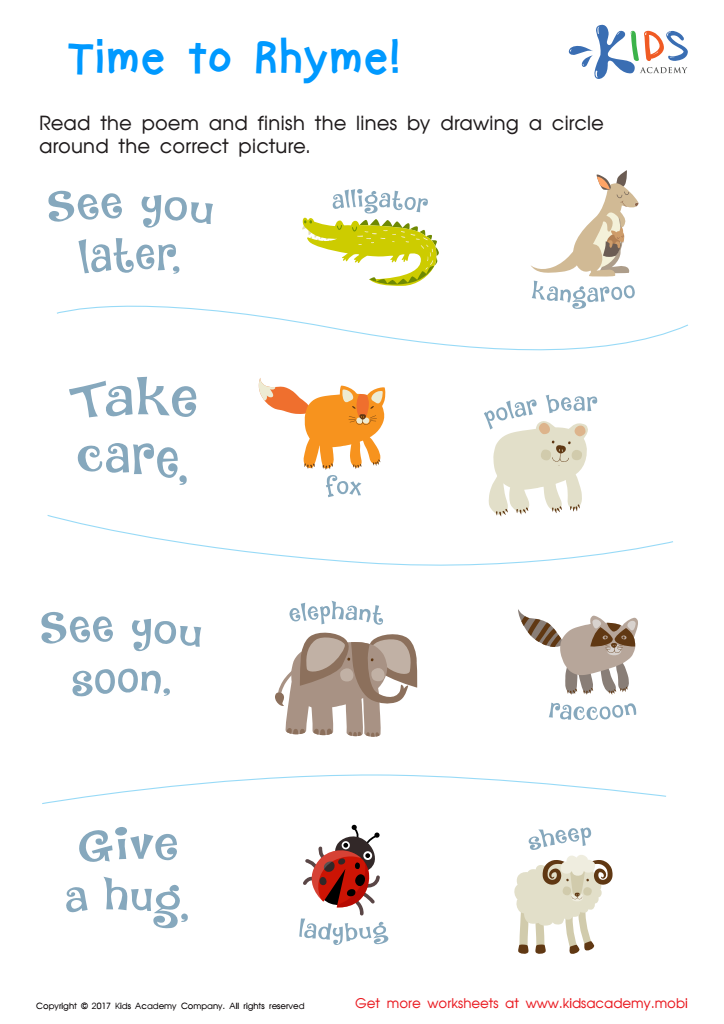
Time to Rhyme Rhyming Worksheet
 Assign to My Students
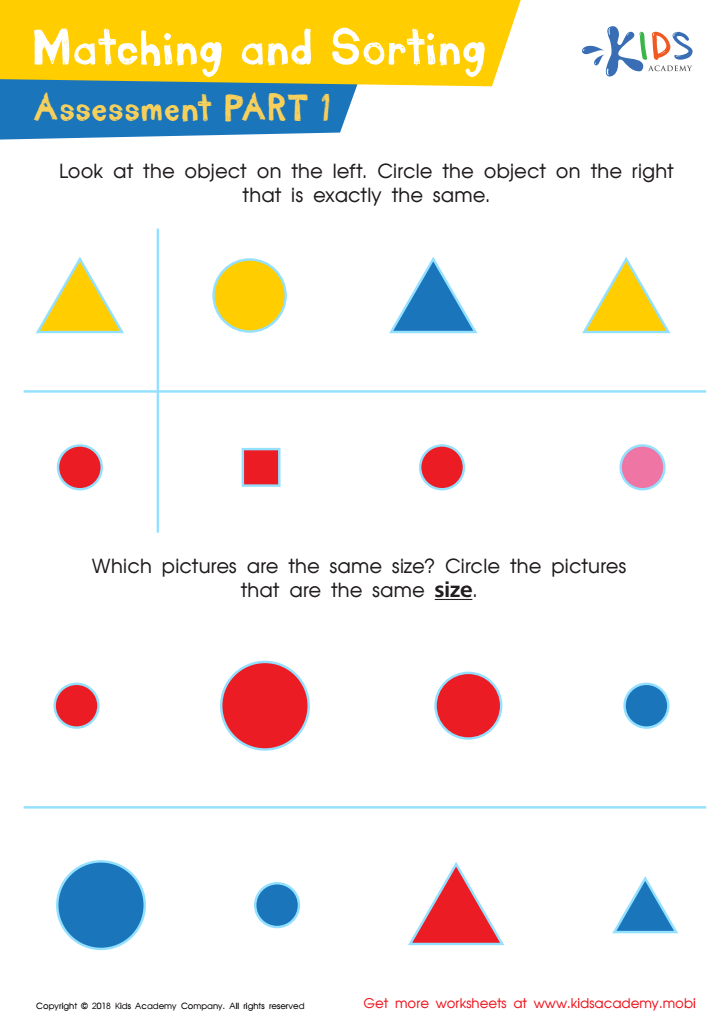
Matching and Sorting for Kindergarten: Assessment 1 Worksheet
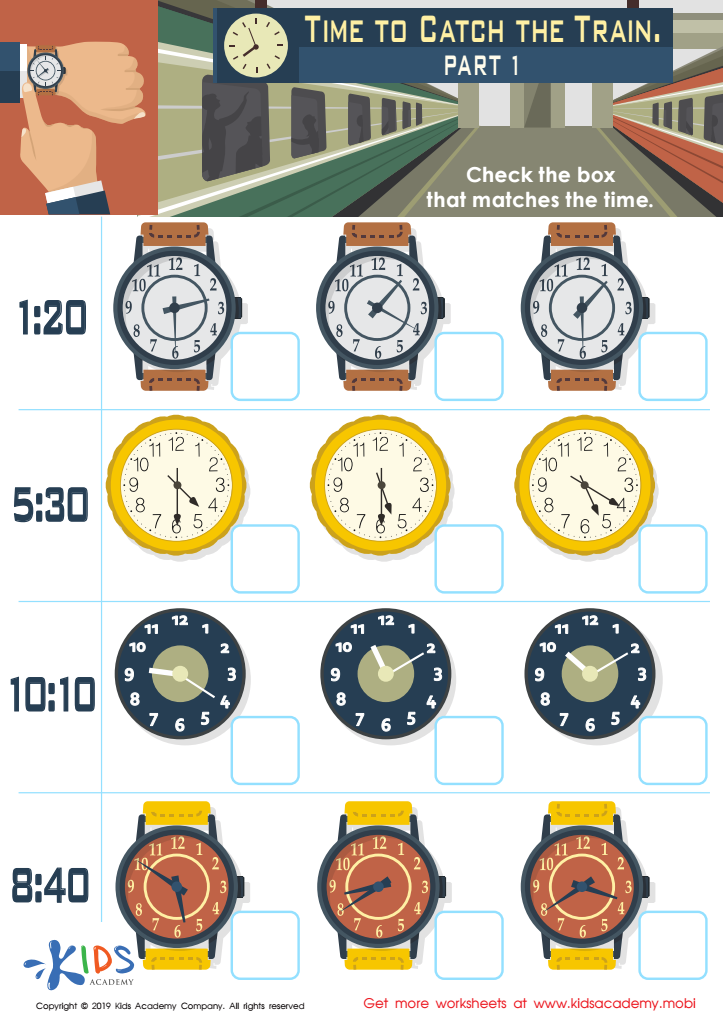
Time to Catch the Train Part 1 Worksheet







Time-telling skills are crucial for young children ages 4-8 as they form a foundation for practical life management, academic success, and cognitive development. For young kids, understanding time fosters a sense of routine and security. Knowing what “2 o’clock” means helps children anticipate important events like meal times, bedtimes, and school hours, creating a structured environment which can reduce anxiety and promote a sense of order.
Academically, mastering time-telling skills enhances numeracy and reinforces concepts in number recognition, addition, subtraction, and sequence. These skills also aid in developing logical thinking and problem-solving abilities, as children learn to link the abstract concept of time with concrete activities in their daily routines.
From a developmental perspective, telling time instills responsibility and time management skills. As children grow, these skills become vital for managing deadlines, adhering to schedules, and efficiently allocating time to various tasks—habits essential not only in school life but throughout adulthood.
Moreover, engaging kids in time-related activities can improve their fine motor skills when manipulating clock hands and boost their visual-spatial intelligence through distinguishing different angles and positions.
Therefore, parents and teachers must actively support the acquisition of time-telling skills to foster a balanced growth both academically and in life skills, which are pivotal for children's overall development and future independence.








