Understanding adjectives Normal Worksheets for Ages 4-8
5 filtered results
-
From - To
Unlock the power of language with our "Understanding Adjectives" Normal Worksheets, designed specifically for children aged 4-8. These engaging worksheets help young learners explore and grasp the concept of adjectives, equipping them with essential skills to describe nouns beautifully. With a variety of fun activities, including matching exercises, fill-in-the-blanks, and colorful illustrations, children will enhance their vocabulary and build confidence in their language abilities. Perfect for homeschoolers and classroom settings, our worksheets provide important practice in enhancing descriptive language skills. Start your child's journey towards expressive communication and creativity today with these interactive and enjoyable learning resources!
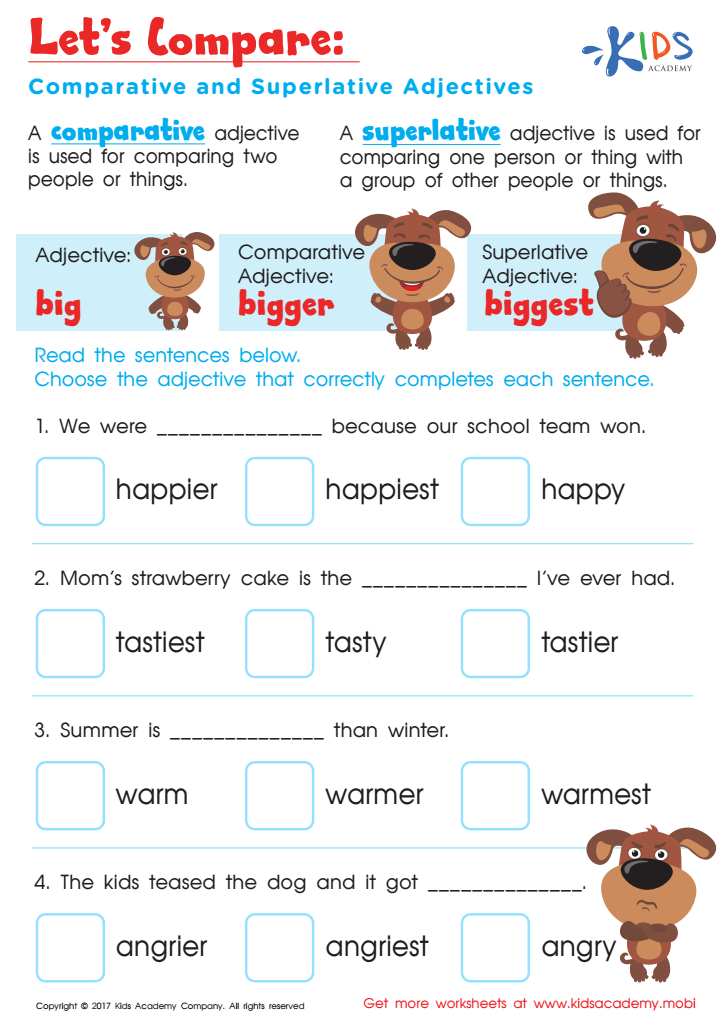
Comparative and Superlative Worksheet
 Assign to My Students
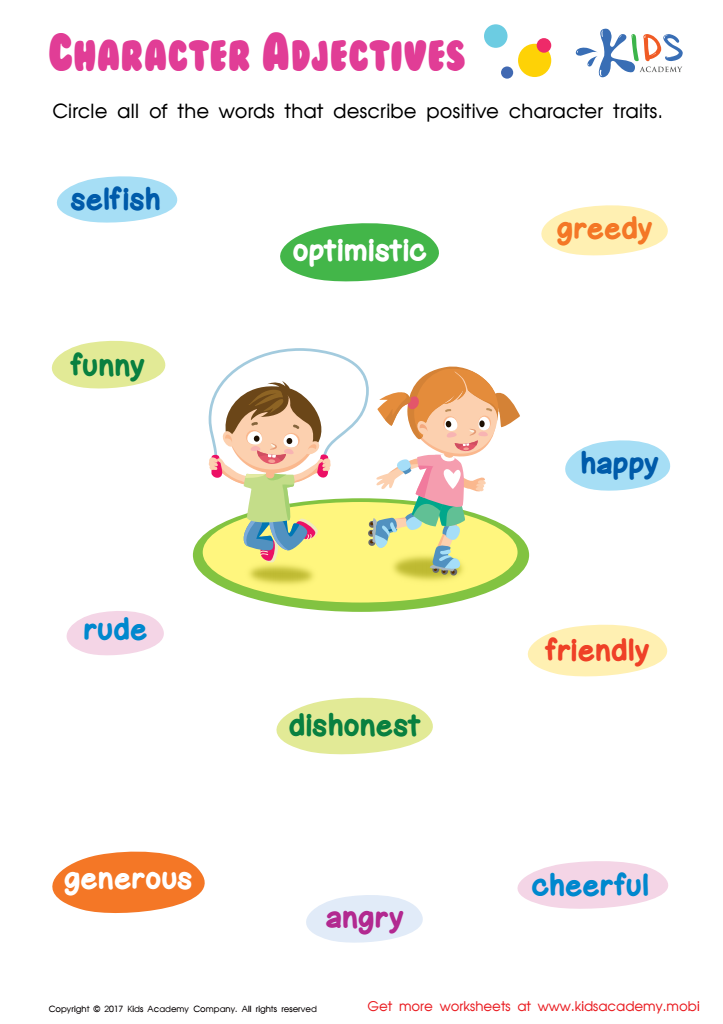
Character Adjectives Worksheet
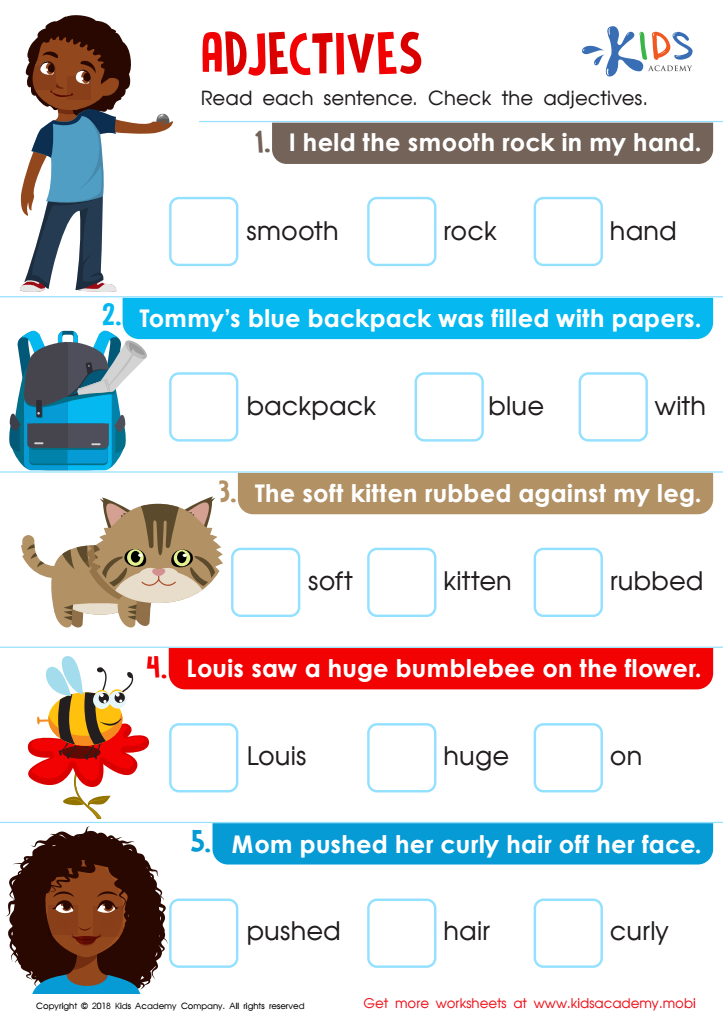
Adjectives Worksheet
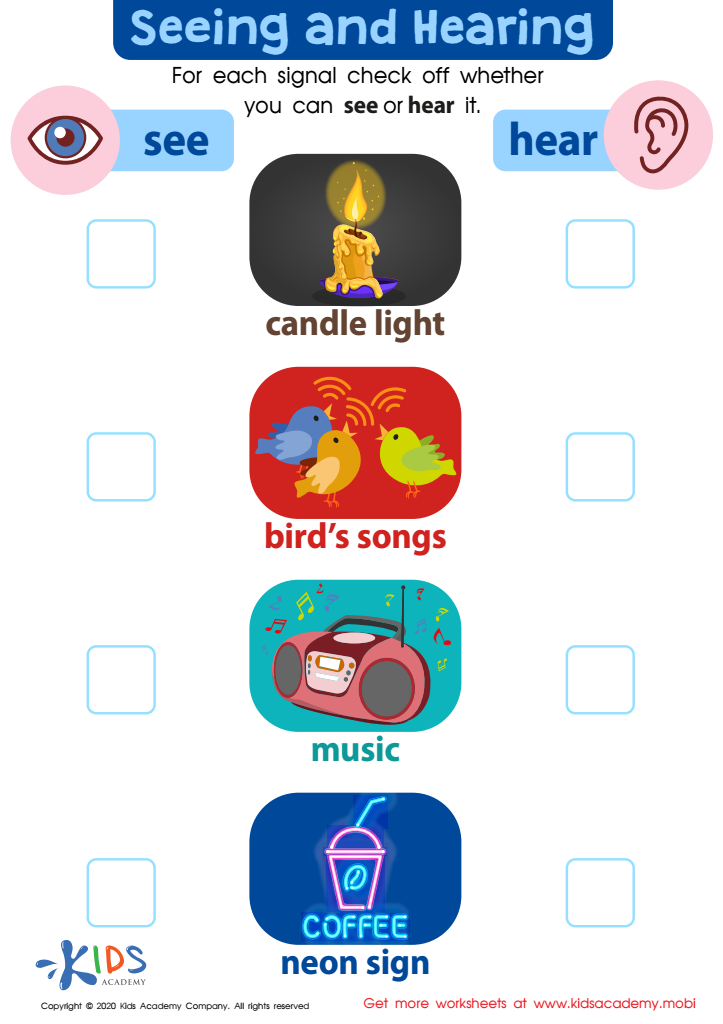
Seeing and Hearing Worksheet
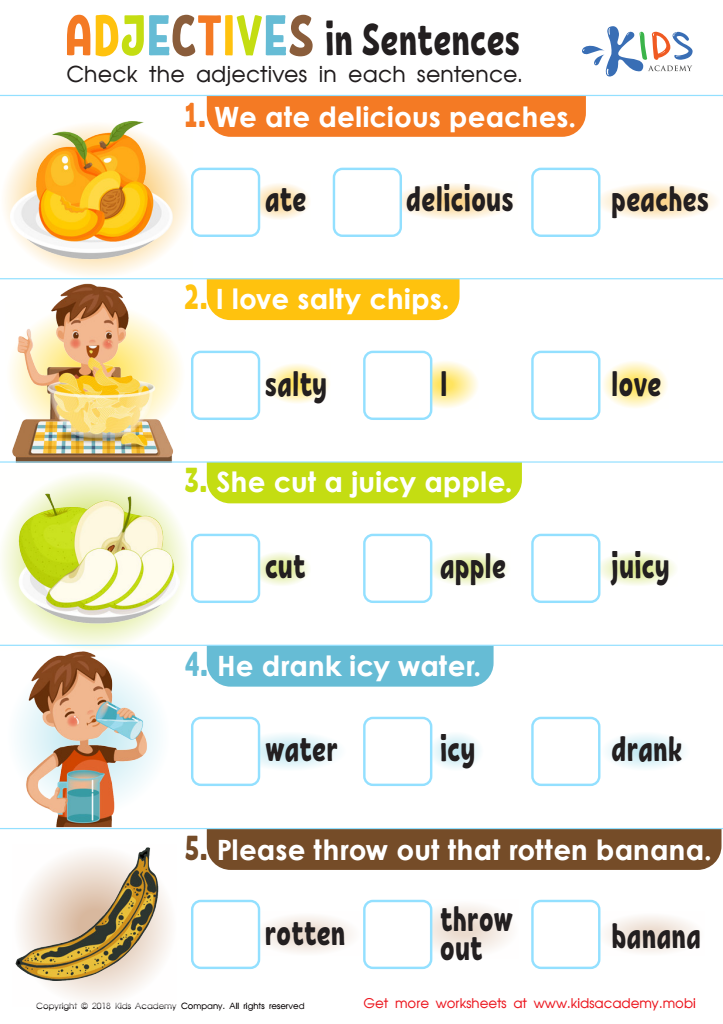
Adjectives in Sentences Worksheet



%20(1).jpg)



Understanding adjectives is crucial for children aged 4-8, as these descriptive words play a vital role in language development and communication. Parents and teachers should care about this concept because it enhances children's ability to express themselves and convey their thoughts clearly. For instance, when kids learn adjectives, they can describe objects, emotions, and experiences more effectively, leading to richer conversations and storytelling.
Adjectives also support literacy development. By identifying and using descriptive language in reading, children improve their comprehension skills and become more engaged with texts. This engagement fosters a love for reading and expands vocabulary, which is essential for their overall academic success.
Moreover, understanding adjectives encourages creativity and critical thinking. When children learn to use descriptive words in their play or writing, they start to think more deeply about the world around them. This skill encourages them to observe details and express their individuality.
In summary, focusing on adjectives helps build a foundation for effective communication, literacy, and critical thinking. By supporting children’s understanding of adjectives, parents and teachers empower them to become confident speakers and writers, transforming the way they connect with others in their everyday lives.








