Understanding base ten Normal Worksheets for Ages 4-8
3 filtered results
-
From - To
Our “Understanding Base Ten” worksheets are designed for children ages 4-8 to build fundamental math skills. These engaging, printable activities clearly teach the concept of base ten through visual aids, hands-on practices, and interactive exercises. They help young learners grasp the importance of units, rods, and flats, making complex ideas simple and fun. As children work through each sheet, they develop strong number sense and early arithmetic skills. Perfect for both classroom and home learning, these worksheets support the foundation for future math success, enhancing problem-solving abilities and critical thinking. Start exploring the world of numbers with our expertly crafted resources today!
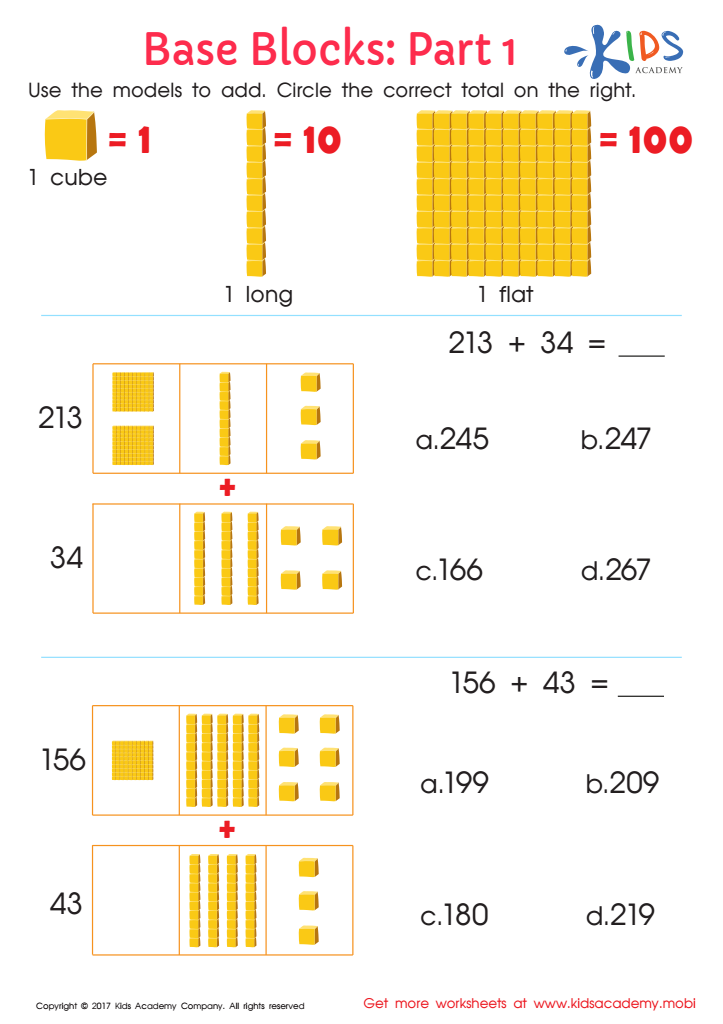
Base Ten Blocks Worksheet: Part 1
 Assign to My Students
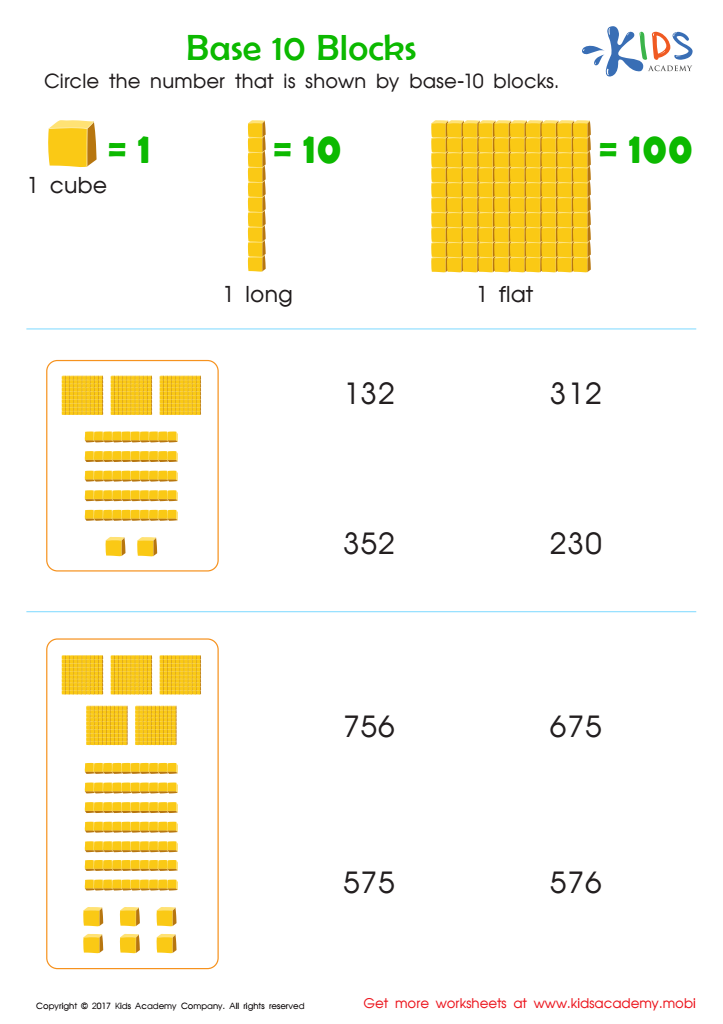
Base Ten Blocks Worksheet
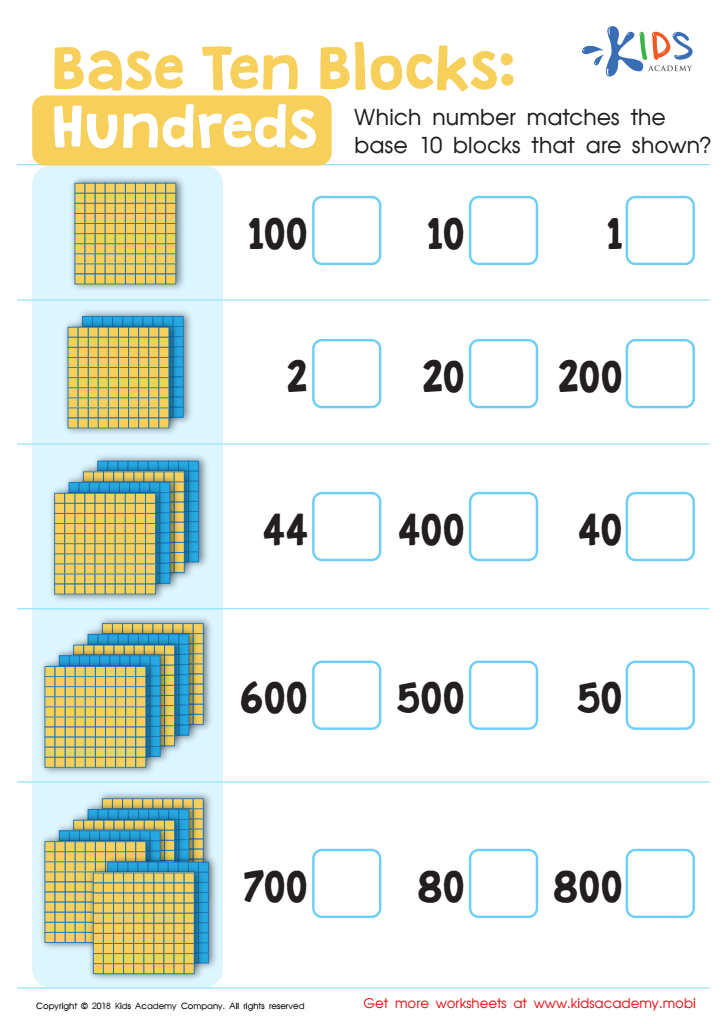
Base Ten Blocks: Hundreds Worksheet








Understanding base ten is crucial for young children, as it forms the foundation of our number system and essential arithmetic skills. For ages 4-8, grasping this concept early facilitates smoother transitions to more complex mathematical ideas, promoting long-term academic success.
Parents and teachers play vital roles in nurturing this understanding because it enhances a child's ability to count, compare, and perform basic operations like addition and subtraction. For instance, recognizing that the number 27 is composed of two tens and seven ones helps children develop mental strategies for arithmetic. This understanding is pivotal in transitioning from counting physical objects to more abstract mathematical thinking, thus boosting their problem-solving skills and confidence.
Moreover, a strong base ten foundation supports learning in many STEM disciplines encountered later in schooling. Early mastery can potentially contribute to higher achievement and interest in these fields. Educators and parents demonstrate the importance of such foundational skills through everyday activities, such as using base ten blocks, interactive games, and everyday counting tasks, instilling not just numerical proficiency but also a love for learning. This early investment cannot be overstated; it sets the stage for a more successful and enjoyable educational journey, igniting curiosity and laying the groundwork for future academic endeavors.








