Understanding biodiversity Normal Worksheets for Ages 4-8
4 filtered results
-
From - To
Explore our engaging "Understanding Biodiversity Normal Worksheets" designed for children ages 4-8! These vibrant and interactive worksheets help young learners grasp the concept of biodiversity in a fun and accessible way. Through a variety of activities including matching, coloring, and basic identification exercises, kids will discover different plant and animal species, their habitats, and the importance of preserving our natural world. Each worksheet promotes critical thinking and encourages an appreciation for nature, making it perfect for classrooms or homeschooling. Join us in nurturing the next generation of environmental stewards with these thoughtfully crafted educational resources!
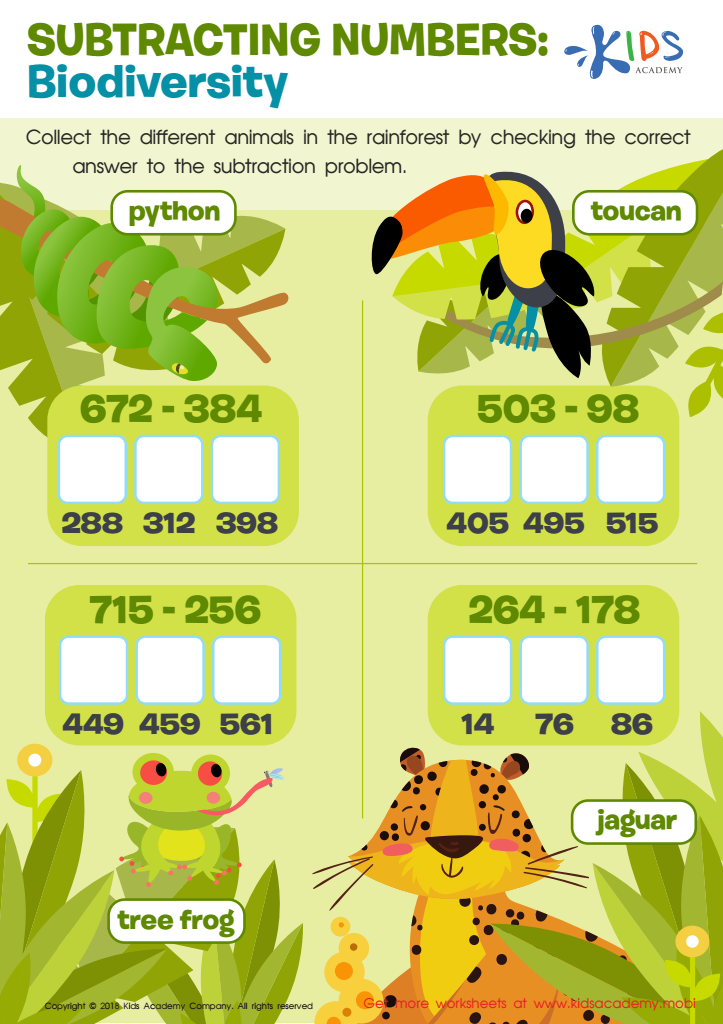
Subtracting Numbers: Biodiversity Worksheet
 Assign to My Students
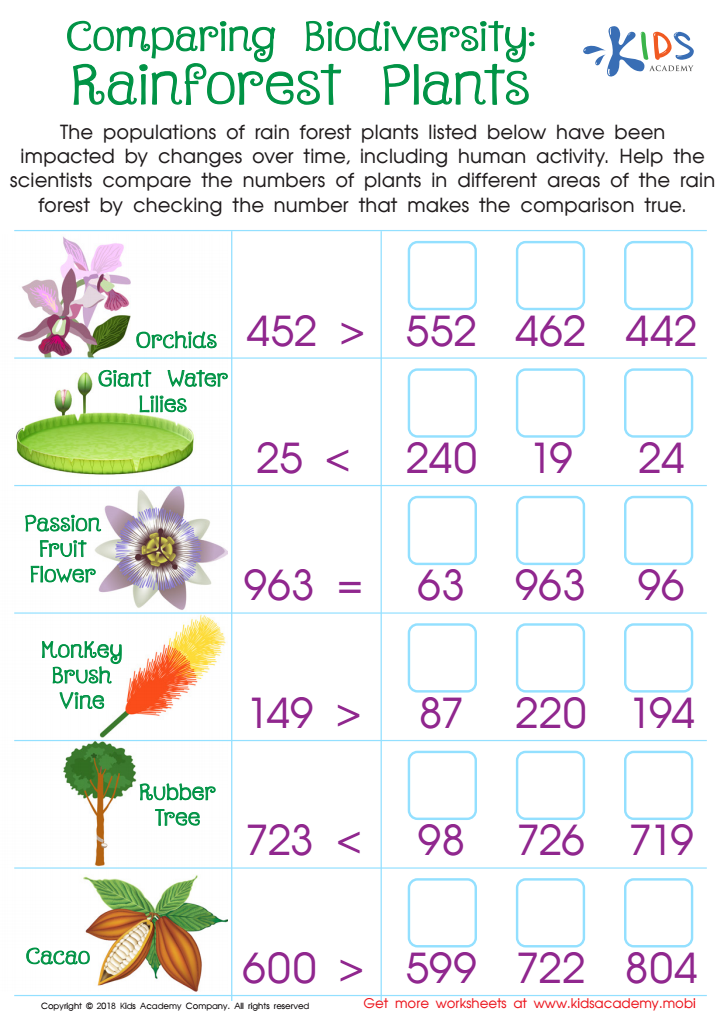
Comparing Biodiversity: Rainforest Plants Worksheet
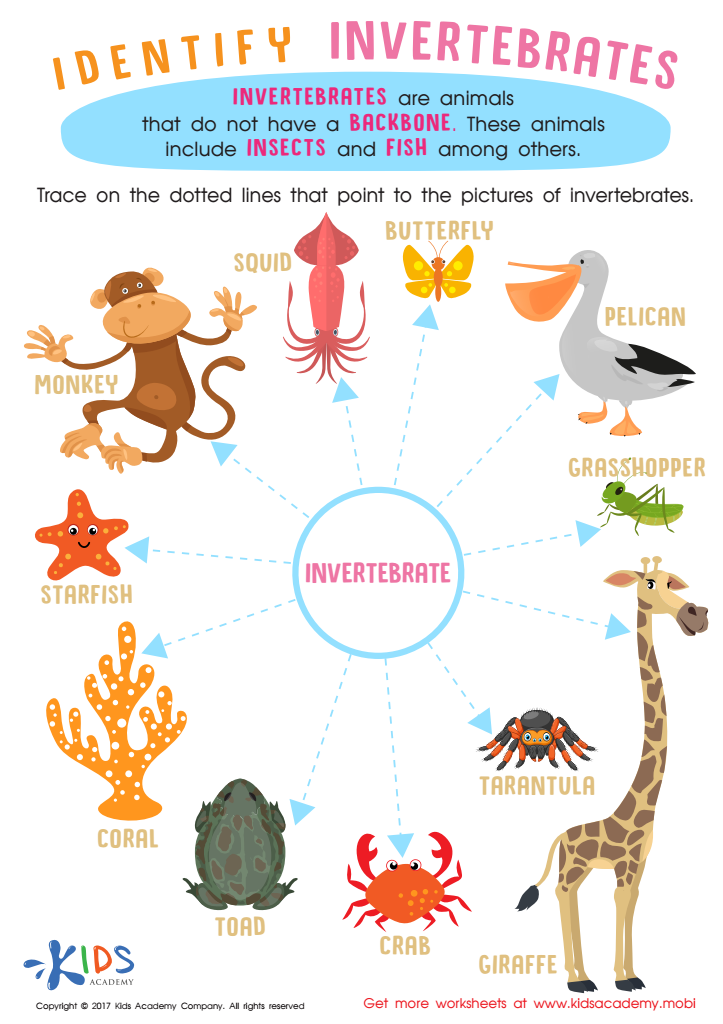
Invertebrates Worksheet for Grade 3
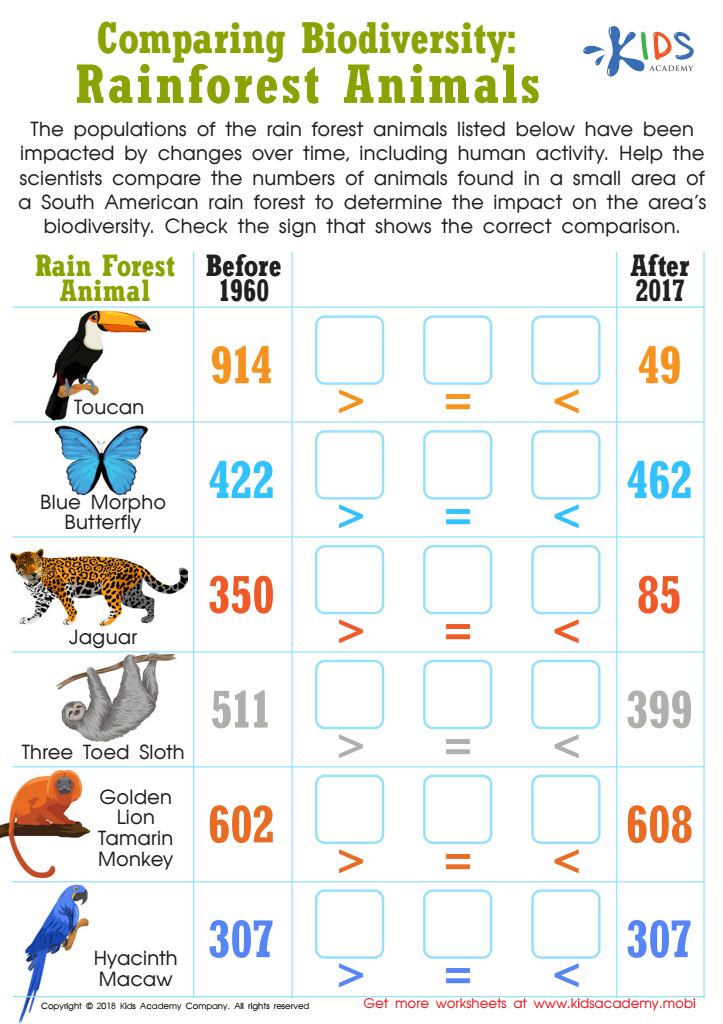
Comparing Biodiversity: Rainforest Animals Worksheet








Understanding biodiversity is crucial for children aged 4-8 because it lays the foundation for their appreciation of the natural world. At this age, kids are naturally curious, and introducing them to the variety of plants, animals, and ecosystems can spark a lifelong love for nature. Teaching children about biodiversity helps them recognize that all living things are interconnected—meaning the well-being of one species can impact another and ultimately the health of our planet.
Moreover, engaging with biodiversity promotes important skills such as observation, critical thinking, and empathy. When children learn about different species, they develop a sense of responsibility towards their environment, fostering care and respect for wildlife. Simple activities, like nature walks or classroom discussions about local ecosystems, can encourage them to ask questions and seek understanding.
In addition, connecting children with biodiversity can encourage healthy outdoor play and exploration, which is vital for physical and mental development. Parents and teachers play an essential role in nurturing this curiosity by providing resources, experiences, and guidance. Ultimately, understanding biodiversity cultivates informed and environmentally-conscious future generations who are more likely to protect and preserve our planet.








