Understanding comparisons Normal Worksheets for Ages 4-8
5 filtered results
-
From - To
Discover our "Understanding Comparisons Normal Worksheets" designed specifically for children ages 4-8. These engaging and interactive worksheets help young learners grasp essential comparison concepts such as bigger vs. smaller, more vs. less, and taller vs. shorter. With a variety of fun activities, children will develop important critical thinking skills as they explore comparisons in everyday objects and scenarios. Ideal for classroom or home use, our worksheets provide valuable practice and reinforce foundational math skills while promoting cognitive development. Enhance your child's learning experience today with these stimulating and educational resources that support early childhood development! Explore now!
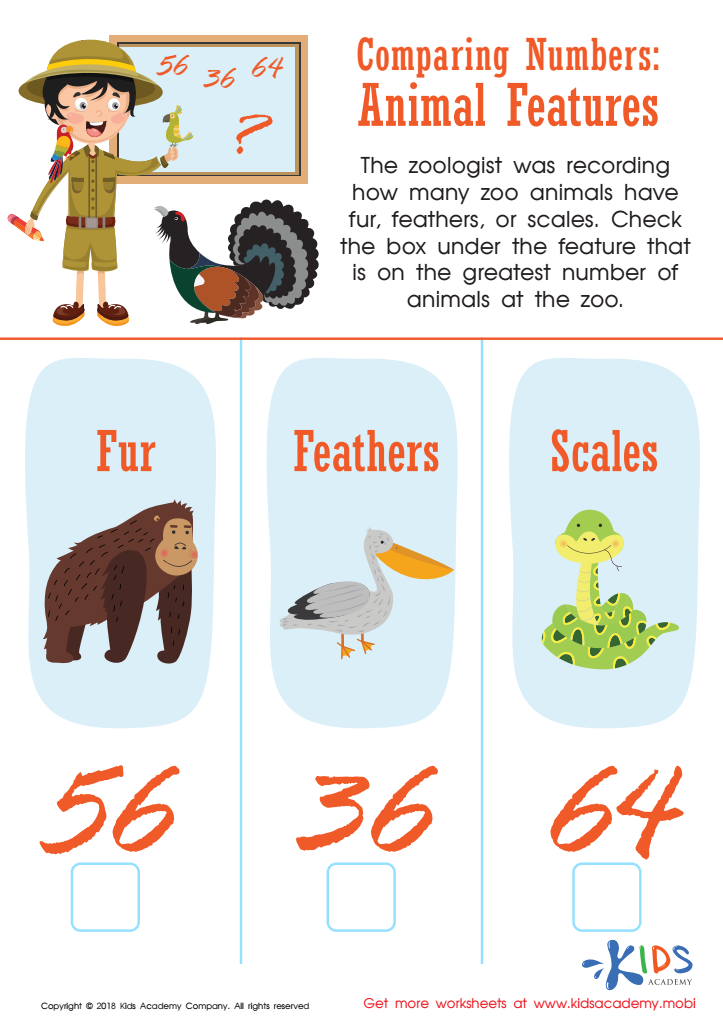
Animal Features Worksheet
 Assign to My Students
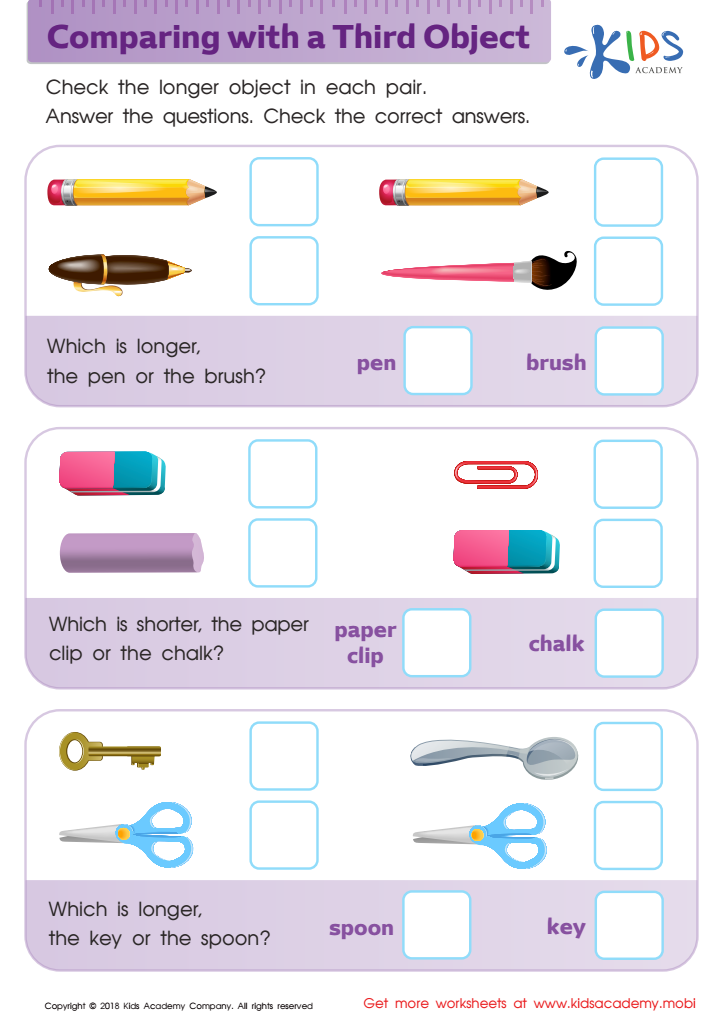
Comparing with a Third Object Worksheet
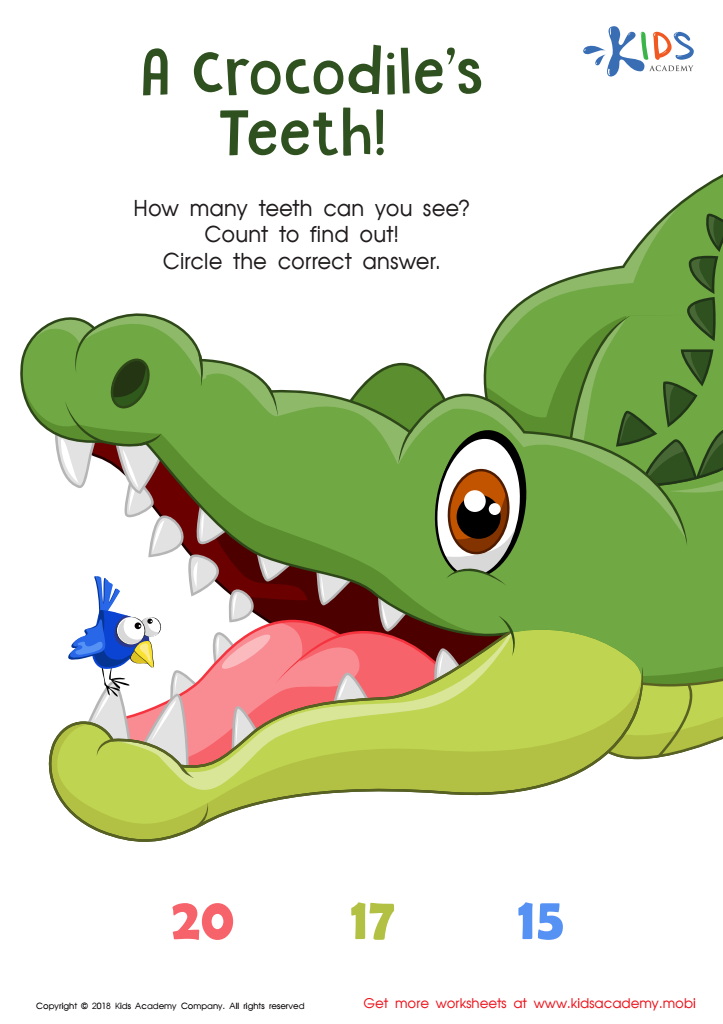
A Crocodile's Teeth Worksheet
Matching: Classifying Toys by Size Worksheet
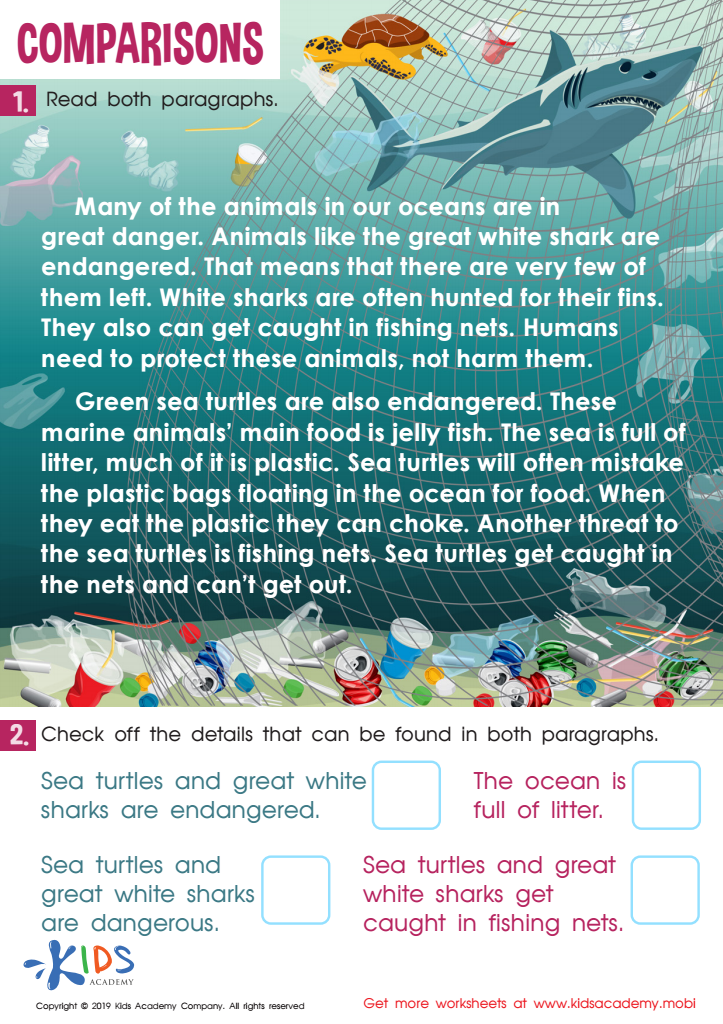
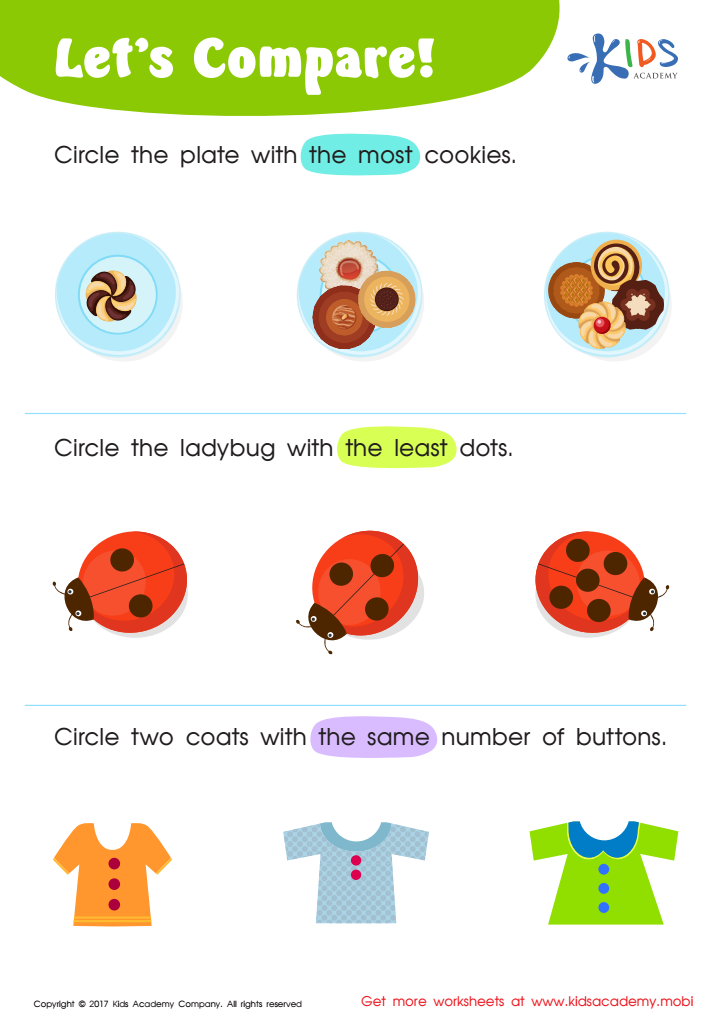
Comparisons Worksheet



.jpg)


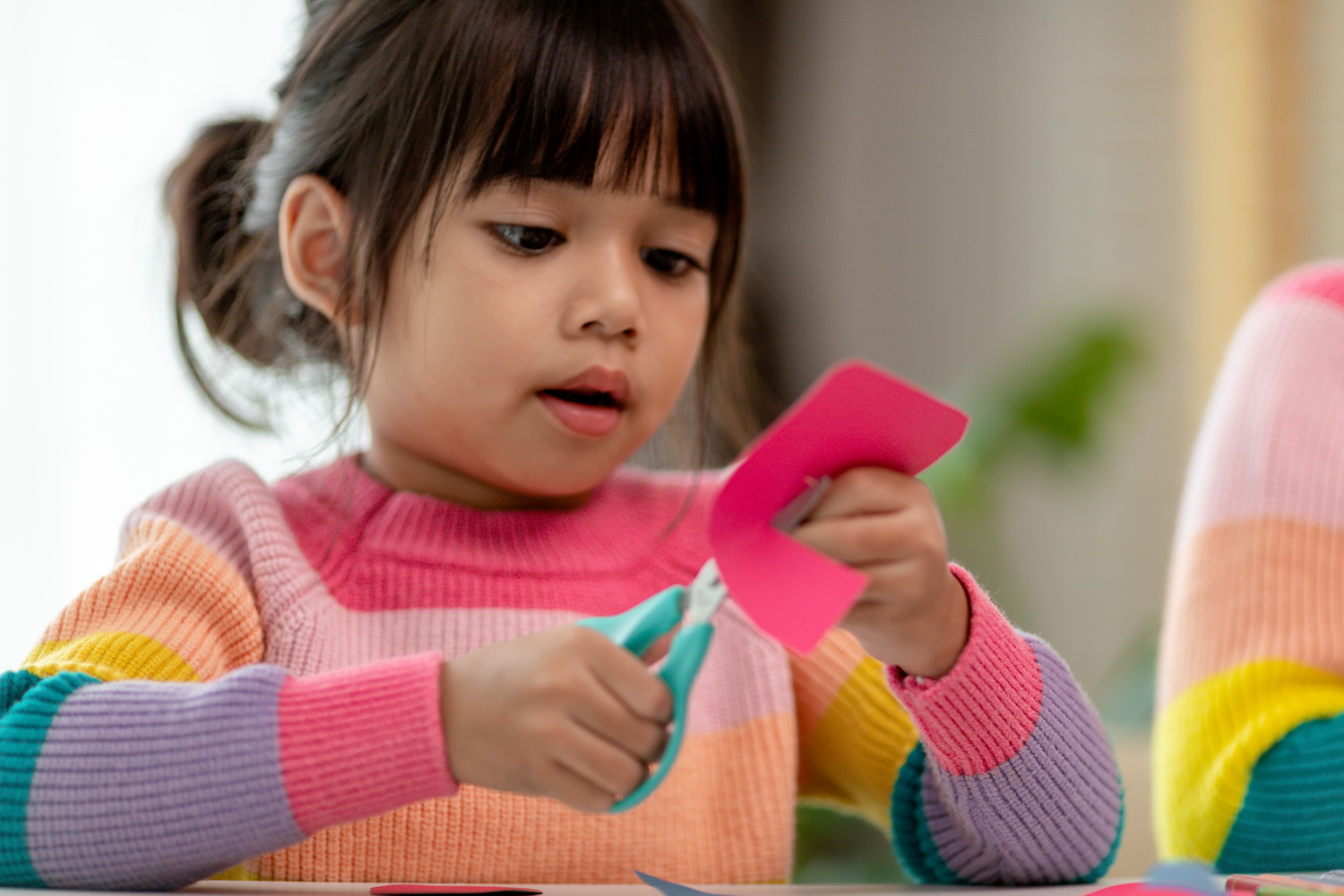
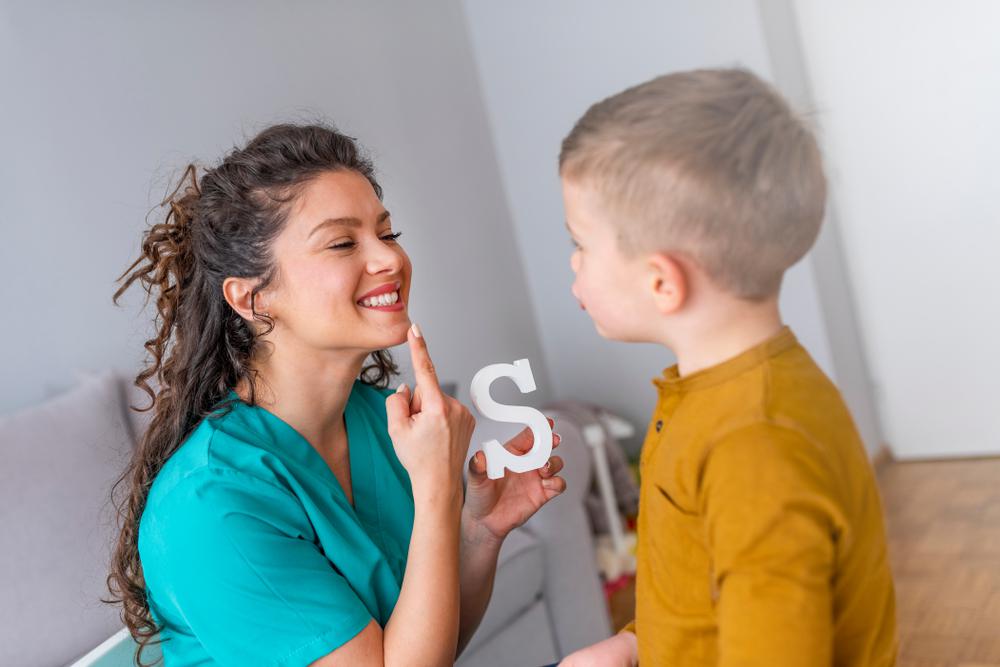
Understanding comparisons is essential for children ages 4-8 as it serves as a foundational skill for their cognitive and social development. At this age, children are naturally curious and tend to make sense of the world by comparing objects, quantities, and characteristics. Teaching them how to make effective comparisons enhances their critical thinking and problem-solving abilities, which are crucial for later academic success.
For parents and teachers, fostering this understanding can improve language skills as children learn to express differences and similarities using descriptive vocabulary. Engaging kids in activities that involve comparisons—such as sorting, categorizing, or measuring—also encourages active participation in learning and boosts their confidence.
Moreover, mastering comparison skills helps children navigate social interactions. For instance, being able to understand why a friend prefers one toy over another can enhance empathy and communication. As they prepare for more complex mathematical concepts in the future, grasping comparisons lays the groundwork for understanding greater-than/less-than relationships, fractions, and ratios.
Investing time in developing comparison skills is not just about academic growth; it stimulates creativity, encourages collaboration, and builds a sense of wonder about how things relate to one another in their quickly expanding world.








