Understanding prepositions Normal Worksheets for Ages 4-8
6 filtered results
-
From - To
Enhance your child's understanding of prepositions with our engaging worksheets designed for ages 4-8! Our "Understanding Prepositions Normal Worksheets" provide fun, interactive activities that help young learners grasp the concepts of location, direction, and relationships in a bright, colorful format. Each worksheet features a variety of exercises, including matching, fill-in-the-blank, and picture recognition, ensuring comprehensive practice. Tailored to meet early learning standards, these worksheets promote both independent learning and teacher-guided instruction, making them perfect for classrooms or home learning. Help your child succeed and build essential language skills with our printable worksheets that turn learning into an enjoyable adventure!
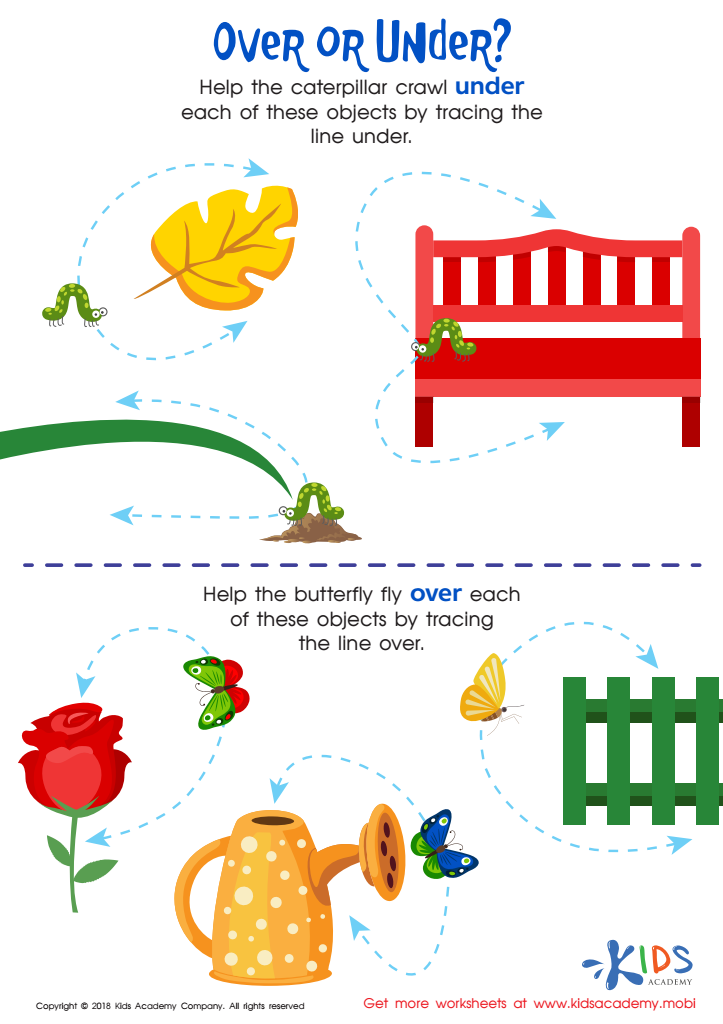
Over or Under? Worksheet
 Assign to My Students
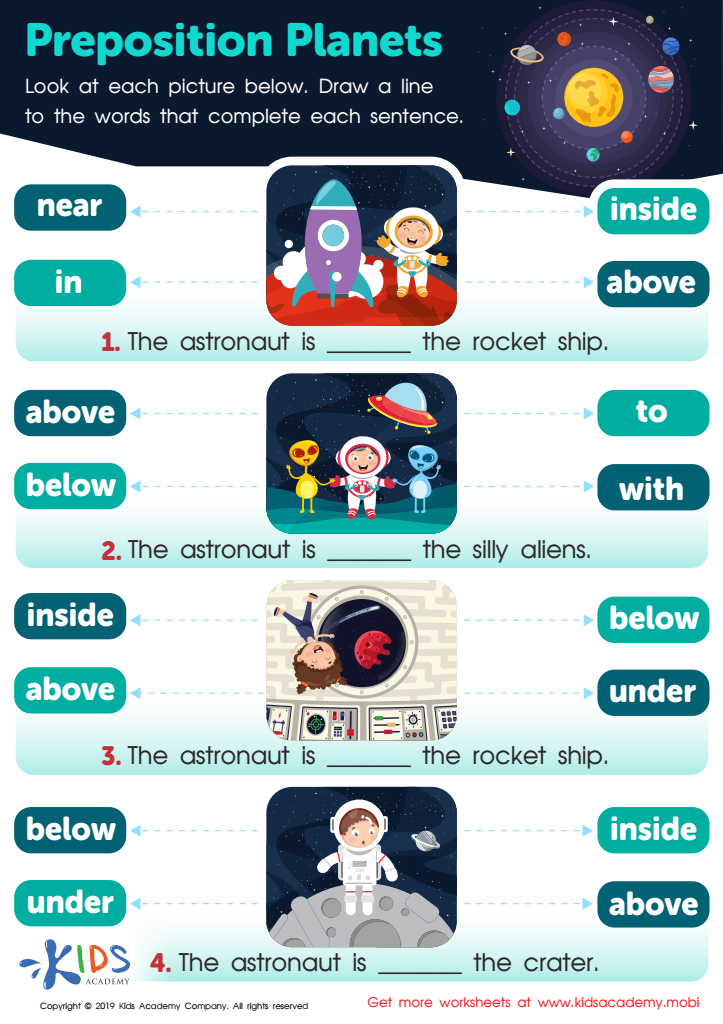
Preposition Planets Worksheet
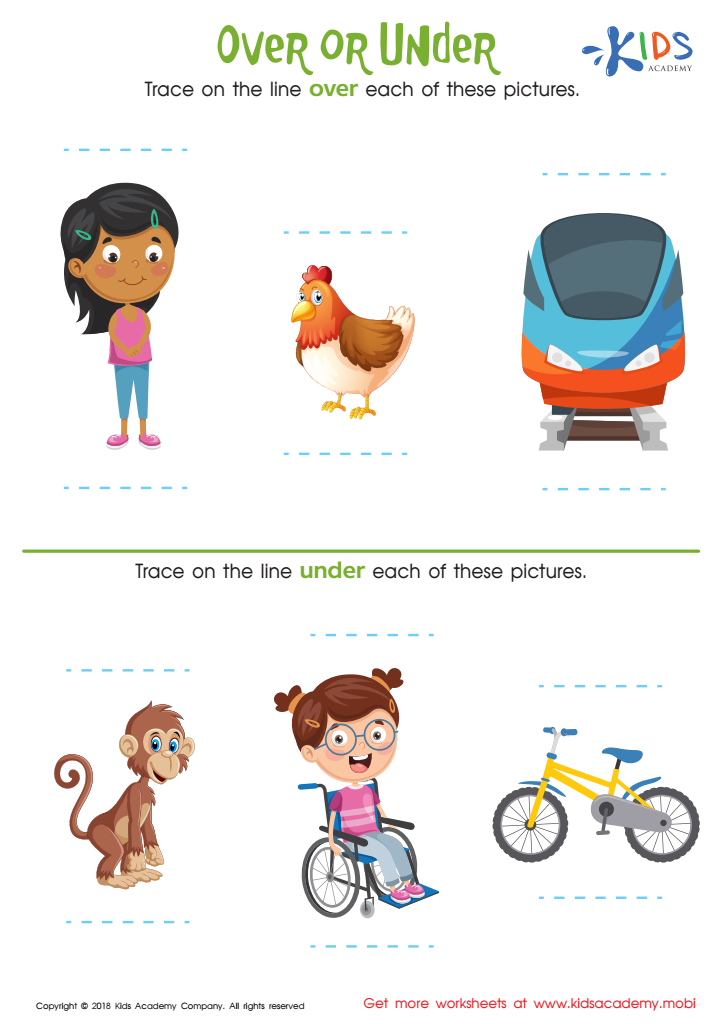
Over or Under Worksheet
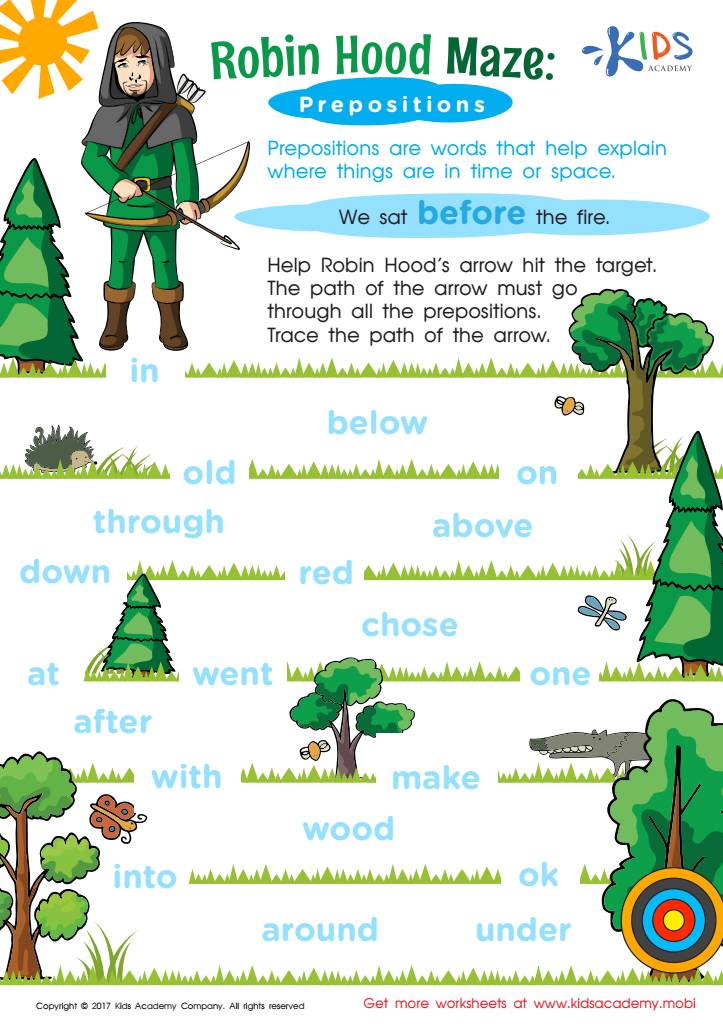
Prepositions Worksheet
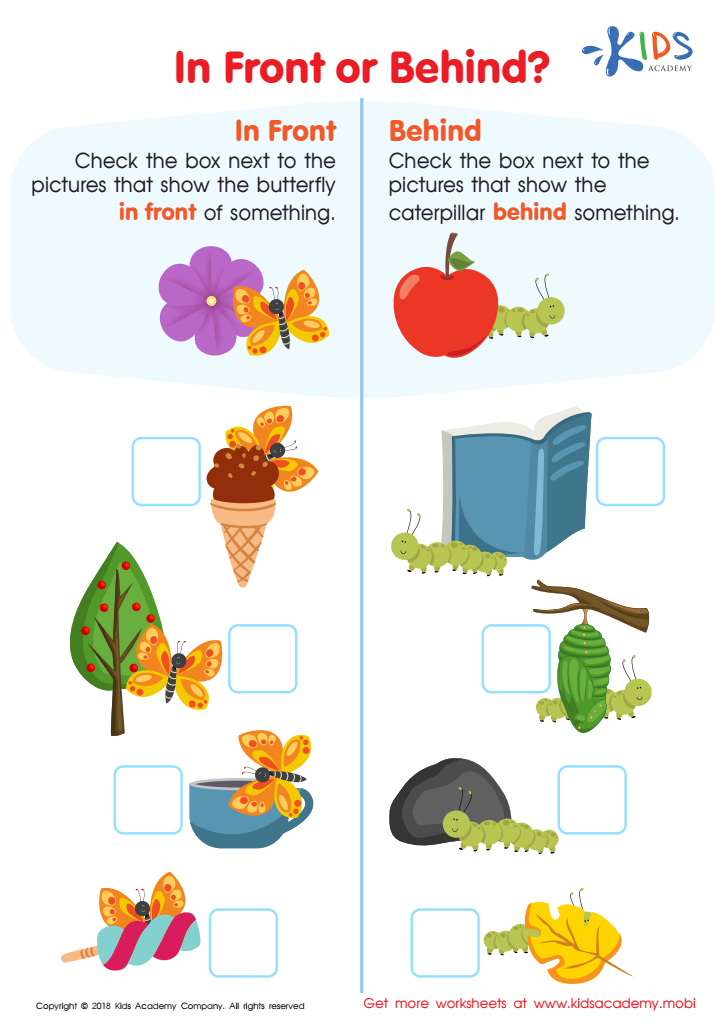
In Front or Behind Worksheet
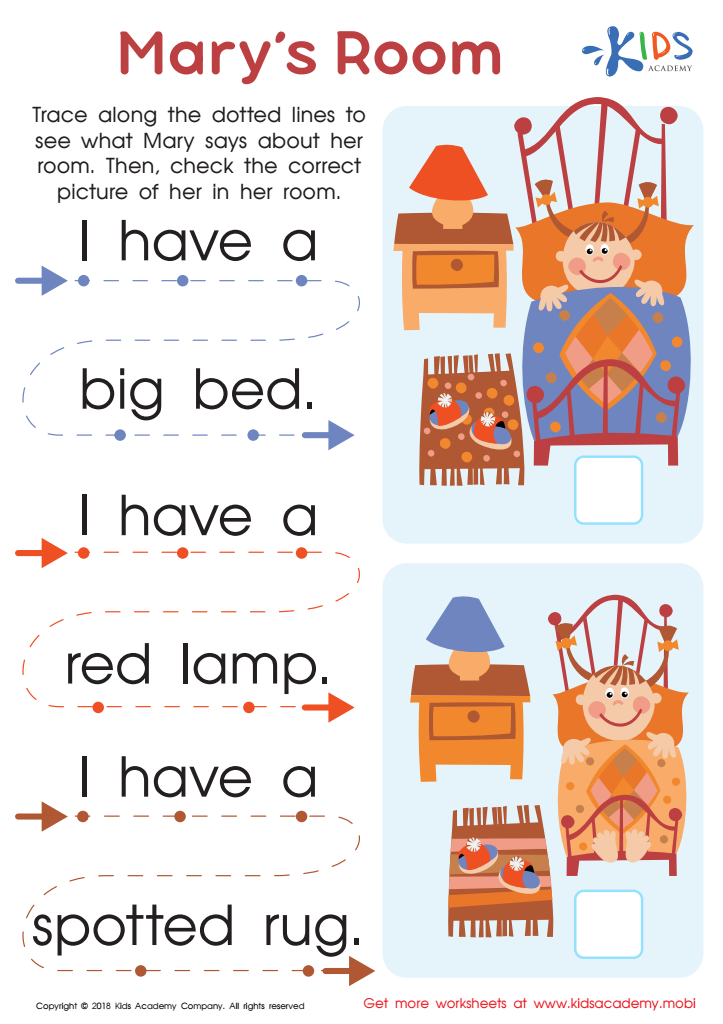
Mary's Room Worksheet







Understanding prepositions is crucial for children ages 4-8 as it lays the foundation for language development and effective communication. Prepositions are words that describe relationships between people, places, objects, and time, such as "under," "over," "before," and "after." By mastering these concepts, children enhance their vocabulary and improve their comprehension skills.
At this age, children are naturally curious and developing their ability to describe their surroundings. When parents and teachers emphasize prepositions, they provide children with the tools to articulate their thoughts and experiences clearly. This understanding is essential for following directions, solving problems, and engaging in conversations, which are vital skills for both academic success and social interactions.
Moreover, prepositions play a significant role in literacy, as they often appear in reading materials. A solid grasp of prepositions allows children to better comprehend texts, thus fostering a love for reading. Engaging activities, such as storytelling or playing games that incorporate prepositions, can make learning fun and interactive.
Ultimately, by prioritizing the understanding of prepositions, parents and teachers empower children to express themselves with clarity, contributing to their overall linguistic development and confidence in communication.








