"Understanding Suffixes Normal Worksheets for Ages 4-8" offers dynamic resources to help young learners deepen their grasp of suffixes, enriching their vocabulary and enhancing reading comprehension. Designed specifically for children ages 4-8, these engaging worksheets provide a playful, age-appropriate approach to language skills. With colorful activities and exciting challenges, kids practice adding suffixes to root words, developing critical literacy foundations. Ideal for classroom use or at-home learning, these resources help young minds explore language intricacies, preparing them for more advanced reading and writing journeys. Unlock the fun of suffixes today with our thoughtful, engaging worksheets!

Check out this FREE "Understanding suffixes" Trial Lesson for age 4-8!

Identify Common Suffixes

Favorites
With answer key
Interactive
  • 4-8
  • Understanding suffixes
  • Normal
Reading: Words With Suffixes Worksheet

Reading: Words With Suffixes Worksheet

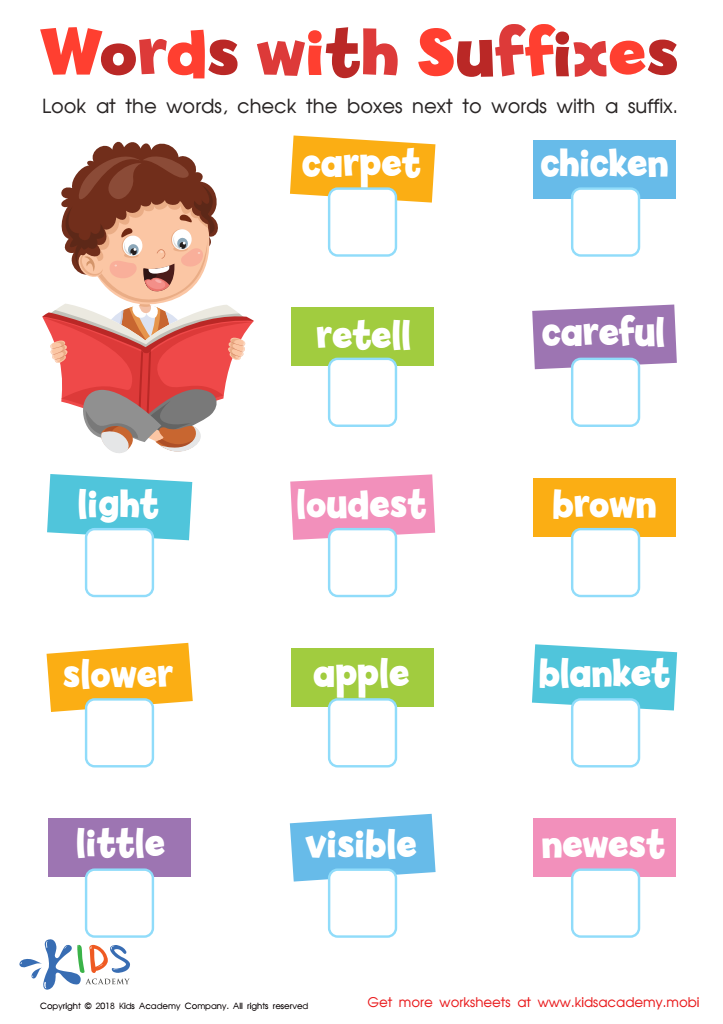
Help your students understand suffixes and build reading fluency with this worksheet. Have them read each word, then choose the ones with a suffix. Practicing this will lead to better comprehension and more confident reading. Save it for future use in language and reading classes.
Reading: Words With Suffixes Worksheet
Worksheet
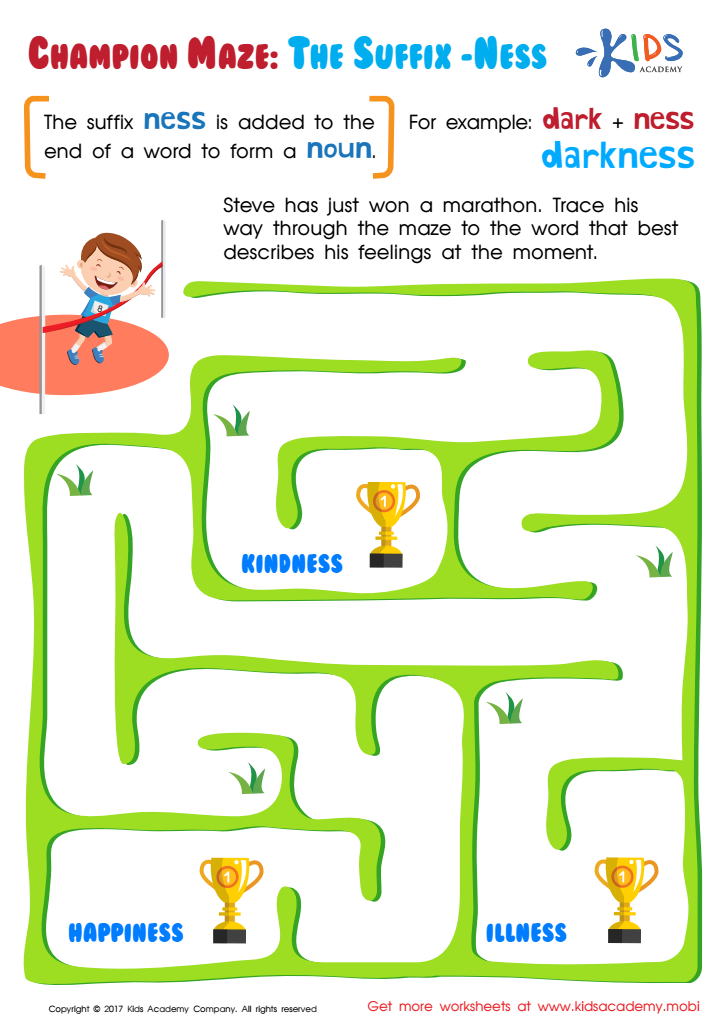
Suffix Ness Worksheet PDF

Suffix Ness Worksheet

Words are amazing! Add an ending and they can change part of speech. Make nouns out of adjectives with -ness. This worksheet has a fun maze to help learners increase vocabulary and language skills.
Suffix Ness Worksheet
Worksheet
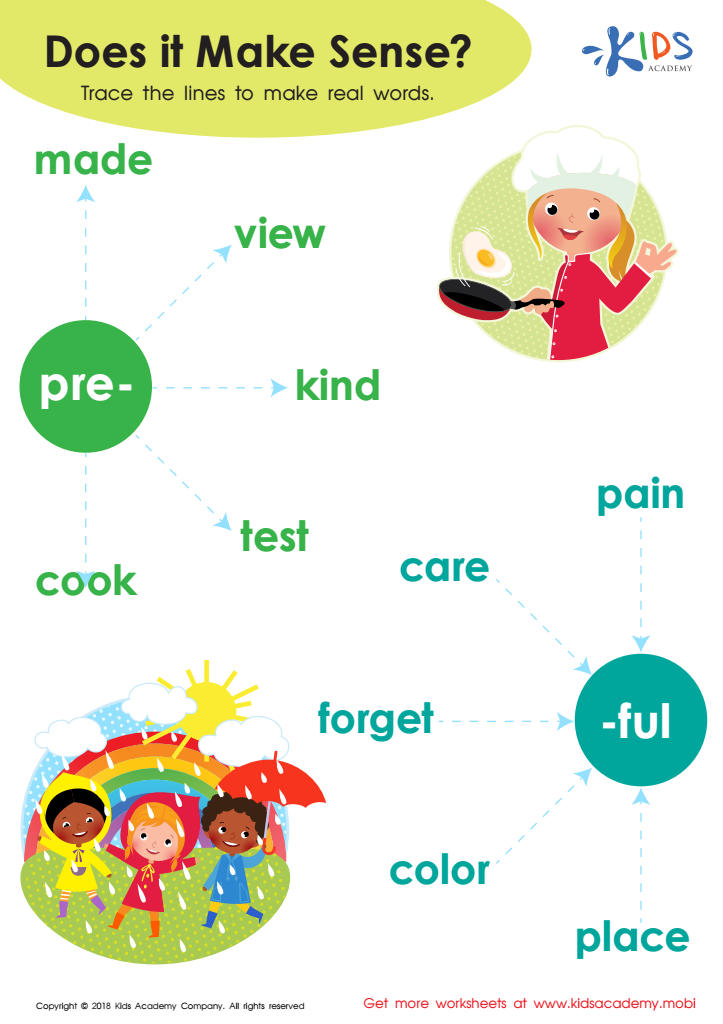
Prefix pre and suffix ful worksheet

Prefix pre– and Suffix ful– Worksheet
Can't preforget something! This worksheet helps kids learn how to attach prefixes and suffixes to root words, forming new words that make sense. With this activity, they'll evaluate how the root words change when adding the prefix or suffix.
Prefix pre– and Suffix ful– Worksheet
Worksheet
Suffix -Able Worksheet

Suffix -Able Worksheet

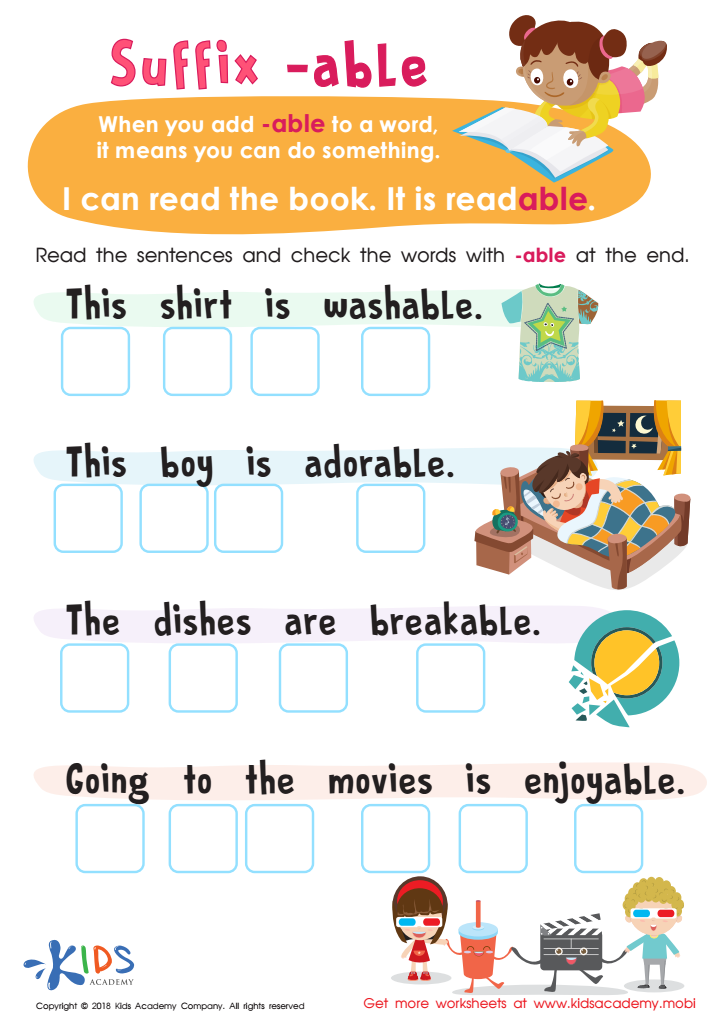
Suffix -able means you can do something. Example: readable - means you can read it. Give kids examples then check this worksheet. Read sentences with kids, looking for words with -able at the end.
Suffix -Able Worksheet
Worksheet
Prefix and suffix worksheet for grade 3

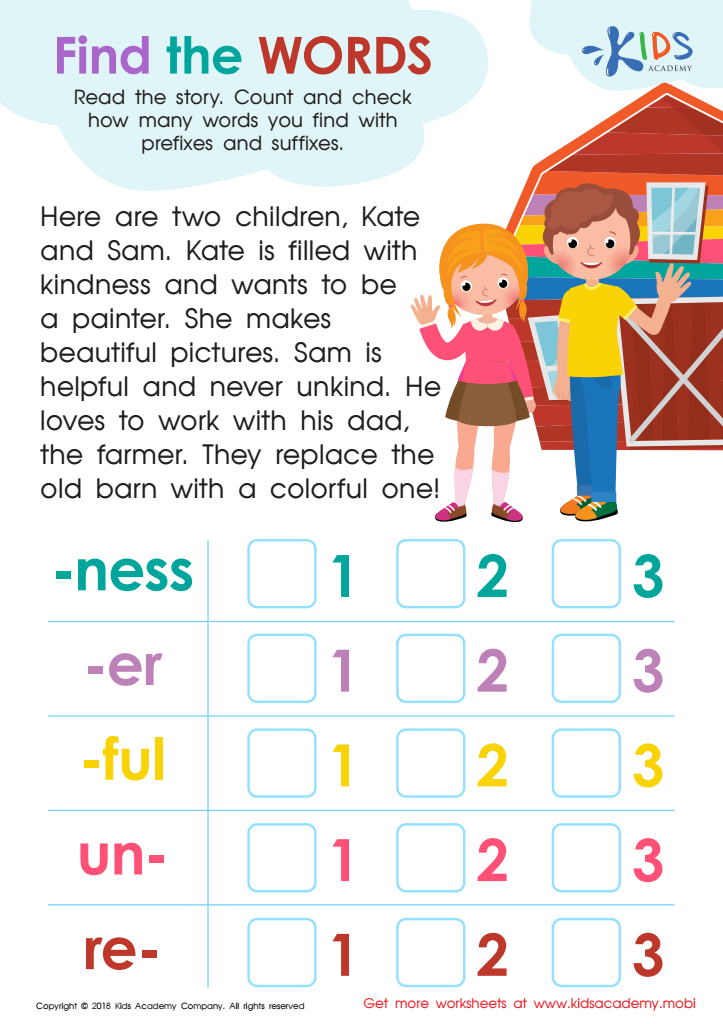
Prefix and Suffix Worksheet For Grade 3
Read the story about Sam and Kate and help your grade 3 child tally all the words with prefixes and suffixes. Check their work by counting the words and ticking the appropriate boxes. This entertaining worksheet will help develop their reading and counting skills! (80 words)
Prefix and Suffix Worksheet For Grade 3
Worksheet
The Suffix -Ly Worksheet

The Suffix -Ly Worksheet

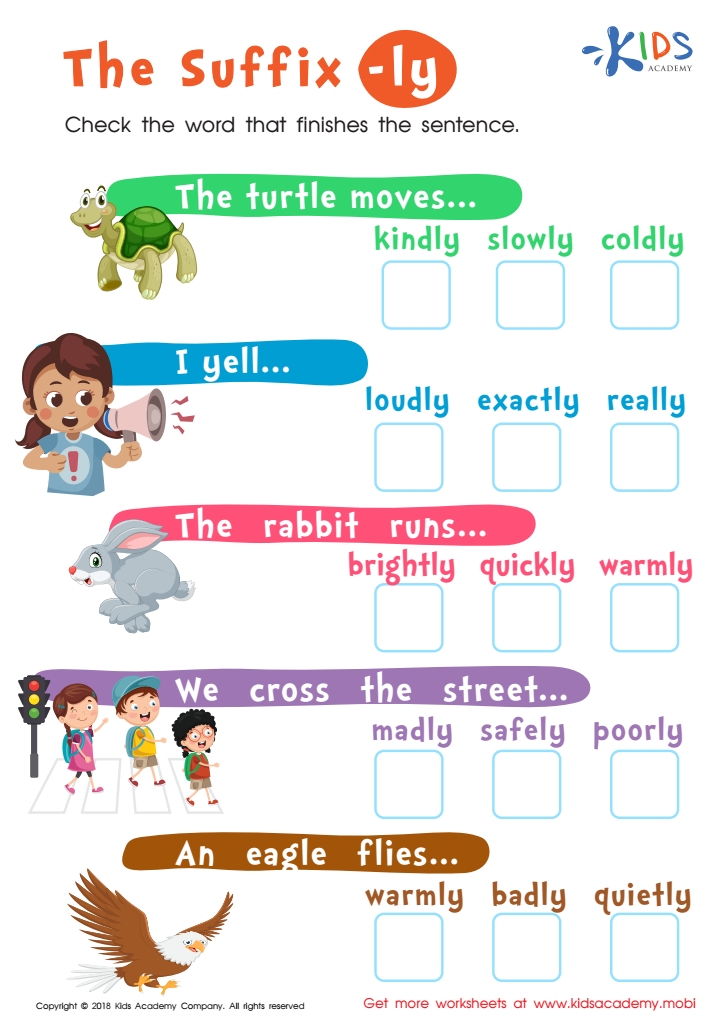
Suffixes change the meaning of words: the -ly suffix usually describes how an action is done (e.g. slowly, quickly, loudly). Help your child understand this and then check out the fun worksheet. Ask them to identify the animals and people in the pictures, then read the sentences out loud and have them check the ones that finish the sentence.
The Suffix -Ly Worksheet
Worksheet
Suffix er printable worksheet

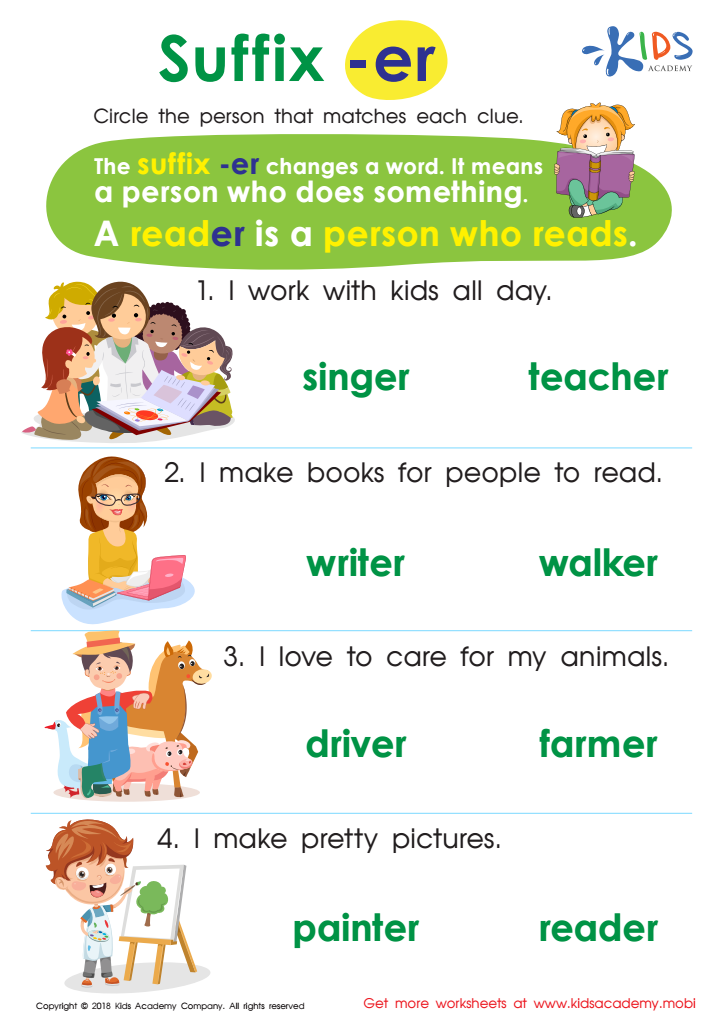
Suffix –er Printable Worksheet
Kids learn how powerful suffixes are with this printable worksheet. Read the sentence clues and select the word it describes. Discuss how the suffix alters the original word. Amazing how two letters can transform meanings!
Suffix –er Printable Worksheet
Worksheet
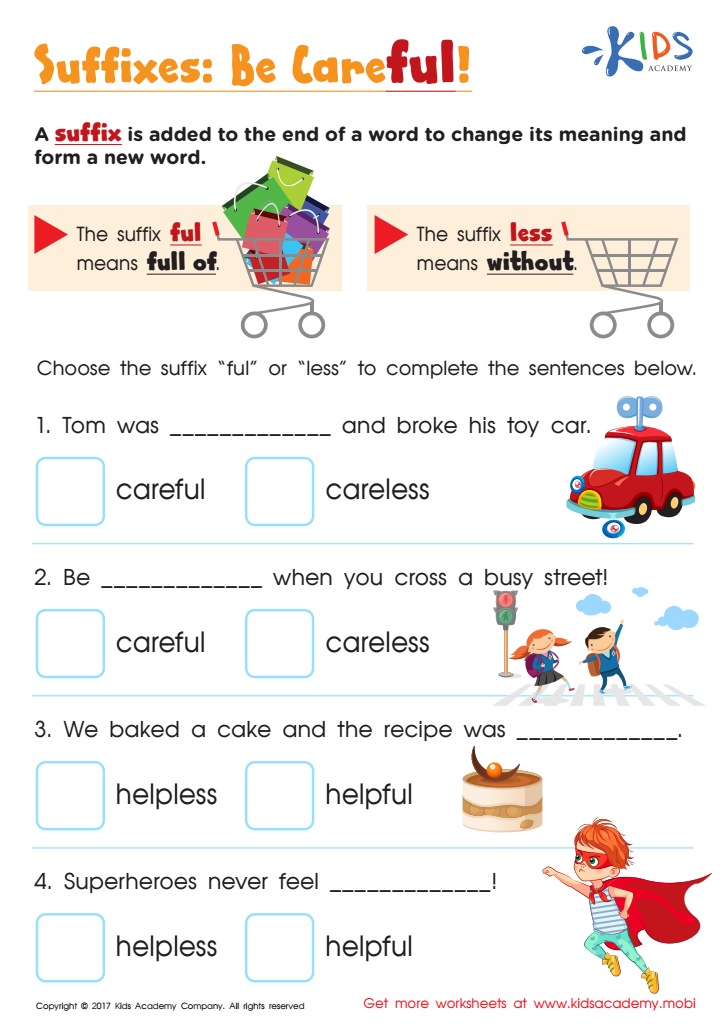
Suffixes ful and less worksheet

Suffixes Ful and Less Worksheet

Uh oh! Careful and careless might look similar, but have very different meanings. To avoid mix-ups, learn to spot and use the right suffixes. Use this suffixes ful and less worksheet to help your child master common suffixes!
Suffixes Ful and Less Worksheet

Worksheet


Understanding suffixes is crucial for young children, not just for their language skills, but for overall cognitive development. For children aged 4-8, this period is foundational for solidifying language fundamentals. Suffixes help kids understand how words are structured and provide clues about their meanings. For instance, knowing that "-ed" typically indicates the past tense can help children recognize and decode new words when they read, improving their reading fluency.

Incorporating suffixes into learning at a young age enhances vocabulary. By teaching kids simple suffixes such as "-s" for plurals and "-ing" for ongoing actions, we give them tools to dissect and understand new words they encounter. This fosters greater independence and confidence in reading and writing.

Moreover, grasping suffixes helps develop critical thinking and problem-solving skills. When children learn to recognize and apply suffixes, they practice categorizing, pattern recognition, and analytical thinking — skills vital for academic success in all subjects.

Parents and teachers play a key role in this learning process. Through reading, games, and engaging activities, they can make learning about suffixes fun and meaningful, setting children on a path to becoming more proficient readers and writers. Therefore, investing time in teaching suffixes pays off in multiple areas of a child’s development.