
Word identification Normal Worksheets for Ages 4-8
9 filtered results
Difficulty Level
Grade
Age
-
From - To
Subject
Activity
Standards
Discover our engaging "Word Identification Normal Worksheets" tailored for children aged 4-8! Designed to enhance early literacy skills, these worksheets provide fun and interactive activities that help young learners identify and understand words in context. With colorful illustrations and age-appropriate exercises, kids will develop their vocabulary and reading proficiency. Each worksheet encourages critical thinking through matching, word searches, and simple sentences, making learning enjoyable and effective. Perfect for classroom use or at-home practice, our worksheets are aligned with educational standards to ensure your child’s learning path is both challenging and rewarding. Start your child's literacy journey today!
Favorites
With answer key
Interactive
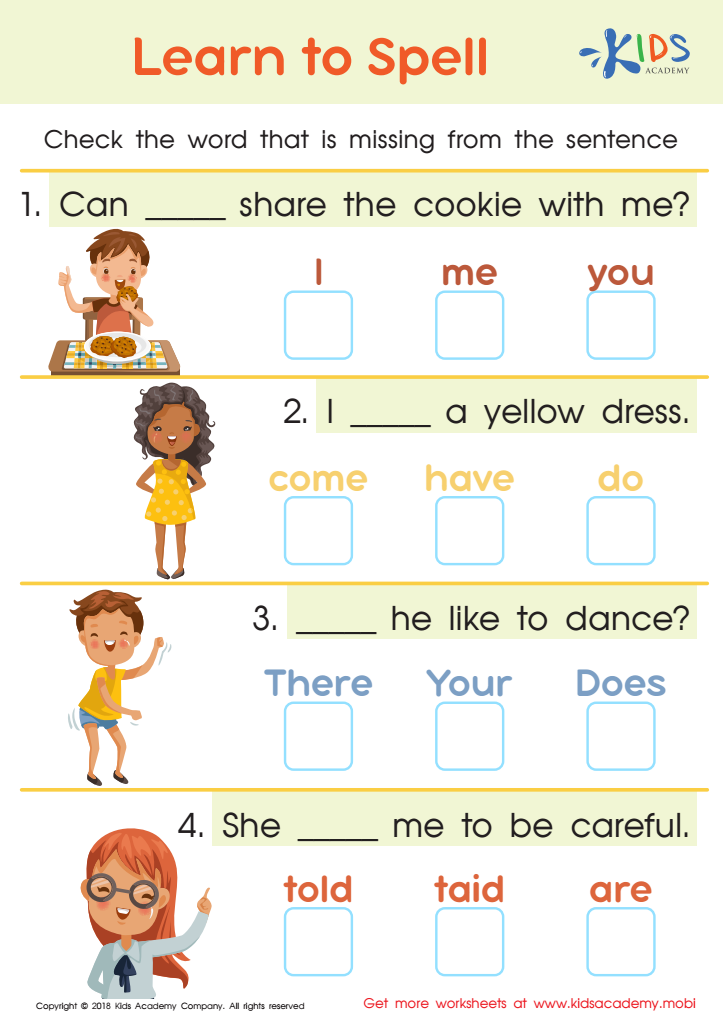
Learn to Spell Worksheet
Help sharpen spelling skills with a simple worksheet. Read sentences aloud and show which word is missing. Ask students to pick the correct word from the options. Ensure they check the missing word for accuracy.
Learn to Spell Worksheet
Worksheet
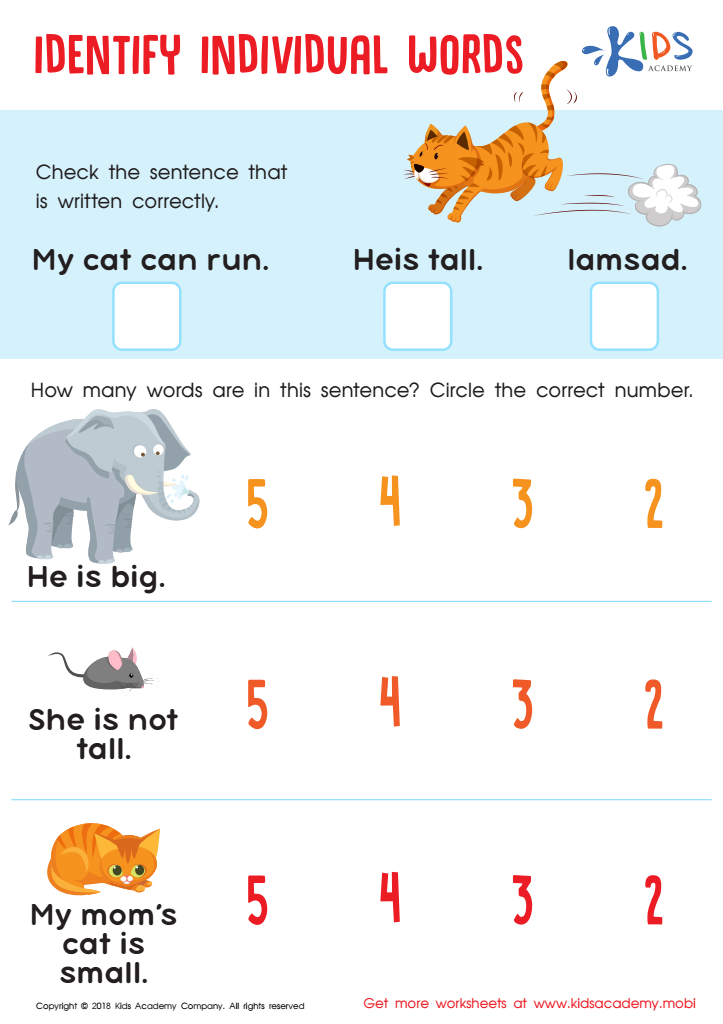
Identify Individual Words Worksheet
Does your child have trouble constructing sentences? Check out this worksheet! It will help them identify words that make up sentences and assess how well they can read and answer questions. The first part tests how well they can recognize a written sentence. The second part has them read questions and circle the correct number of words. Give it a try!
Identify Individual Words Worksheet
Worksheet
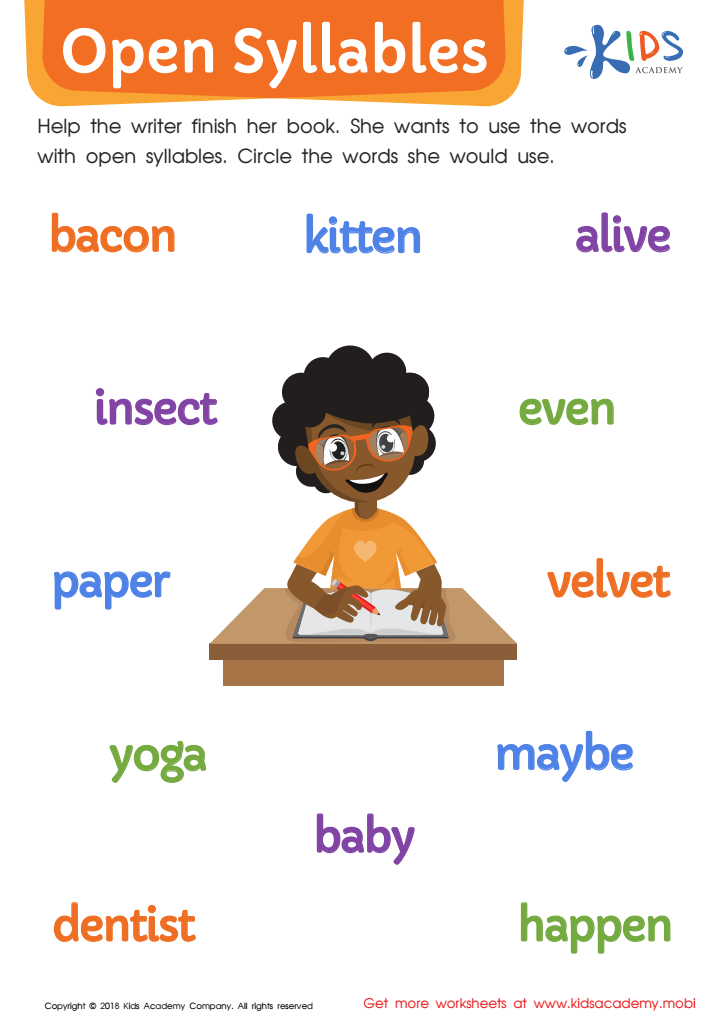
Open Syllables Worksheet
Before beginning this worksheet, make sure your child knows what open syllables are. If not, take time to teach them with examples. Then, help the writer finish her book by circling words with open syllables. She needs your child's help!
Open Syllables Worksheet
Worksheet
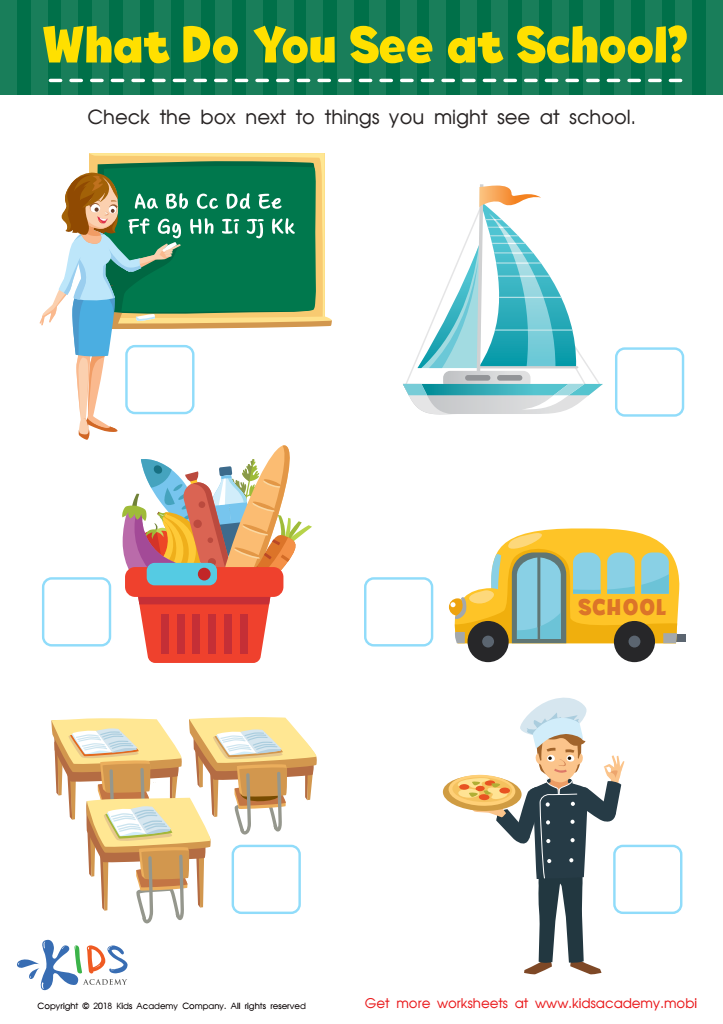
What Do you See at School? Worksheet
Have your kids give you a list of things they see at school. Then, view the worksheet together. Ask them to check the boxes next to the school items. Look for objects that can be found at school and those that don't belong. This is a great way to check their knowledge of what they see at school daily, except on weekends and holidays.
What Do you See at School? Worksheet
Worksheet
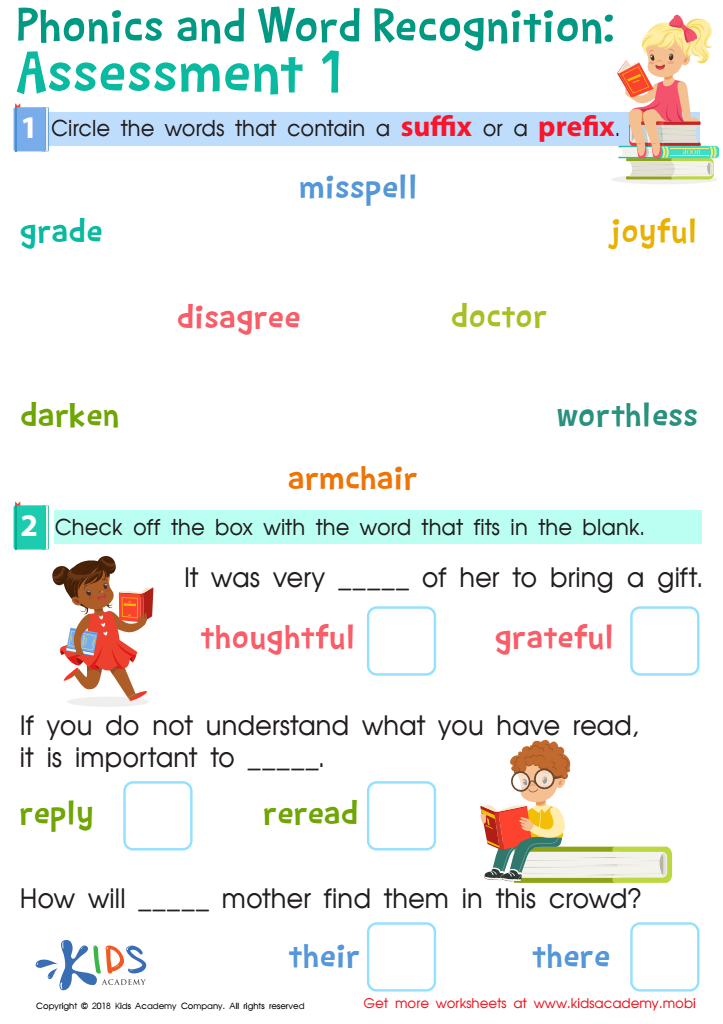
Phonics and Word Recognition: Assessment 1 Worksheet
Explain prefixes (words added to start of another word to give it a new meaning) and suffixes (added to end of word to change its meaning) to your kids with examples like 'unhappy' (prefix) and 'forgetful' (suffix). Now, help your child complete this worksheet, including circling words and checking boxes.
Phonics and Word Recognition: Assessment 1 Worksheet
Worksheet
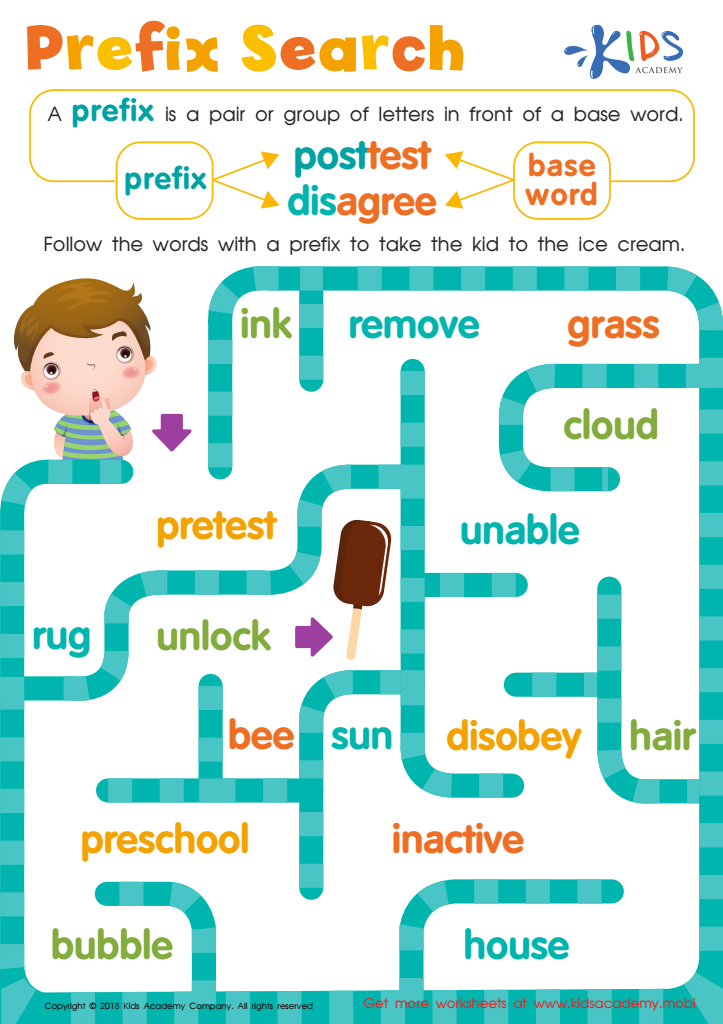
Reading: Prefix Search Worksheet
Maze your way through prefixes! This worksheet helps students practice reading new words with a prefix and figuring out the base word. An understanding of prefixes gives students the skills to comprehend new words. A fun and useful activity for the reading classroom!
Reading: Prefix Search Worksheet
Worksheet
Long I Vowel Team Coloring Worksheet
This worksheet provides practice with letter combinations that make the long "i" sound while enhancing creativity and motor skills with a fun coloring activity. Unknowingly, new readers learn key phonics skills while having fun!
Download (PDF)
 Assign to My Students
Assign to My Students
Long I Vowel Team Coloring Worksheet
Worksheet
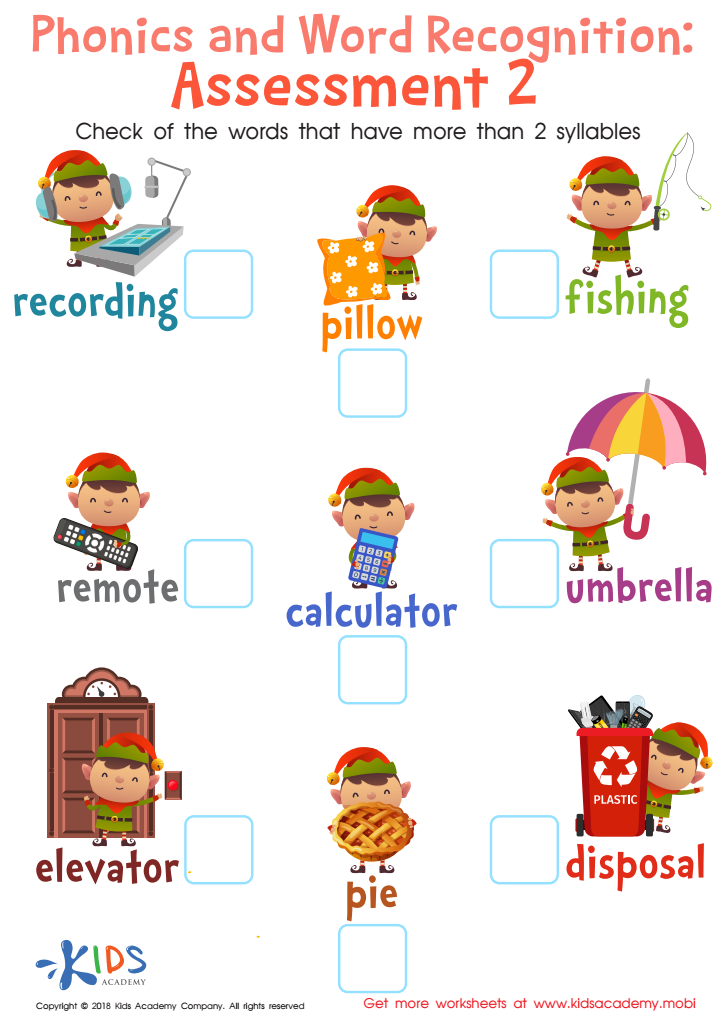
Phonics and Word Recognition: Assessment 2 Worksheet
Help your kids learn proper pronunciation by counting syllables. Most words they'll encounter have 1-3 syllables, making them simple to say. Have them repeat the words in your worksheet after you. Focus on longer words with more than two syllables.
Phonics and Word Recognition: Assessment 2 Worksheet
Worksheet
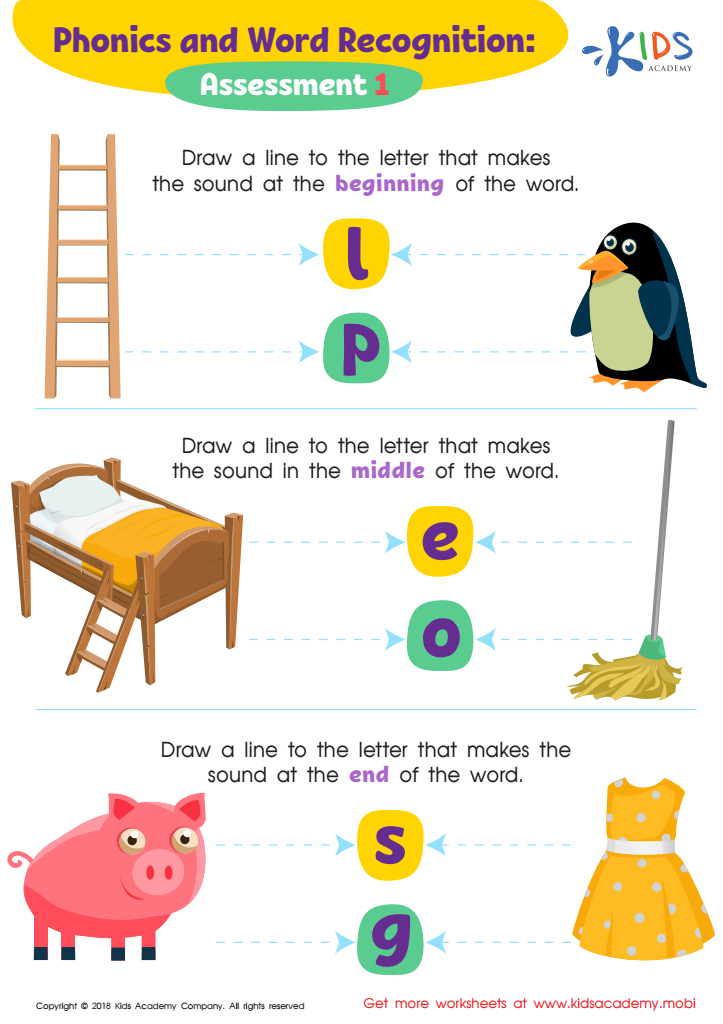
Phonics and Word Recognition: Assessment 1 ELA Worksheet
This fun worksheet tests your child's sound recognition skills for each part of a word. Ask your child to name each image and trace the line to match it with the corresponding letter. Listen for beginning sounds on 1st, middle sounds on 2nd, and ending sounds on 3rd. Encourage learning with this colorful and interactive activity!
Phonics and Word Recognition: Assessment 1 ELA Worksheet
Worksheet
Join Kids Academy for Free
Who is primarily going to use this learning content?







Word identification is a crucial skill for children aged 4-8, as it serves as the foundational building block for literacy development. At this early stage, children are absorbing language and learning how to decode written words, which significantly impacts their reading comprehension and overall academic success.
Parents and teachers should care about word identification because it fosters confidence in young learners. When children can recognize and understand words, they are more likely to engage with texts, participate in discussions, and express their ideas clearly, leading to increased academic enthusiasm.
Moreover, strong word identification skills are linked to future reading proficiency. Researchers have shown that early word recognition ability correlates with later performance in reading and writing. In a literacy-rich environment, children who seamlessly identify words can focus on understanding concepts and retaining information rather than struggling with decoding.
Additionally, emphasizing word identification helps to address diverse learning needs. By providing targeted support, educators can tailor their approaches to individual children, ensuring that all learners progress at their own pace. Investing time and resources in developing word identification skills ultimately strengthens children's literacy foundations, equipping them with essential tools for lifelong learning.








