Normal Addition and Subtraction Word Problems Worksheets for Ages 4-8 - Page 2
29 filtered results
-
From - To
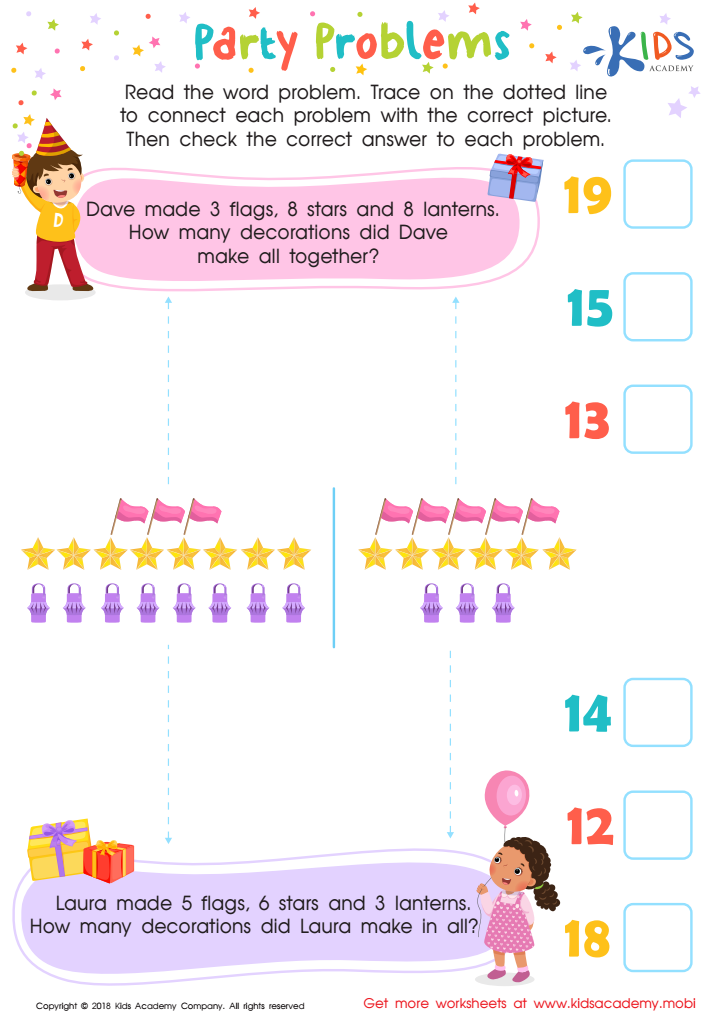
Party Problems Worksheet
 Assign to My Students
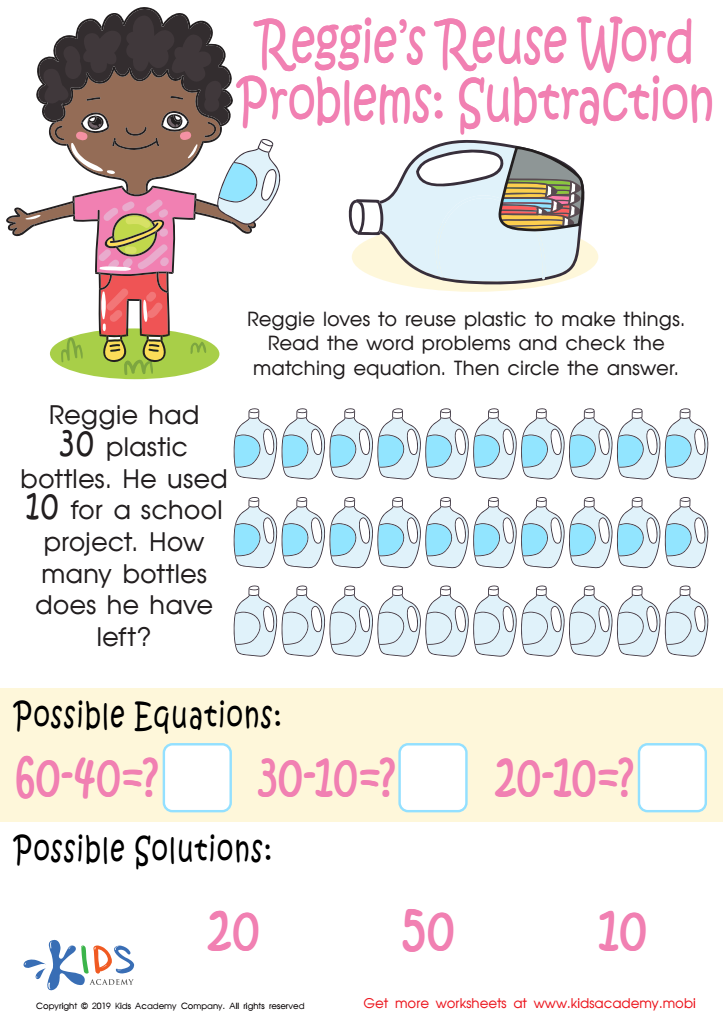
Reggie's Reuse Word Problems: Subtraction Worksheet
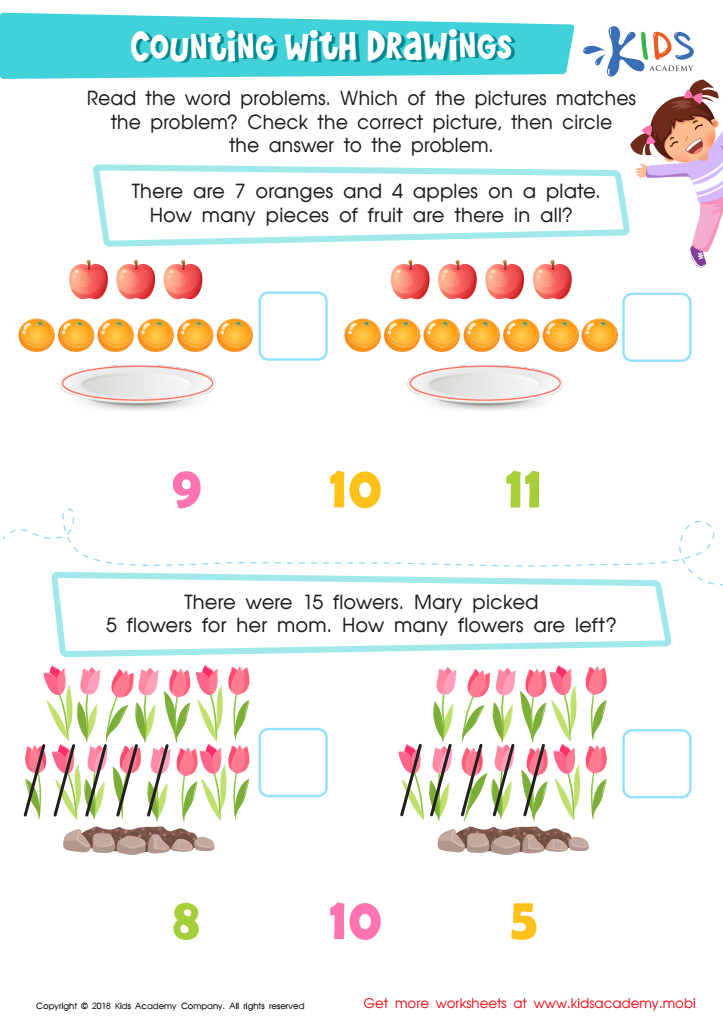
Counting with Drawings:Fruits & Flowers Worksheet
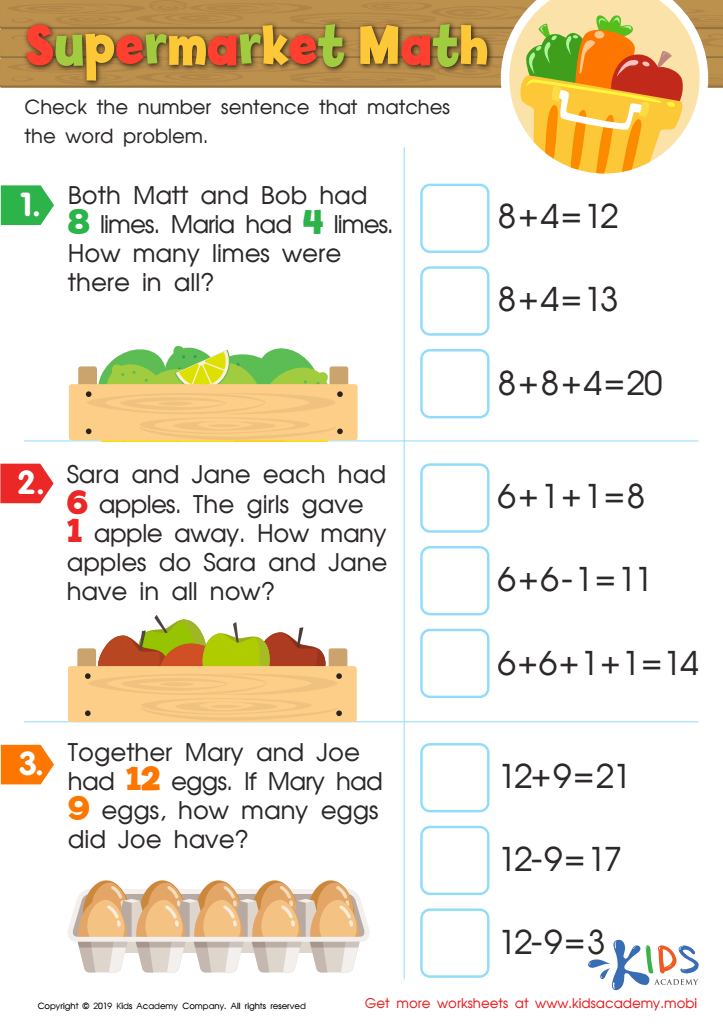
Supermarket Math Worksheet
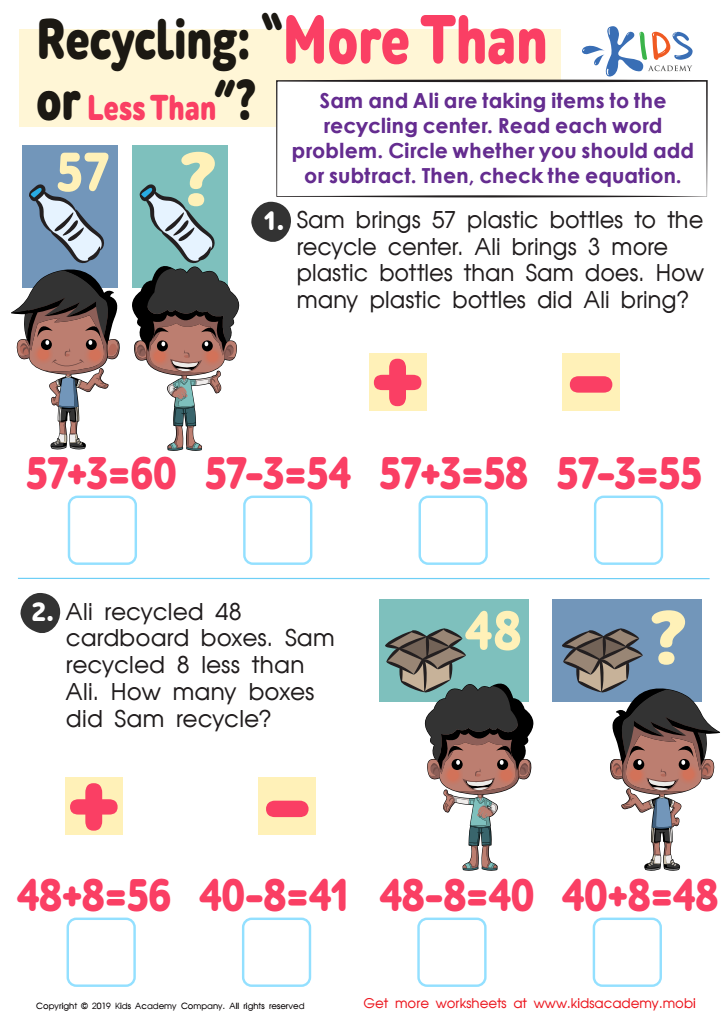
Recycling - More or Less Worksheet








Parents and teachers should care about normal addition and subtraction word problems for children ages 4-8 because these problems serve as foundational skills necessary for academic success and everyday life. At this age, children are typically developing critical thinking and comprehension skills, and word problems encourage them to apply mathematical concepts in real-world contexts.
Working through these problems helps children understand the relationships between numbers and enhances their problem-solving abilities. It also encourages language development, as children learn to decode a story problem and extract the relevant numerical information. This dual focus on math and literacy builds a more comprehensive skill set.
Fostering early mathematical thinking prepares children for more complex concepts as they progress in their education. Moreover, engaging in word problems can promote positive attitudes toward math by making it relatable and enjoyable.
When parents and educators prioritize these activities, they create a supportive environment that emphasizes understanding over rote memorization. Collectively, these elements contribute to stronger intellectual curiosity and resilience, establishing a foundation for lifelong learning in mathematics and beyond. By equipping young learners with these essential tools, we prepare them not only for their academic journeys but for critical thinking challenges they will face in everyday life.