
Hand-eye Coordination Normal Addition & Subtraction Worksheets for Ages 4-8
3 filtered results
Difficulty Level
Grade
Age
-
From - To
Subject
Activity
Standards
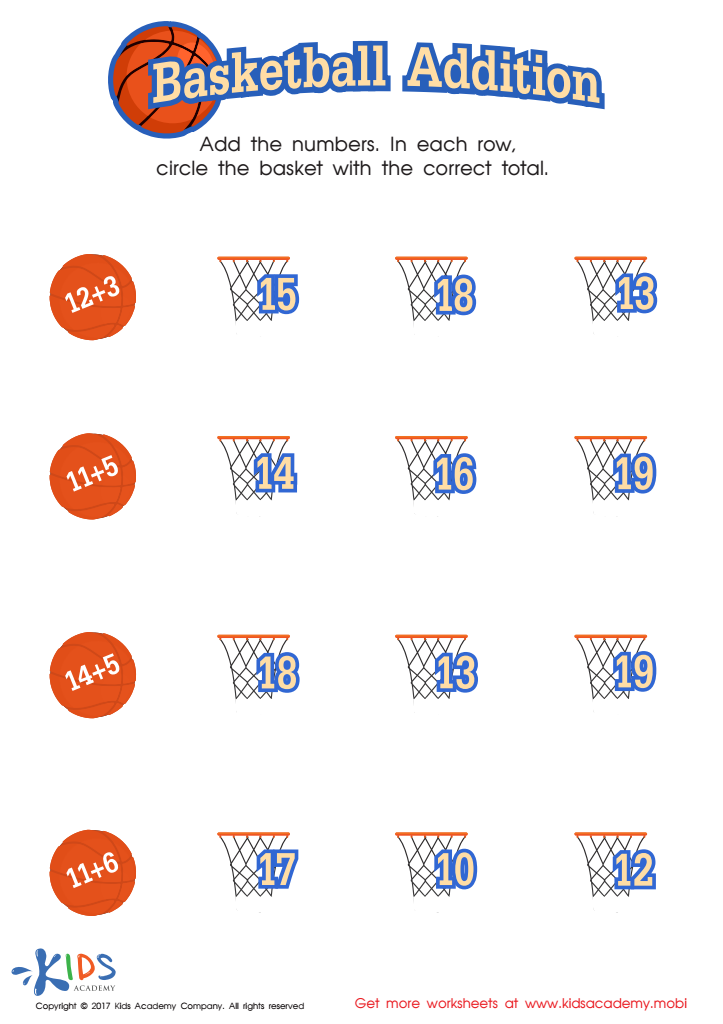
Enhance your child’s learning with our Hand-eye Coordination Normal Addition and Subtraction Worksheets designed for ages 4-8. These engaging worksheets seamlessly integrate math practice with essential hand-eye coordination skills, promoting both cognitive and physical development. Children will enjoy colorful illustrations that make math fun and interactive, helping them build confidence while mastering addition and subtraction concepts. Perfect for classroom activities or at-home learning, these worksheets are easy to print and incorporate into daily routines. Foster your child's mathematical abilities while encouraging fine motor skills with our thoughtfully crafted resources. Get started on a fun learning journey today!
Favorites
With answer key
Interactive
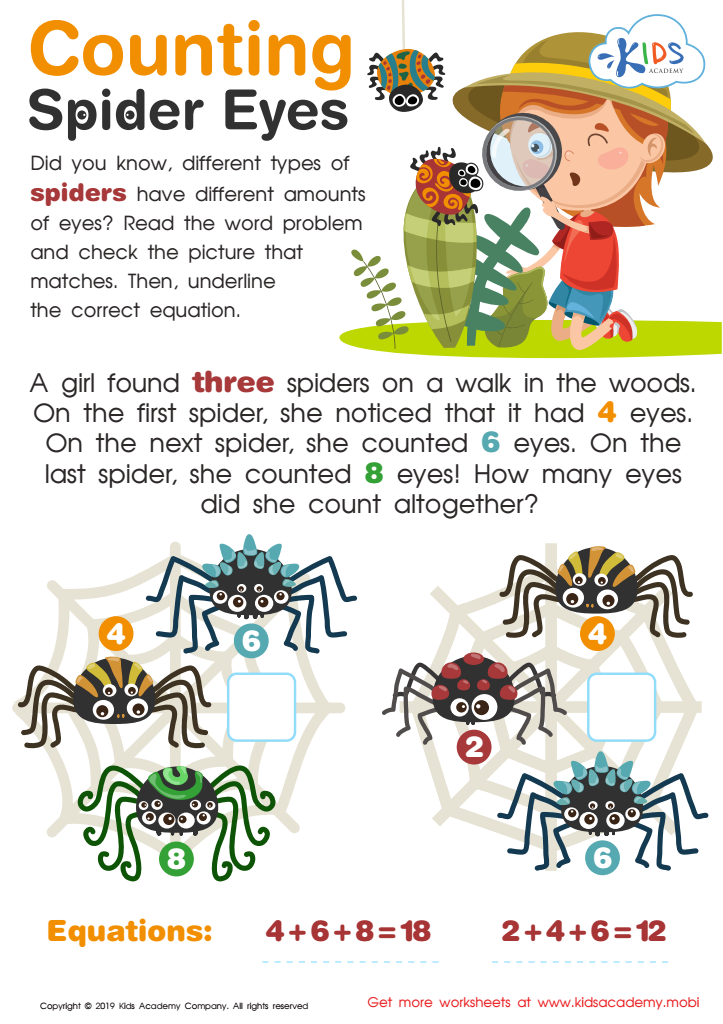
Counting Spider Eyes Worksheet
Did you know different spiders have different eye numbers? Kids will love learning this fact and solving the spider word problems on this free worksheet! Word problems promote a deeper understanding of the concept, plus they get to add up the spiders’ eyes while solving addition problems with more than one addend. Fun and math all in one!
 Assign to My Students
Counting Spider Eyes Worksheet
Worksheet
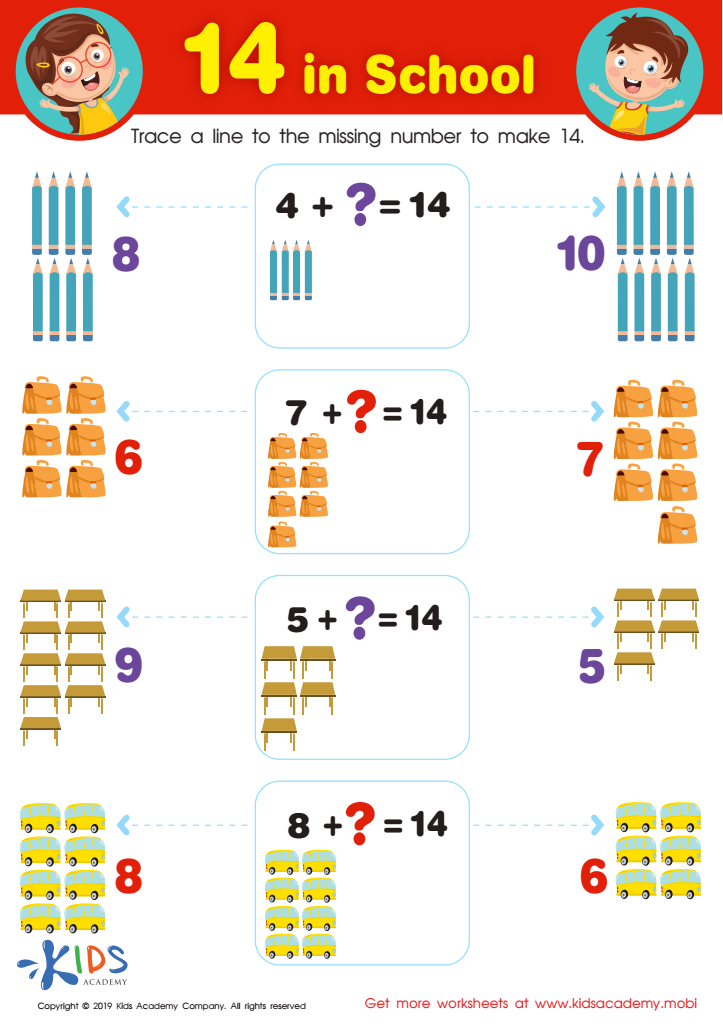
14 in School Worksheet
Remind your kids that adding different sets of numbers can give the same total (e.g. 2+3=5, 4+1=5). Ask them for more examples. Afterwards, work through the exercise. Help them count the objects and trace a line to the missing number that makes the total 14.
14 in School Worksheet
Worksheet
Join Kids Academy for Free
Who is primarily going to use this learning content?








Hand-eye coordination is a crucial developmental skill that significantly impacts children's ability to perform various tasks, including normal addition and subtraction. For children aged 4-8, this coordination enables them to manipulate objects, write numbers clearly, and visually track mathematical symbols as they solve problems. Encouraging this skill helps to build a strong foundation for future academic success, particularly in mathematics.
Parents and teachers should prioritize hand-eye coordination activities, as they contribute not only to cognitive development but also to fine motor skills. Engaging in activities like counting blocks, playing simple math games, and utilizing school supplies like scissors or paper for addition/subtraction exercises promotes these abilities in a fun and engaging way.
Moreover, fostering hand-eye coordination at this age supports children's confidence in their abilities, which is essential for maintaining a positive attitude toward learning. When children find joy in learning math concepts through interactive methods, they are more likely to develop critical thinking and problem-solving skills. Therefore, by supporting hand-eye coordination alongside normal addition and subtraction exercises, adults can lay the groundwork for children's lifelong learning and ensure they feel competent and enthusiastic about math early on.








