Understanding patterns Normal Addition & Subtraction Worksheets for Ages 4-8
4 filtered results
-
From - To
Welcome to our "Understanding Patterns: Normal Addition & Subtraction Worksheets" specifically designed for children aged 4-8! These engaging worksheets promote fundamental math skills by helping young learners recognize and explore mathematical patterns in addition and subtraction. Our interactive activities foster critical thinking and problem-solving, catering to different learning styles through visually stimulating designs and age-appropriate challenges. Whether in a classroom setting or at home, these worksheets guide parents and educators in supporting children's mathematical development. Enhance your child's math journey and boost their confidence by exploring the world of patterns—an essential foundation for future mathematics success! Get started today!
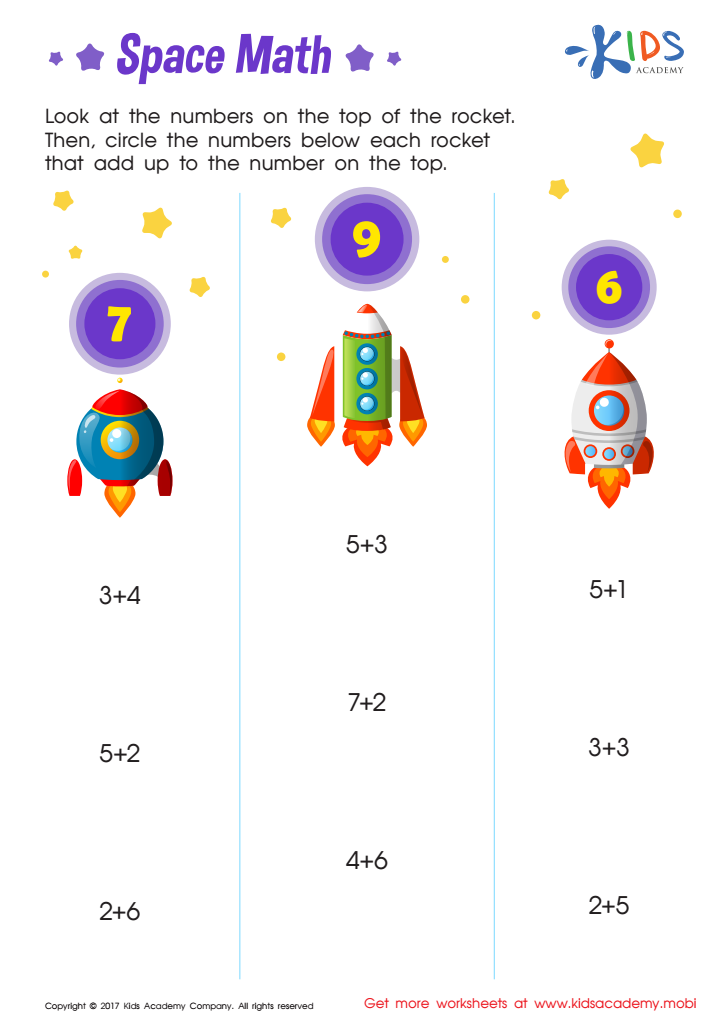
Addition: Space Math Worksheet
 Assign to My Students
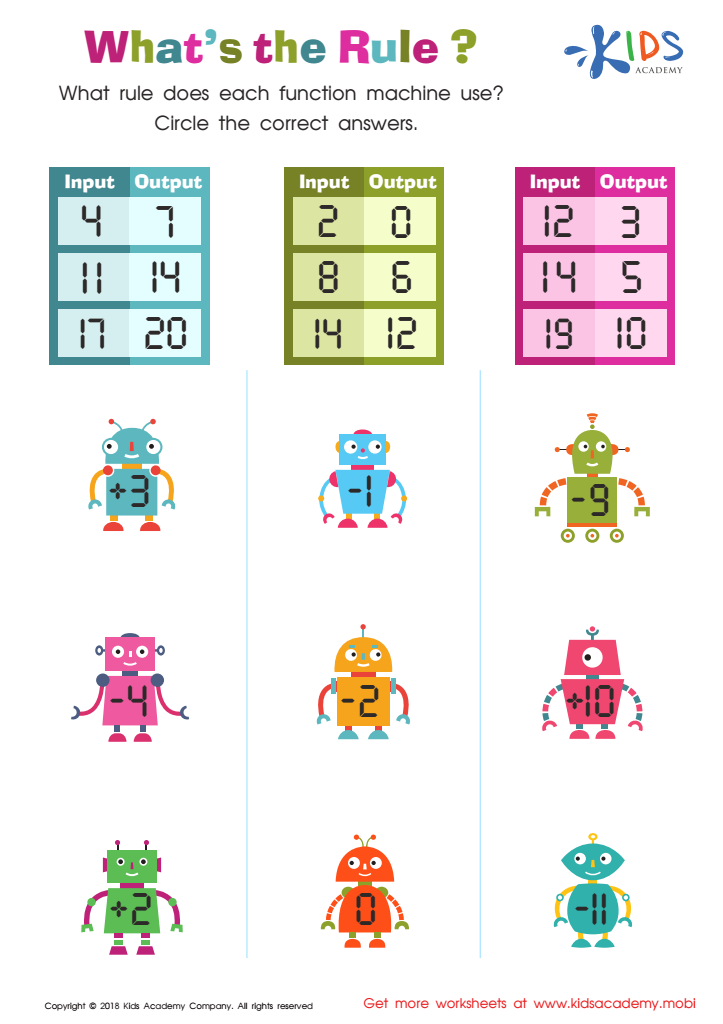
What's the Rule Worksheet
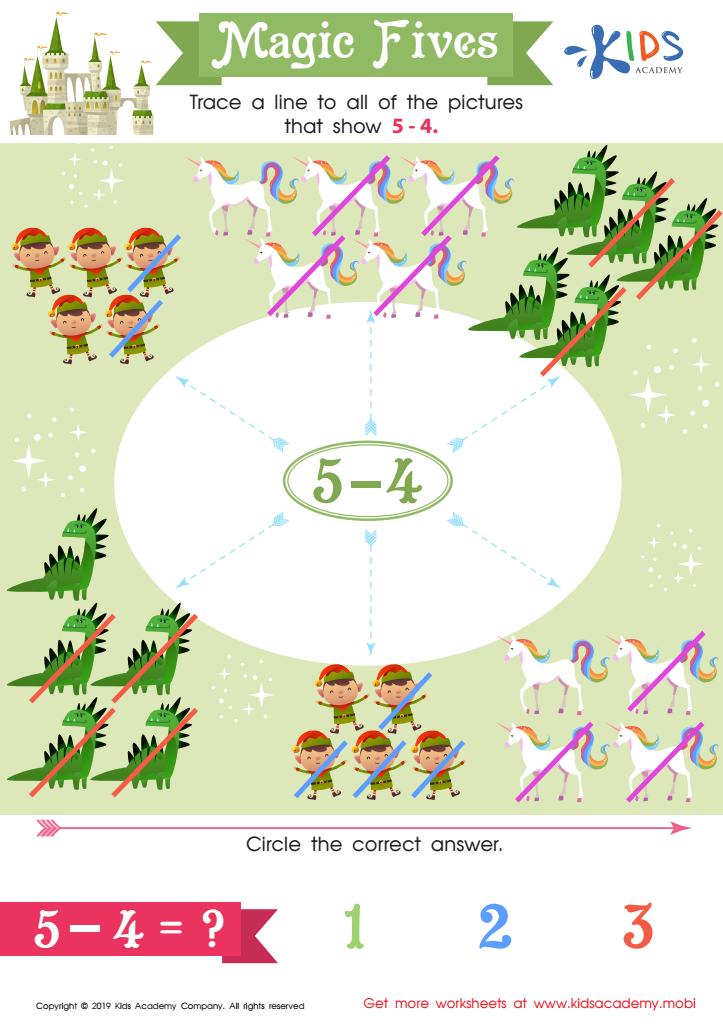
Magic Fives Worksheet
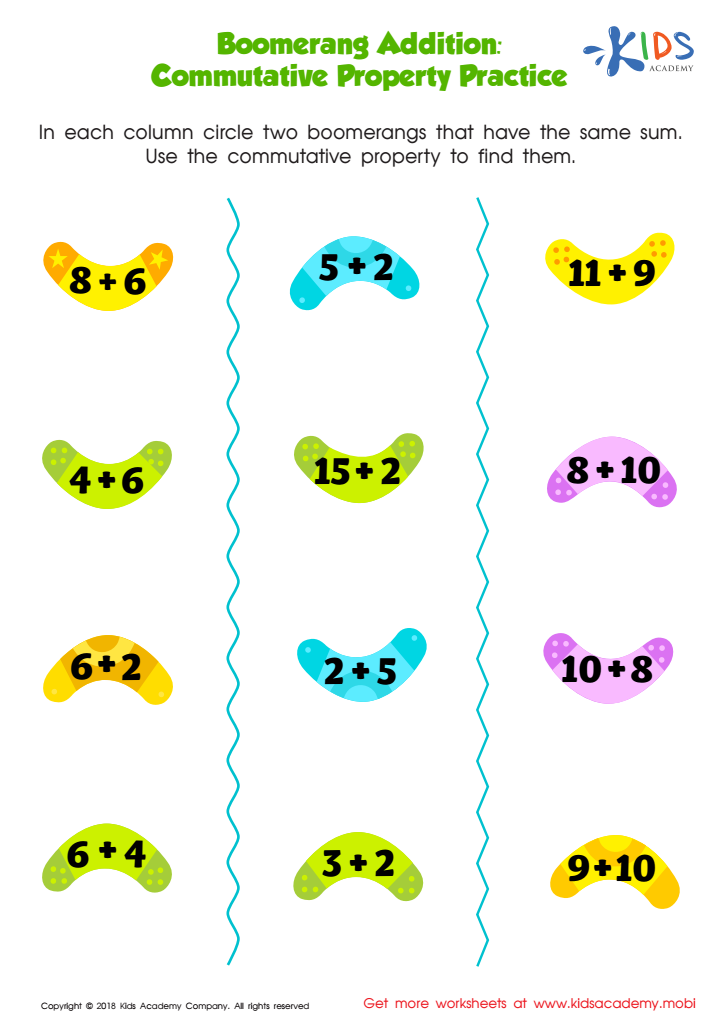
Boomerang Addition Worksheet








Understanding patterns, normal addition, and subtraction are foundational skills that significantly impact a child's early mathematical development. For parents and teachers of children aged 4-8, fostering these skills is crucial for several reasons.
First, recognizing and creating patterns help children develop logical thinking and problem-solving abilities. Patterns lay the groundwork for understanding more complex mathematical concepts later, such as multiplication and division. Engaging with patterns develops critical cognitive skills like observation, prediction, and sequencing.
Secondly, mastering basic addition and subtraction builds numerical fluency. These operations are essential for everyday activities, from sharing snacks to handling money. A strong foundation in these areas helps children feel more confident in tackling math-related tasks and promotes positive attitudes towards learning.
Furthermore, nurturing these skills at a young age cultivates a genuine interest in mathematics. When children experience success and enjoyment in learning, they are more likely to engage with increasingly complex ideas in the future.
Lastly, collaborative learning between parents and teachers reinforces these skills, providing consistent support. By prioritizing an understanding of patterns and basic operations, caregivers can help shape resilient learners who are well-equipped to thrive in academic environments.








