Spatial reasoning Normal Geometry Worksheets for Ages 4-8
3 filtered results
-
From - To
Discover our Spatial Reasoning Normal Geometry Worksheets, designed specifically for children ages 4-8. These engaging activities enhance early geometry skills, helping kids understand shapes, patterns, and spatial concepts. Through fun and interactive exercises, children will build a solid foundation in spatial reasoning, crucial for future math success. Our worksheets are perfect for both classroom and at-home learning, offering a variety of challenges to keep young minds stimulated. With colorful illustrations and age-appropriate tasks, these worksheets make learning geometry enjoyable and effective. Equip your child with the tools they need to excel in math with our expertly crafted resources.
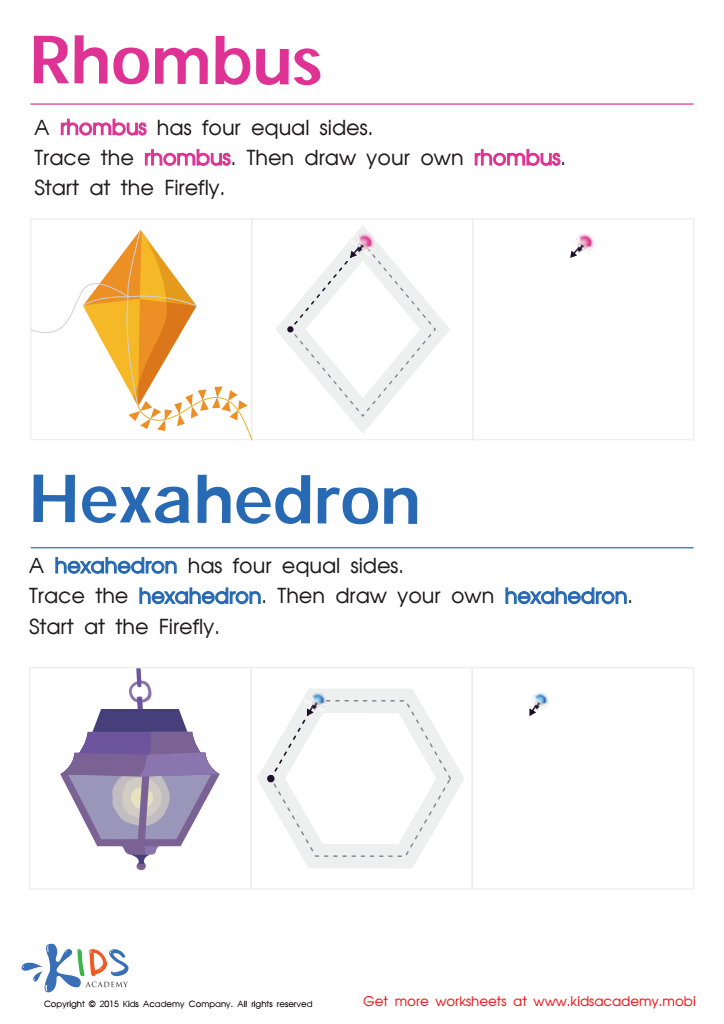
Draw a Rhombus And a Hexahedron Printable
 Assign to My Students











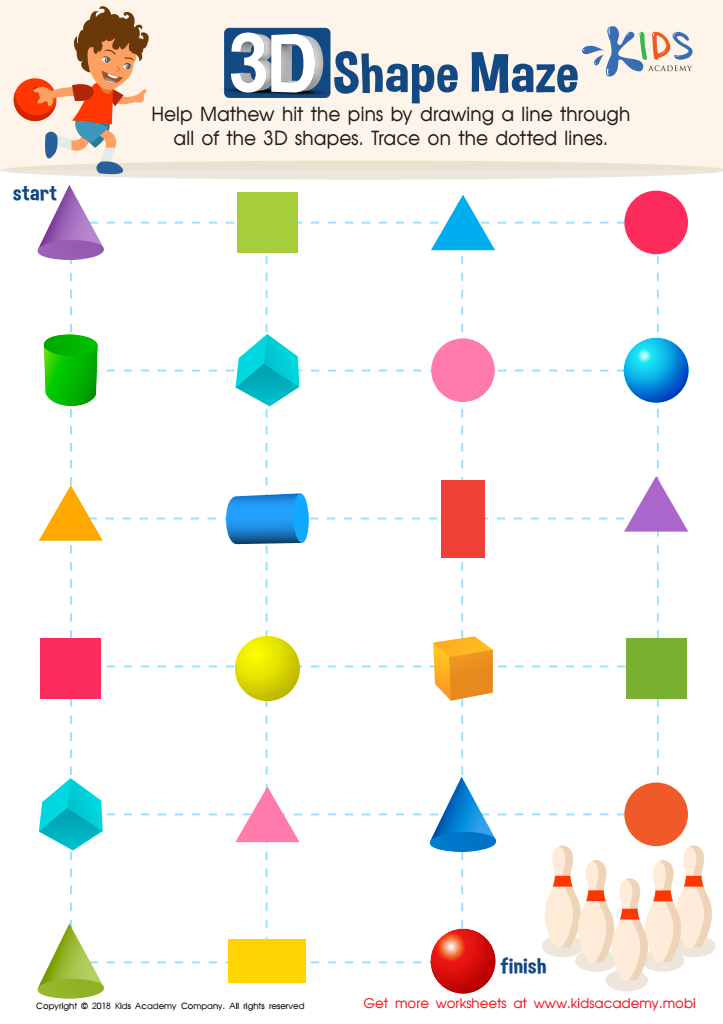
Shapes Maze Geometry Worksheet
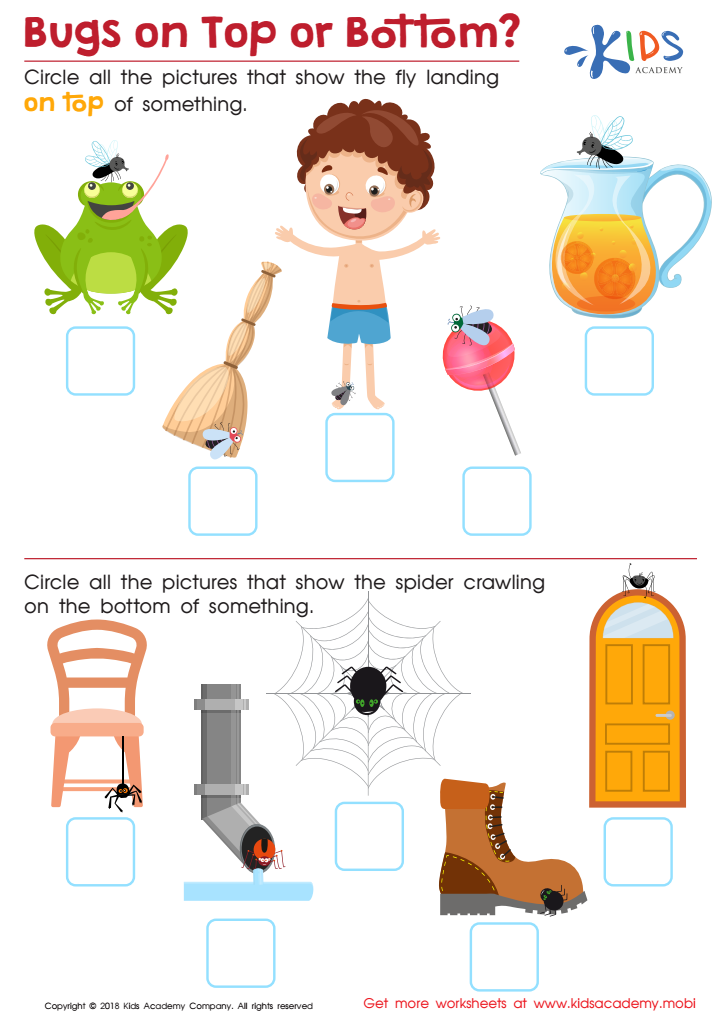
Bugs on Top or Bottom? Worksheet








Spatial reasoning and normal geometry are fundamental skills that children aged 4-8 need to develop, and both parents and teachers should prioritize fostering these abilities. At this formative age, children's brains are highly adaptable and receptive to learning new concepts, making it an ideal time to introduce spatial reasoning activities and basic geometry. Spatial reasoning skills involve understanding how objects fit and move in space, which is critical for later success in fields like architecture, engineering, and mathematics. Developing these skills early can nurture a strong foundation for more complicated problem-solving and critical thinking tasks.
Basic geometry introduces kids to shapes, sizes, patterns, and spatial relationships. It not only bolsters their mathematical abilities but also enhances their visual and tactile learning experiences. Engaging in activities such as building blocks, puzzles, and drawing shapes lays the groundwork for more advanced mathematical concepts they'll encounter in later years.
Moreover, spatial reasoning boosts other cognitive skills, such as memory and attention to detail. It also improves children's ability to navigate their environments and understand spatial relationships, which can make real-world activities easier and more intuitive for them.
In summary, cultivating spatial reasoning and normal geometry early on equips children with crucial analytical tools, stimulates cognitive development, and lays the groundwork for future success in numerous academic and practical areas.








