Comparing lengths Normal Math Worksheets for Ages 4-8
4 filtered results
-
From - To
Enhance your child's understanding of measurements with our "Comparing Lengths" normal math worksheets, designed specifically for ages 4-8. These engaging and interactive worksheets introduce young learners to the concept of comparing lengths through colorful visuals and fun activities. By utilizing familiar objects, children will learn to distinguish longer versus shorter items, fostering their critical thinking and measurement skills. Ideal for at-home practice or in-class activities, our worksheets not only keep students engaged but also reinforce foundational math concepts. Download our easy-to-use resources today and watch your child develop confidence in their math abilities as they practice comparing lengths!
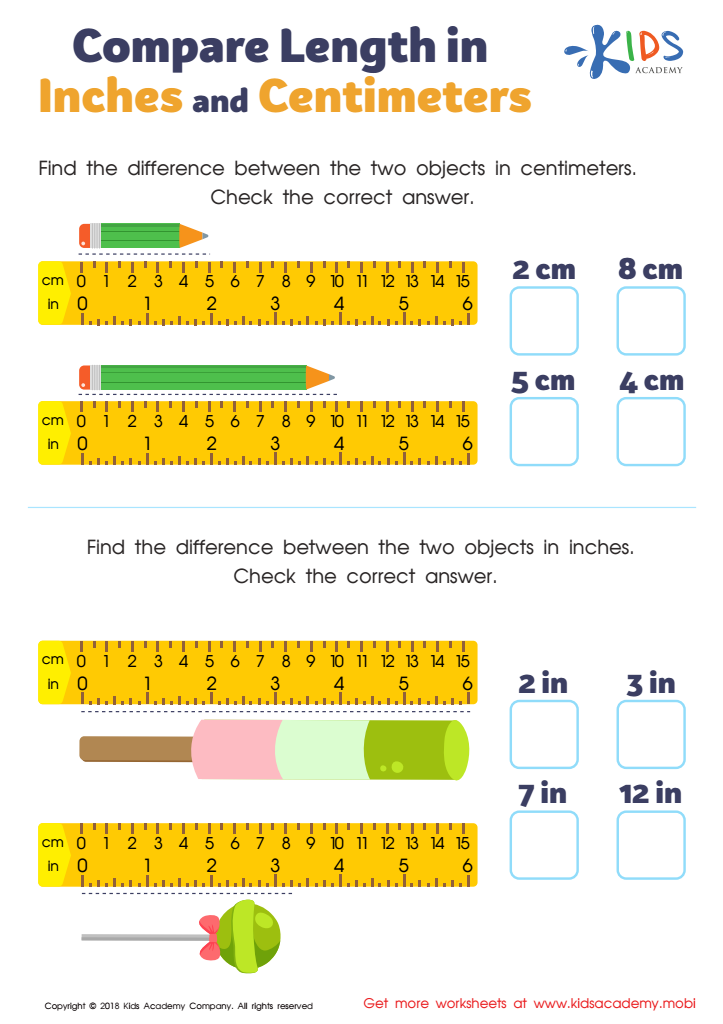
Compare Length in Inches and Centimeters Worksheet
 Assign to My Students
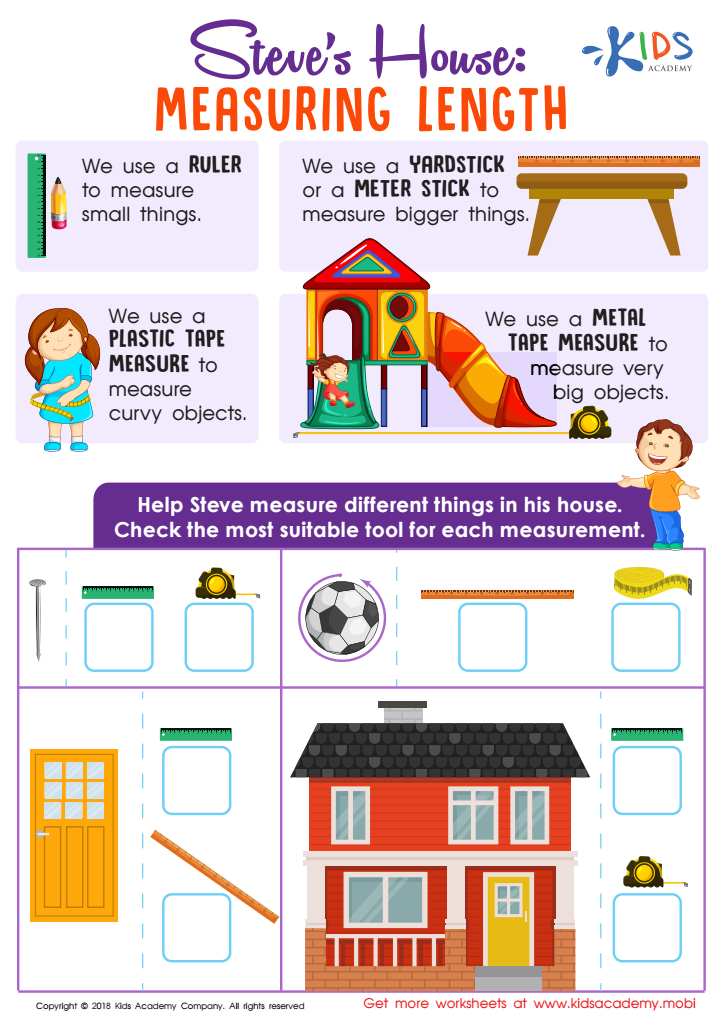
Steve's House: Measuring Length Worksheet
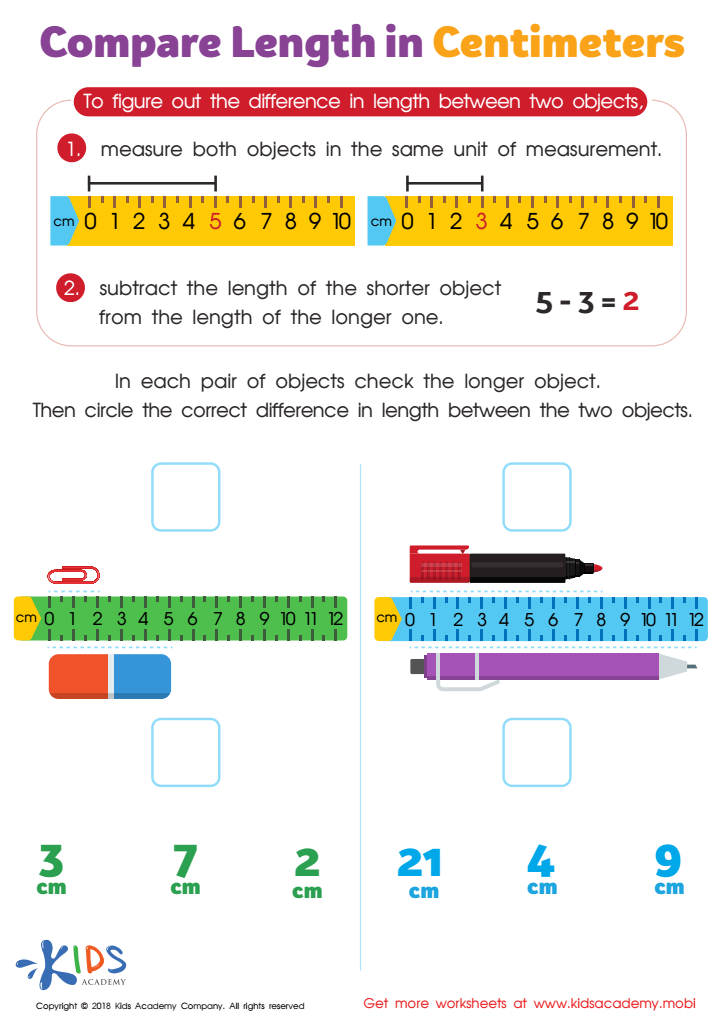
Compare Length in Centimeters Worksheet
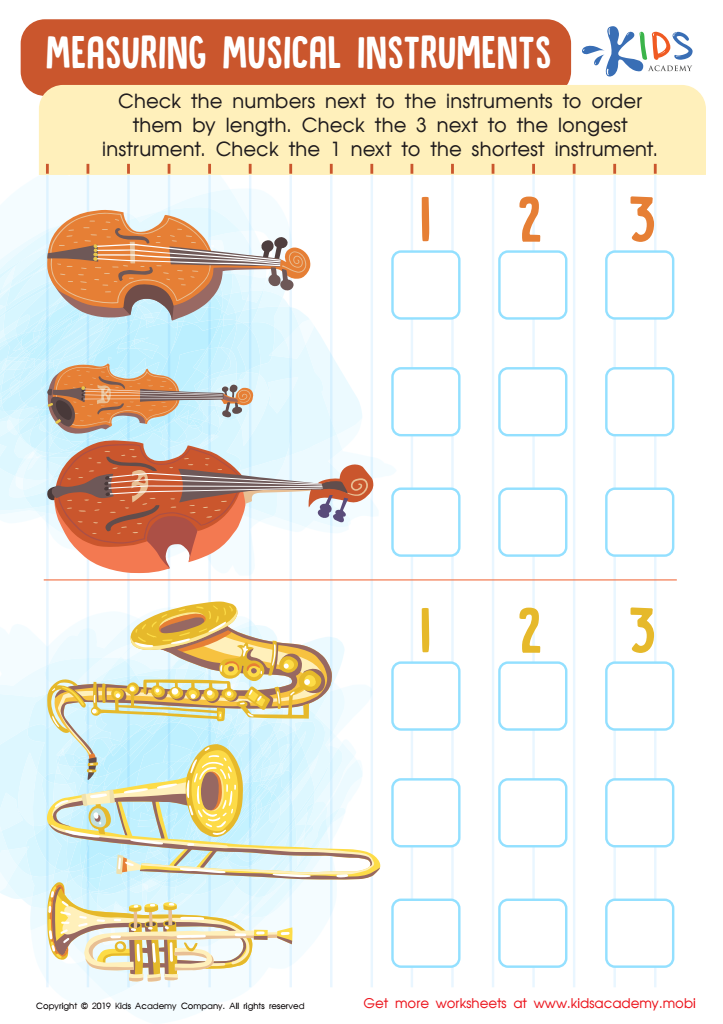
Measuring Musical Instruments Worksheet







Understanding and comparing lengths is a foundational skill for early learners, making it essential for parents and teachers to emphasize this concept in children ages 4-8. First, comparing lengths helps develop strong cognitive skills, including critical thinking and problem-solving. These early experiences encourage children to make observations, gather data, and make comparisons—skills that are useful across various subjects.
Moreover, measuring and comparing lengths provides a practical context for introducing basic mathematical concepts, such as inequalities, scales, and units of measurement. This integration of math with everyday life fosters a love for learning, as children are more engaged when they see relevance in their activities.
Additionally, these skills lay the groundwork for more advanced mathematical concepts in later grades, aiding in a smoother transition as learners progress. Parents and teachers can facilitate hands-on learning experiences through simple activities like comparing everyday objects, building with blocks, or measuring with string. By actively participating in these learning moments, adults can help instill confidence in children, promoting a proactive learning attitude toward math, ultimately shaping their academic success and life skills. In summary, prioritizing comparison of lengths supports cognitive development, practical learning, and foundational mathematical understanding.








