Comparison Skills Normal Math Worksheets for Ages 4-8
3 filtered results
-
From - To
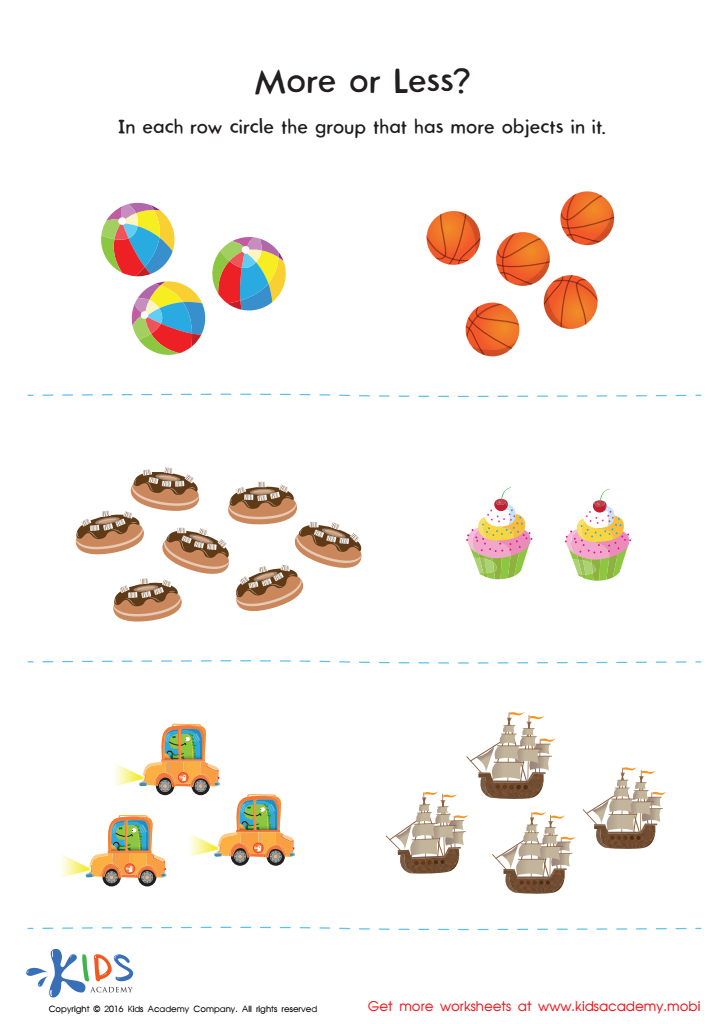
Discover our engaging Comparison Skills Normal Math Worksheets designed specifically for children aged 4-8! These worksheets provide interactive, skill-building activities that help young learners understand the concepts of greater than, less than, and equal to. With colorful visuals and kid-friendly layouts, your child will enjoy practicing their comparison skills in a fun and educational way. Each worksheet encourages critical thinking and strengthens foundational math abilities, ensuring your little one gains confidence in their math skills. Perfect for supplementing home learning or classroom activities, these worksheets are an invaluable resource for early education. Start your child’s mathematical journey today!
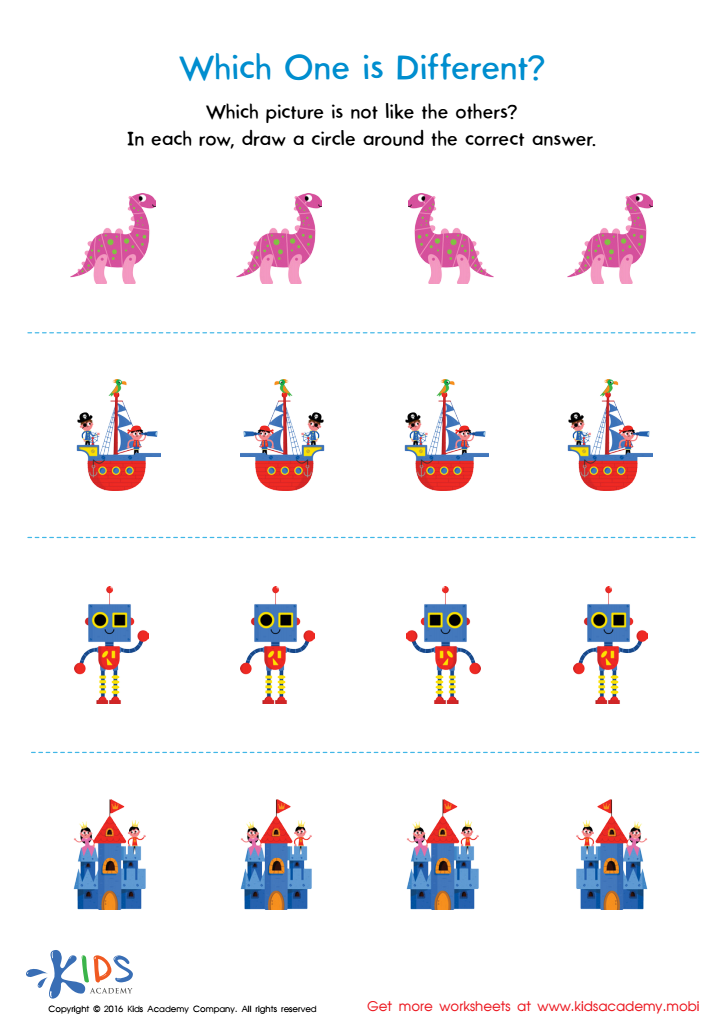
Which One Is Different Worksheet
 Assign to My Students
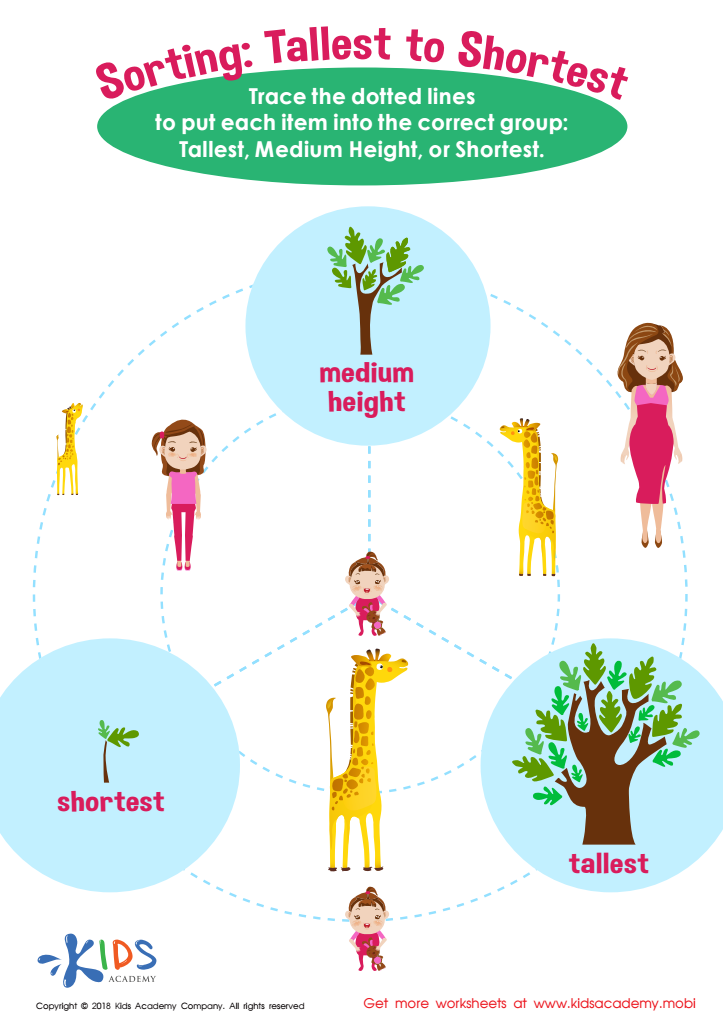
Sorting: Tallest to Shortest Worksheet







.jpg)
Comparison skills in early mathematics are essential for children aged 4-8, as they form the foundation for later math concepts and critical thinking. These skills involve recognizing differences and similarities, understanding size, quantity, and order, and evaluating relationships between objects. By mastering comparison skills, children become adept at sorting, classifying, and organizing information, which promotes logical reasoning and problem-solving abilities.
For parents and teachers, nurturing comparison skills at this young age can lead to improved academic outcomes in math and beyond. When children learn to compare quantities—such as understanding that 5 apples are more than 3 or recognizing that a tall cup holds more liquid than a short one—they develop an innate sense of measurement and numeracy. These foundational skills help with more advanced mathematical operations, including addition and subtraction.
Furthermore, fostering comparison skills encourages children to engage with their surroundings. It promotes curiosity and exploration, allowing them to develop a richer understanding of the world. As educators and caregivers guide children through playful comparisons, such as measuring, counting, or sorting objects, they lay the groundwork for a lifetime of confident and competent mathematics learners. Investing in these skills early facilitates a smoother educational journey and enhances children's overall cognitive development.








