Developing problem-solving abilities Normal Math Worksheets for Ages 4-8
3 filtered results
-
From - To
Unlock the potential in your child with our "Developing Problem-Solving Abilities” Normal Math Worksheets for Ages 4-8. Designed to nurture analytical thinking, these worksheets foster essential problem-solving skills through fun and engaging activities. Tailored specifically for young learners, each worksheet presents children with practical challenges that enhance their critical thinking and boost mathematical proficiency. Our goal is to make learning enjoyable and impactful, helping kids to build a strong foundation for future success. Encourage your child's natural curiosity and confidence with our expertly crafted math exercises that make tackling problems a rewarding adventure.
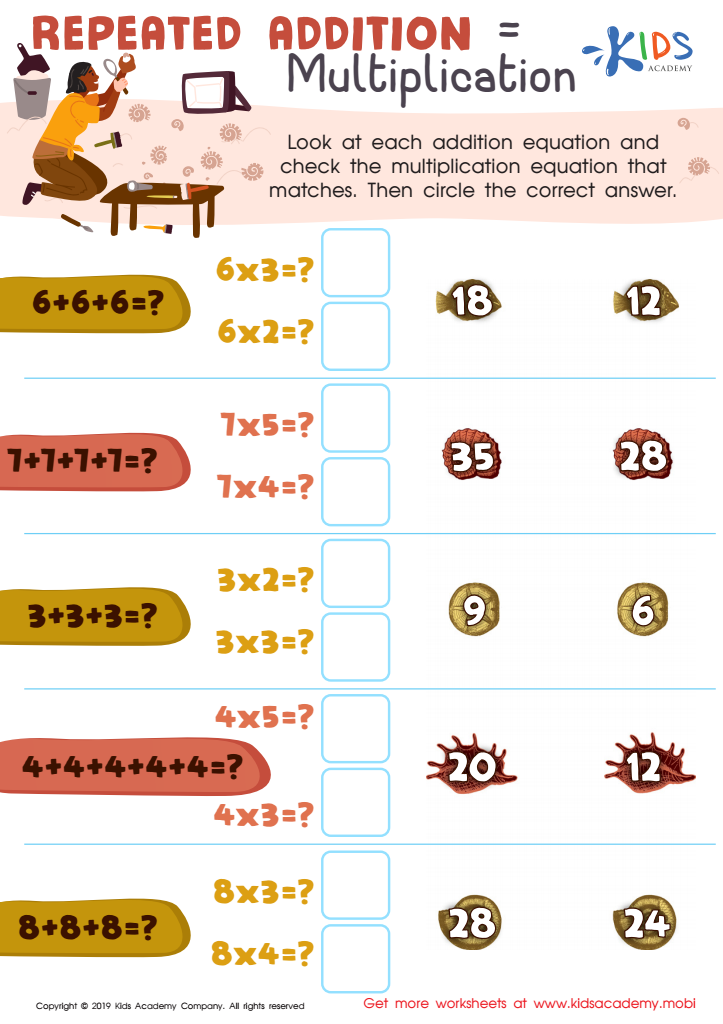
Repeated Addition = Multiplication Worksheet
 Assign to My Students
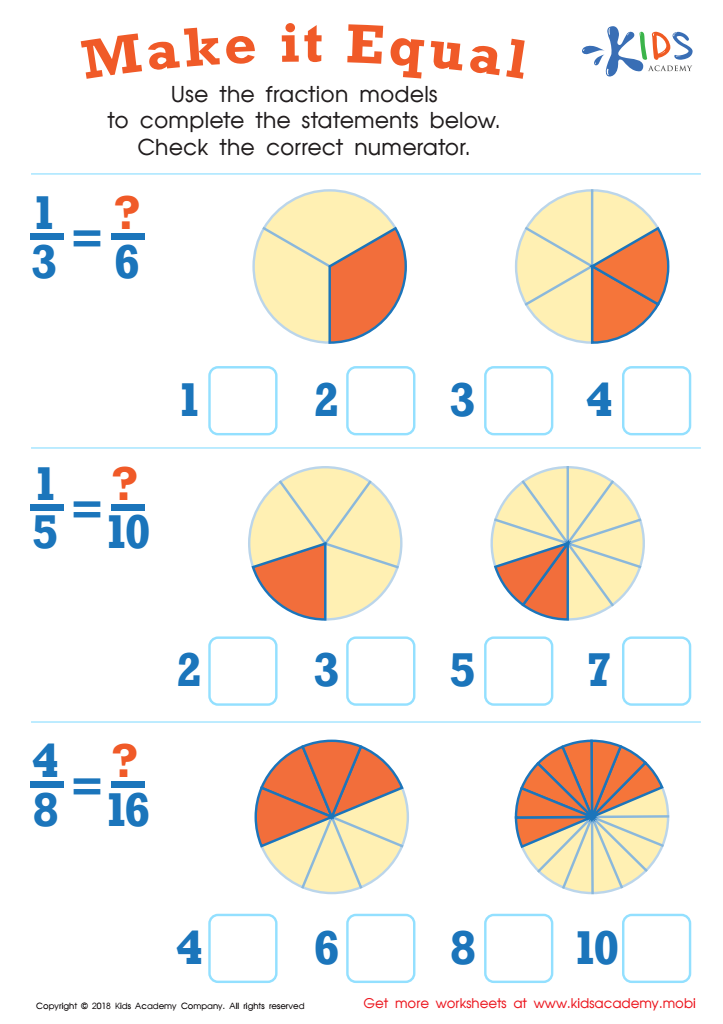
Make It Equal Worksheet
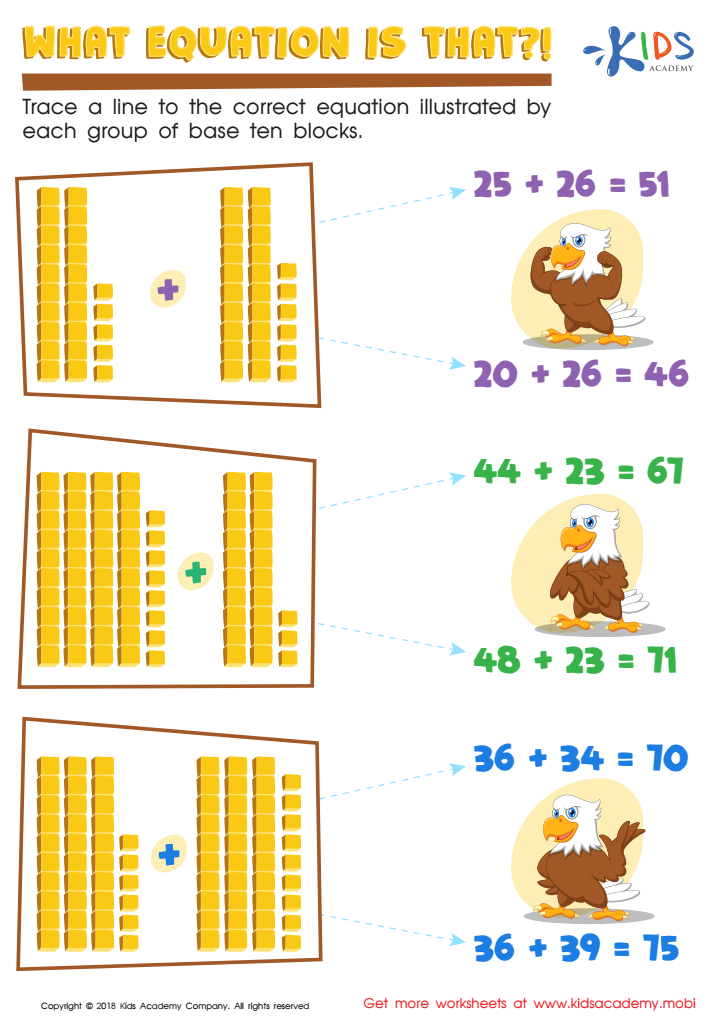
What Equation Is That? Worksheet







Developing problem-solving abilities in young children, specifically within the context of math for ages 4-8, is crucial for several reasons. Firstly, early math skills lay the foundation for more complex mathematical thinking and academic success in later years. When children learn to approach problems methodically, break them down into manageable parts, and think critically, they are not just learning math; they are acquiring skills that will help them in all areas of learning and life.
Secondly, problem-solving helps children become more resilient and resourceful. Facing and overcoming challenges in math fosters persistence and adaptability, teaching children that it’s acceptable to make mistakes and learn from them. This growth mindset is essential for personal and academic development.
Furthermore, introducing problem-solving in early math activities also enhances cognitive abilities such as memory, attention, and reasoning. Engaging with puzzles, pattern recognition, and basic arithmetic helps develop neural pathways that support diverse intellectual functions.
Lastly, strong problem-solving skills promote independence and confidence. Children who can navigate problems on their own feel more competent and capable, boosting their self-esteem and eagerness to learn. Overall, fostering these skills at a young age cultivates a holistic foundation for future learning and problem-solving across various life contexts.








