Reading analog clocks Normal Math Worksheets for Ages 4-8
3 filtered results
-
From - To
Discover our engaging "Reading Analog Clocks" math worksheets designed for children aged 4-8! These fun and educational printables help young learners master how to tell time using analog clocks. Our worksheets offer a range of exercises that guide children step-by-step, enhancing their understanding of hours, minutes, and the overall concept of time. Perfect for reinforcing classroom learning or supplementing at home, each activity combines clear visuals and simple instructions to build confidence and skills. Encourage your child’s mathematical development with our expertly crafted resources, ensuring a solid foundation in time-telling and essential learning skills.
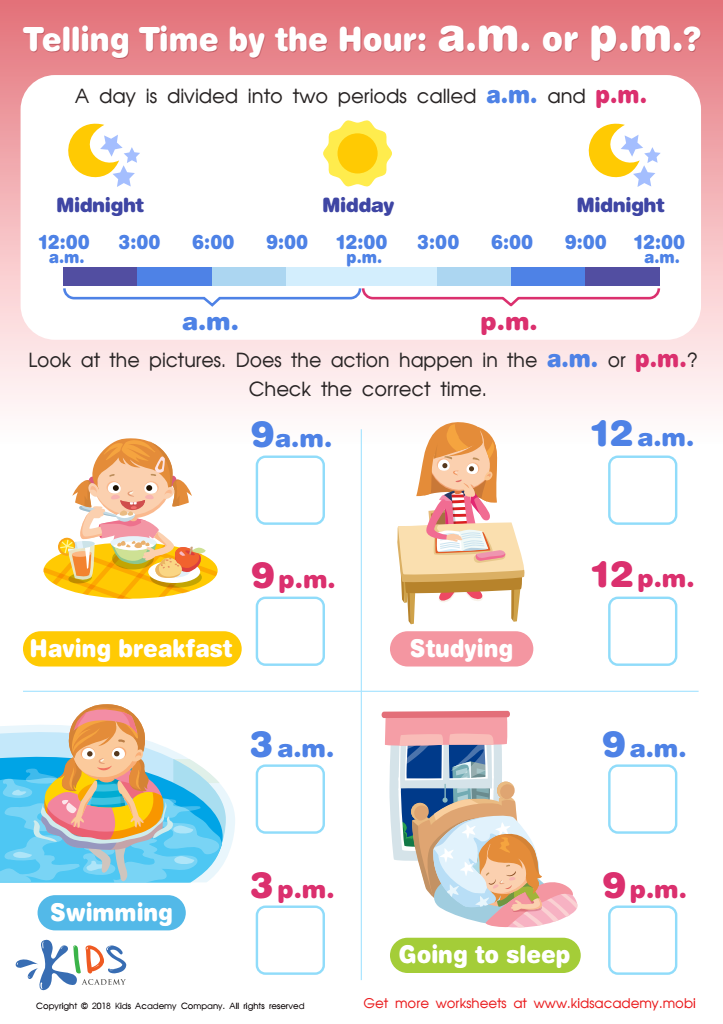
Tilling Time by the Hour: a.m. or p.m.? Worksheet
 Assign to My Students
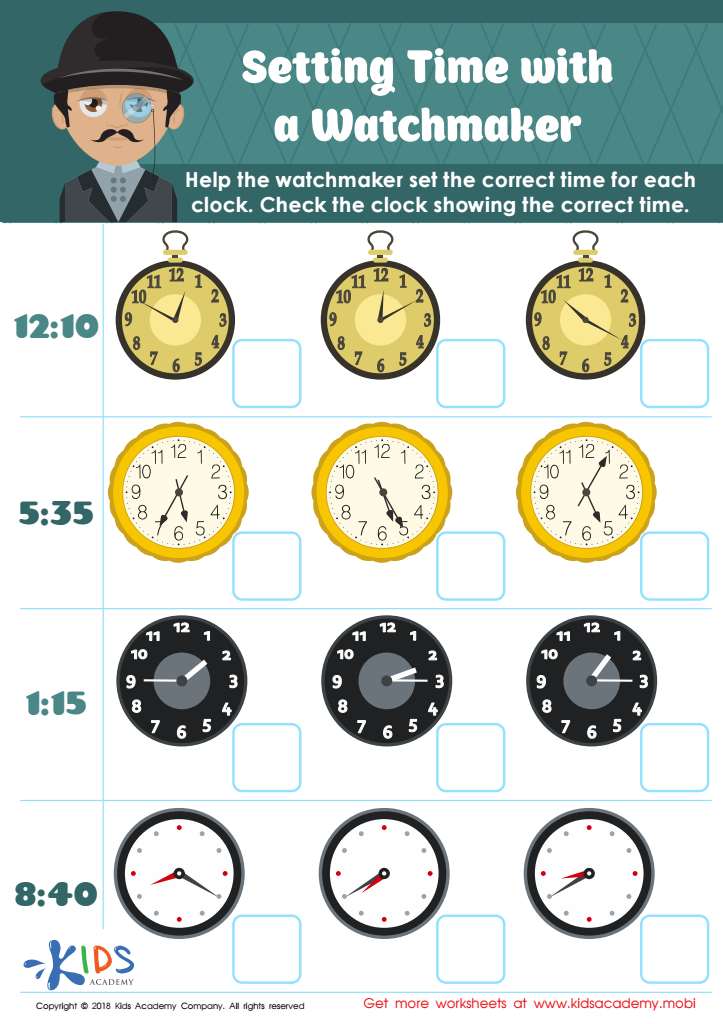
Setting Time with Watchmaker Worksheet
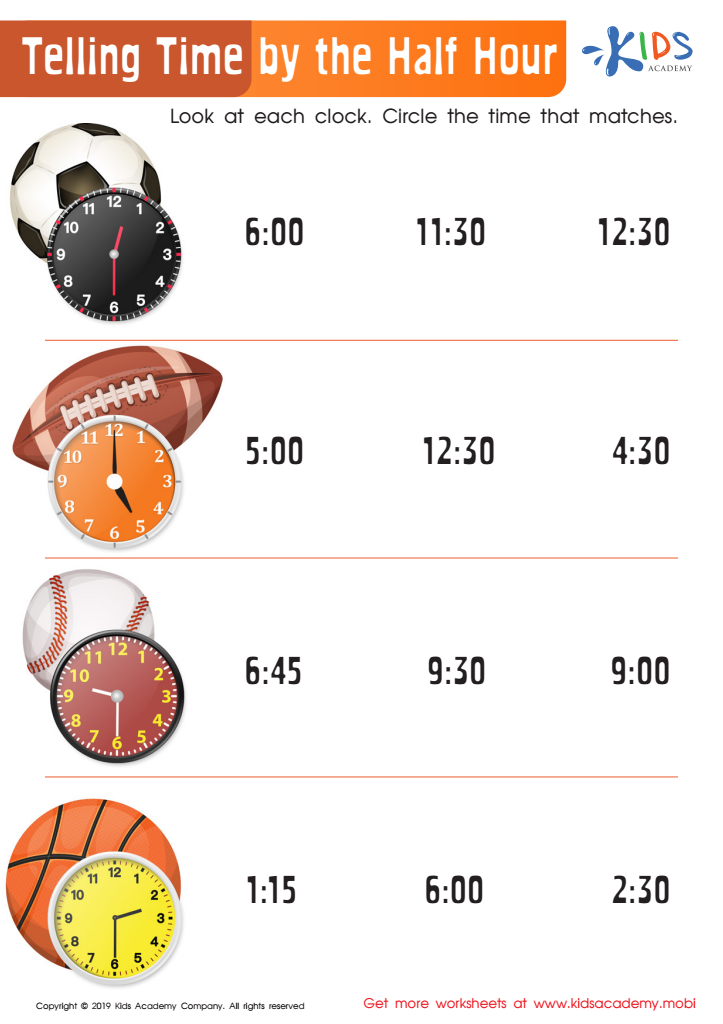
Telling Time by the Half Hour Worksheet








Understanding how to read analog clocks is an essential skill for young children aged 4-8 because it fosters both cognitive and practical growth. For parents and teachers, emphasizing this skill helps children develop an intuitive sense of time—an often overlooked but crucial aspect of daily life. By learning to tell time, children gain a structured concept of the day's flow, aiding them in understanding routines and schedules. This sense of order and routine is pivitol for mood regulation and fostering a secure environment both at home and at school.
Equally important is the mathematical aspect of reading analog clocks. The activity helps children get accustomed to numbers, work with concepts like counting by fives, and enhance their ability to understand fractions, as the clock face is a basic division of portions. Engaging with the clock hands strengthens their spatial reasoning as they comprehend how the clock's hands move in correlation with time passing.
Overall, teachers and parents who invest time in helping children learn to read analog clocks not only facilitate the immediate practical understanding necessary for daily timeliness but also lay the groundwork for higher mathematical thinking and cognitive abilities. This relatively simple teaching task can have significant long-term benefits in a child's overall educational and personal development.








