Spatial reasoning Normal Math Worksheets for Ages 4-8
3 filtered results
-
From - To
Enhance your child's mathematical journey with our Spatial Reasoning Normal Math Worksheets designed for ages 4-8. At Kids Academy, our engaging and interactive printables nurture essential reasoning skills, vital for early childhood development. These worksheets are thoughtfully created to challenge and entertain young minds, helping them grasp complex concepts through puzzles, shapes, and spatial patterns. By incorporating fun visuals and intriguing problems, we ensure learning becomes an exciting adventure. Boost your child's spatial awareness, problem-solving abilities, and foundational math skills with our expertly crafted resources. Perfect for home or school use, these worksheets make learning math both enjoyable and effective.
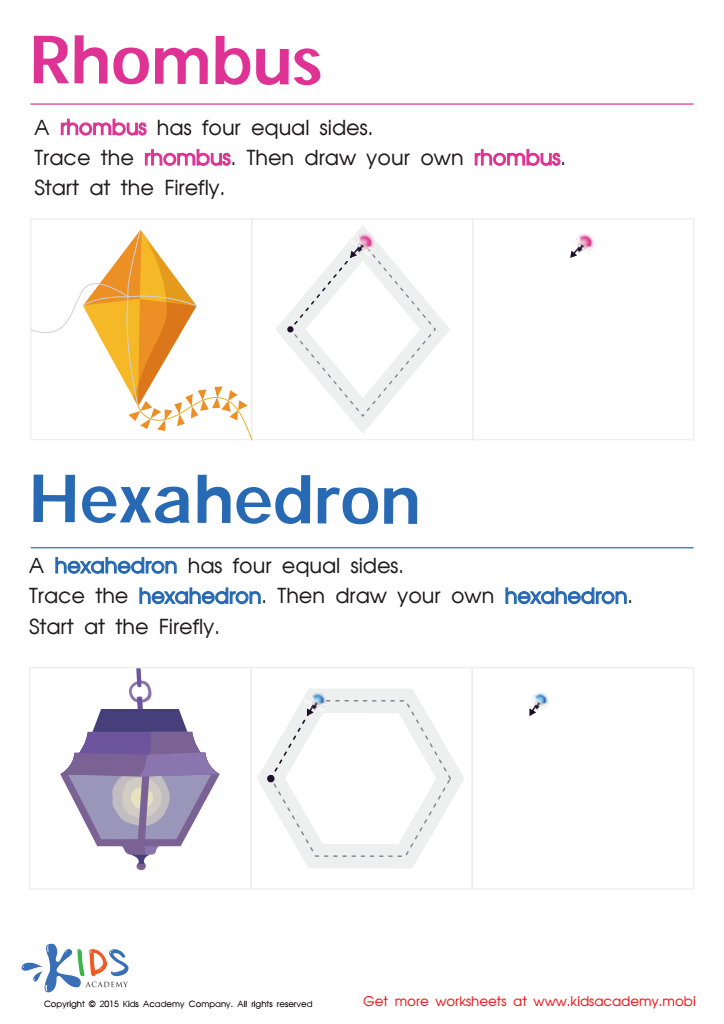
Draw a Rhombus And a Hexahedron Printable
 Assign to My Students
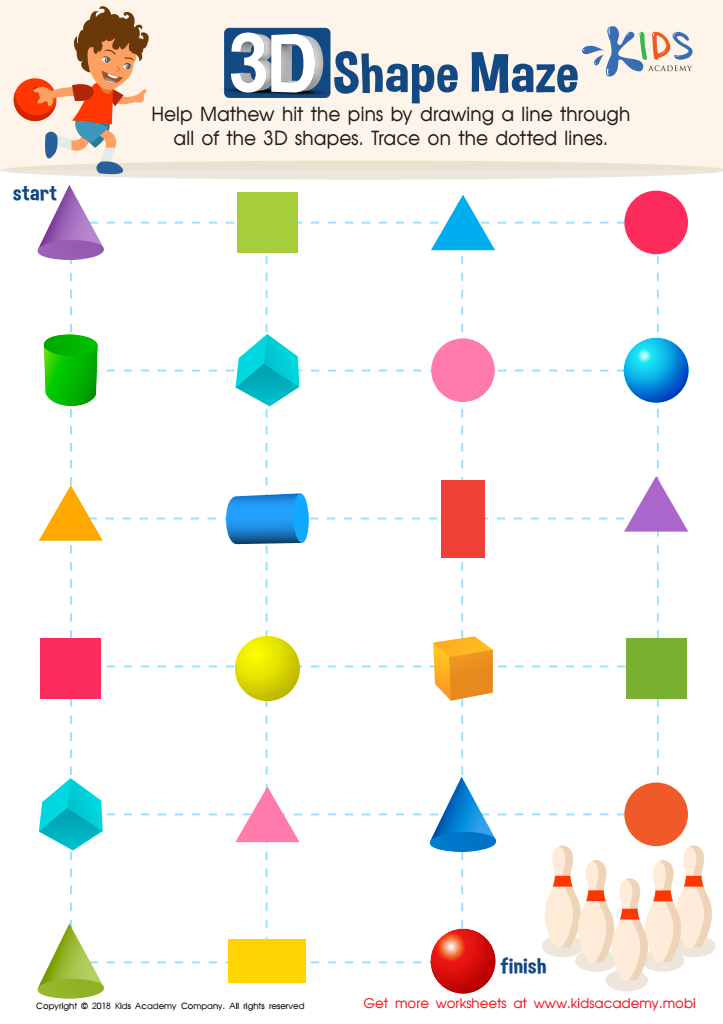
Shapes Maze Geometry Worksheet
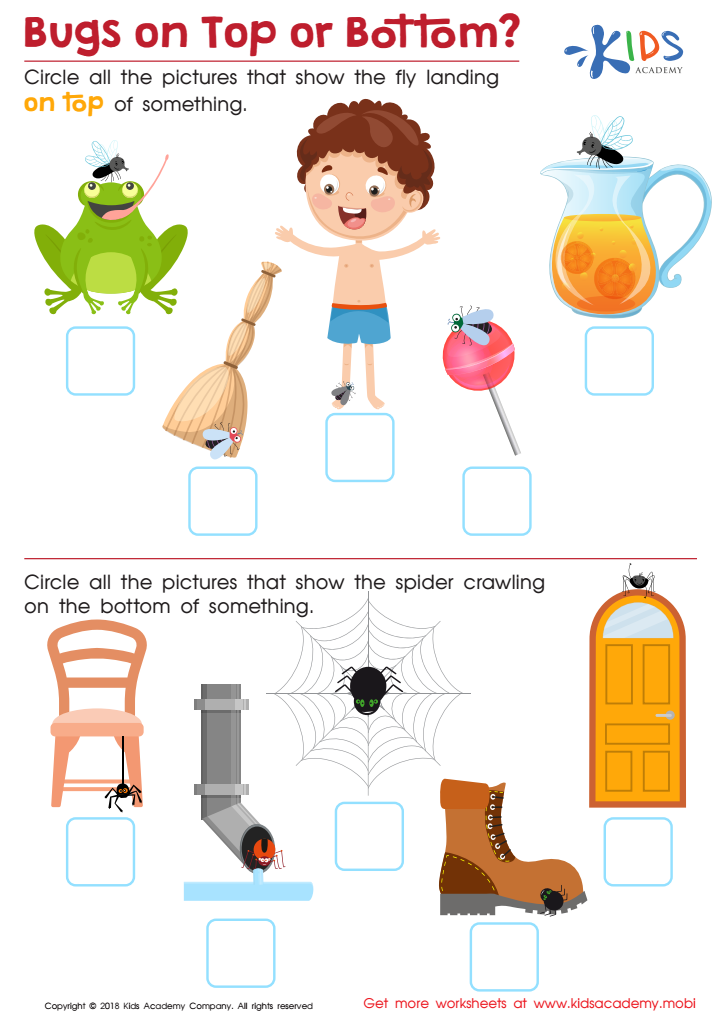
Bugs on Top or Bottom? Worksheet








Spatial reasoning is the ability to mentally visualize and manipulate objects and shapes. For children aged 4-8, developing this skill is particularly crucial for several reasons.
Firstly, spatial reasoning contributes significantly to early mathematical skills. Children with strong spatial thinking are better at understanding and solving mathematical problems, as they can easily visualize relationships between numbers and shapes. Activities like identifying shapes, exploring patterns, or solving puzzles enhance their ability to grasp concepts such as geometry, measurement, and even number sense.
Secondly, spatial reasoning bolsters problem-solving and critical thinking. Children use spatial skills to navigate environments, build structures with blocks, and even draw. These activities necessitate understanding spatial relationships, planning, and executing ideas — all of which are fundamental aspects of cognitive development.
Moreover, nurturing spatial reasoning early can pique interest in STEM (Science, Technology, Engineering, and Mathematics) fields. Proficiencies in disciplines like engineering, architecture, and computer science heavily rely on spatial skills. Early exposure ensures children are better prepared and more likely to pursue these fields later in life.
Therefore, teachers and parents should prioritize activities and curricula that strengthen spatial reasoning. Games, block play, drawing, and spatial language during everyday conversations can make a significant impact. Caring about spatial reasoning not only supports mathematical learning but also fosters broader cognitive abilities essential for life-long success.








