
Visual Perception Skills Normal Math Worksheets for Ages 4-8
3 filtered results
Difficulty Level
Grade
Age
-
From - To
Subject
Activity
Standards
Enhance your child's learning experience with our Visual Perception Skills Normal Math Worksheets designed specifically for ages 4-8. These engaging worksheets aim to develop essential visual perception abilities, such as shape recognition, spatial awareness, and pattern identification, all while introducing fundamental math concepts. With colorful illustrations and age-appropriate activities, children will enjoy practicing math while honing their visual skills. Our worksheets are perfect for home learning and classroom activities, ensuring that kids improve their visual processing in a fun and interactive way. Boost your child's confidence and academic performance with our curated set of visual perception math worksheets today!
Favorites
With answer key
Interactive
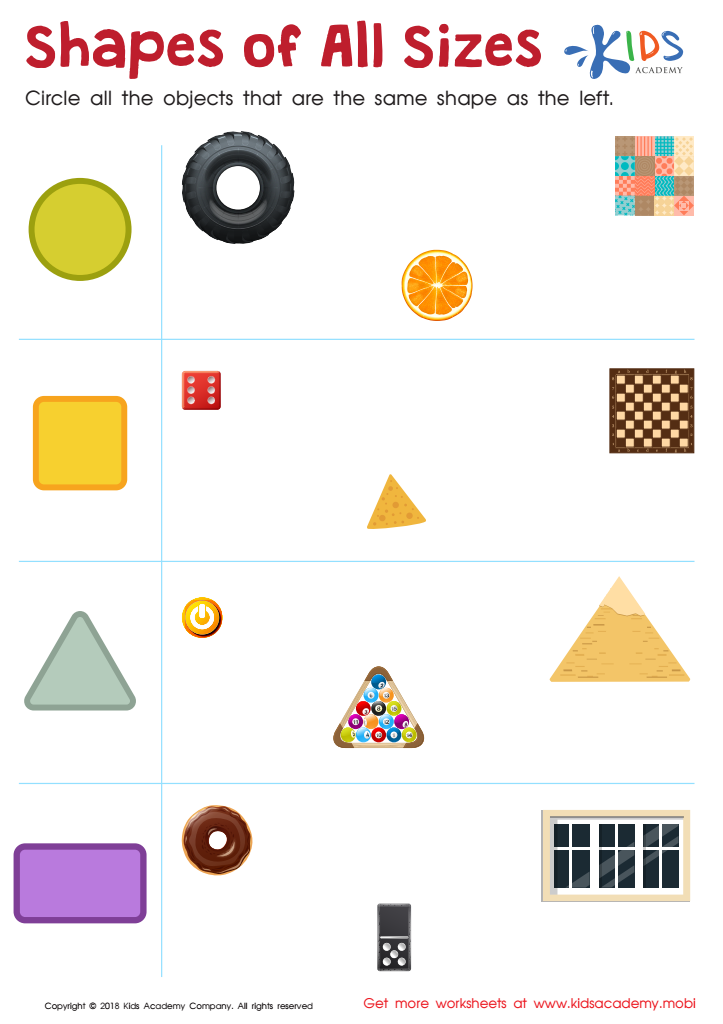
Shapes of All Sizes Worksheet
Students will have fun comparing basic shapes to familiar objects with this worksheet. It's an excellent way to help them recognize similarities in geometric shapes, building strong foundations for understanding congruence and similarity.
 Assign to My Students
Shapes of All Sizes Worksheet
Worksheet
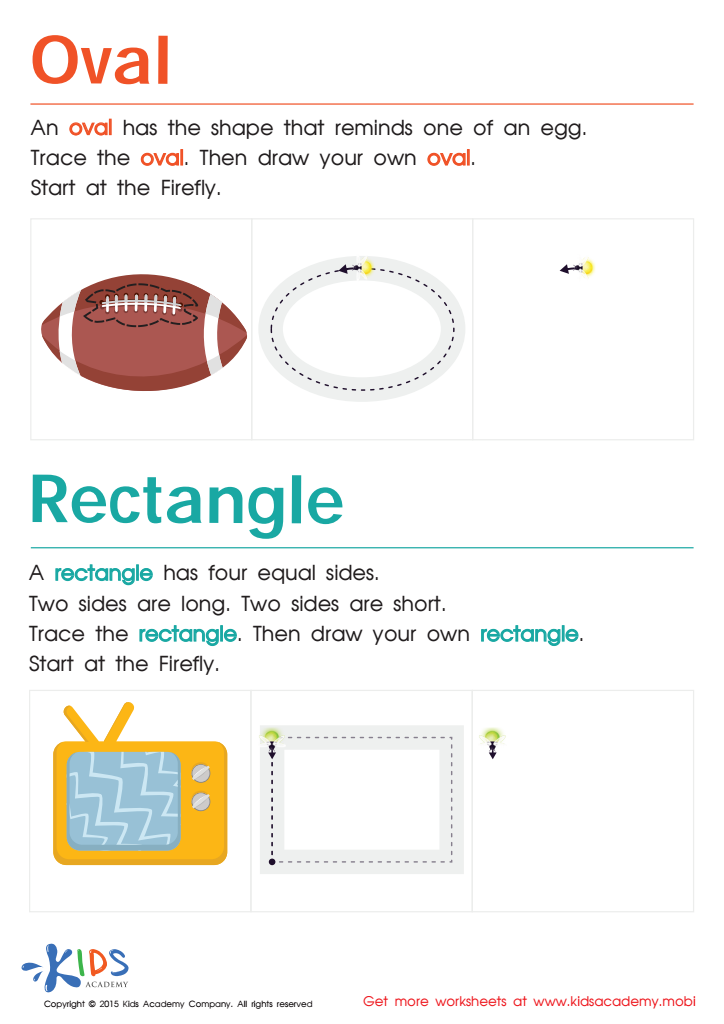
Easy Drawing of Ovals And Rectangles Worksheet
Kids Academy offers free geometry worksheets to make learning more fun and interesting. Trace an oval, rectangle, and many other shapes!
Easy Drawing of Ovals And Rectangles Worksheet
Worksheet
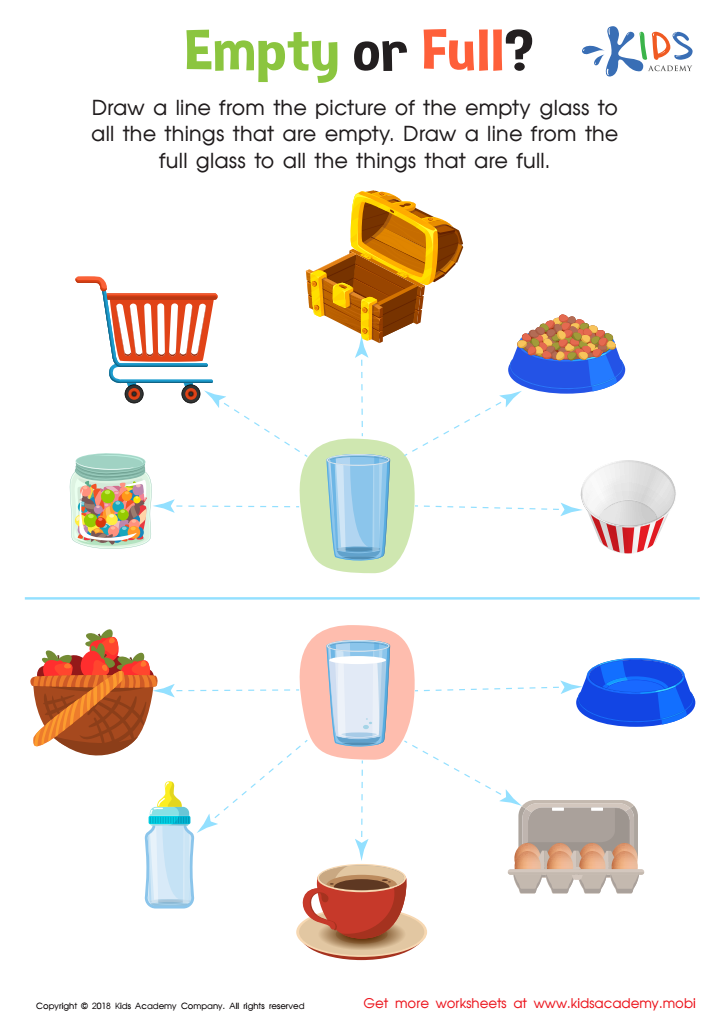
Empty or Full? Worksheet
Let students get to grips with the concepts of empty and full with this PDF worksheet. It uses fun, bright pictures to help them comprehend the difference and also helps develop fine-motor skills with tracing lines. Kids will be proud of themselves as they get answers right!
Empty or Full? Worksheet
Worksheet
Join Kids Academy for Free
Who is primarily going to use this learning content?








Visual perception skills are essential for math proficiency, especially for children aged 4-8. These skills enable children to recognize shapes, differentiate between sizes and positions, and understand spatial relationships — all fundamental concepts in early math learning. As children develop these abilities, they become better equipped to tackle mathematical tasks, from counting to more complex problems involving addition and subtraction.
Parents and teachers should prioritize nurturing visual perception skills because they lay the groundwork for future academic success. Strong visual perception not only enhances math skills but also supports reading and writing development. By identifying and fostering these abilities early, educators can help children become confident and competent learners.
In the classroom, activities such as pattern recognition, puzzles, and spatial orientation games can significantly enhance visual perception. Similarly, at home, parents can contribute by engaging children in interactive experiences like building blocks or shape sorting. This collaborative effort promotes cognitive development and strengthens parent-child bonds.
Investing time in developing visual perception skills yields long-term benefits, including better problem-solving abilities, improved academic performance, and the foundation for critical thinking. Through this lens, early math education becomes more than just numbers; it becomes a comprehensive approach to nurturing inquisitive and capable learners.








