Matching skills Normal Matching Worksheets for Ages 4-8
4 filtered results
-
From - To
Our Matching Skills Normal Matching Worksheets for Ages 4-8 are designed to engage young learners in fun and educational activities. These worksheets help children develop critical thinking, improve concentration, and boost their visual discrimination skills. With colorful images and interactive exercises, kids can practice counting, shape recognition, and pattern matching in an enjoyable format. Puzzles and matching games are curated to suit different learning stages, keeping youngsters captivated and encouraging continuous learning. Ideal for at-home practice or classroom use, our printable worksheets provide a solid foundation for early math success. Unlock your child's potential with our comprehensive matching activities!
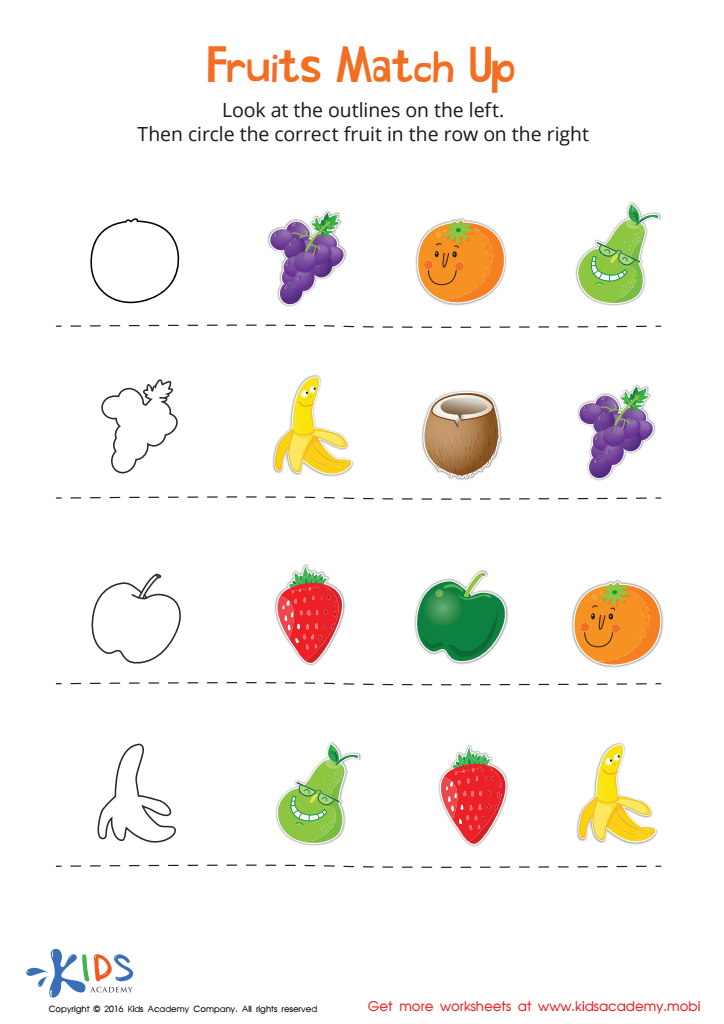
Fruits Match Up Worksheet
 Assign to My Students
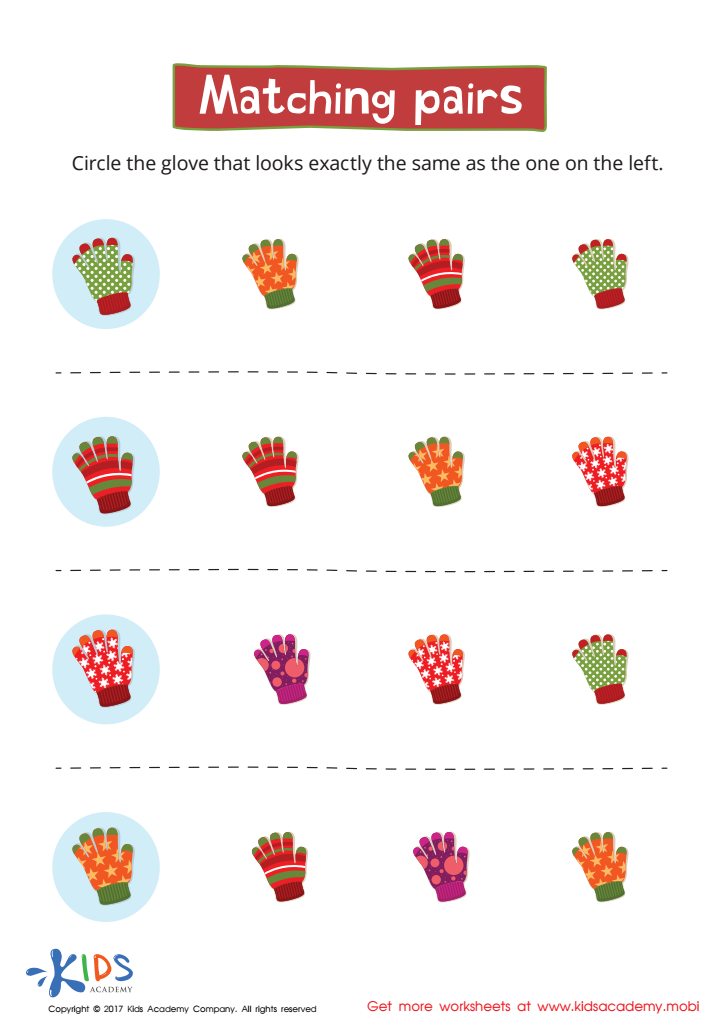
Matching: Matching Pairs Worksheet
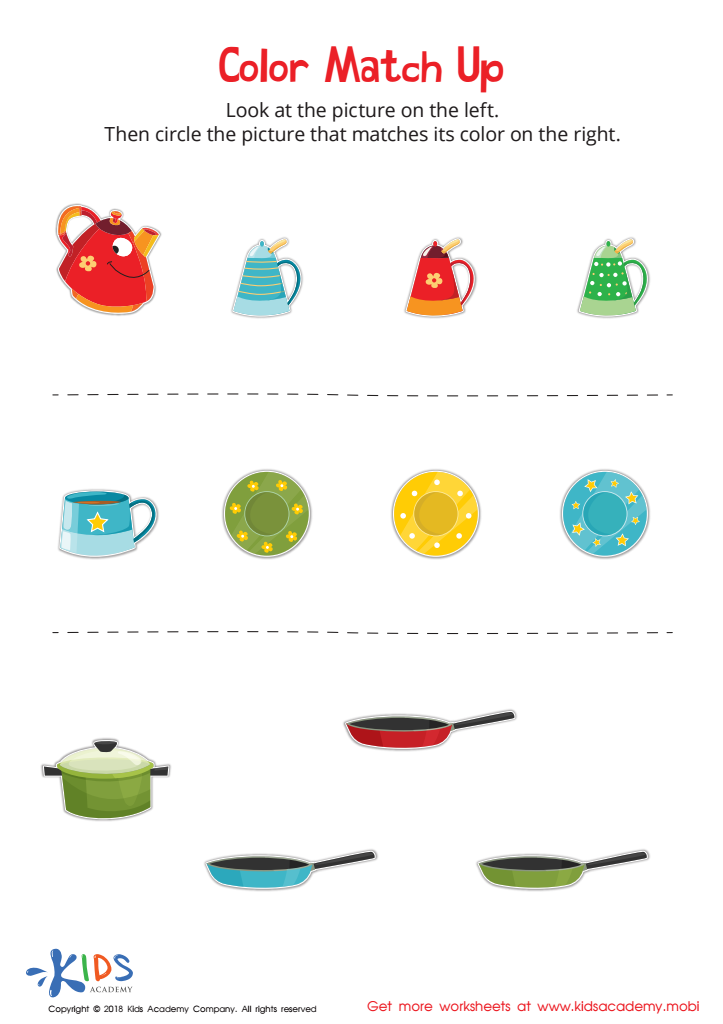
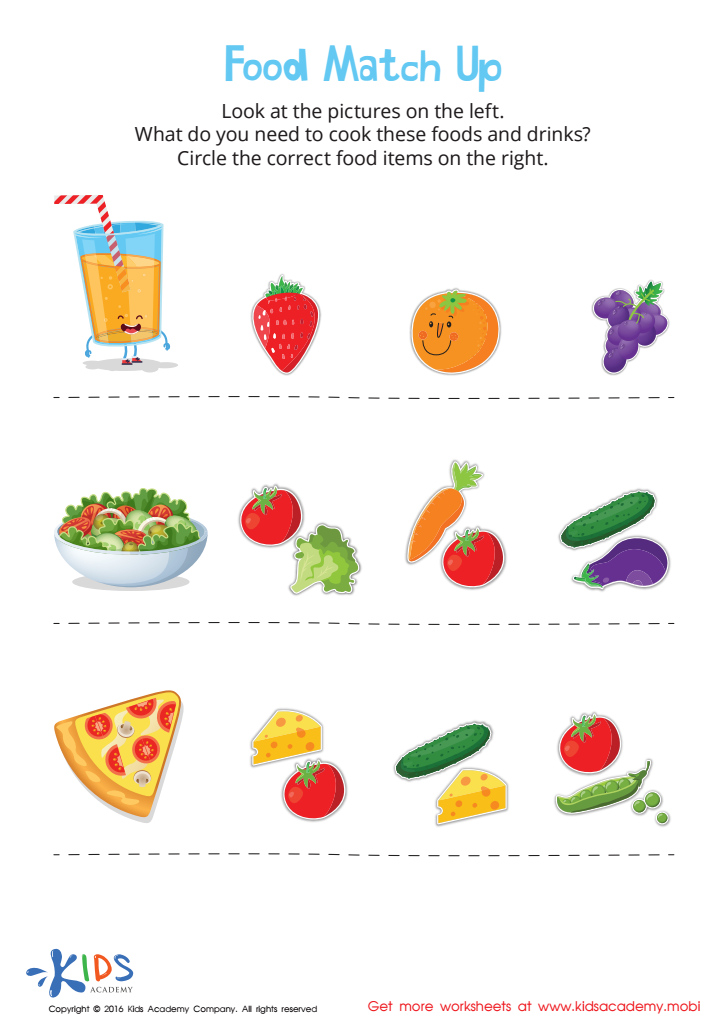
Food Match Up Worksheet







Matching skills are a crucial component of early childhood development, especially for children ages 4-8. At this stage, children's brains are rapidly growing and absorbing information from their surroundings. Developing matching skills aids in cognitive development, boosting memory, concentration, and attention to detail. These skills lay the groundwork for more complex tasks such as reading, spelling, and mathematics.
For example, when children engage in activities that involve matching colors, shapes, or objects, they learn to categorize and organize information in their minds. This is vital for problem-solving and logical reasoning later in life. Additionally, matching activities improve fine motor skills and hand-eye coordination, fostering better handwriting and other manual tasks.
For parents and teachers, investing time in matching exercises can also reveal a child’s unique learning style and areas where they may need additional support. Recognizing patterns and developing action plans to strengthen weaker areas ensures a well-rounded educational foundation.
Moreover, matching games and activities provide an enjoyable, interactive way for children to learn, making education a fun and engaging experience. Whether it's through puzzles, card games, or digital apps, these activities not only educate but also strengthen parent-child or teacher-student bonds, making learning a shared, positive experience.








