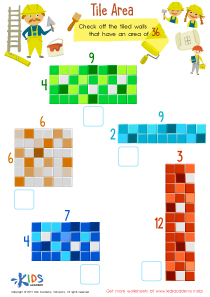
Number Recognition Normal Matching Worksheets for Ages 4-8
6 filtered results
-
From - To
Unlock your child’s potential with our Number Recognition Normal Matching Worksheets for Ages 4-8! Carefully designed to enhance early math skills, these engaging and interactive activities guide young learners in recognizing and matching numbers. Our worksheets are tailored to support the development of essential number recognition in a fun and educational way. Perfect for both classroom and at-home learning, your child will build confidence and a strong foundation in math. Download now from Kids Academy and give your child the advantage they deserve for a bright mathematical future!
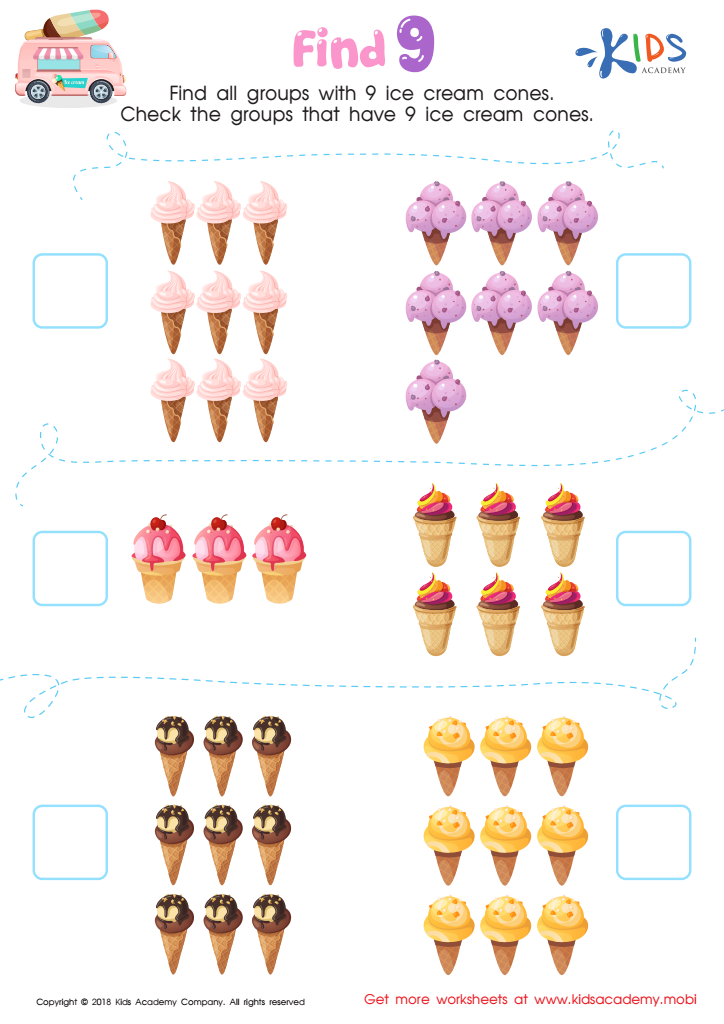
Find 9 Worksheet
 Assign to My Students
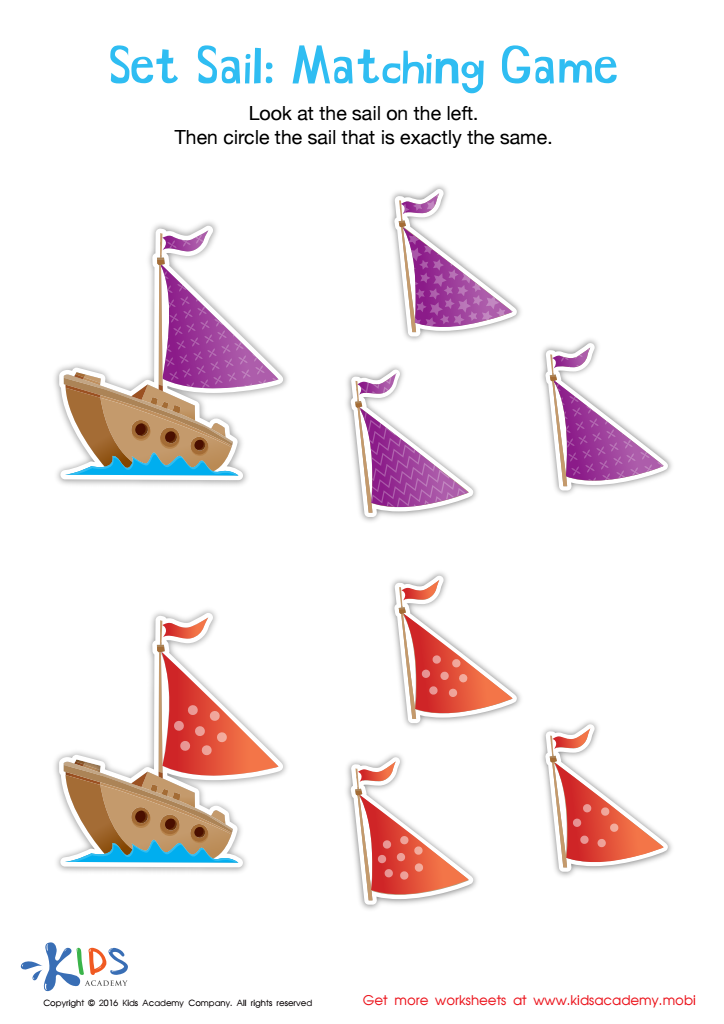
Set Sail Worksheet
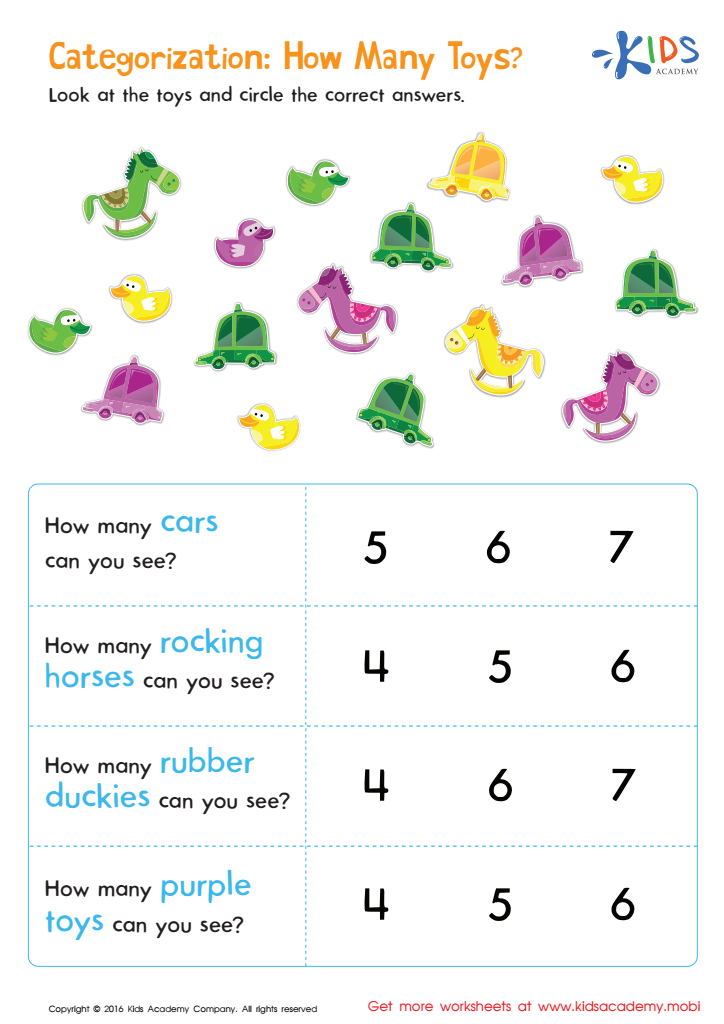
Classifying Toys by Type and Color Sorting Worksheet
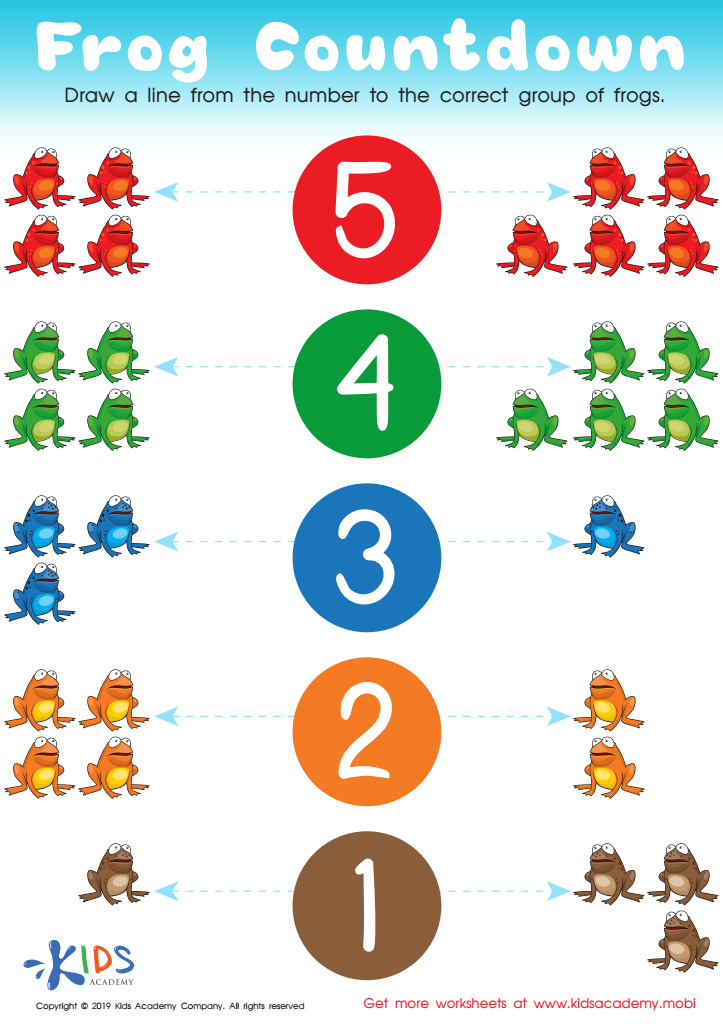
Frog Countdown Worksheet
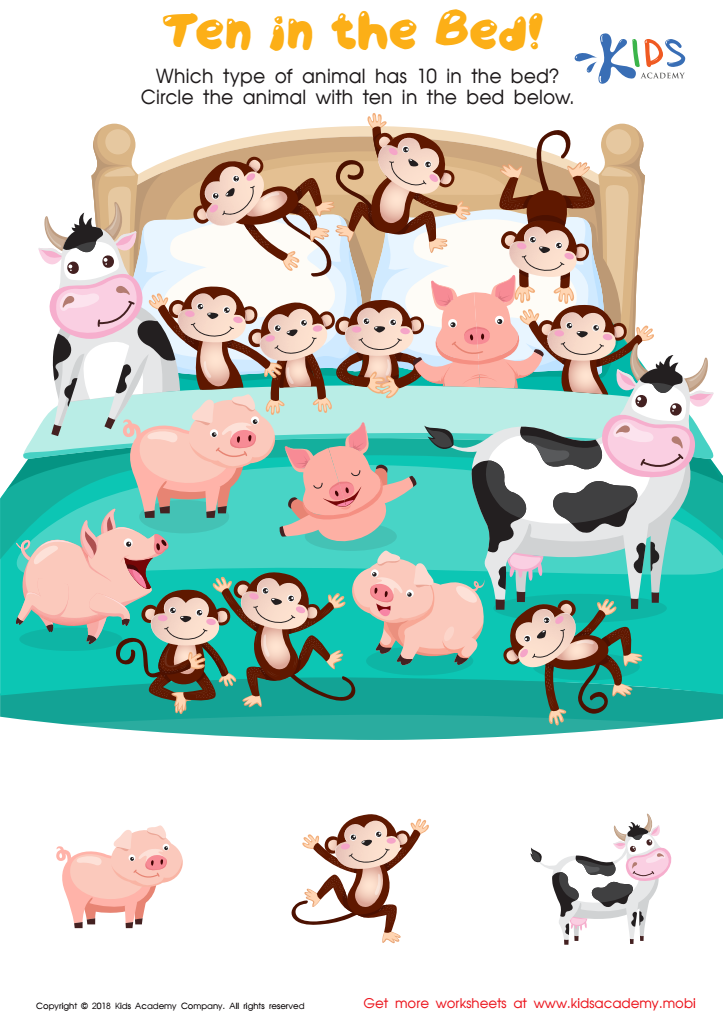
Ten in the Bed Worksheet
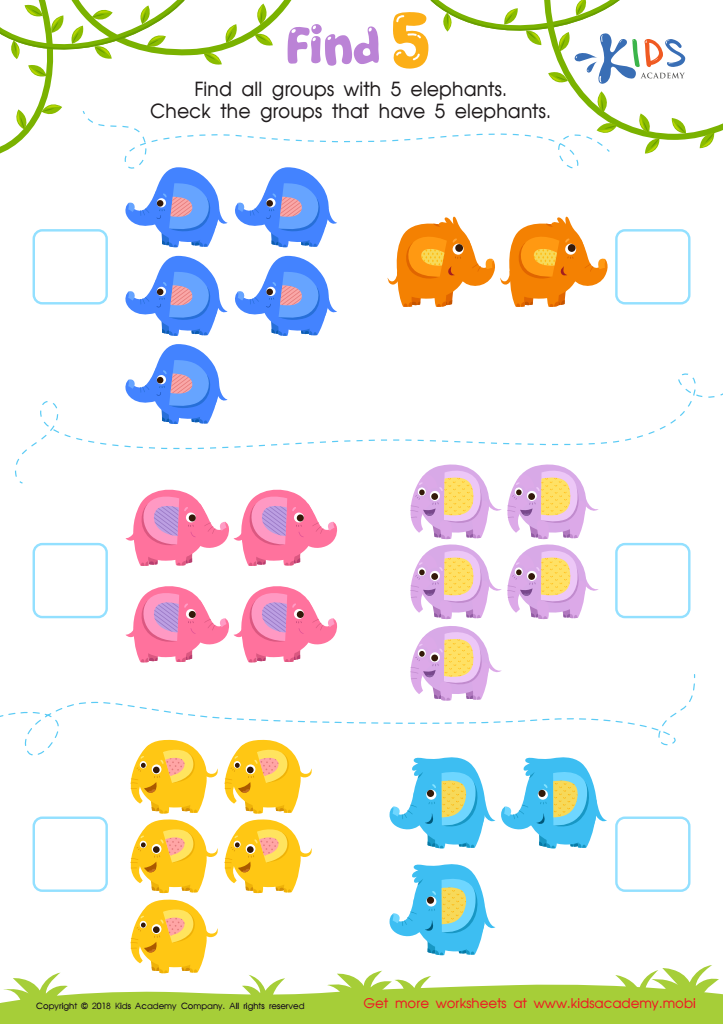
Find 5 Worksheet








Number recognition and normal matching for children aged 4-8 lays a fundamental foundation for their mathematical understanding and future educational success. During these early years, children's brains are highly receptive and can easily assimilate new concepts, making it a critical period for introducing basic numeracy skills.
Firstly, recognizing numbers is essential for everyday activities, such as counting objects, reading prices, and understanding time. When parents and teachers focus on teaching number recognition, they equip children with the necessary skills to navigate their world and develop confidence in their abilities. This skill growth helps ease future learning experiences.
Moreover, matching numbers with corresponding quantities engages children in meaningful context-based learning. This reinforces their counting skills and introduces them to the concept of one-to-one correspondence. When a child successfully matches three blocks with the number "3," they're not only practicing numeracy but also enhancing cognitive abilities like pattern recognition and logical thinking.
Lastly, early numeracy skills are strong predictors of later academic achievements in mathematics. Providing children with engaging, hands-on activities targeted at number recognition aids in creating a positive, no-fear association with math. Thus, parents and teachers must prioritize these foundational math concepts to support children’s long-term educational trajectory and holistic development.