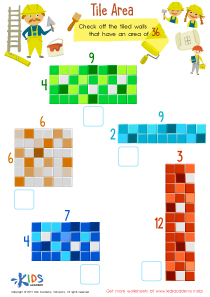
Fine Motor Skills Normal Sorting Worksheets for Ages 4-8
3 filtered results
Difficulty Level
Grade
Age
-
From - To
Subject
Activity
Standards
Enhance your child's dexterity with our "Fine Motor Skills Normal Sorting Worksheets for Ages 4-8." Tailored to develop precision in little hands, these worksheets offer engaging activities that promote sorting, categorization, and hand-eye coordination. Perfect for preschool through second grade, each worksheet supports early math skills while boosting fine motor development. Ideal for classrooms or at-home learning, these activities are designed to make learning fun and interactive. Help your child build a strong foundation in essential skills that pave the way for academic success. Explore our colorful and captivating sorting worksheets today!
Favorites
With answer key
Interactive
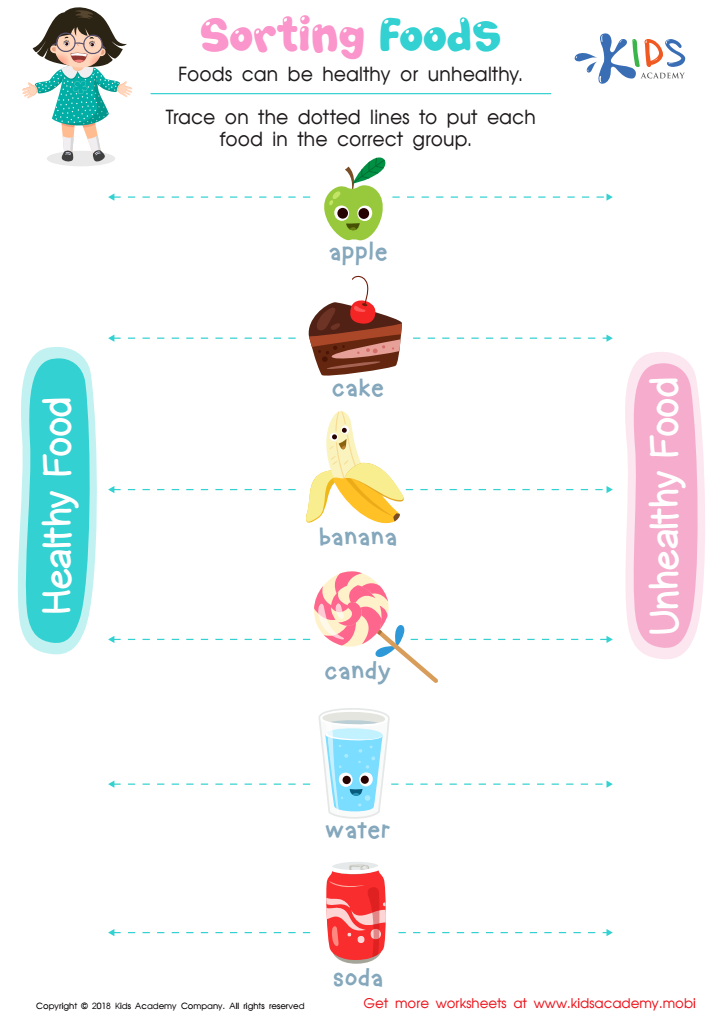
Sorting Food Worksheet
This delightful worksheet boosts critical thinking and fine motor skills. Kids use prior knowledge and pictures to sort foods into healthy and unhealthy groups. Tracing lines support accurate sorting and matching. Enjoy fun and free learning!
 Assign to My Students
Sorting Food Worksheet
Worksheet
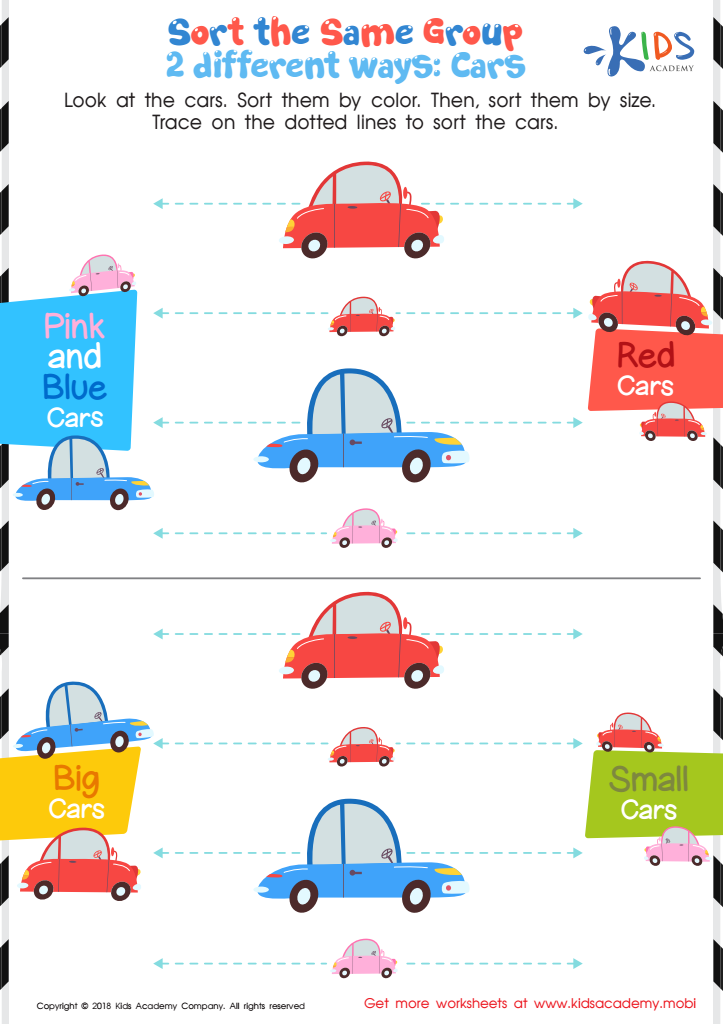
Sort the Same Group 2 Different Ways: Cars Worksheet
Look at the pictures with your child. Can they identify the objects? Ask them to sort the cars first by color and then size. Assist them to trace the dotted lines to sort the cars by color and size. This worksheet lets you easily assess your child's color and size organization skills.
Sort the Same Group 2 Different Ways: Cars Worksheet
Worksheet

Join Kids Academy for Free
Who is primarily going to use this learning content?








Fine motor skills development in children aged 4-8 is essential for several reasons. These skills involve the coordination of small muscle movements in the hands and fingers, enabling children to perform tasks like writing, buttoning clothes, and using utensils. For parents and teachers, improving fine motor skills is crucial because it directly impacts a child's independence and ability to engage in daily activities.
In the classroom, fine motor skills are vital for academic success. Children with well-developed fine motor abilities can hold pencils correctly, form legible handwriting, and engage in crafts that require precise hand movements. Conversely, children who struggle with these skills may find it challenging to complete schoolwork, feeling frustrated or lagging behind their peers.
Moreover, developing fine motor skills enhances cognitive abilities such as focus, problem-solving, and hand-eye coordination. Engaging in activities like sorting objects of different sizes and shapes can bolster children's cognitive development while making learning interactive and enjoyable.
At home, parents can support their child’s fine motor development through play. Activities like playing with building blocks, using playdough, or using child-safe scissors can refine these skills, fostering creativity and confidence.
In essence, attention to fine motor development in early years lays a foundation for not only academic success but also lifelong independence and cognitive flexibility.