Problem-Solving Skills Normal Two-step Word Problems Worksheets for Ages 4-8
9 filtered results
-
From - To
Boost your child's critical thinking with our "Problem-Solving Skills: Normal Two-step Word Problems Worksheets for Ages 4-8." These engaging worksheets are expertly designed to challenge young minds and develop essential problem-solving abilities. Each worksheet features a variety of age-appropriate word problems that require careful reading, logical reasoning, and basic math skills to solve. Whether your child is just starting with simple arithmetic or advancing to more complex concepts, these worksheets provide the perfect practice to enhance their mathematical prowess. Perfect for classroom or at-home learning, help your child build a strong foundation in problem-solving today!
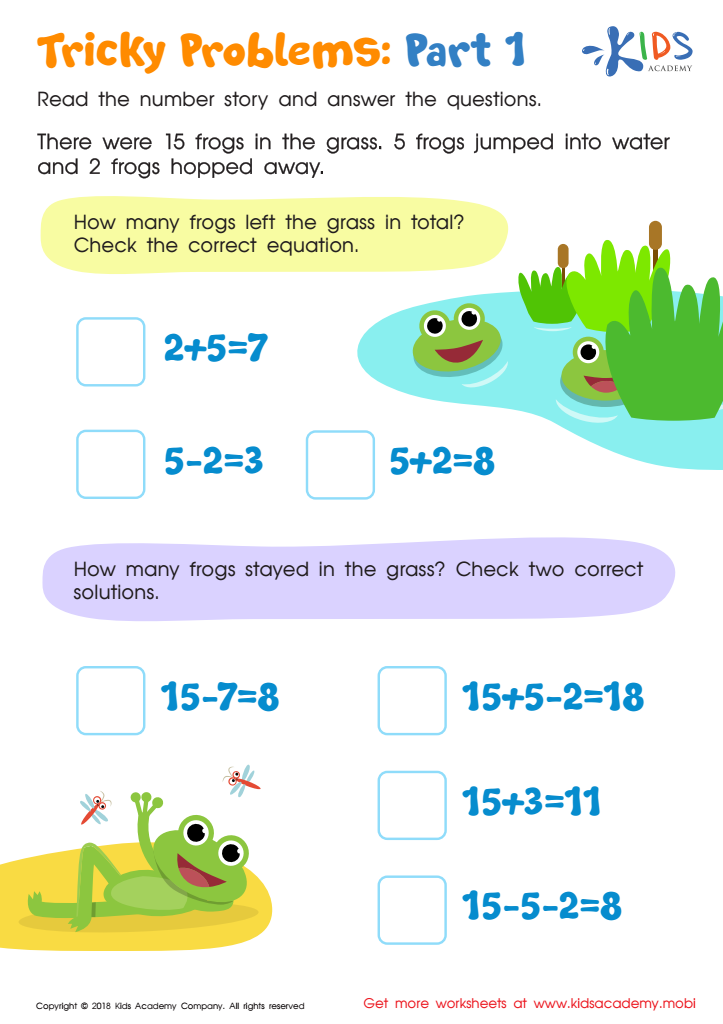
Tricky Problems Worksheet: Part 1
 Assign to My Students
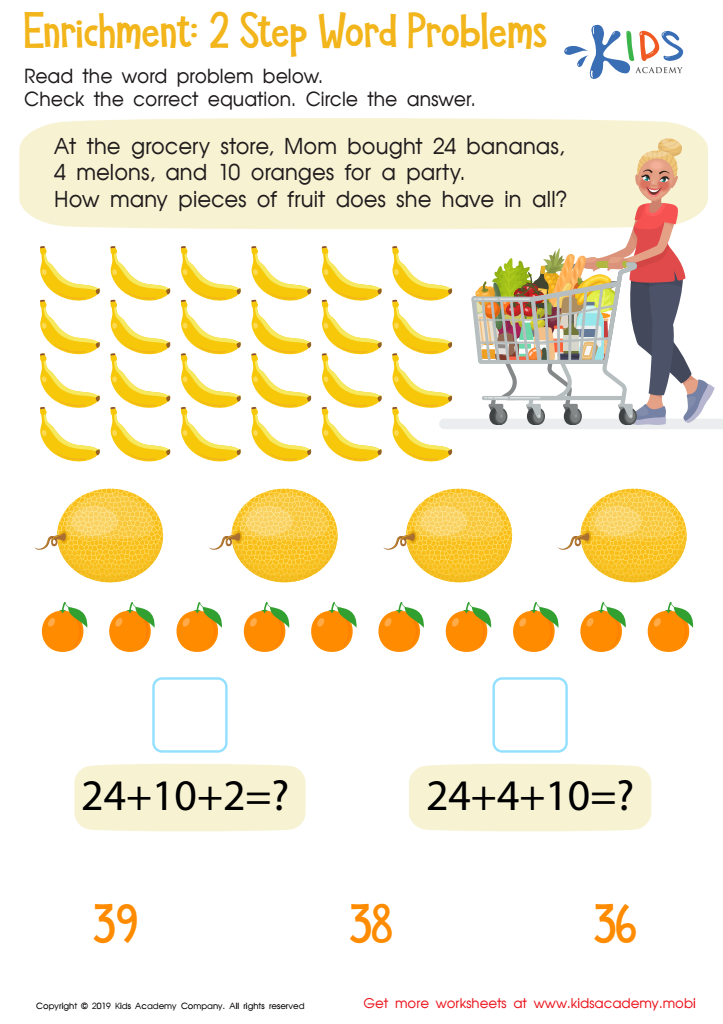
Enrichment -2 Step Word Problems Worksheet
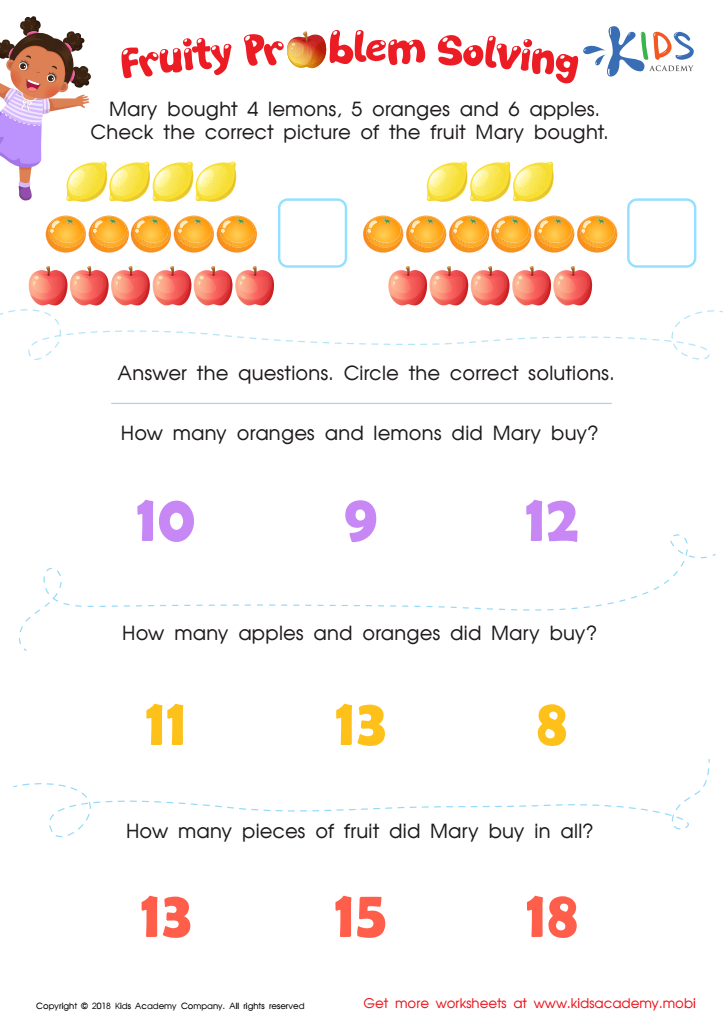
Fruity Problem Solving Worksheet
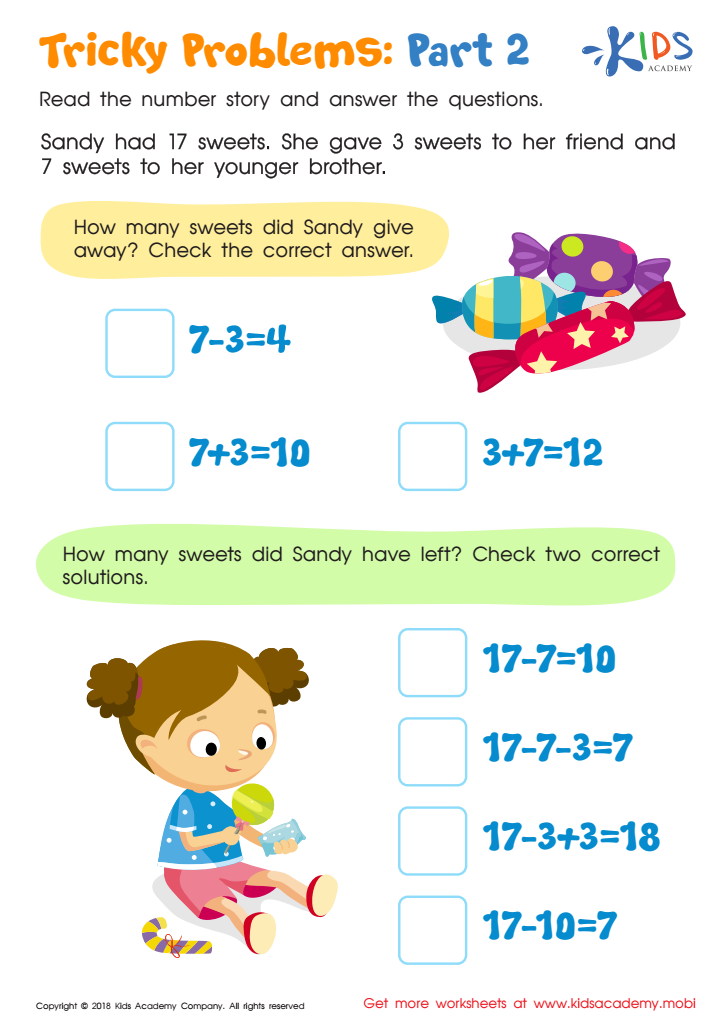
Tricky Problems Worksheet: Part 2
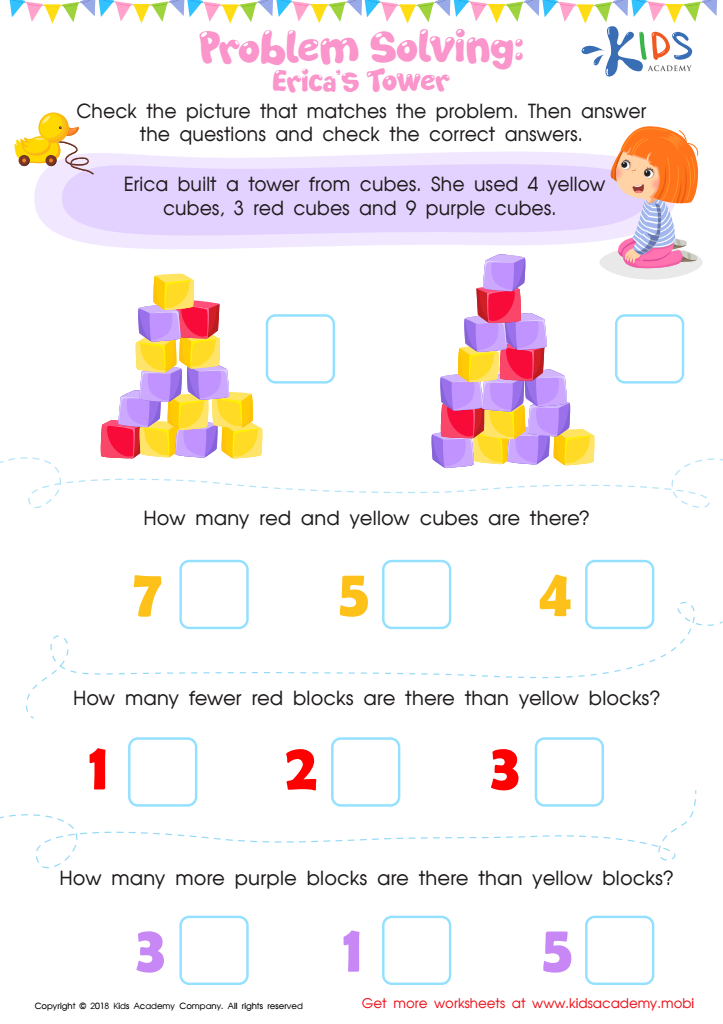
Problem Solving: Erica's Tower Worksheet
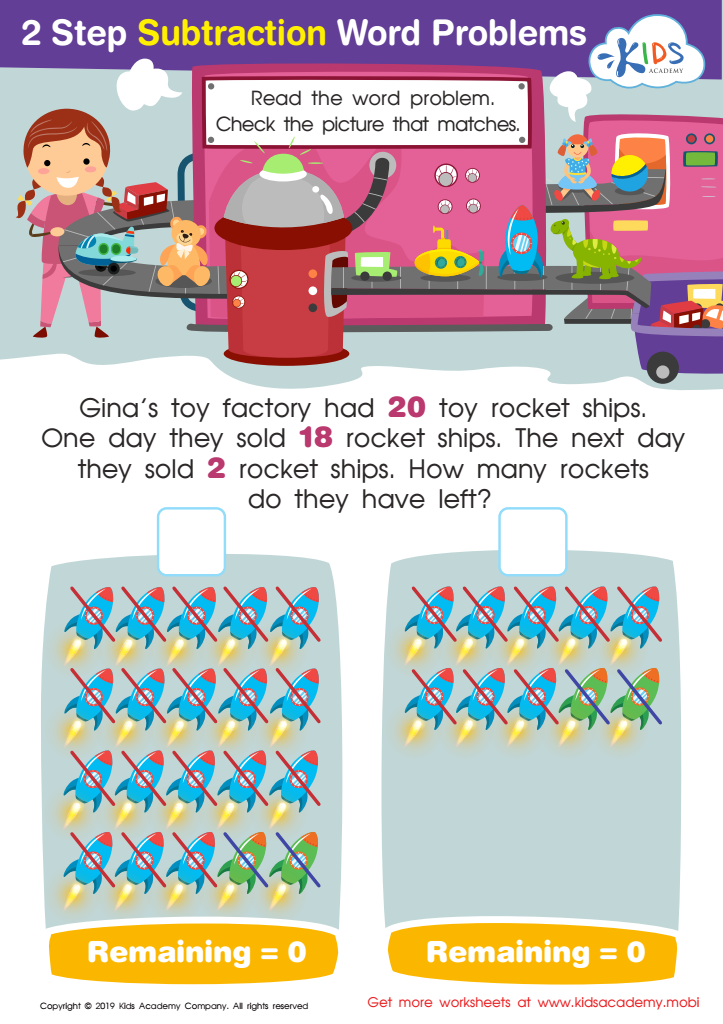
Step Subtraction Word Problems Worksheet
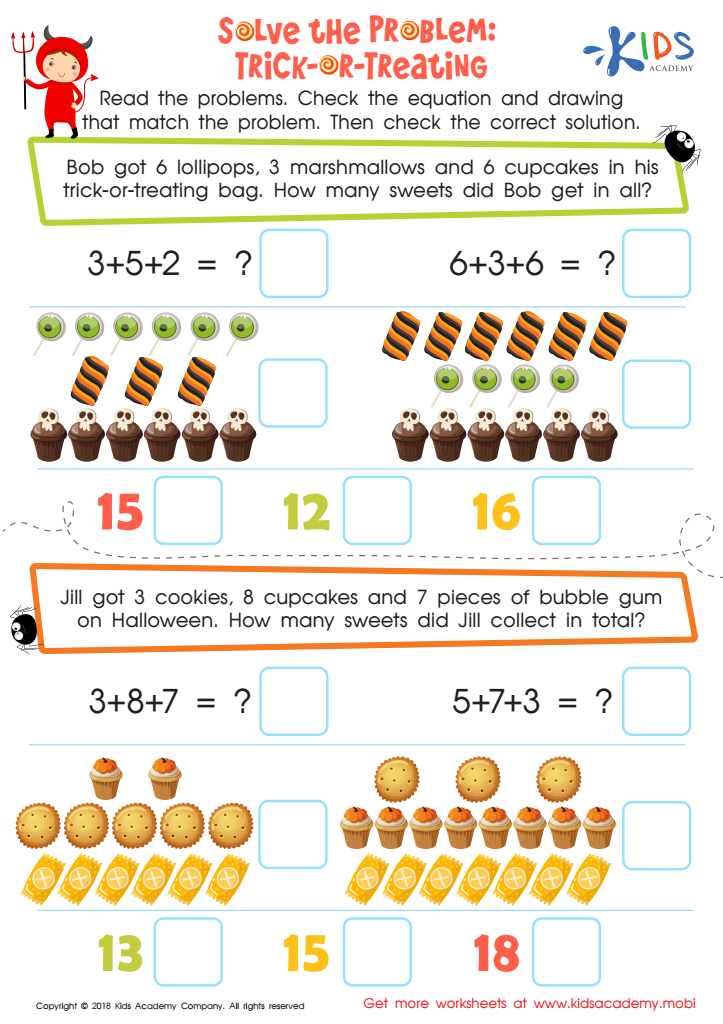
Solve the Problem: Trick–or–treating Worksheet
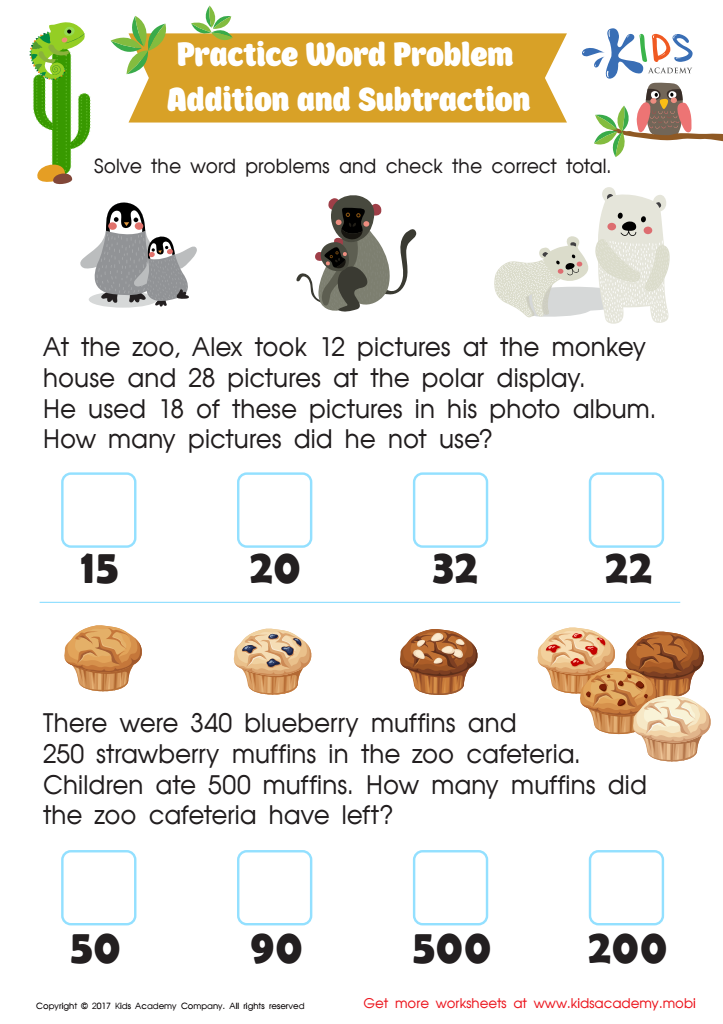
Addition and Subtraction: Word Problems Worksheet
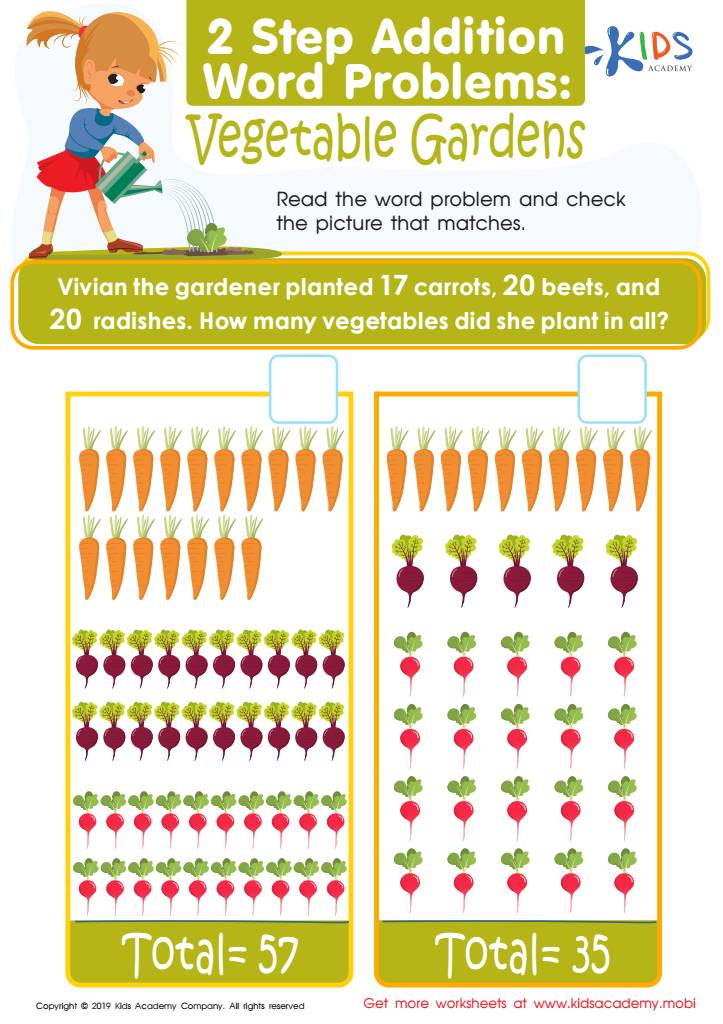
Vegetable Gardens Worksheet



It's important for parents and teachers to care about developing problem-solving skills in young children, especially through normal two-step word problems, for several reasons. Firstly, these skills lay the foundation for critical thinking, enabling children to break down complicated issues into manageable parts and navigate them effectively. For example, solving a word problem that involves adding and then subtracting helps children understand sequences and logical progression.
Secondly, problem-solving fosters independence and confidence. When children successfully solve multi-step problems, it builds their self-esteem and encourages them to tackle new challenges without hesitation. This self-assured approach can translate into better performance not just in mathematics, but across all subjects.
Additionally, engaging with word problems enhances language and comprehension skills. Children must read, understand, and interpret text to identify what's being asked. This improves their reading abilities and equips them with a multifaceted approach to learning.
Lastly, early exposure to problem-solving equips children with lifelong skills that are crucial for future academic and personal success. In a world that increasingly values analytical and reasoning abilities, developing problem-solving skills at a young age ensures that children are better prepared for the complexities of life and work in the 21st century.
Investing in these capabilities from a young age is not just academically advantageous but essential for overall personal development.