Logical Reasoning Normal Word Problems Worksheets for Ages 4-8
4 filtered results
-
From - To
Explore our engaging "Logical Reasoning Normal Word Problems Worksheets" designed for children ages 4-8! These worksheets are crafted to foster critical thinking and problem-solving skills through fun, relatable scenarios. Each worksheet presents a unique challenge that encourages kids to apply logical reasoning in everyday contexts. Perfect for homeschool or classroom use, our resources help young learners navigate through math concepts seamlessly while developing essential cognitive skills. With colorful illustrations and age-appropriate language, these worksheets make learning enjoyable and interactive. Support your child's journey in mastering logical reasoning and watch their confidence and abilities soar! Download your worksheets today!
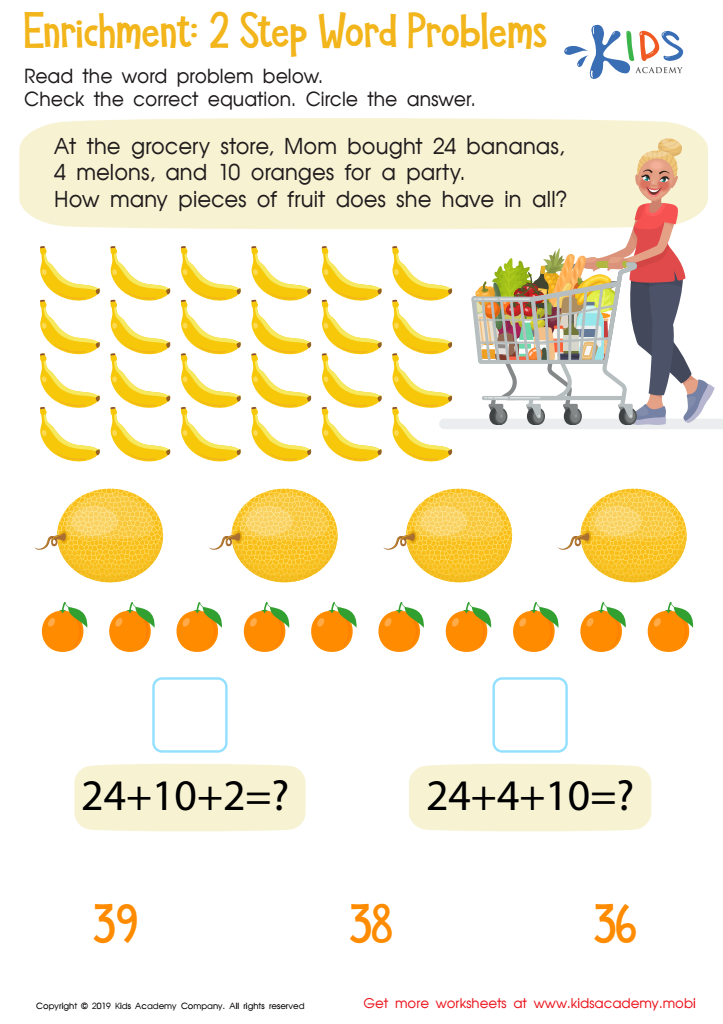
Enrichment -2 Step Word Problems Worksheet
 Assign to My Students
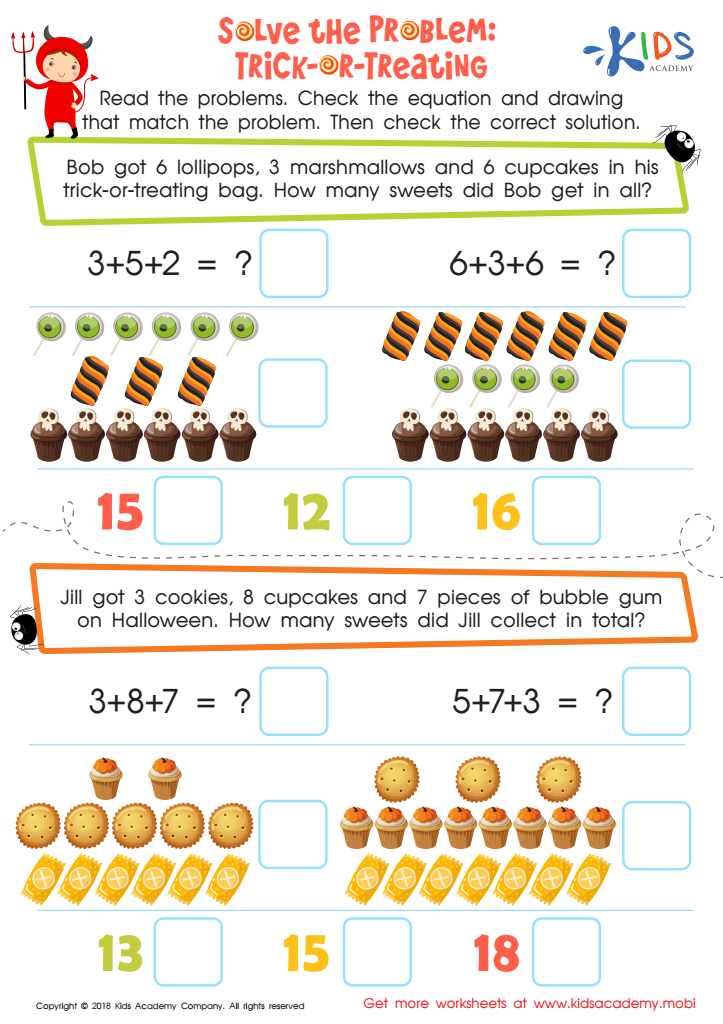
Solve the Problem: Trick–or–treating Worksheet
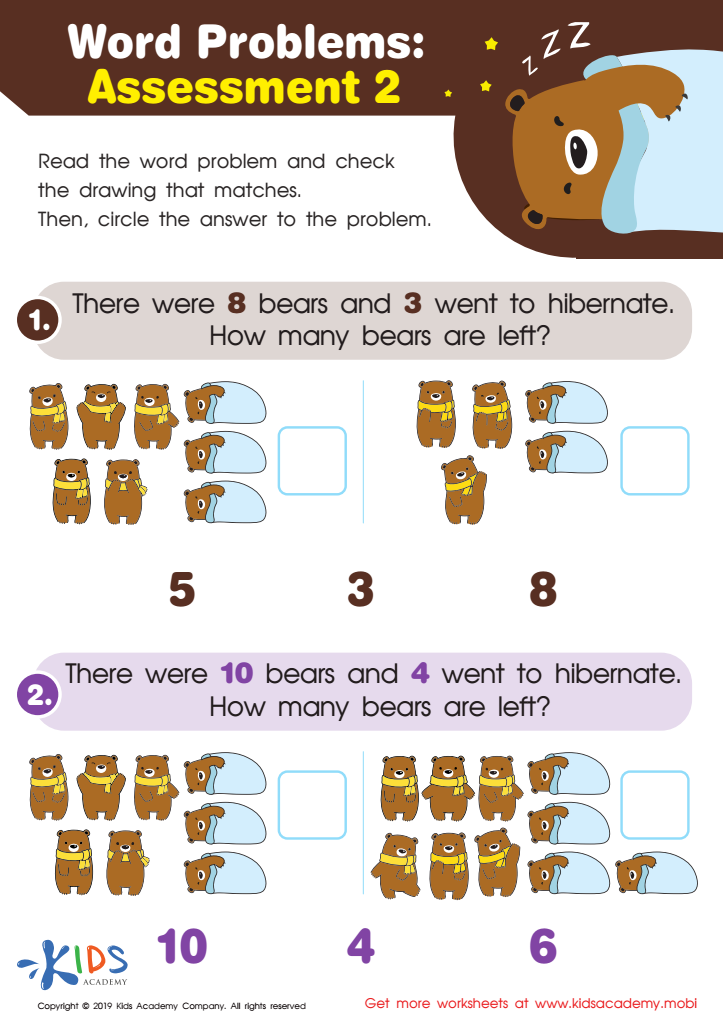
Word Problems: Assessment 2 Worksheet
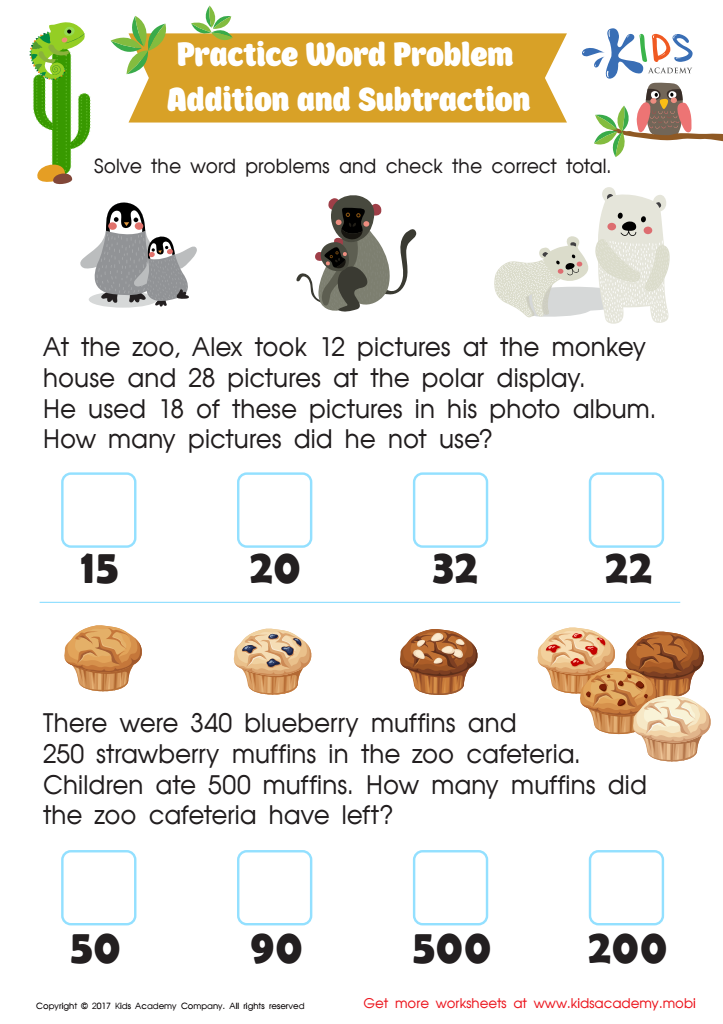
Addition and Subtraction: Word Problems Worksheet



.jpg)



Logical reasoning plays a crucial role in a child's early cognitive development. For ages 4-8, logical reasoning normal word problems help children to develop critical thinking and problem-solving skills essential for navigating everyday situations and academic challenges. Engaging with these types of problems fosters a child’s ability to comprehend information, analyze relationships, and make informed decisions.
Parents and teachers should prioritize logical reasoning activities because they create a foundation for later academic success in subjects like mathematics and science. By working through word problems, children learn to translate written information into actionable steps, enhancing their comprehension and communication skills. Furthermore, the ability to reason logically is linked to improving children's social skills, as it aids in understanding perspectives and making connections with others.
Incorporating logical reasoning in playful and interactive ways cultivates a love for learning and encourages perseverance, as children encounter and work through challenges. Overall, fostering logical reasoning through normal word problems not only enhances academic performance, but also supports children's emotional and social development, preparing them for a well-rounded future in an increasingly complex world. Thus, investing time in these practices should be a priority for both parents and teachers.








