Logical Reasoning Normal Building Vocabulary Worksheets for Ages 4-8
4 filtered results
-
From - To
Enhance your child's vocabulary and logical reasoning skills with our thoughtfully designed worksheets for ages 4-8. These engaging activities promote critical thinking while expanding linguistic abilities. Children will enjoy solving puzzles, making connections, and identifying patterns, all while learning new words. Our logical reasoning worksheets are not only educational but also fun, encouraging interactive learning and a love for reading. Designed by experts, these printable resources help young learners build a solid foundation in language arts, preparing them for future academic success. Discover the joy of learning and watch your child thrive with our unique vocabulary-building worksheets!
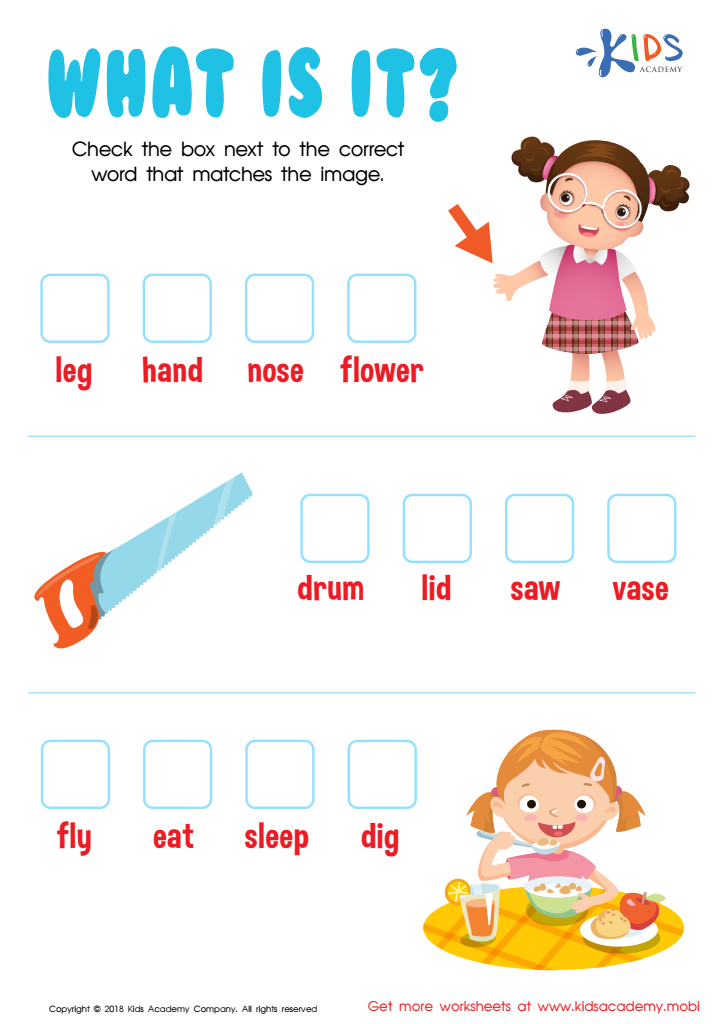
What Is It? Worksheet
 Assign to My Students











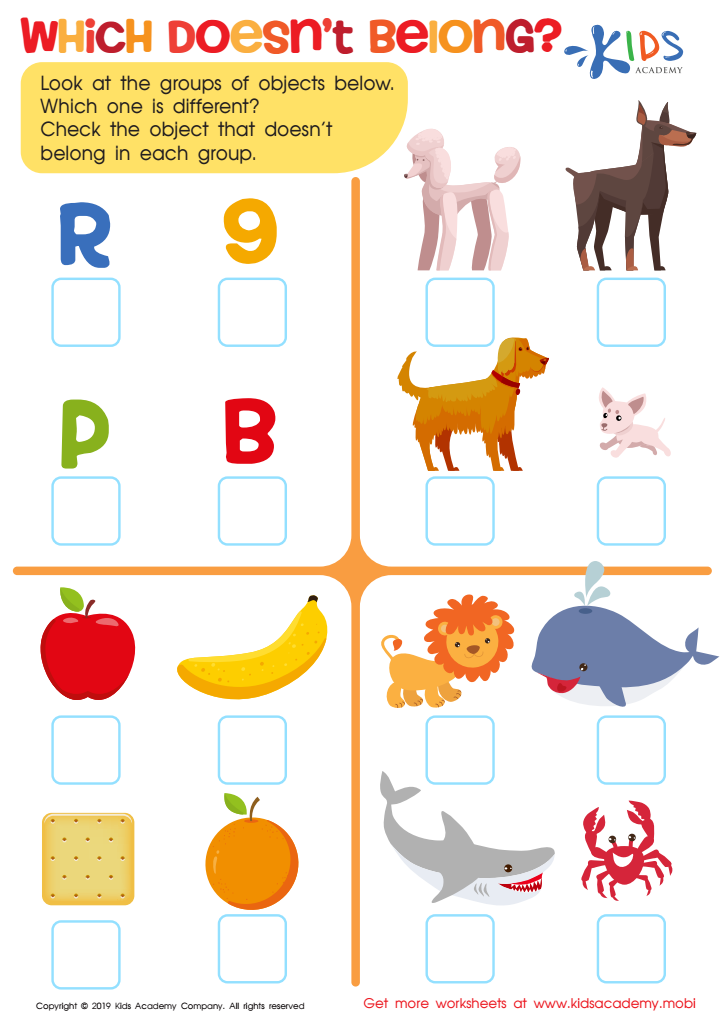
Which Doesn't Belong? Worksheet
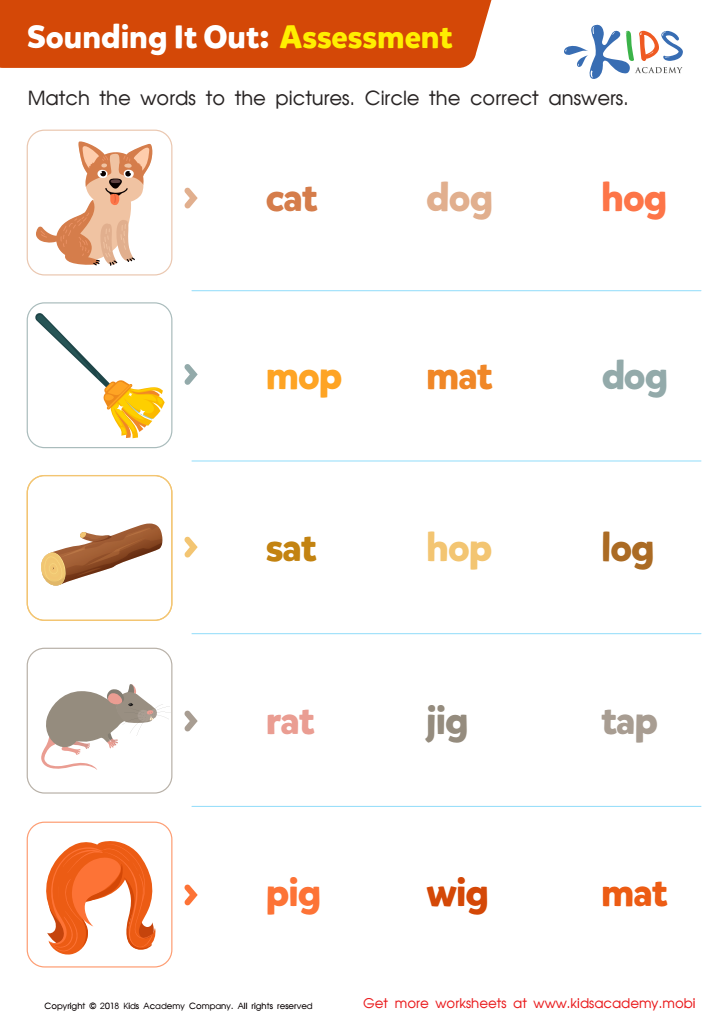
Sounding it Out: Assessment Worksheet
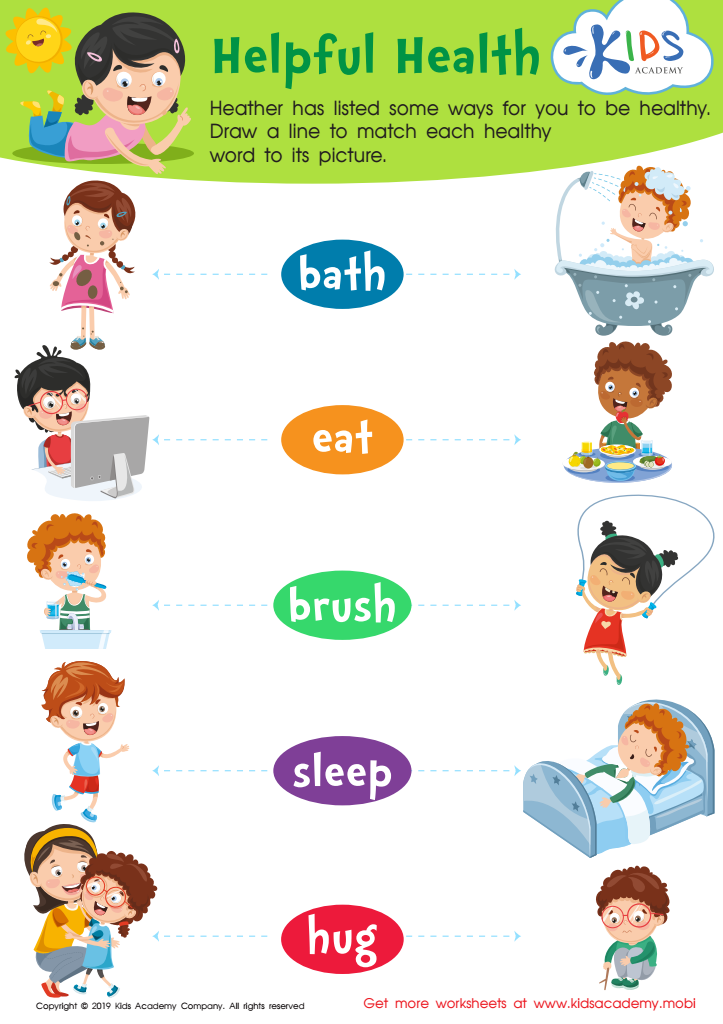
Helpful Health Worksheet







.jpg)
Logical reasoning and vocabulary building are fundamental components in early childhood education, particularly for children ages 4-8. Developing logical reasoning skills enables children to analyze situations, make decisions, and solve problems effectively. These skills facilitate critical thinking, aiding them in understanding cause-and-effect relationships in everyday life. As children engage with puzzles, stories, and games that require reasoning, they learn to approach challenges methodically and creatively.
Simultaneously, vocabulary building enhances language development, improves communication skills, and enriches understanding. An extensive vocabulary supports reading comprehension, making it easier for children to grasp new concepts and ideas. The ability to articulate thoughts clearly builds confidence and encourages active participation in discussions and learning activities.
By caring about both logical reasoning and vocabulary development, parents and teachers equip children with the tools they need to navigate their learning journeys successfully. These foundational skills foster a sense of curiosity and empower children to ask questions, seek answers, and engage critically with the world around them. In essence, nurturing these skills not only prepares children for academic success but also helps them develop into thoughtful, informed, and engaged individuals in society.








