Categorization skills Normal Reading Worksheets for Ages 4-8
3 filtered results
-
From - To
Looking to enhance your child's reading and comprehension abilities? Our Categorization Skills Normal Reading Worksheets for Ages 4-8 are the perfect solution! Designed to engage young learners, these worksheets help children practice identifying and grouping similar items, fostering critical thinking and improving vocabulary. Each worksheet features fun, age-appropriate graphics and easy-to-follow instructions, making learning enjoyable. Perfect for both classroom and home settings, our resources are tailored to support early literacy development. Encourage your child to explore the exciting world of categorization while building essential reading skills. Start your educational journey today with our thoughtfully crafted worksheets!
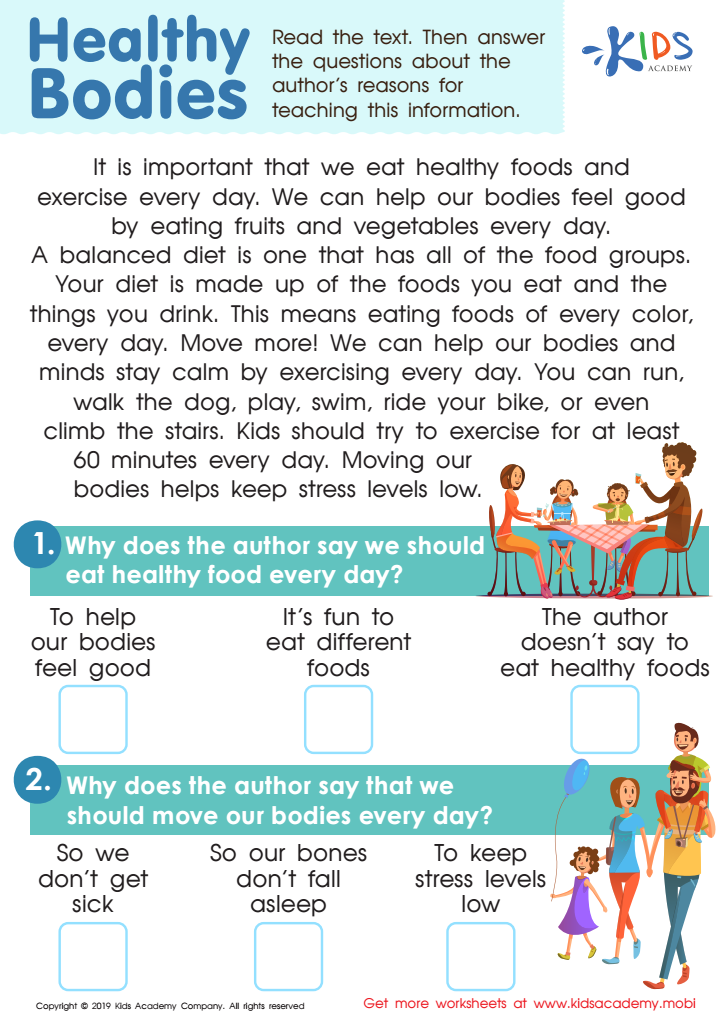
Healthy Bodies Worksheet
 Assign to My Students
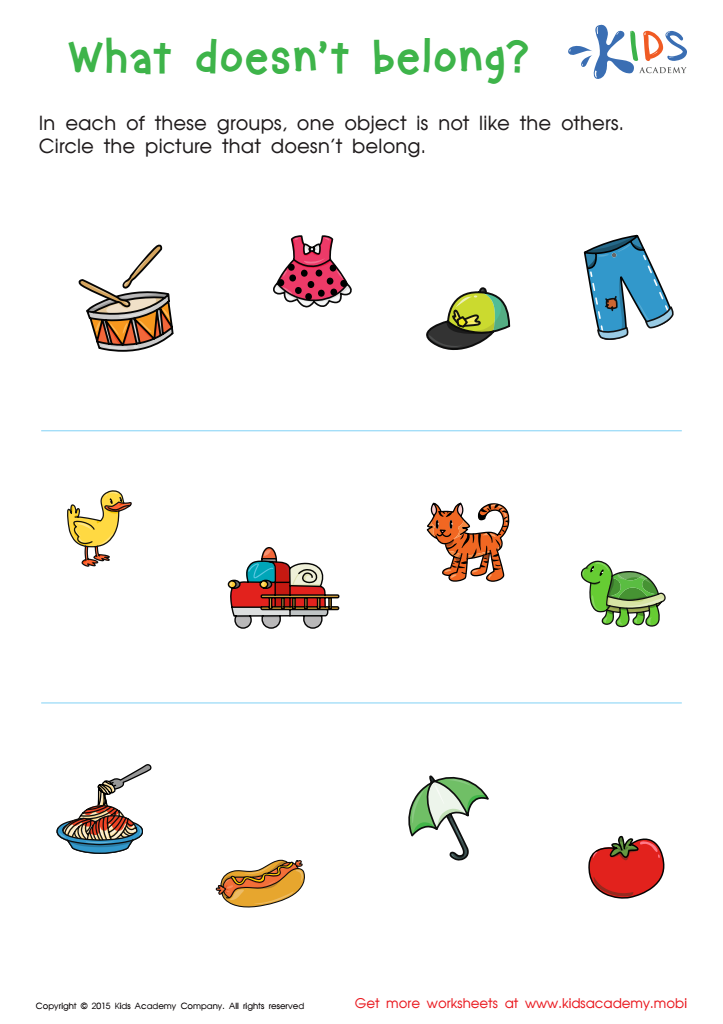
First Words: What Doesn't Belong Worksheet
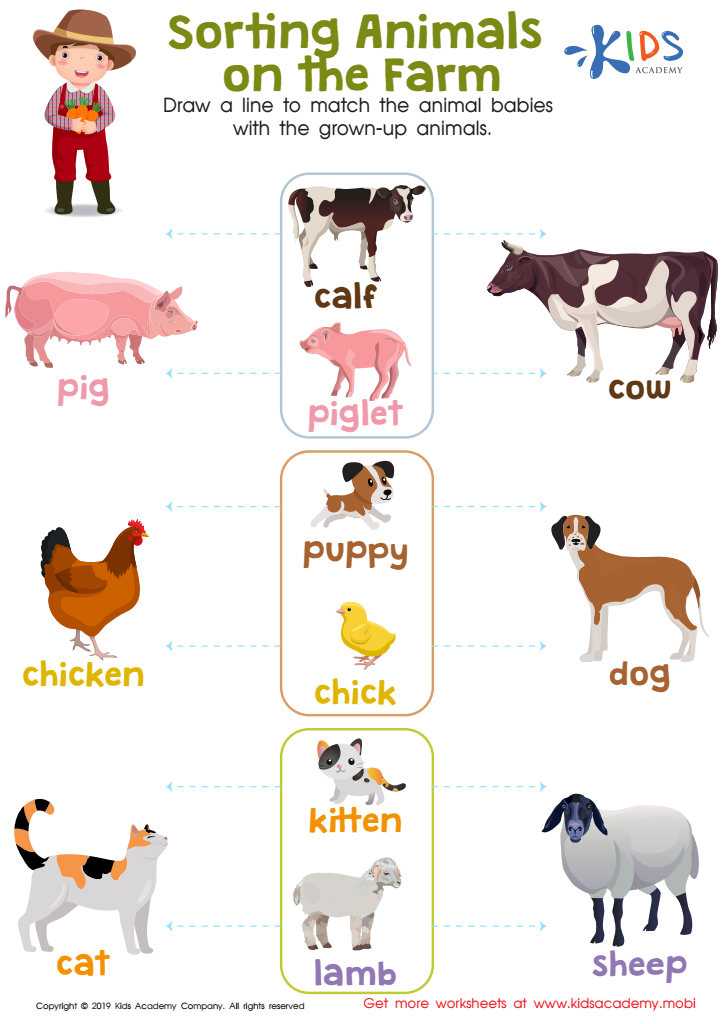
Sorting Animals on the Farm Worksheet



.jpg)




Categorization skills are crucial for children aged 4 to 8 as they serve as foundational elements for effective reading and comprehension. During this developmental stage, children begin to classify objects, words, and ideas which helps them navigate and make sense of their environment. For parents and teachers, fostering categorization enhances vocabulary acquisition; when children group similar words or concepts together, they understand nuanced meanings and relationships.
Improved categorization leads to stronger reading skills. As children learn to categorize, they can better identify the main ideas and themes in texts, which is essential for comprehension. Recognizing that stories often revolve around familiar categories—like animals, family, or seasons—allows children to predict what may come next, making reading a more engaging experience.
Moreover, strong categorization abilities can influence problem-solving skills and critical thinking. When children learn to categorize, they become adept at analyzing information, drawing connections, and making informed guesses in both reading and daily situations.
Ultimately, parents and teachers who prioritize the development of categorization skills are equipping children with tools that not only bolster their reading capabilities but also enhance their overall cognitive development, preparing them for future learning milestones.








