Moral understanding Normal Reading Worksheets for Ages 4-8
5 filtered results
-
From - To
Explore our "Moral Understanding Normal Reading Worksheets" designed for children ages 4-8. These engaging worksheets enhance literacy while teaching valuable life lessons. By integrating stories and activities that reflect moral dilemmas and ethical choices, children develop critical thinking skills alongside their reading proficiency. Our resources encourage empathy, kindness, and respect, making them perfect for reinforcing moral lessons at home or in the classroom. Ideal for emerging readers, these worksheets provide fun and interactive learning experiences. Boost your child's overall development by nurturing their ability to understand and navigate moral situations through the power of reading. Start building their moral compass today!
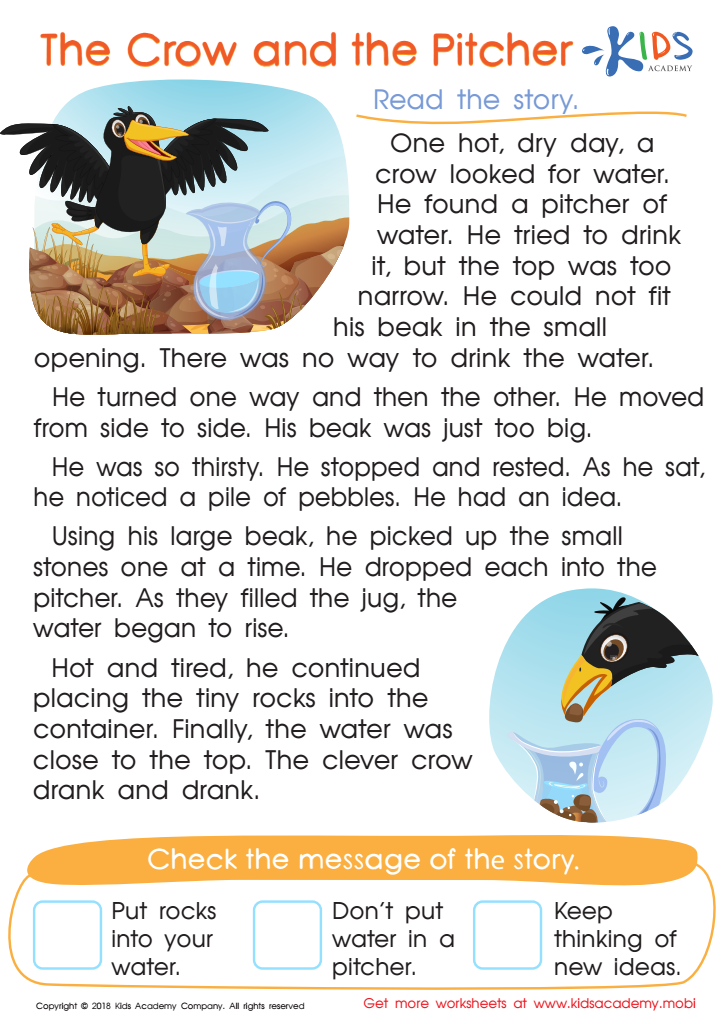
The Crow and the Pitcher Worksheet
 Assign to My Students
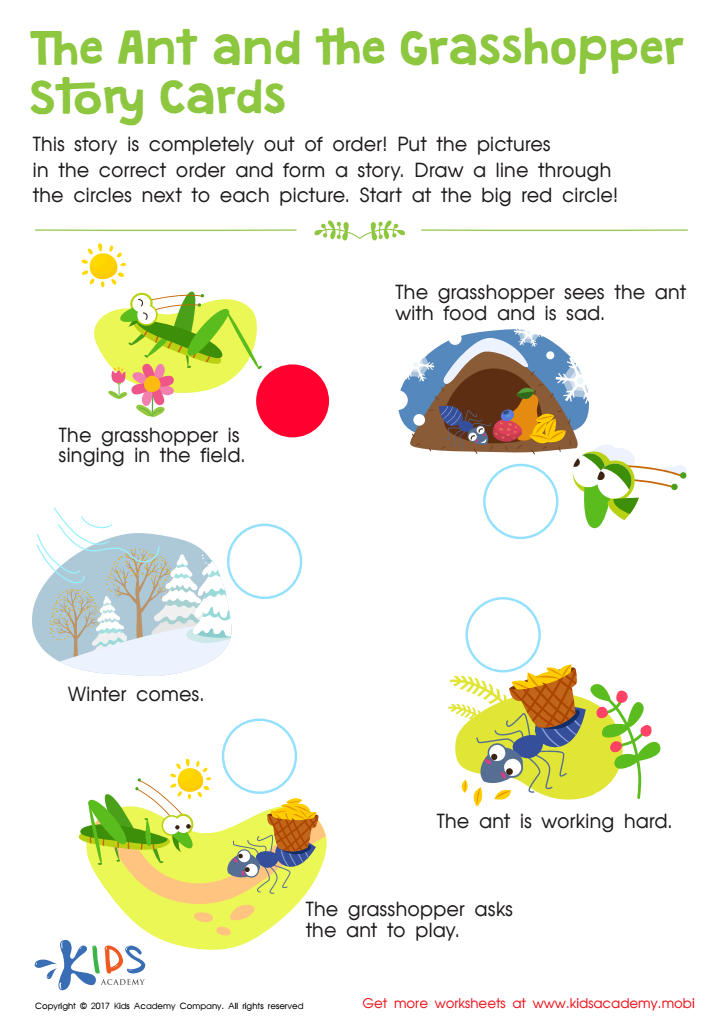
The Ant and The Grasshopper Worksheet
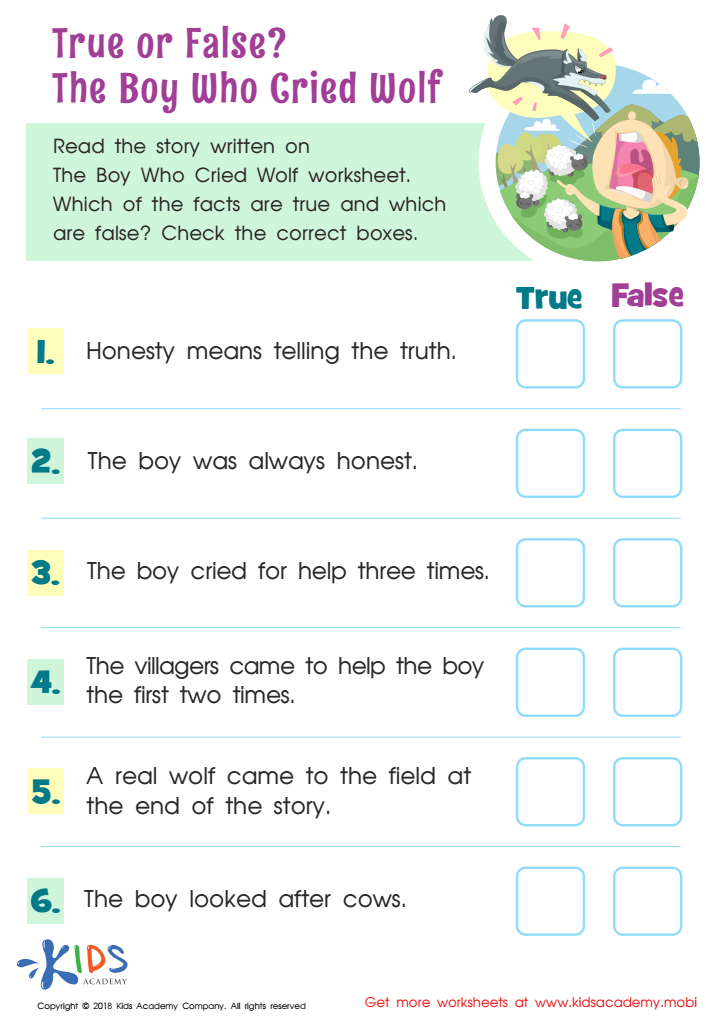
True or False? The Boy Who Cried Wolf Worksheet
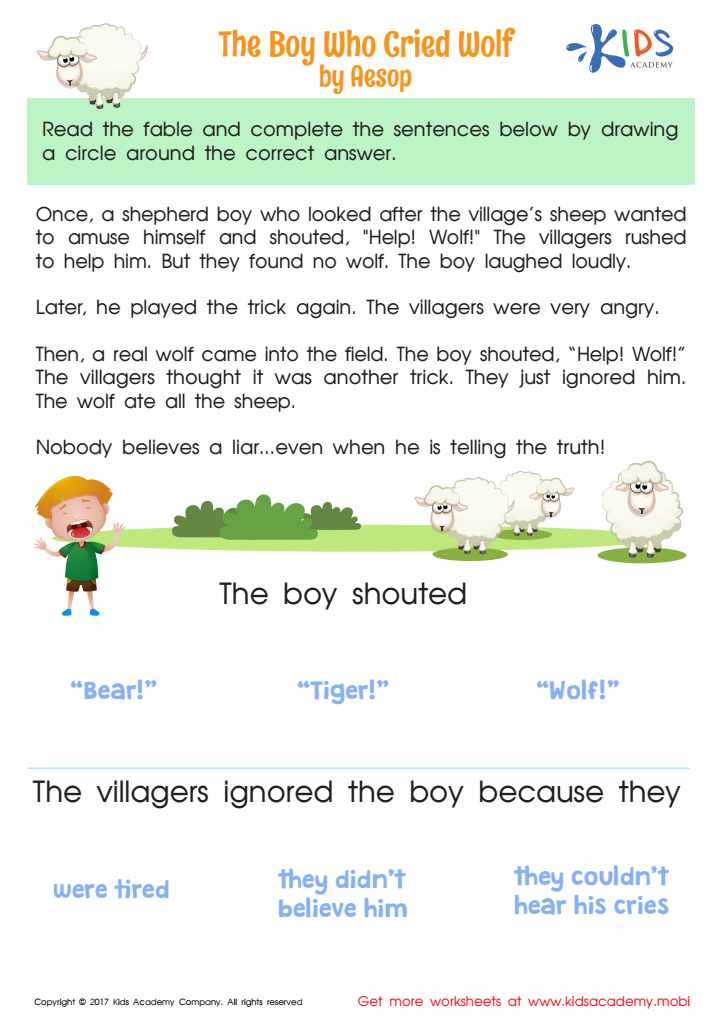
The Boy Who Cried Wolf Worksheet
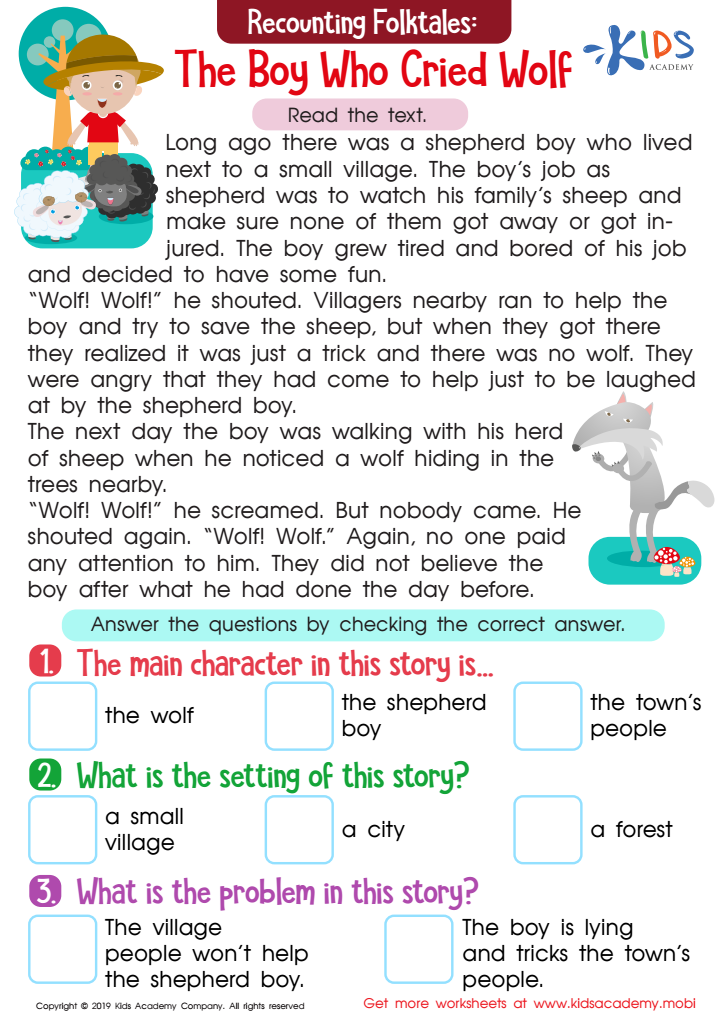
The Boy Who Cried Wolf Part 1 Worksheet


.jpg)



Moral understanding is crucial in the early developmental stages of children, particularly between the ages of 4 to 8. During this time, children begin to form their sense of right and wrong, influenced greatly by their interactions with parents, teachers, and peers. Fostering moral understanding helps children develop key social skills, empathy, and critical thinking abilities, which are essential for healthy relationships and a positive sense of self.
Parents and teachers play a pivotal role in this process. By introducing stories, discussions, and scenarios that promote moral reasoning, they can help guide children in understanding concepts like honesty, fairness, and compassion. Normal reading materials for this age group often incorporate moral dilemmas and diverse perspectives, making these themes relatable and engaging.
Moreover, when children comprehend and appreciate moral values, they are more likely to exhibit prosocial behavior, improving classroom dynamics and familial relationships. Ensuring that children grasp these concepts early on lays a strong foundation for their future ethical choices and interpersonal interactions. Investing in moral understanding is not just about teaching right and wrong; it is about nurturing empathetic, responsible, and well-rounded individuals who contribute positively to society.








