
Verb identification Normal Reading Worksheets for Ages 4-8
3 filtered results
Difficulty Level
Grade
Age
-
From - To
Subject
Activity
Standards
Discover our engaging Verb Identification Normal Reading Worksheets designed for children ages 4-8. These educational resources by Kids Academy are crafted to enhance early literacy skills and provide a solid foundation in grammar. Each worksheet combines vivid illustrations with interactive activities, making learning fun and effective. Children will practice identifying verbs within sentences, expanding their vocabulary, and improving their reading comprehension. Perfect for classroom use or at-home practice, these worksheets are an invaluable tool for parents and educators aiming to foster language development and encourage a love for reading in young learners.
Favorites
With answer key
Interactive
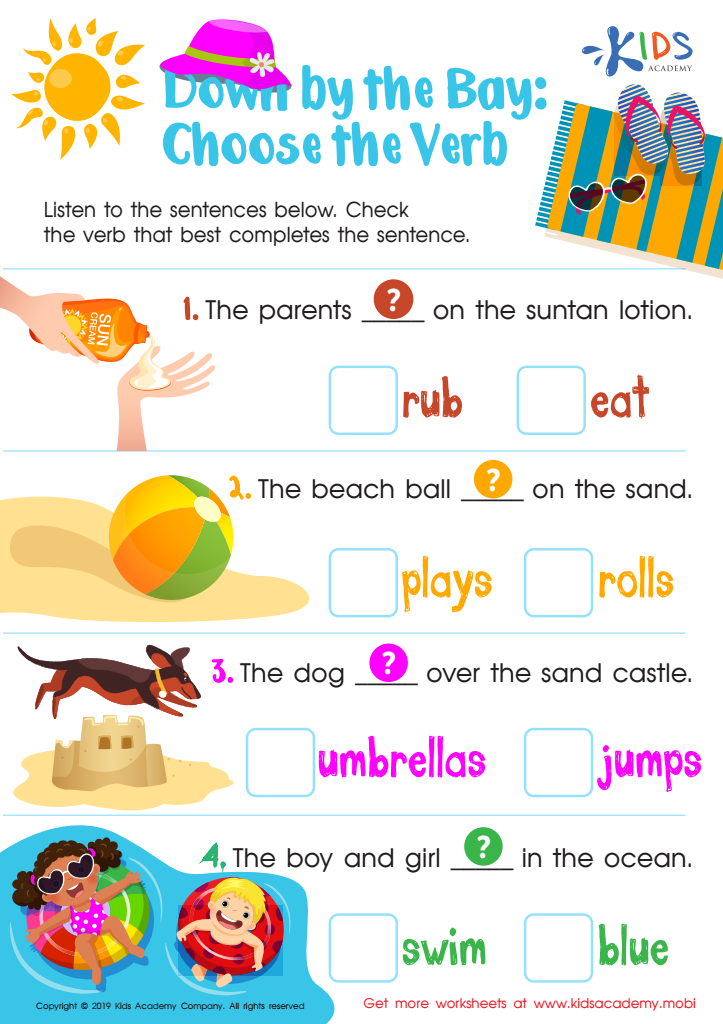
Down by the Bay: Choose the Verb Worksheet
Teach your kids about verbs: words that describe actions, like 'playing', 'eating', 'talking'. Ask your child to give their own verbs, then read the sentences in a worksheet and help them pick the best one for each question.
 Assign to My Students
Down by the Bay: Choose the Verb Worksheet
Worksheet
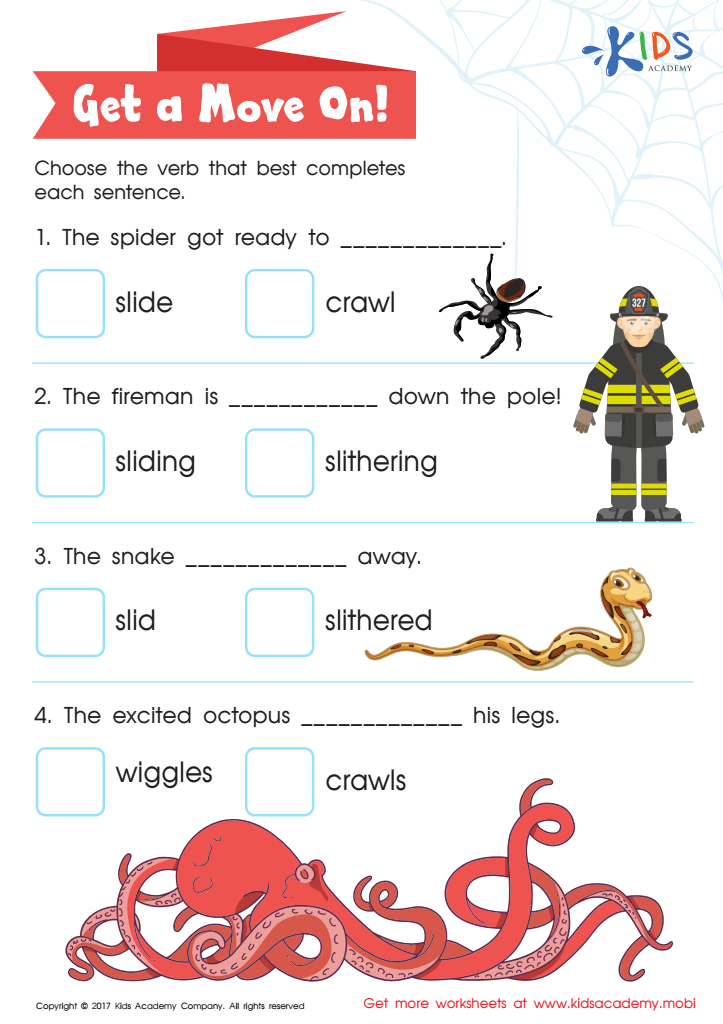
Verb Worksheet
Help your child learn verbs with this fun verb worksheet for grade 2! Firemen slide down poles, spiders crawl - they'll learn while they select the right verb in each sentence.
Verb Worksheet
Worksheet
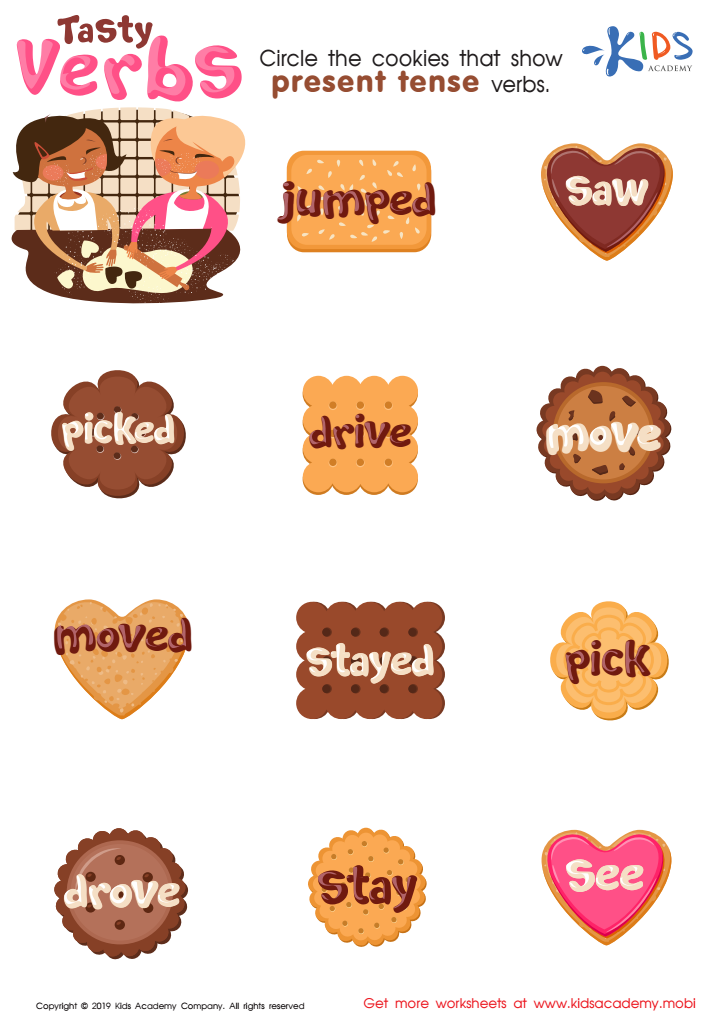
Tasty Verbs Worksheet
Verbs can show actions, past events, and future happenings. Master present tense verbs with this cookie-themed worksheet! Read the verbs on each cookie and help kids form sentences using the word in present tense. Circle the correct answers for each cookie. Give them a tasty treat while learning something new!
Tasty Verbs Worksheet
Worksheet
Join Kids Academy for Free
Who is primarily going to use this learning content?








Verb identification is a crucial skill in early literacy because it lays the foundation for effective communication and comprehension. For children aged 4-8, understanding what verbs are and how they function helps them construct meaningful sentences. This awareness directly contributes to their ability to express ideas and narrate experiences coherently, which is essential for both spoken and written communication.
Parents and teachers should prioritize verb identification because it enhances reading comprehension. When children recognize verbs in a sentence, they better understand the action or state being described. This understanding improves their ability to follow stories, grasp their plots, and predict outcomes, which strengthens their overall reading abilities.
In addition, early identification of verbs supports cognitive development. It fosters analytical thinking since children learn to differentiate between parts of speech and understand their roles. This knowledge is not just crucial for language arts; it also underpins skills needed in subjects like math and science, where instructions often rely on verbs.
Finally, cultivating an early interest in words and their functions can ignite a lifelong love for reading. By making verb identification fun and interactive through games and activities, parents and teachers can engage children and encourage a positive attitude towards learning.
In summary, verb identification for young learners is fundamental for effective communication, comprehension, cognitive development, and fostering a love for reading.








