
Understanding perspectives Normal Reading Comprehension Worksheets for Ages 4-8
3 filtered results
Difficulty Level
Grade
Age
-
From - To
Subject
Activity
Standards
Explore our "Understanding Perspectives" reading comprehension worksheets designed for children ages 4-8. These engaging activities help young learners grasp different viewpoints through age-appropriate stories and questions. By encouraging children to think critically and empathize, they develop essential comprehension skills integral to their literacy journey. Our worksheets are not just fun, but also aligned with educational standards to facilitate effective learning. Ideal for home or classroom settings, these resources support teachers and parents in fostering hopeful readers. Join us in nurturing curiosity and enhancing reading skills! Start your adventure in understanding perspectives today!
Favorites
With answer key
Interactive
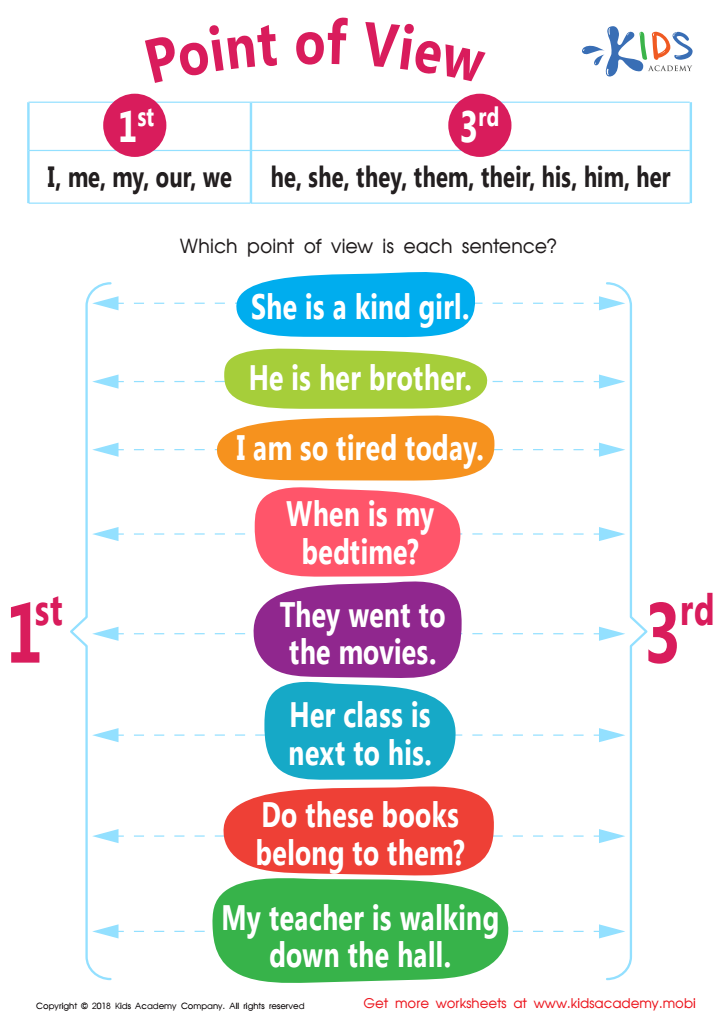
Point of View Worksheet
This printable worksheet helps kids understand Point of View by providing 1st and 3rd person choices. It's a fun way to practice differentiating between the two viewpoints and improve their reading comprehension. Match the sentences to 1st or 3rd person to strengthen understanding and enjoy the task!
 Assign to My Students
Point of View Worksheet
Worksheet
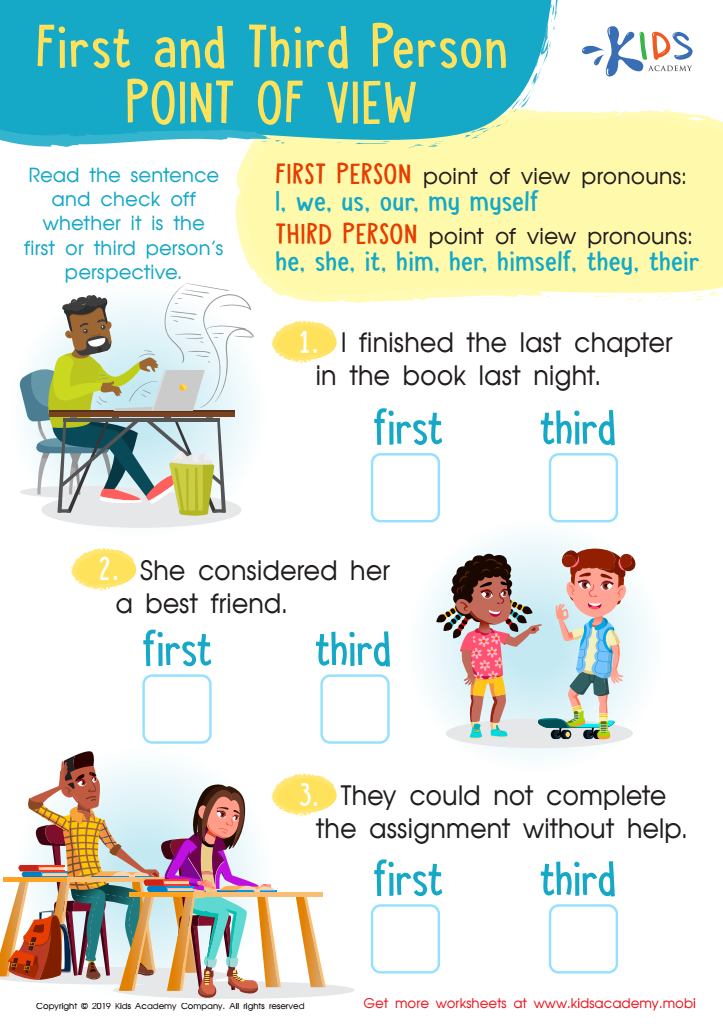
First and Third Person Point of View Worksheet
Remind kids what a point of view is in a story. First person is from the character's perspective; third person is from the narrator's. Ask students to check if sentences in the exercise are in first or third person point of view.
First and Third Person Point of View Worksheet
Worksheet
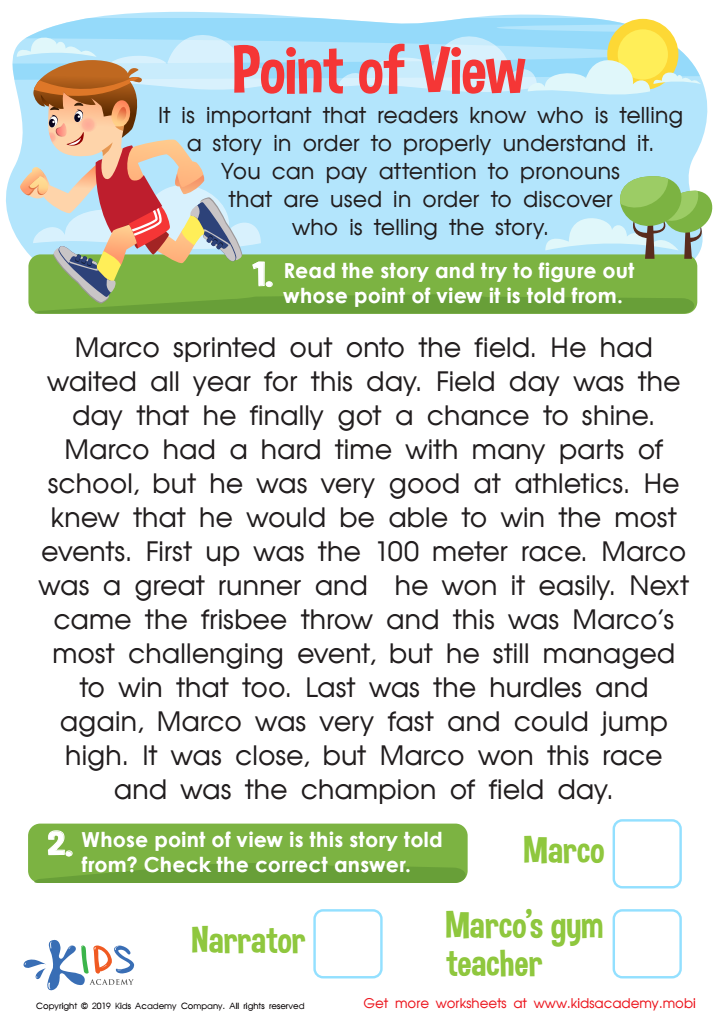
Point of View Worksheet
Readers need to identify the storyteller to properly understand and relate to the story. Help your kids identify the point of view by noticing the pronouns used. Read the story in this worksheet with them and guide them to determine the story's point of view.
Point of View Worksheet
Worksheet
Join Kids Academy for Free
Who is primarily going to use this learning content?








Understanding perspectives in reading comprehension is crucial for children aged 4-8 as it fosters empathy, critical thinking, and deeper engagement with texts. At this early developmental stage, children begin to form their identity and understanding of the world around them. When they learn to recognize different viewpoints within a story or from characters, they develop the ability to appreciate diverse opinions and cultures.
Teachers and parents play a pivotal role in nurturing this skill by exposing children to a range of literature that presents various perspectives. Engaging with stories encourages children to ask questions such as "How does this character feel?" or "Why did they make that choice?" This inquiry promotes analytical thinking, helping young readers understand that there are multiple sides to every situation.
Additionally, fostering perspective-taking in reading can improve communication skills and enhance social interactions, which are essential for preschool and early elementary relationships. Ultimately, by prioritizing the comprehension of different perspectives, parents and educators not only cultivate a love for reading but also equip children with essential life skills that promote understanding, compassion, and effective communication in their everyday lives.








