Logical Reasoning Normal Reading Fiction Worksheets for Ages 4-8
5 filtered results
-
From - To
Enhance your child's critical thinking and reading comprehension with our "Logical Reasoning Normal Reading Fiction Worksheets for Ages 4-8." Tailored specifically for young learners, these engaging worksheets combine entertaining stories with thought-provoking questions that nurture logical reasoning skills. Each activity is designed to promote cognitive development, boost creativity, and improve problem-solving abilities. Perfect for children ages 4-8, our worksheets turn reading fiction into an interactive learning experience that helps young minds thrive. Developed by educators and aligned with educational standards, these printable resources are ideal for home or classroom use. Explore our collection today and support your child's journey to becoming a critical thinker.
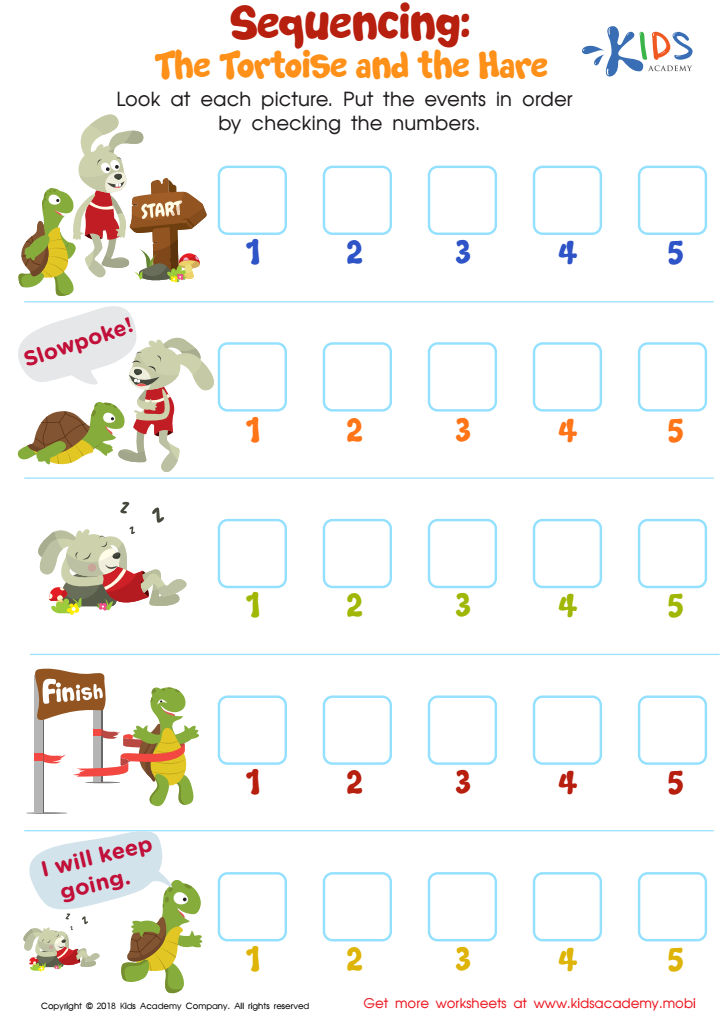
Sequencing: The Tortoise and the Hare Worksheet
 Assign to My Students
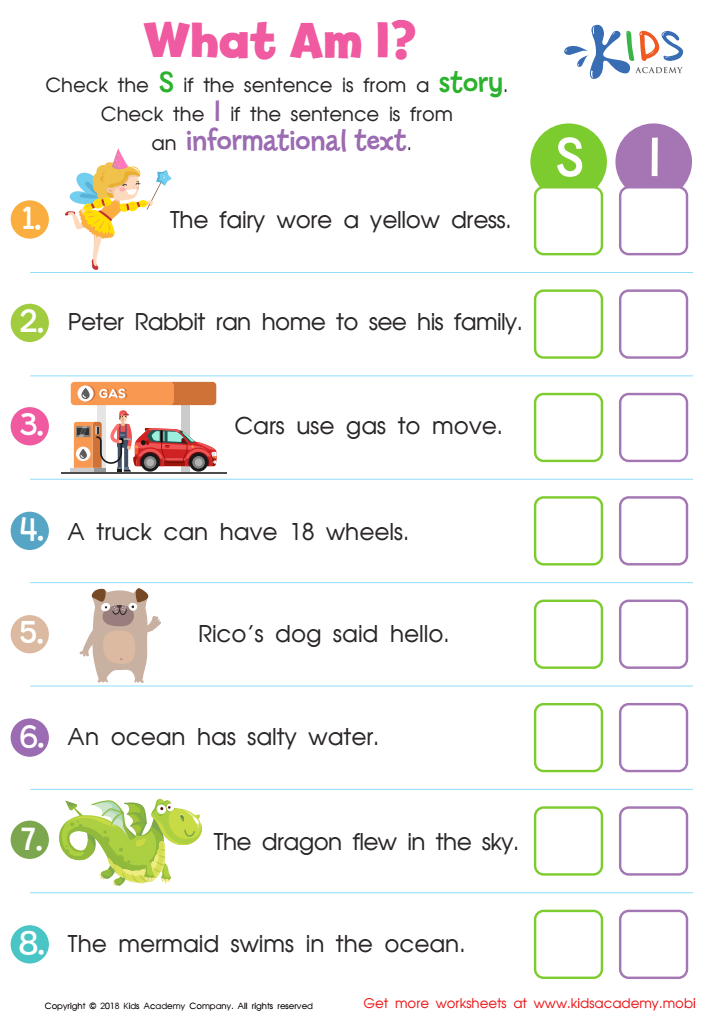
What Am I? Worksheet
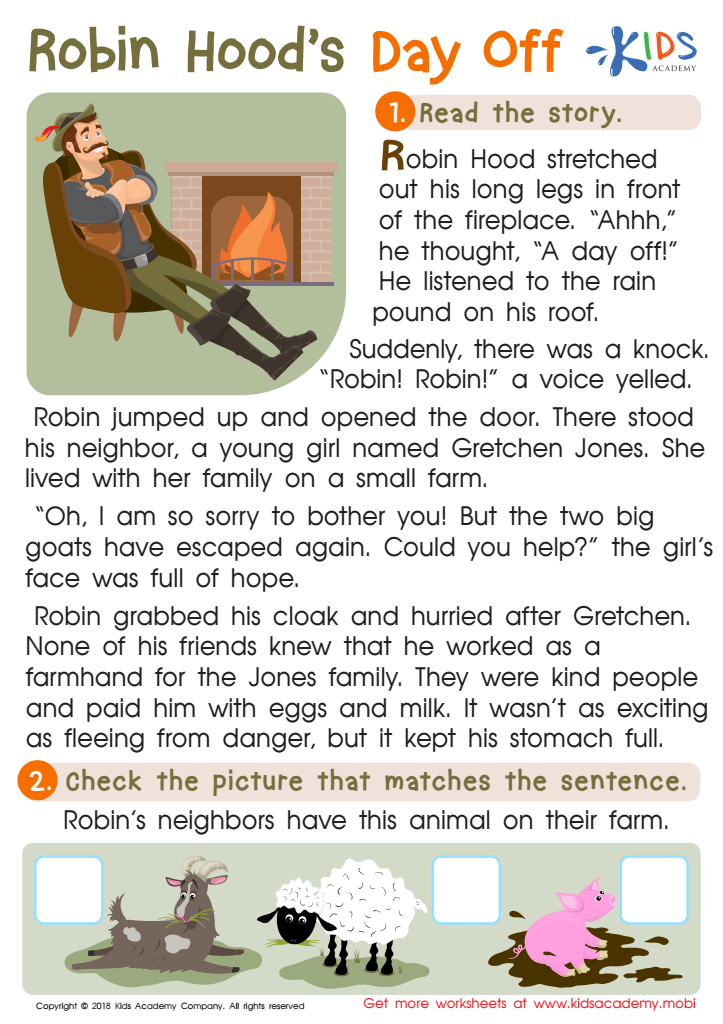
Robin Hood's Day Off Worksheet
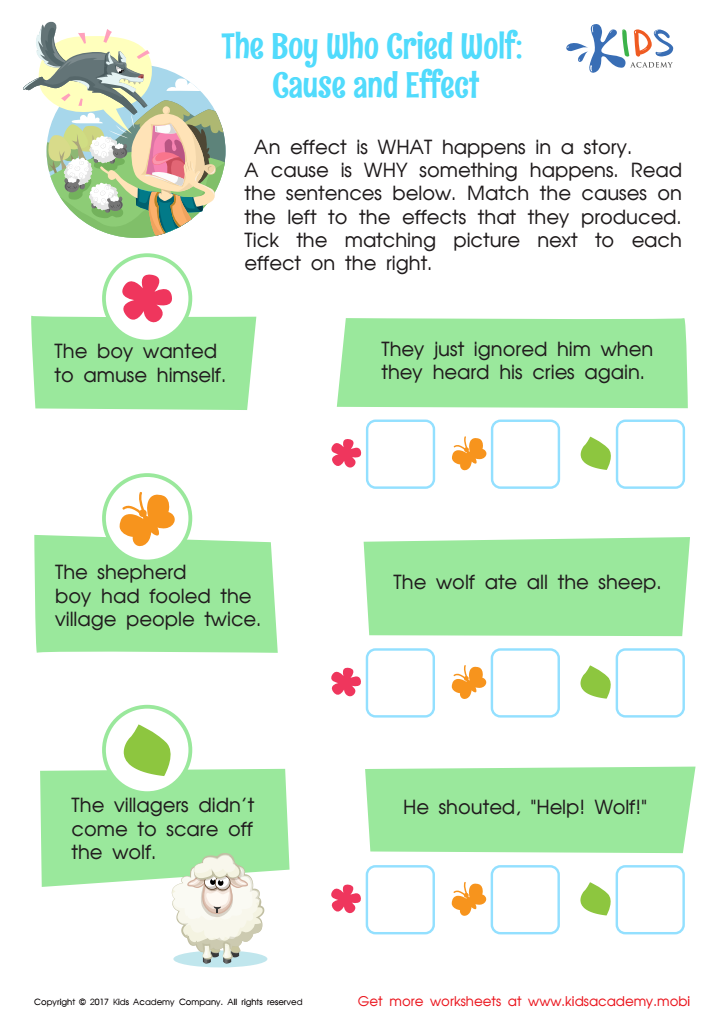
The Boy Who Cried Wolf: Cause and Effect Worksheet
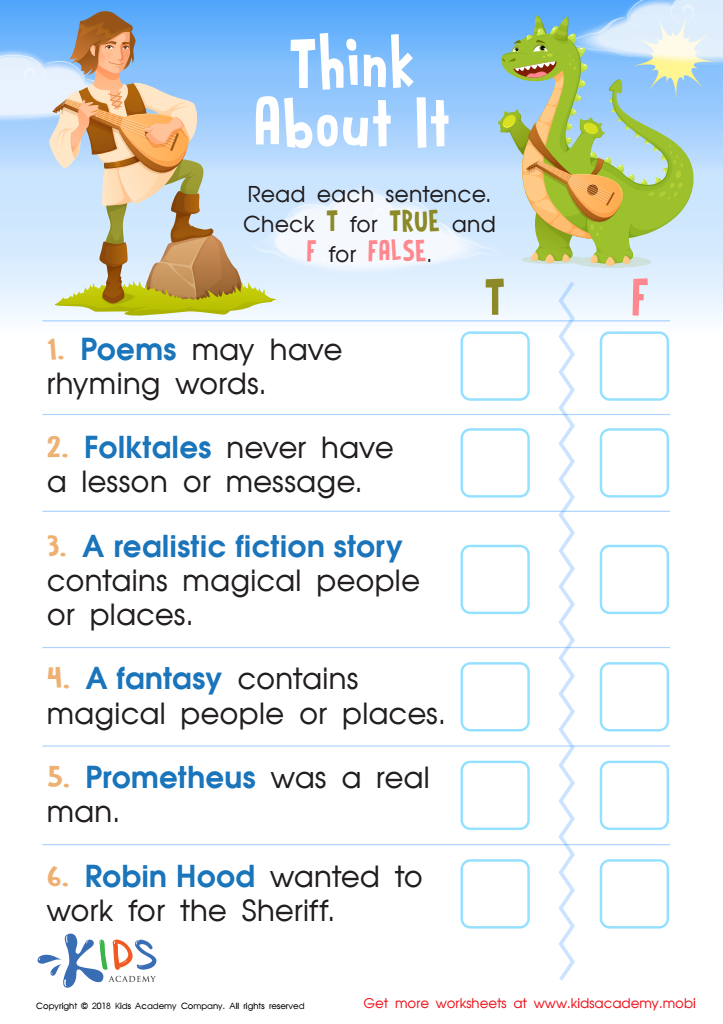
Think About It: Assessment Worksheet


.jpg)

.jpg)


Logical reasoning, normal reading, and exposure to fiction hold significant importance for children aged 4-8. Early childhood is a critical period for cognitive development, and nurturing these skills can lay a solid foundation for future learning and personal growth.
Logical reasoning helps children develop problem-solving skills, critical thinking, and the ability to make connections between ideas. When these abilities are fostered from an early age, children grow to be more competent in math and science subjects, better decision-makers, and capable of understanding complex concepts as they age.
Normal reading, which pertains to age-appropriate, consistent, and regular reading practices, is essential for language development. It enhances vocabulary, improves comprehension, and strengthens attention span. Reading aloud to children encourages bonding, stimulates imagination, and cultivates a love for reading, turning it into a lifelong habit.
Fiction, in particular, plays a crucial role. Stories transport children to new worlds, introduce diverse perspectives, and foster empathy. Kids learn to identify with characters, understand differing viewpoints, and handle emotions. Fiction also sparks creativity, inviting children to dream, imagine, and develop their narrative skills.
Parents and teachers who prioritize logical reasoning, normal reading, and fiction are not just enhancing academic skills, but are helping shape socially aware, creative, and thoughtful individuals.







