Logical thinking Normal Reading Fiction Worksheets for Ages 4-8
3 filtered results
-
From - To
Enhance your child's reading skills with our engaging Logical Thinking Normal Reading Fiction Worksheets designed specifically for ages 4 to 8. These worksheets encourage critical thinking and comprehension through fun, age-appropriate fiction stories. Kids will enjoy exploring narratives while answering questions that promote logical reasoning, understanding character motivations, and predicting outcomes. Our resources foster a love for reading while developing essential skills needed for academic success. Perfect for homeschooling or classroom settings, these worksheets provide an interactive way for young learners to connect with stories and deepen their understanding. Grab your worksheets today and watch your child’s logical thinking soar!
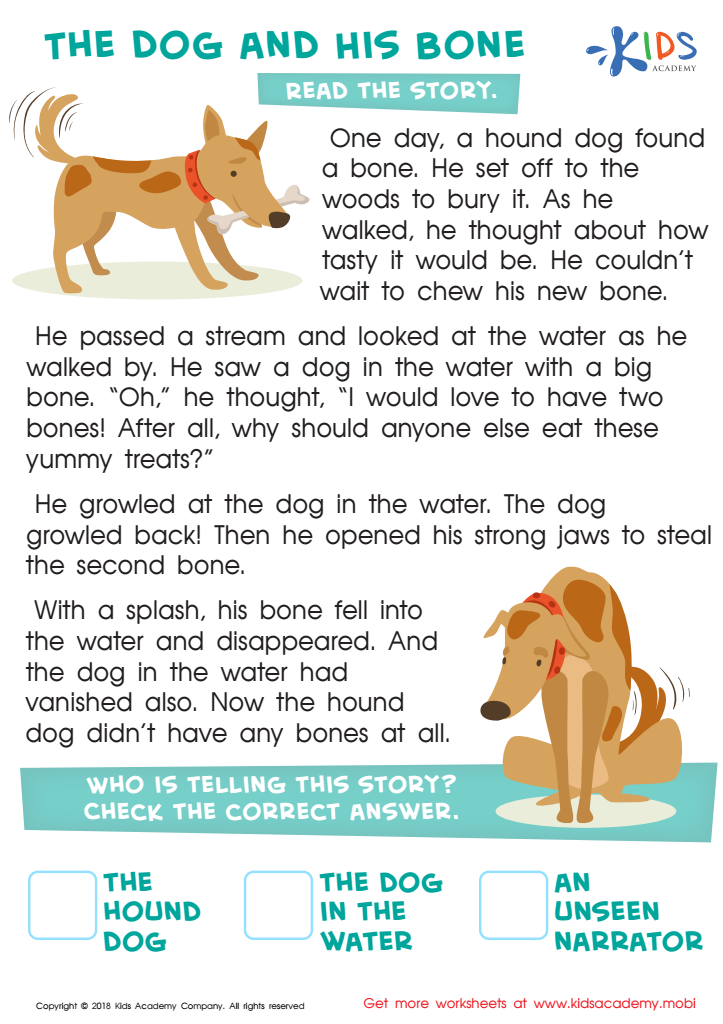
The Dog and His Bone Worksheet
 Assign to My Students
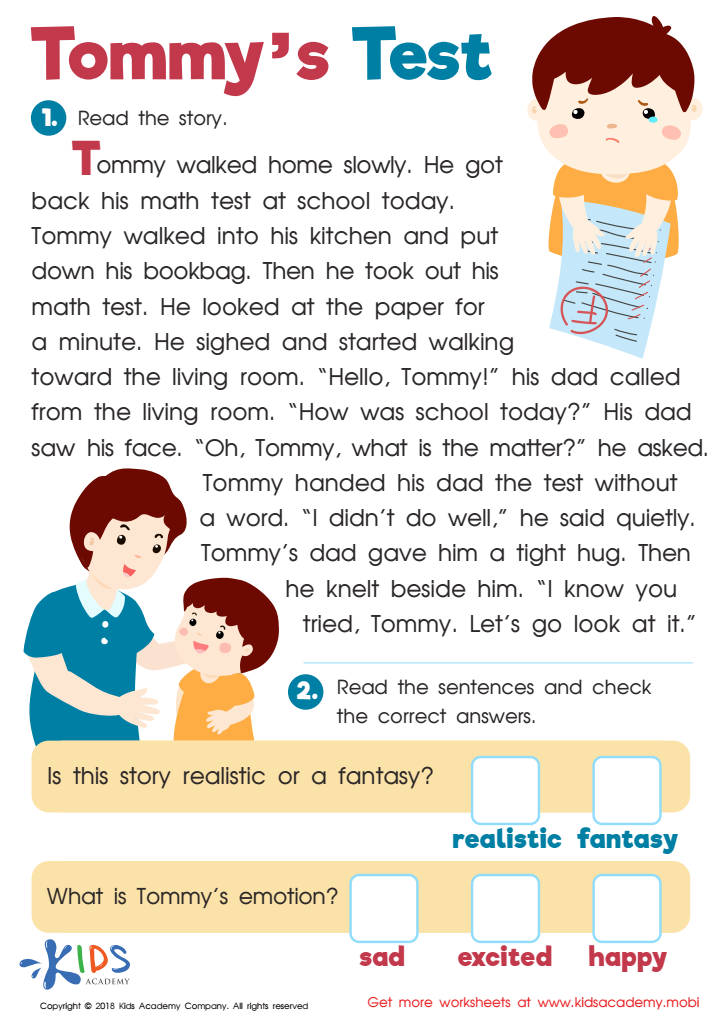
Tommys Test Worksheet
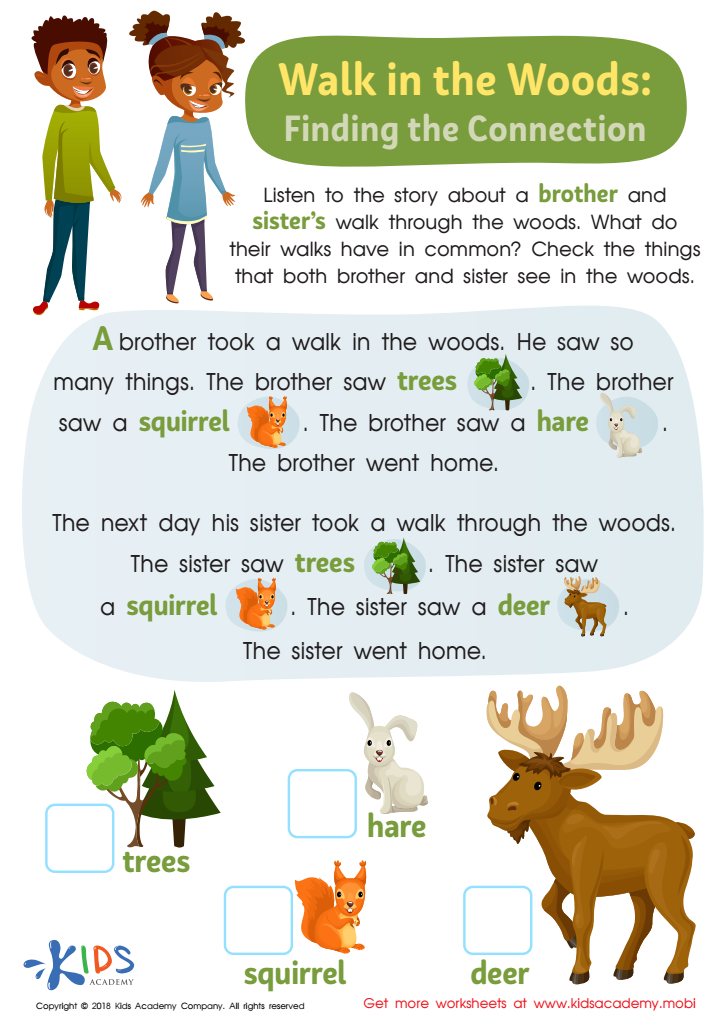
Walk In the Woods: Finding Connections Worksheet






.jpg)

Logical thinking is a critical skill that lays the foundation for problem-solving and decision-making, and introducing this concept through reading fiction for ages 4-8 can be extremely beneficial for young learners. Parents and teachers should care about this subject as it enhances children's cognitive development and allows them to engage with narratives that challenge their understanding of sequences, cause and effect, and character motivations.
Fictional stories often present situations that encourage children to reason through problems, infer outcomes, and make predictions—all essential components of logical thinking. When children read and discuss fiction, they develop their ability to analyze characters’ actions and the consequences that follow, which directly strengthens their reasoning skills.
Additionally, reading fiction increases vocabulary, comprehension, and empathy, as kids step into the shoes of different characters and explore diverse perspectives. This multifaceted involvement not only aids academic growth but also promotes emotional intelligence.
Moreover, the interactive nature of discussing books together can foster a love for reading, encouraging lifelong learning. In summary, prioritizing logical thinking via normal reading fiction can significantly contribute to a child's overall developmental journey both in and outside the classroom. Investing time in this area will nurture well-rounded, thoughtful, and inquisitive individuals.







