Moral understanding Normal Reading Fiction Worksheets for Ages 4-8
5 filtered results
-
From - To
Explore our "Moral Understanding Normal Reading Fiction Worksheets" designed specifically for children aged 4-8. These engaging worksheets enhance young readers' comprehension by focusing on morality and ethics within fictional stories. Each activity encourages critical thinking, helping kids to identify moral lessons, understand characters' choices, and appreciate diverse perspectives. Tailored to align with early literacy standards, these worksheets foster a love for reading while building essential social skills. Ideal for home or classroom use, these resources empower educators and parents to instill valuable life lessons through enjoyable storytelling. Download and unlock the door to meaningful moral discussions with your little ones today!
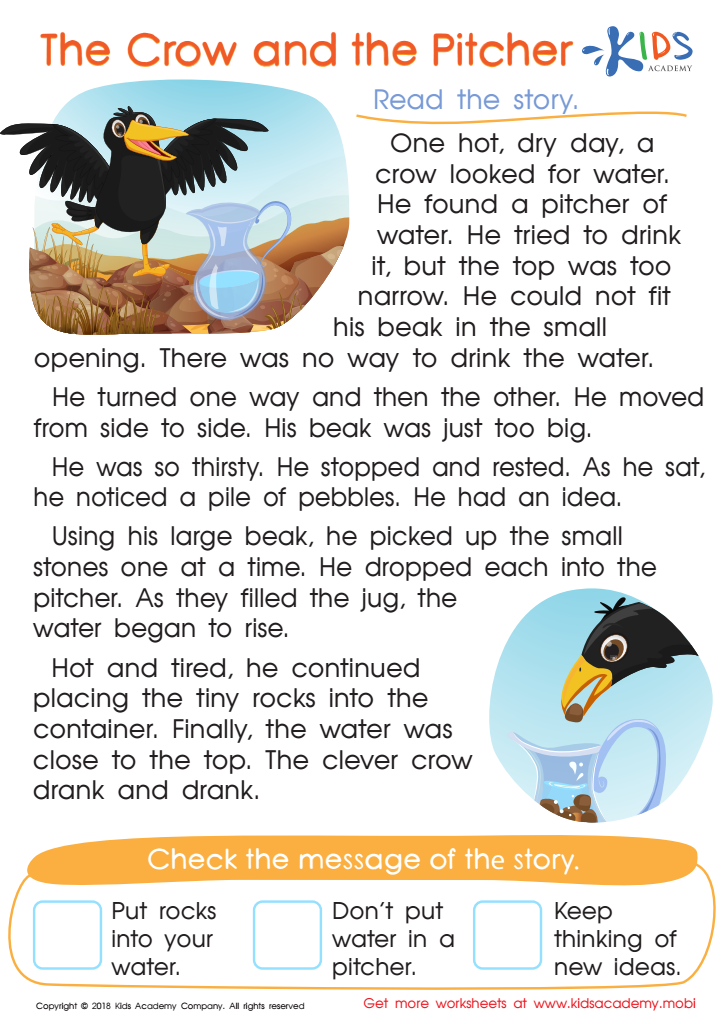
The Crow and the Pitcher Worksheet
 Assign to My Students
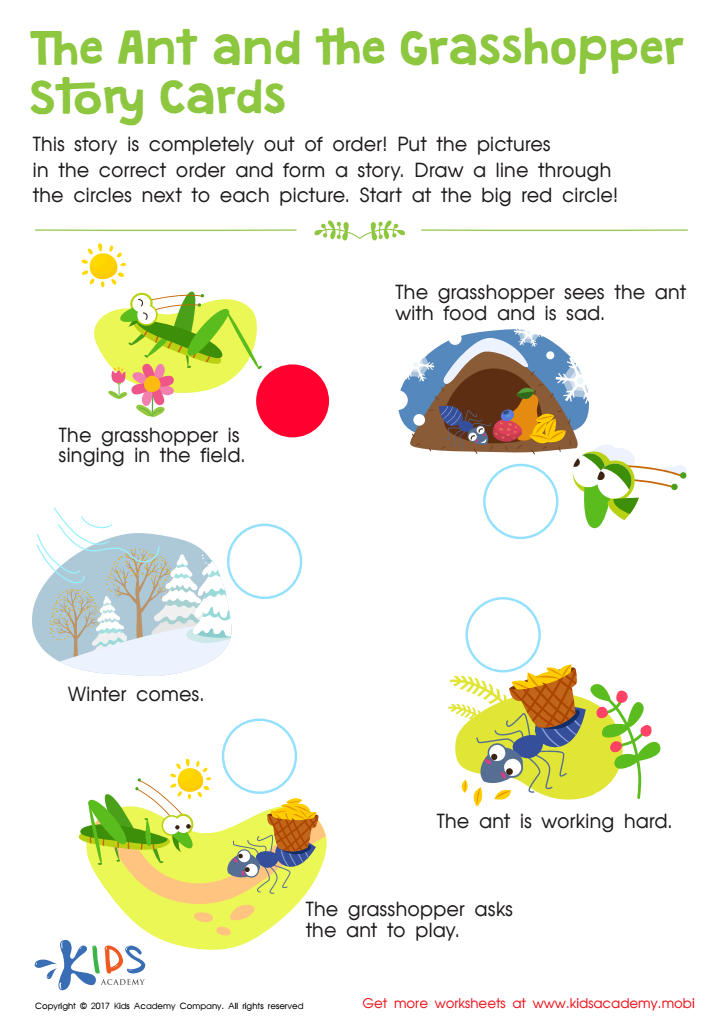
The Ant and The Grasshopper Worksheet
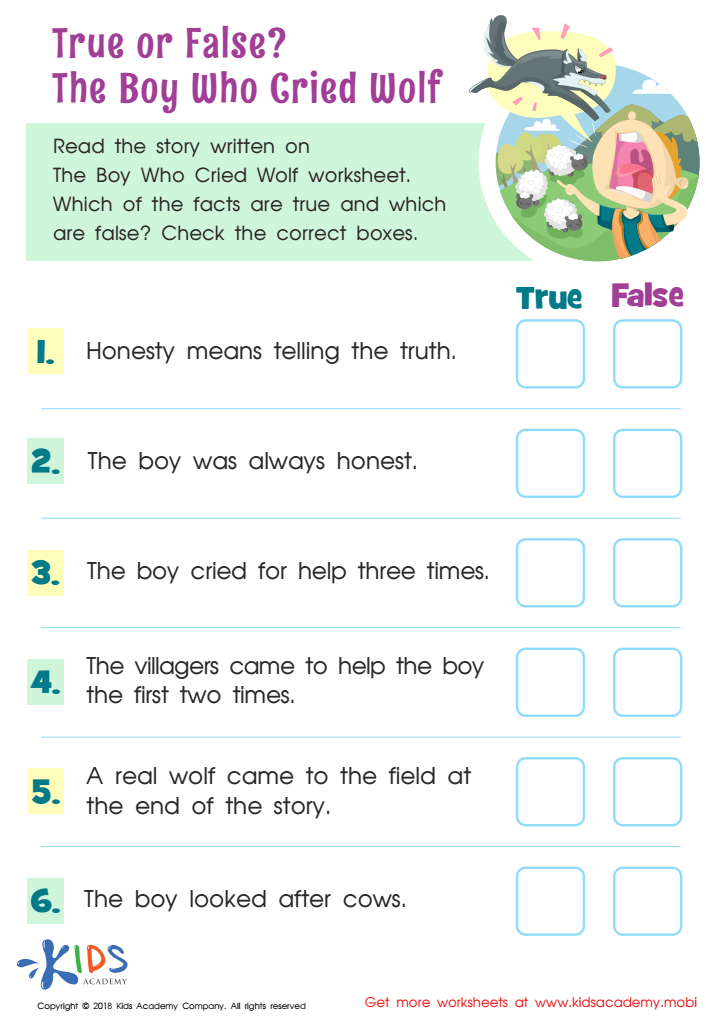
True or False? The Boy Who Cried Wolf Worksheet
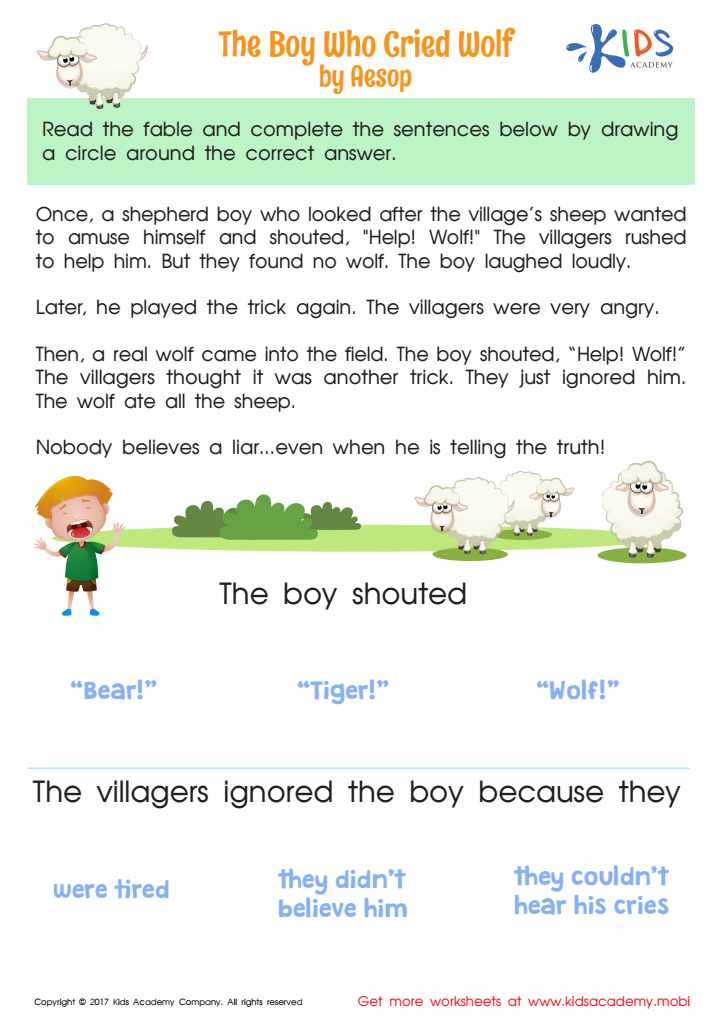
The Boy Who Cried Wolf Worksheet
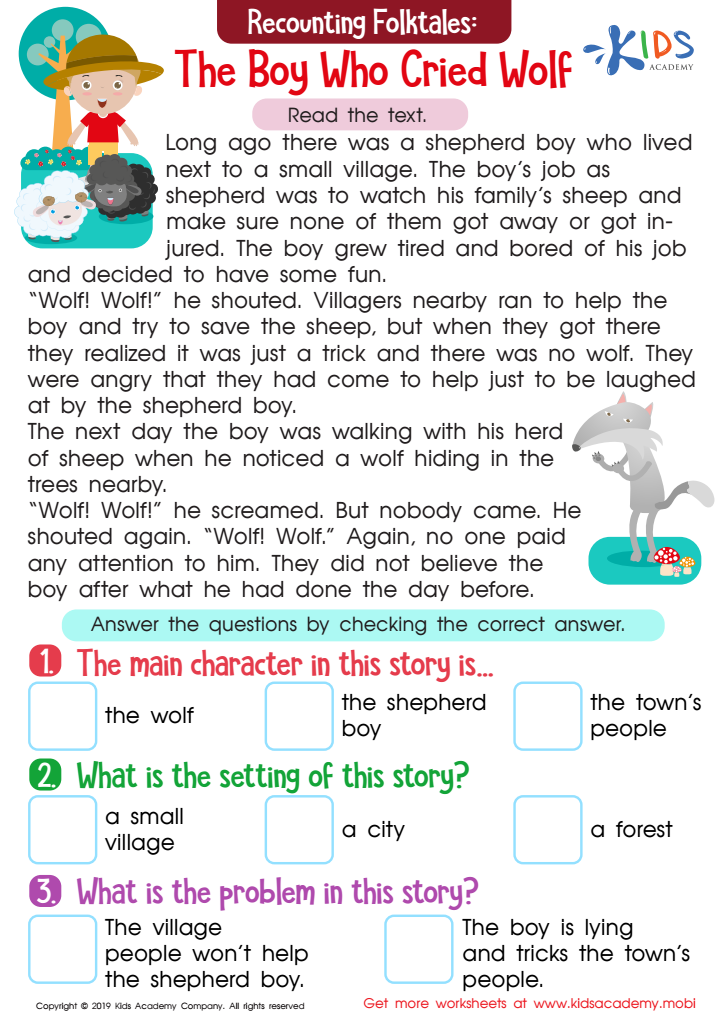
The Boy Who Cried Wolf Part 1 Worksheet




.jpg)


Moral understanding is a crucial component of childhood development, especially for children ages 4 to 8. During this formative period, young learners engage actively with the world around them and begin to form a sense of right and wrong. Introducing moral themes through age-appropriate fictional literature allows children to explore dilemmas and ethical questions in a safe and imaginative environment.
Parents and teachers should care about this literature because it serves as a valuable tool for fostering empathy, compassion, and critical thinking skills. Reading stories that portray moral lessons helps children understand diverse perspectives and the consequences of their actions. By engaging with characters who navigate complex situations, children can learn to articulate their feelings and thoughts about fairness, kindness, and honesty.
Furthermore, discussions around moral themes in fiction promote important social skills. Children can share their own experiences, acknowledging similarities and differences with the characters, thus enhancing their communication abilities. Ultimately, moral understanding in reading not only enriches a child's imagination but also contributes significantly to their social and emotional development, preparing them to navigate their own lives with integrity and respect for others.







