Analytical skills Normal Science Worksheets for Ages 4-8
3 filtered results
-
From - To
Enhance your child's analytical skills with our engaging Normal Science Worksheets for ages 4-8! Designed to strengthen critical thinking, these worksheets incorporate fun and interactive activities related to scientific concepts. Perfect for early learners, each worksheet encourages exploration and problem-solving, helping children develop the ability to analyze and interpret information. From simple observations to basic experiments, your little one will enjoy hands-on learning while building a strong foundation in science. With vibrant illustrations and easy-to-follow instructions, these worksheets make learning enjoyable and effective. Foster a lifelong love for science and critical thinking in your child today!
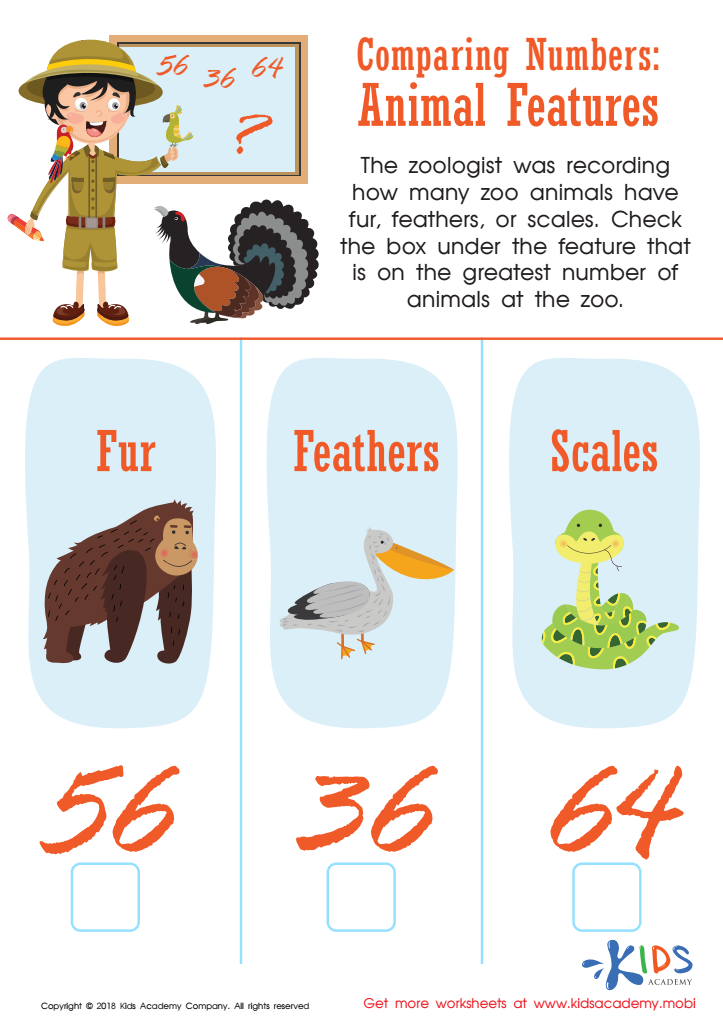
Animal Features Worksheet
 Assign to My Students
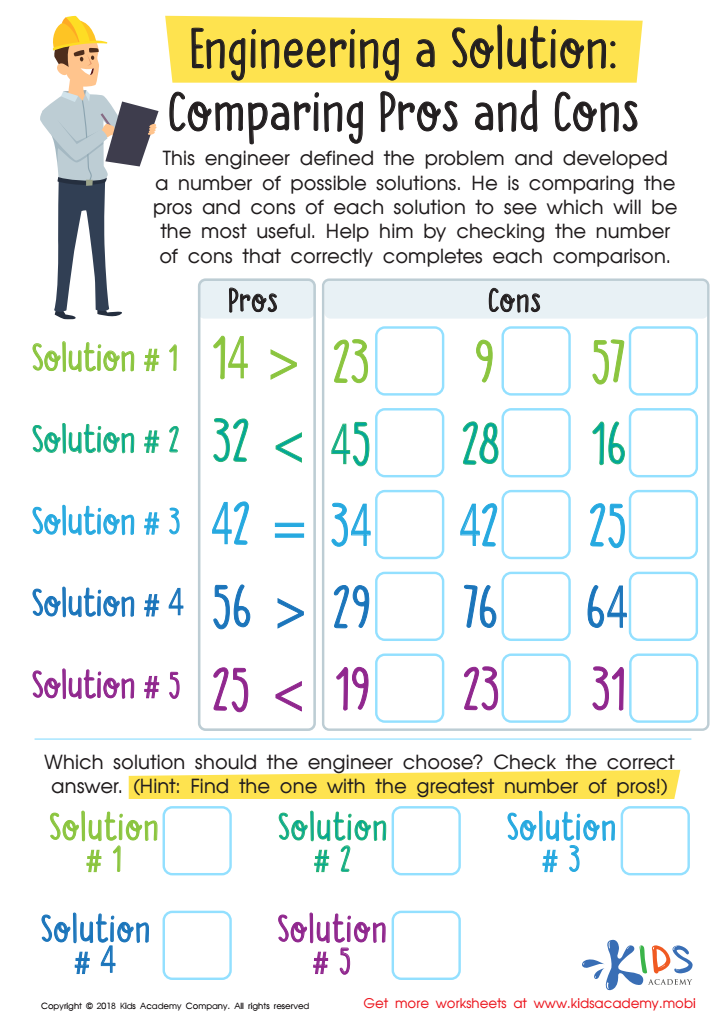
Engineering a Solution: Comparing Pros and Cons Worksheet
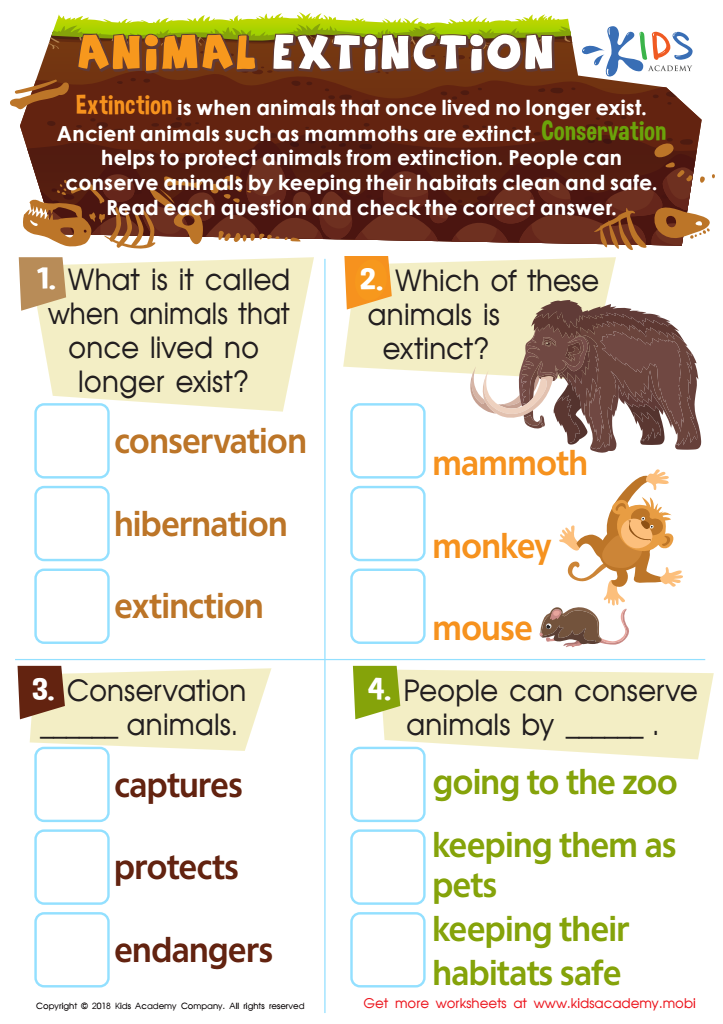
Animal Extinction Worksheet








Parents and teachers should prioritize analytical skills in early childhood education, particularly within the context of normal science, as these skills form the foundation for critical thinking, problem-solving, and decision-making. Ages 4-8 are crucial developmental years when children naturally explore their environment and seek to understand the "how" and "why" of the world around them. By fostering analytical skills through scientific inquiry, educators can guide children to ask questions, formulate hypotheses, observe, and draw conclusions based on evidence.
Engaging kids in normal science encourages curiosity, emotional intelligence, and resilience because they learn to approach challenges methodically. For instance, conducting simple experiments can improve their ability to analyze data, recognize patterns, and make predictions, all of which are essential for future academic success. Additionally, teaching analytical skills aligns with STEM education, which is becoming increasingly important in our technology-driven society.
Moreover, strong analytical abilities contribute to improved communication skills, as children learn to articulate their thoughts, justify their reasoning, and engage in collaborative discussions. Thus, prioritizing analytical skills in early childhood reinforces a love for learning, empowering students to become independent thinkers and informed decision-makers as they grow.







