Counting practice Normal Science Worksheets for Ages 4-8
4 filtered results
-
From - To
Welcome to our Counting Practice Normal Science Worksheets designed specifically for children aged 4-8! These engaging worksheets combine fundamental counting skills with captivating science themes, making learning exciting and enjoyable. Kids will explore numbers and counting concepts through various fun activities that incorporate nature, animals, and everyday science phenomena. Our worksheets are tailored to foster critical thinking and enhance fine motor skills, helping young learners grasp essential math concepts while nurturing their curiosity about the world around them. Perfect for home-schoolers, teachers, or parents looking to enrich their child's learning experience, these resources are ideal for developing foundational skills in a playful context!
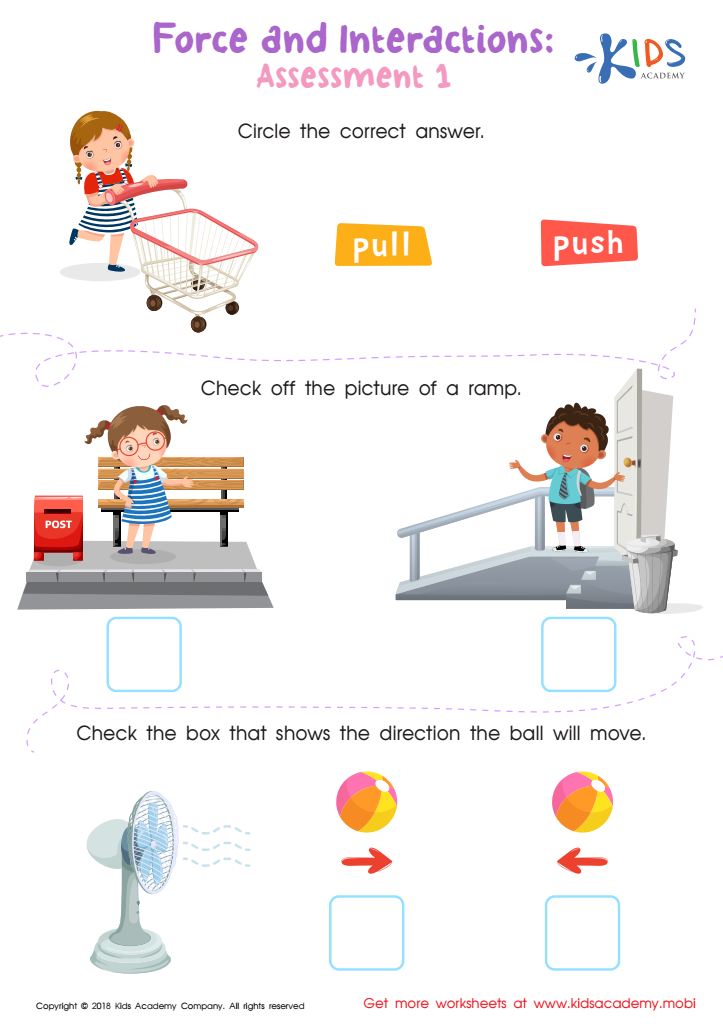
Force and Interactions: Assessment 1 Worksheet
 Assign to My Students
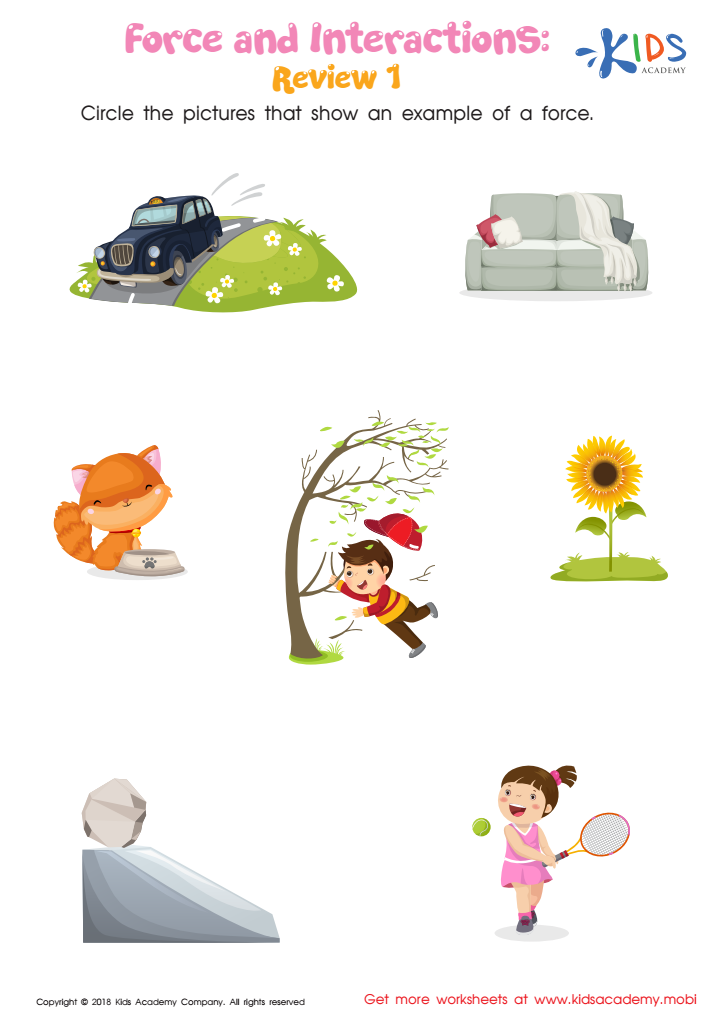
Force and Interactions: Review 1 Worksheet
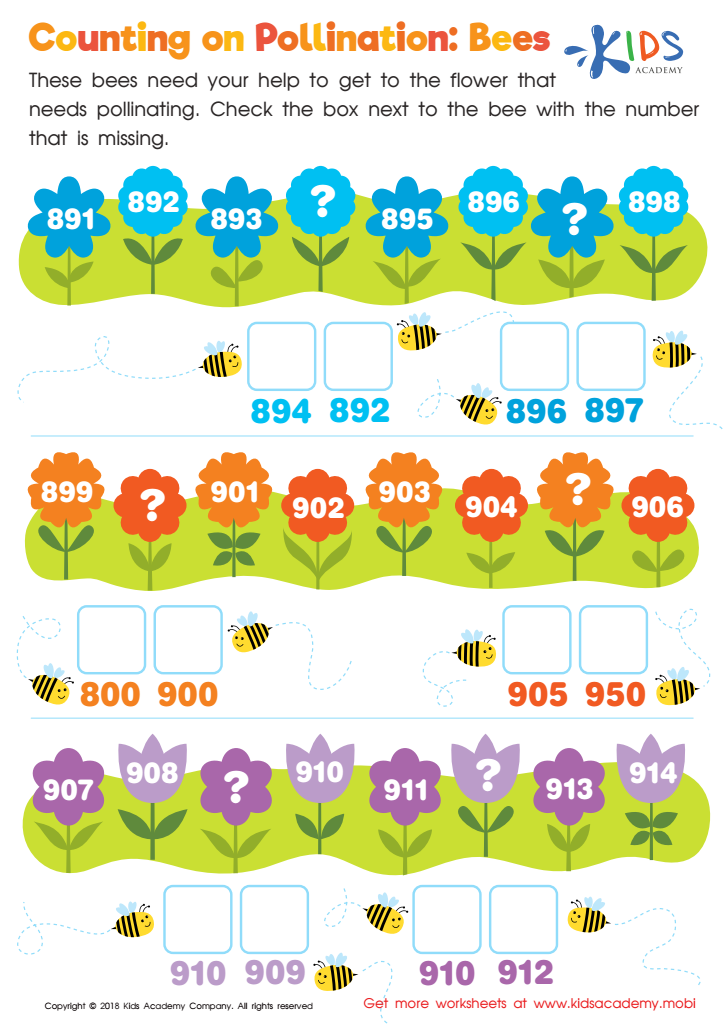
Counting on Pollination: Bees Worksheet
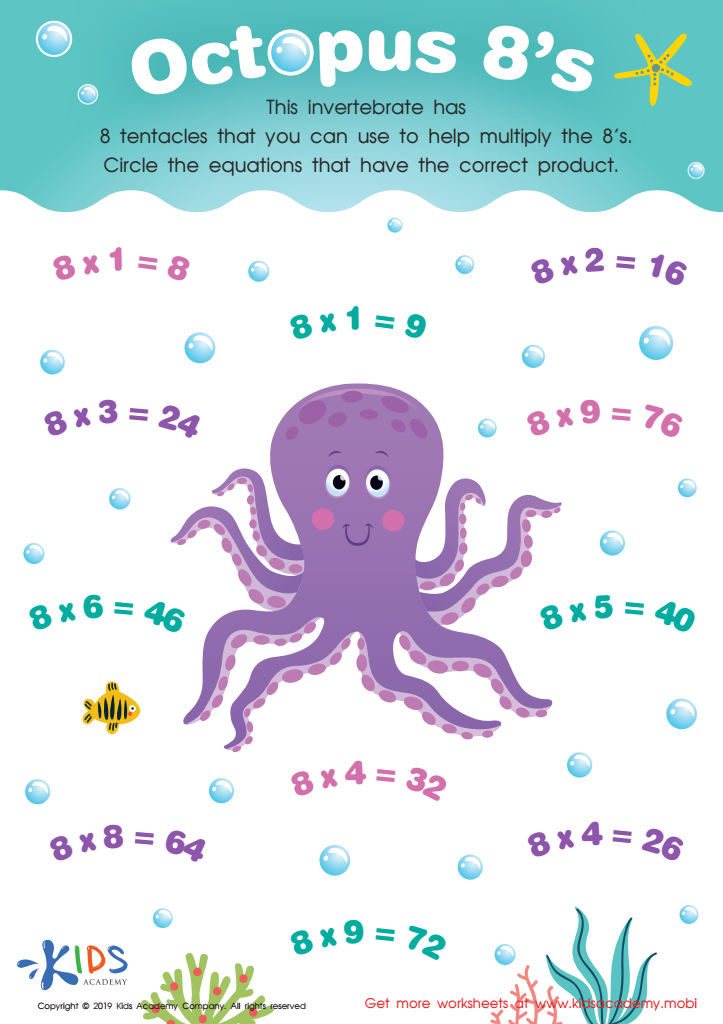
Octopus 8’s Worksheet







Counting practice is a crucial aspect of early childhood education, particularly for children aged 4 to 8. During this formative period, children develop foundational numeracy skills that are essential for their overall academic growth. Engaging in counting helps young learners not only recognize numbers but also understand quantity, which fosters critical thinking and problem-solving abilities.
Parents and teachers should care about counting practice because these skills are indicators of future math success. Proficiency in counting sets the stage for more complex mathematical concepts such as addition, subtraction, and even higher-order mathematical skills later on. Introducing counting through interactive activities—such as counting objects during playtime or using songs—makes learning fun and memorable.
Moreover, counting instills a sense of order and structure in young children, helping them develop concentration and focus. It also supports language development, as they learn to verbalize numbers and quantities. Collaboration between parents and teachers in reinforcing counting at home and in school creates a consistent learning environment. This partnership significantly enhances a child's confidence and engagement, leading to better academic outcomes in math and beyond. Ensuring children have strong counting skills sets a solid foundation for a lifetime of learning and numeracy fluency.







