Identifying Animals Normal Science Worksheets for Ages 4-8
3 filtered results
-
From - To
Discover our "Identifying Animals Normal Science Worksheets" designed for young learners aged 4-8! These engaging worksheets help children explore the animal kingdom while enhancing their observation skills and scientific vocabulary. Featuring vibrant images and age-appropriate activities, kids will easily recognize various animals, understand their habitats, and learn about their characteristics. Our resources encourage critical thinking and promote a love for science in a fun and interactive way. Ideal for both classroom learning and homeschooling, these printable worksheets are perfect for sparking curiosity about wildlife. Foster a lifelong appreciation for animals with our carefully crafted educational tools!
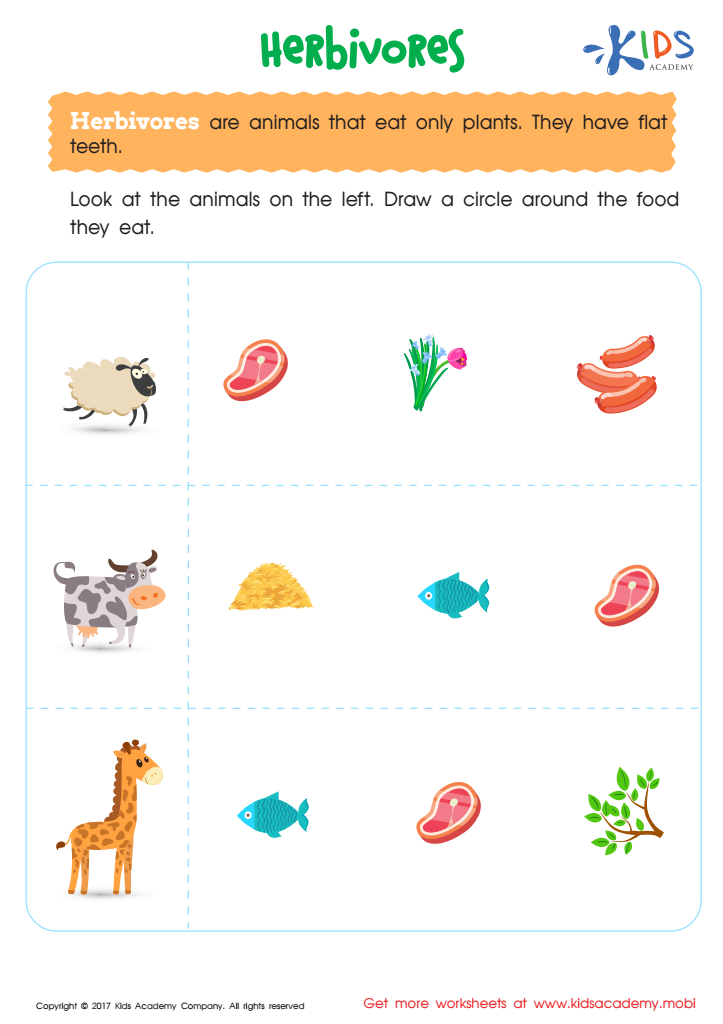
Herbivores Printable
 Assign to My Students
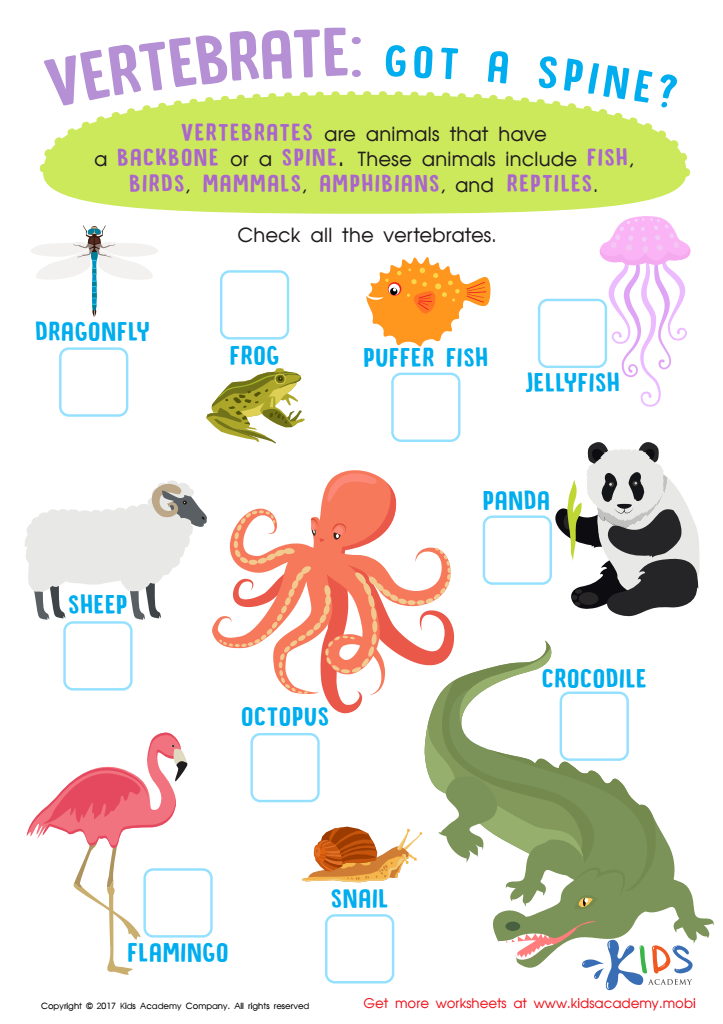
Vertebrates Animals Worksheet for 3rd Grade
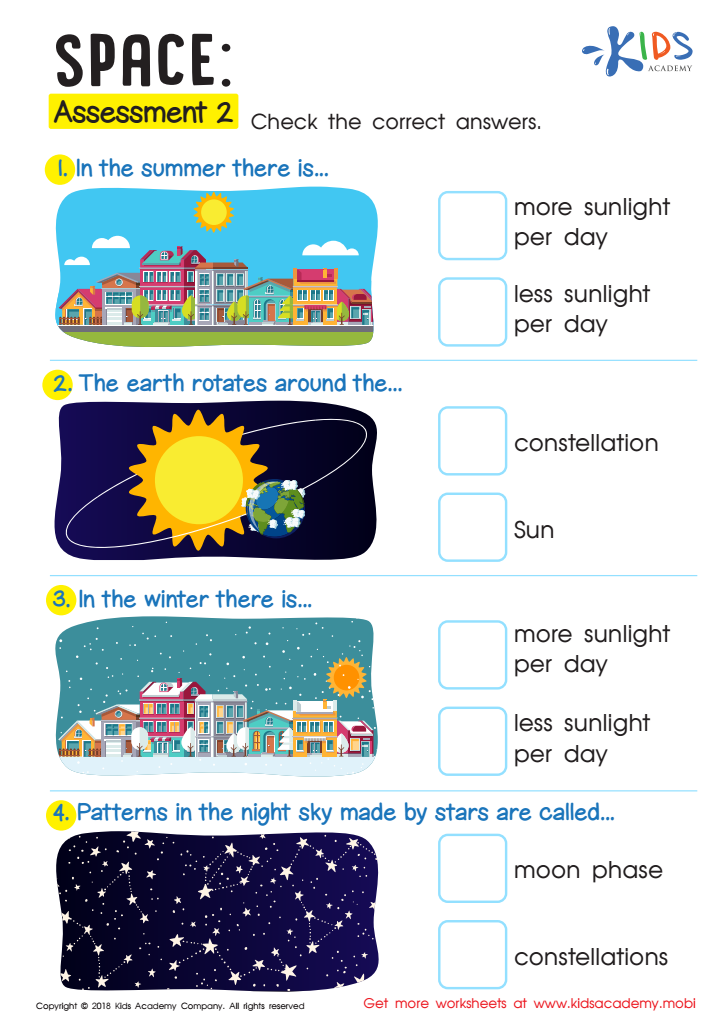
Space: Assessment 2 Worksheet







Identifying Animals Normal Science is crucial for children aged 4-8 as it lays the foundation for their understanding of the natural world. At this developmental stage, children are naturally curious and eager to explore their environment. By engaging them in identifying animals, both parents and teachers can foster critical observational skills and promote scientific inquiry.
Learning about animals enhances cognitive development as children categorize, compare, and contrast different species, thus improving their reasoning abilities. It also supports language acquisition, as children learn animal names, habitats, and behaviors, enriching their vocabulary and communication skills.
Moreover, knowledge of animals promotes awareness of biodiversity and environmental stewardship. By understanding the roles of various animals in ecosystems, children develop empathy towards living creatures and an appreciation for the planet. This connection encourages responsible behaviors towards conservation from a young age.
Additionally, activities related to identifying animals can be incredibly engaging and fun, providing opportunities for hands-on and experiential learning. These experiences create lasting memories and a love for science that can motivate lifelong learning. Overall, fostering an early interest in animal identification equips children with essential skills that transcend beyond the classroom, shaping them into informed and compassionate individuals.







