Science vocabulary expansion Normal Science Worksheets for Ages 4-8
4 filtered results
-
From - To
Enhance your child's understanding of science with our engaging Science Vocabulary Expansion worksheets, designed for ages 4-8! These fun and interactive worksheets promote essential vocabulary development, making learning about scientific concepts exciting and approachable. Suitable for preschool and early elementary students, our materials cover a variety of topics, from basic anatomy to environmental science. Each worksheet encourages hands-on activities, fostering curiosity and critical thinking skills. Parents and teachers can use these resources to support classroom learning or home study sessions. Empower your child's love for science and build a strong vocabulary foundation that will last a lifetime! Get started today!
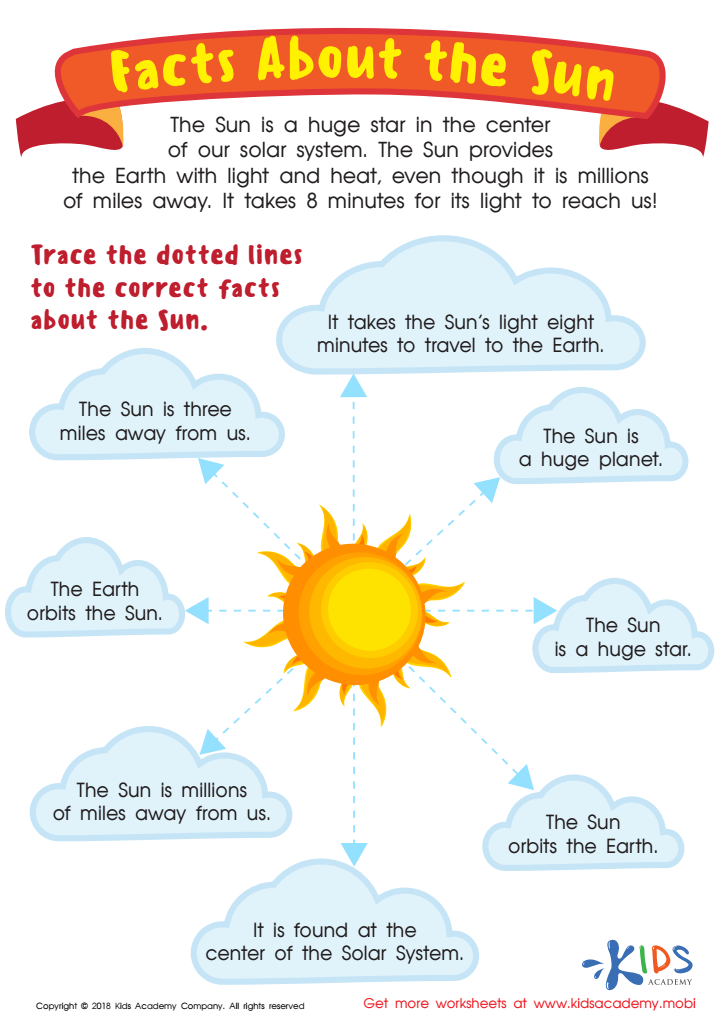
Facts About the Sun Worksheet
 Assign to My Students
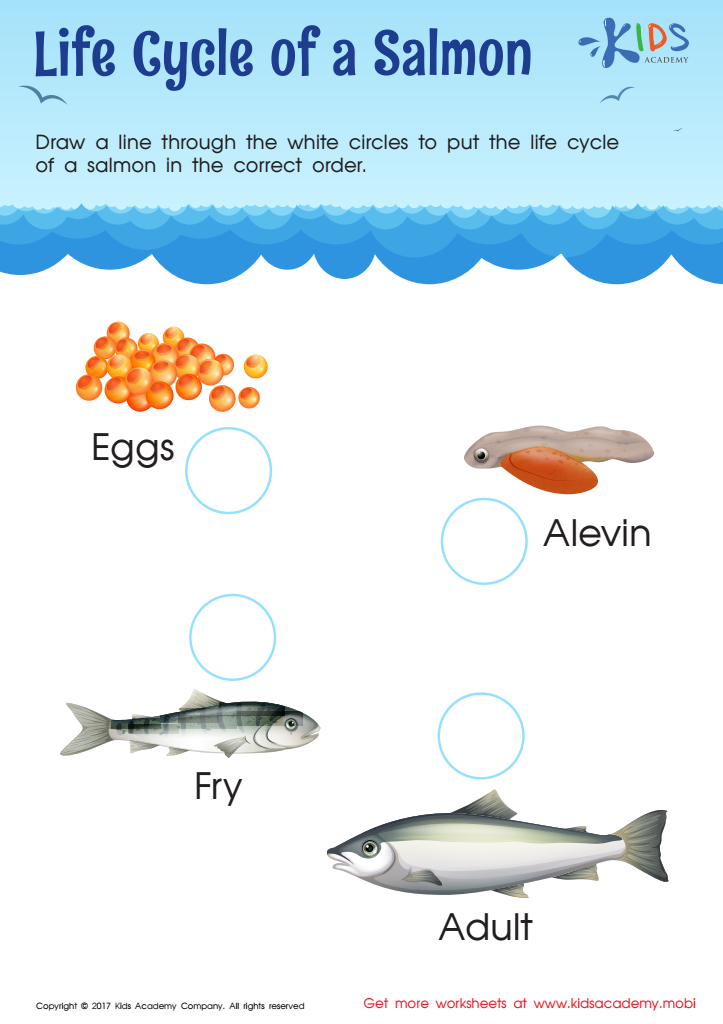
Cycle Of Salmon Worksheet
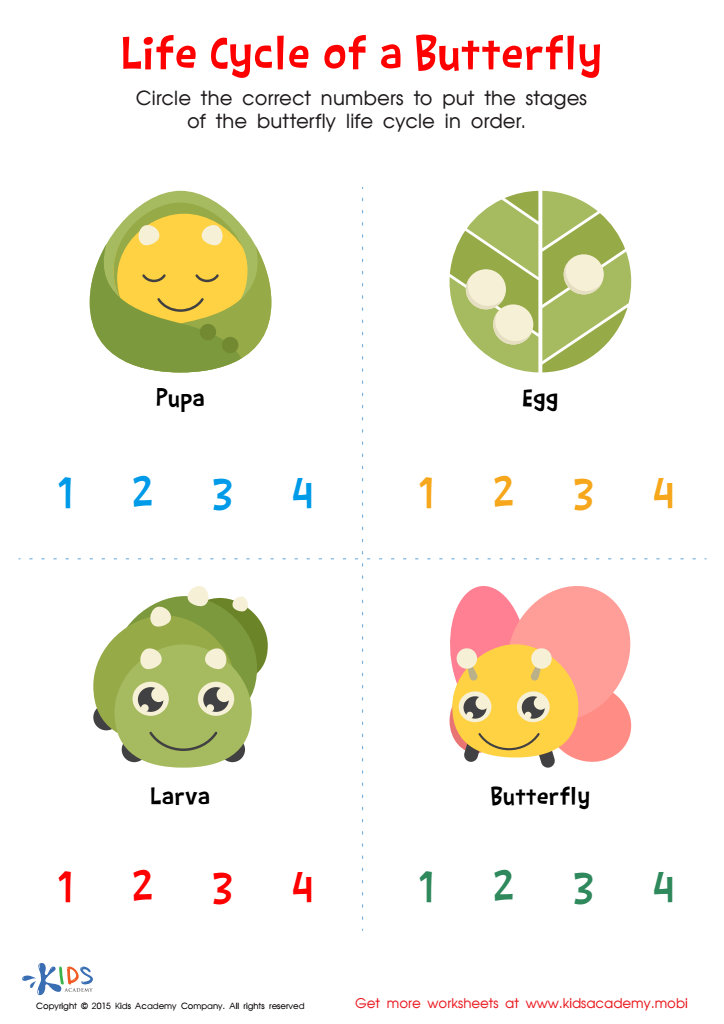
Life Cycle of Butterfly Printable
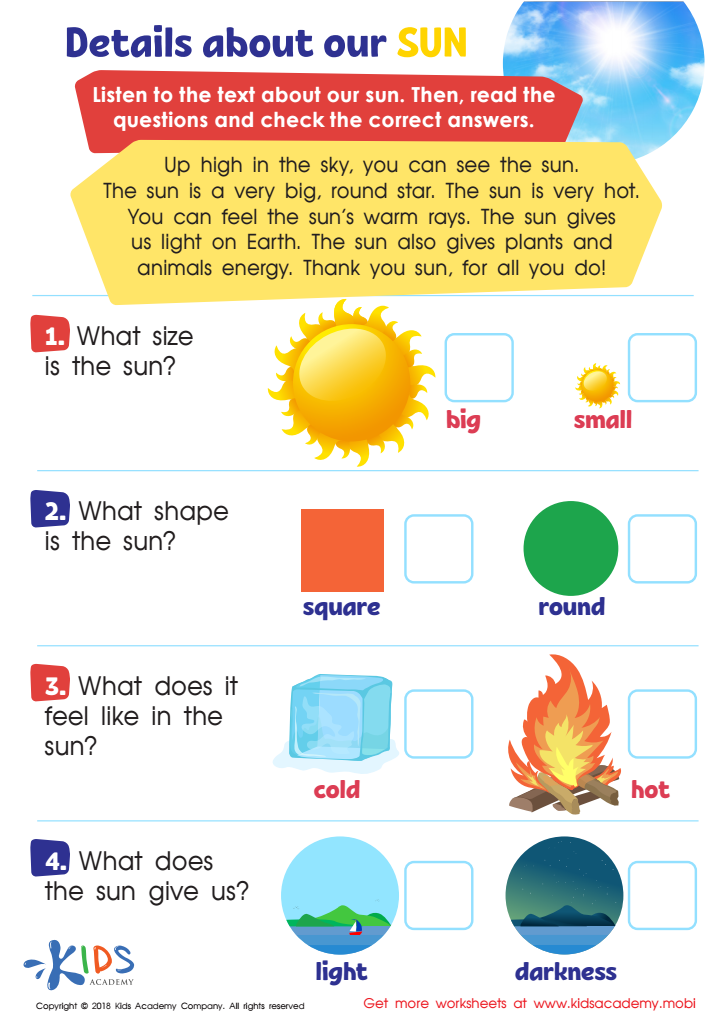
Details About Our Sun Worksheet







Science vocabulary expansion is vital for children aged 4-8 as it lays a foundation for critical thinking and enhances their understanding of the world. At this developmental stage, children are naturally curious, constantly asking questions about their surroundings. By introducing them to essential science vocabulary, parents and teachers can help nurture this curiosity into a deeper interest in scientific concepts. Familiar terms like "habitat," "ecosystem," or "energy" provide the building blocks for more complex ideas.
Furthermore, a strong science vocabulary aids in improving communication skills. Children learn to express their observations and inquiries more effectively, fostering discussions that are key to collaborative learning. Engaging children with hands-on experiments and interactive lessons enhances retention and application of these terms, making learning enjoyable and impactful.
Additionally, developing scientific vocabulary at an early age contributes to academic success in later years. Children who understand fundamental science terms are often better equipped to tackle more complex subjects, leading to increased confidence and interest in STEM fields.
In summary, investing in science vocabulary expansion for young learners not only fuels their curiosity and fosters classroom engagement but also lays the groundwork for lifelong learning and success in an increasingly science-driven world.







