
Reading comprehension Normal Weather Worksheets for Ages 4-8
10 filtered results
Difficulty Level
Grade
Age
-
From - To
Subject
Activity
Standards
Enhance your child's reading skills with our "Reading Comprehension Normal Weather Worksheets for Ages 4-8". These informative worksheets are designed to engage young learners in understanding various weather conditions while improving their reading comprehension. Each worksheet features age-appropriate texts about sun, rain, clouds, and other weather elements, followed by questions to test comprehension and critical thinking. Catered to children aged 4-8, these resources align with early science learning standards, helping kids to develop vocabulary and knowledge about everyday weather phenomena. Download today to make learning about weather both fun and educational!
Favorites
With answer key
Interactive
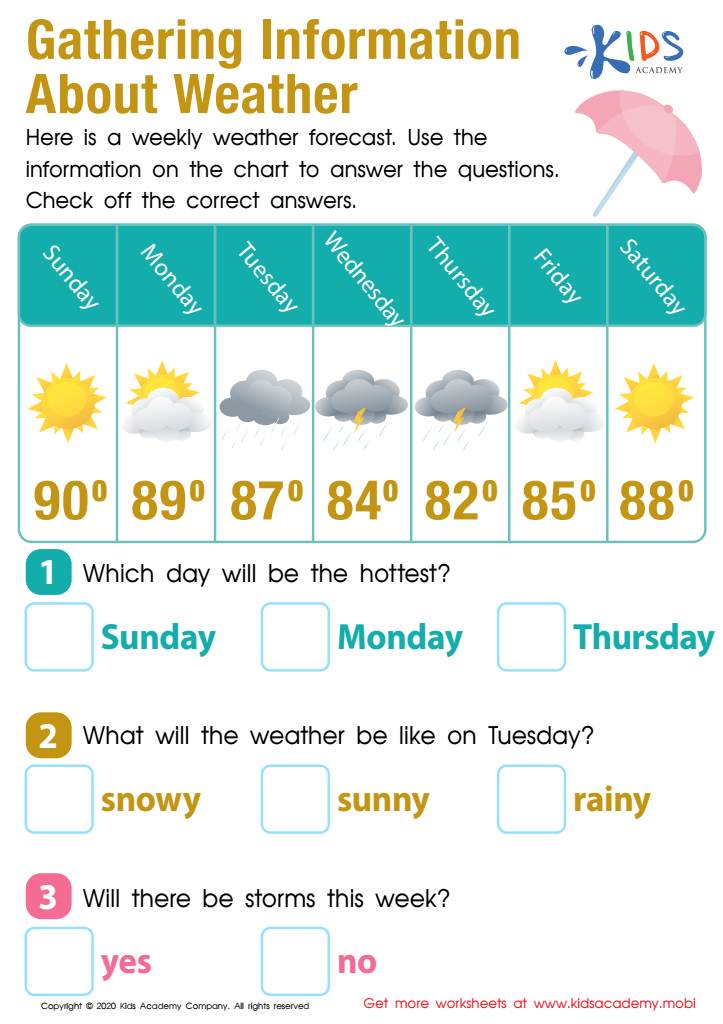
Gathering Information About the Weather Worksheet
Teach your child to interpret a weather forecast with this helpful science worksheet from Kids Academy! Guide them to analyze the data, figure out what the weather will be like on each day and answer the questions at the bottom by checking off the correct answers. This will help them understand and plan for their week!
Gathering Information About the Weather Worksheet
Worksheet
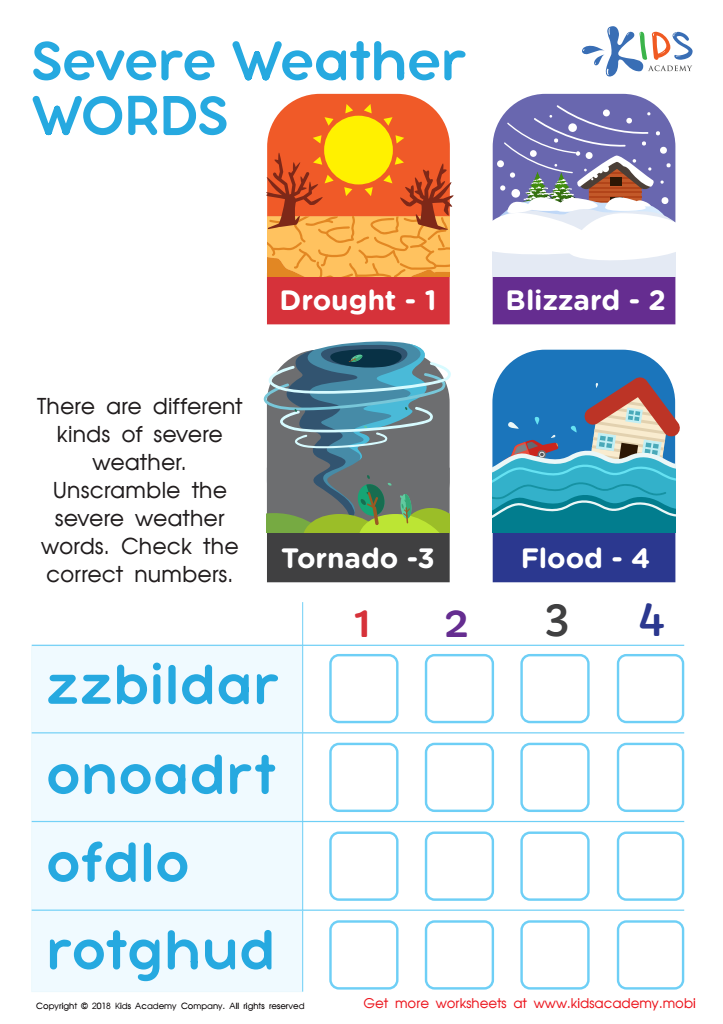
Severe Weather Words Worksheet
Help your child learn about severe weather with this PDF worksheet! Review each image's term and discuss, then have kids unscramble the words. Match the picture number to the term by selecting the correct box. Let your kids work through it and become weather-savvy!
Severe Weather Words Worksheet
Worksheet
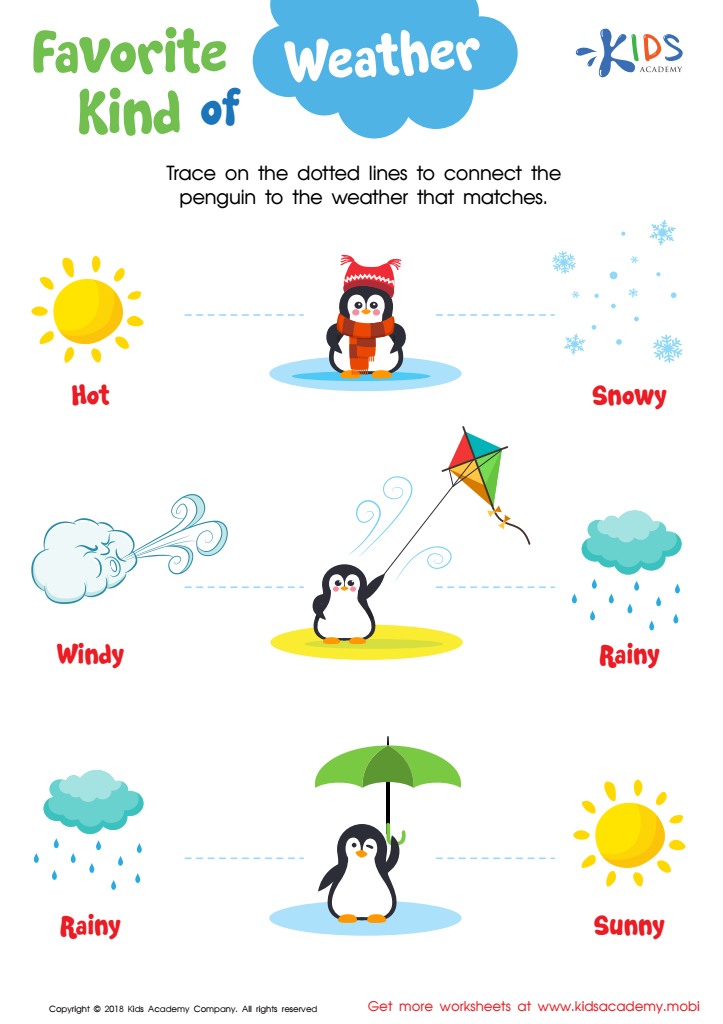
Favorite Kind of Weather Worksheet
!
Help your child understand weather and seasons with this fun worksheet featuring a cute penguin. They'll learn to recognize types of weather and associate them with seasons. To practice their fine motor skills, they'll trace lines to select the right seasons and weather. Kids will make a new friend while broadening their knowledge of nature.
Favorite Kind of Weather Worksheet
Worksheet
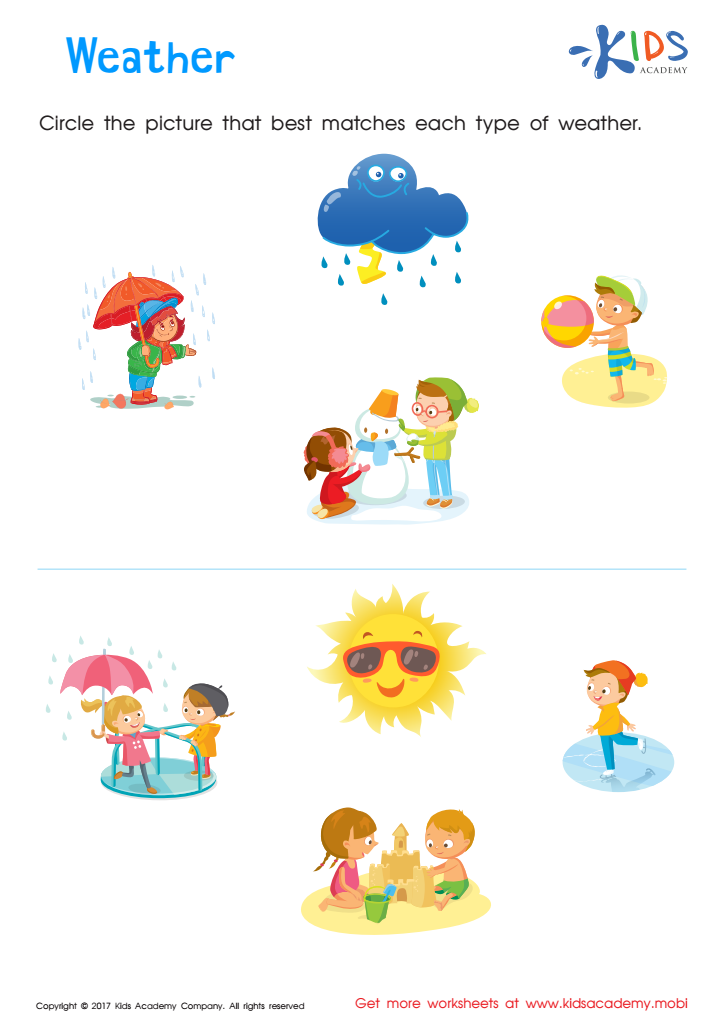
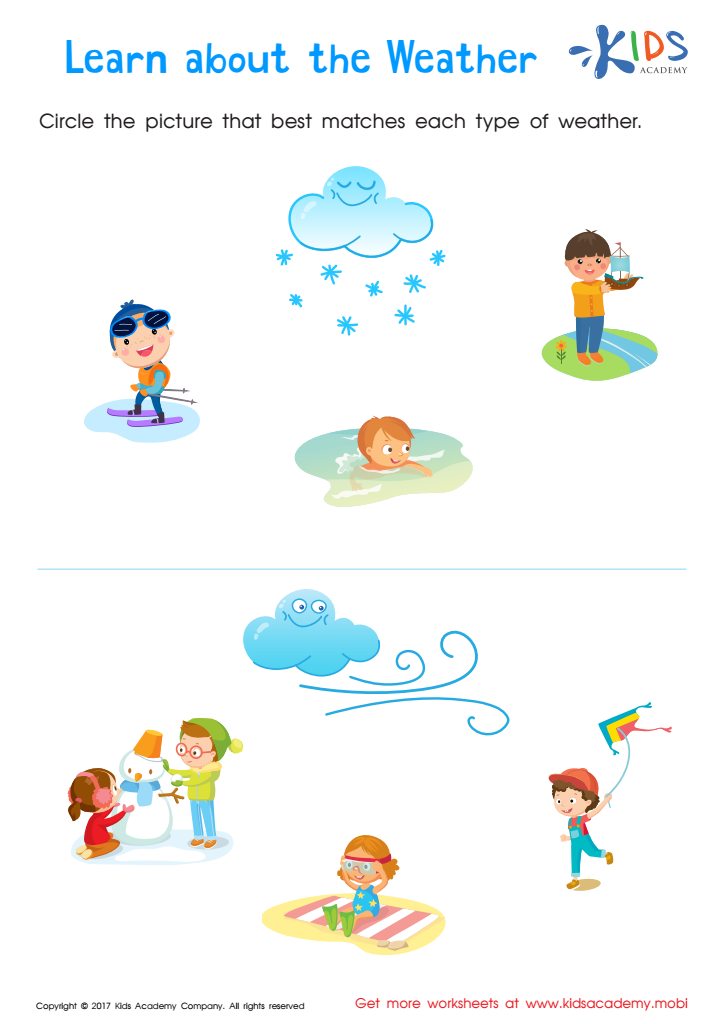
About the Weather Printable
This worksheet is perfect for reinforcing knowledge about changing weather and activities that suit each season. Help your child use their life experiences to observe the weather and complete the worksheet. Fun and colorful, it's a great way to learn about weather and seasons. Let's get started!
About the Weather Printable
Worksheet
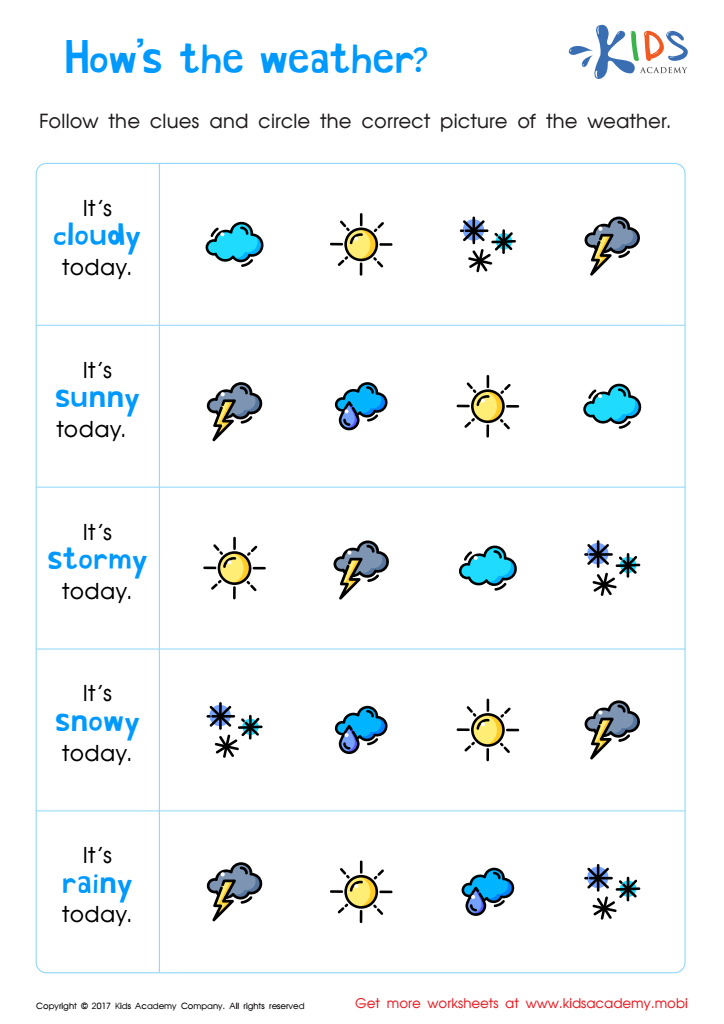
Hows the Weather Worksheet
Teaching kids about weather is a fun way to start science learning. This worksheet helps recognize symbols, literacy skills and make real world connections. Your child will love it!
Hows the Weather Worksheet
Worksheet
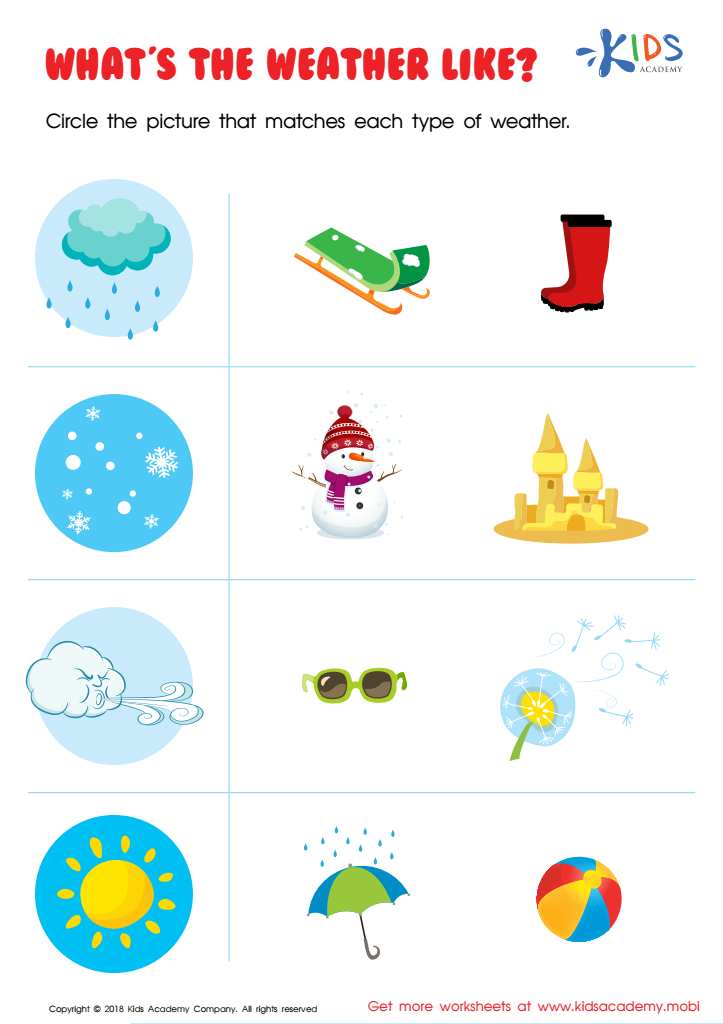
What's the Weather Like? Worksheet
Help budding meteorologists practice matching weather to seasons with this PDF worksheet. Picture clues help identify seasons and fine motor skills are practiced circling the correct weather patterns. Bright and engaging characters make learning fun and reinforce weather knowledge.
What's the Weather Like? Worksheet
Worksheet
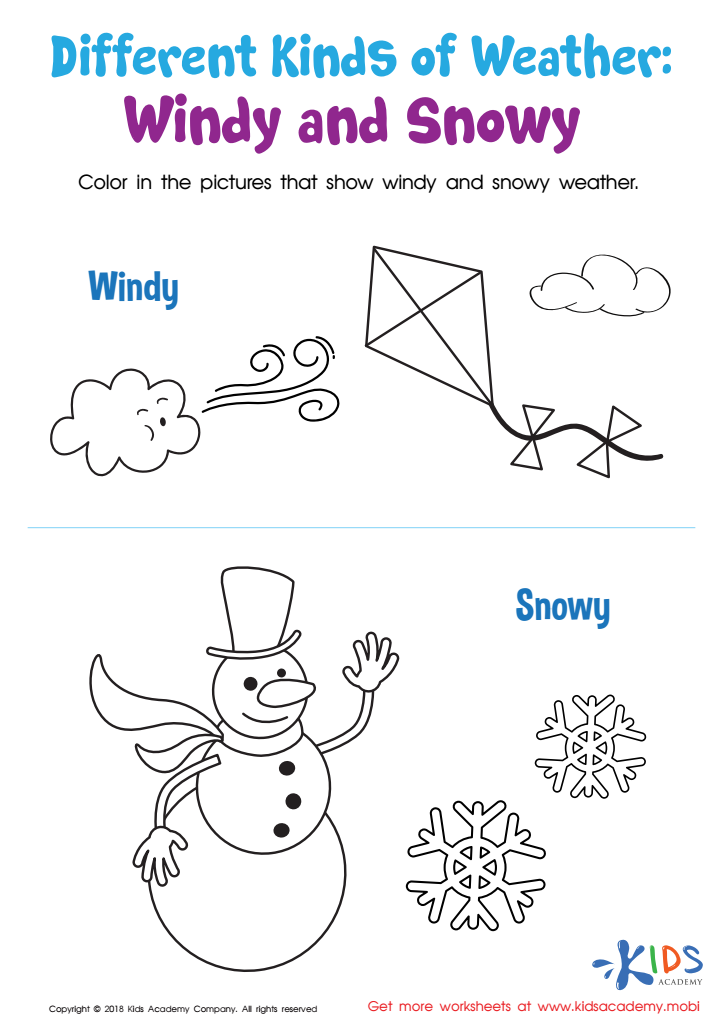
Different Kinds of Weather: Windy and Snowy Worksheet
Invite your little learner to practice their fine motor skills and learn about nature with this fun and charming PDF worksheet! Reinforce weather patterns and examine their environment as they color, giving them a foundation for understanding how weather affects them. No matter the weather, your learner will have a blast!
Download (PDF)
 Assign to My Students
Assign to My Students
Different Kinds of Weather: Windy and Snowy Worksheet
Worksheet
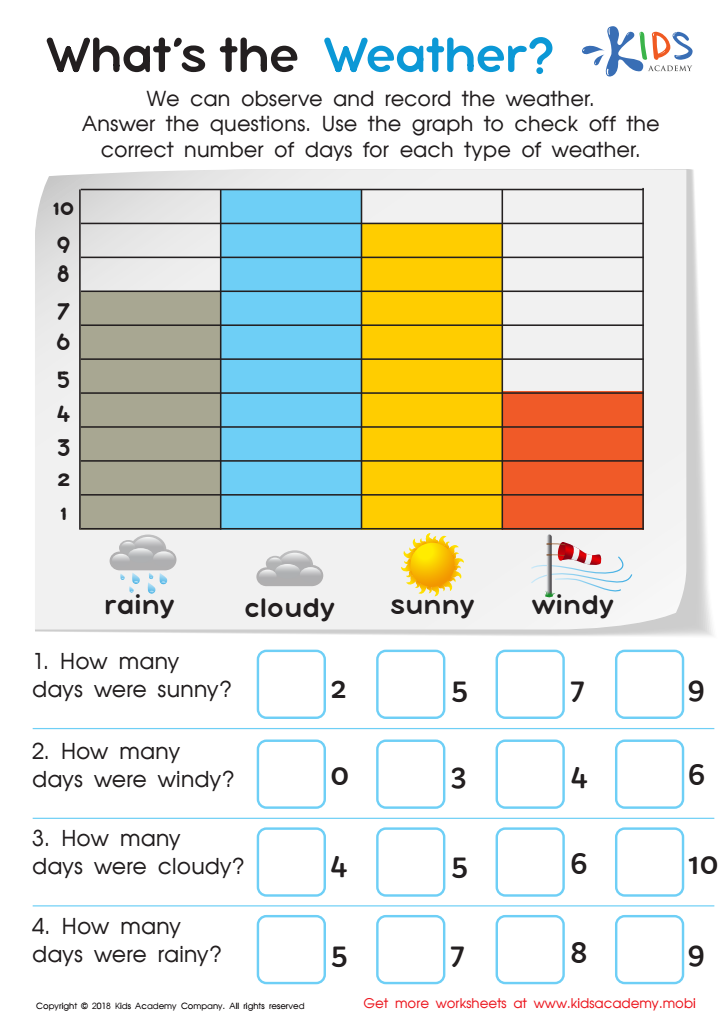
What's the Weather? Worksheet
Check the weather outside. Help kids learn and practice science and math by tracking different types of days using this printable worksheet. Have them count bars next to weather types like cloudy, sunny, windy, and rainy. Answer the questions and take the lesson further by creating a bar graph to show the monthly weather.
What's the Weather? Worksheet
Worksheet
Join Kids Academy for Free
Who is primarily going to use this learning content?




%20(1).jpg)



Reading comprehension is a fundamental skill that underpins a child's academic and life success, and it is essential to focus on it even in the context of engaging materials like "Normal Weather." Children aged 4-8 are at a critical stage of cognitive development where the foundation of their literacy skills is being built. These early years are crucial for language growth, vocabulary development, and understanding complex ideas.
"Normal Weather" offers an excellent opportunity to integrate reading comprehension with real-world knowledge. Understanding weather phenomena helps children make sense of their environment and enhances their scientific literacy. By discussing routine weather patterns, children learn to predict, observe, and describe everyday experiences, thus improving their vocabulary and analytical skills.
Teachers and parents should engage children in conversations about the text, ask questions that prompt critical thinking, and encourage predicting and summarizing the content. Activities like drawing weather scenes, keeping weather diaries, or dramatizing weather reports make learning interactive and fun.
Enhancing reading comprehension through relevant, understandable topics like weather empowers children to become confident readers and learners. It sets a solid foundation for future academic success and keeps them curious and interested in the world around them. In short, prioritizing reading comprehension during these formative years helps build proficient, enthusiastic readers and lifelong learners.








