
Vocabulary development Normal Community Worksheets for Ages 4-8
5 filtered results
Difficulty Level
Grade
Age
-
From - To
Subject
Activity
Standards
Enhance your child’s vocabulary with our engaging "Vocabulary Development Normal Community Worksheets" designed for ages 4-8. These interactive worksheets provide a fun and educational way for young learners to explore their community while expanding their language skills. Children will engage in activities that encourage recognition of common community terms, helping them relate words to their everyday environment. By participating in these thoughtfully crafted exercises, kids will boost their comprehension and verbal skills, preparing them for future academic success. Discover a world of words with our thoughtfully designed worksheets, perfect for parents and educators aiming to foster a love for language in young learners!
Favorites
With answer key
Interactive
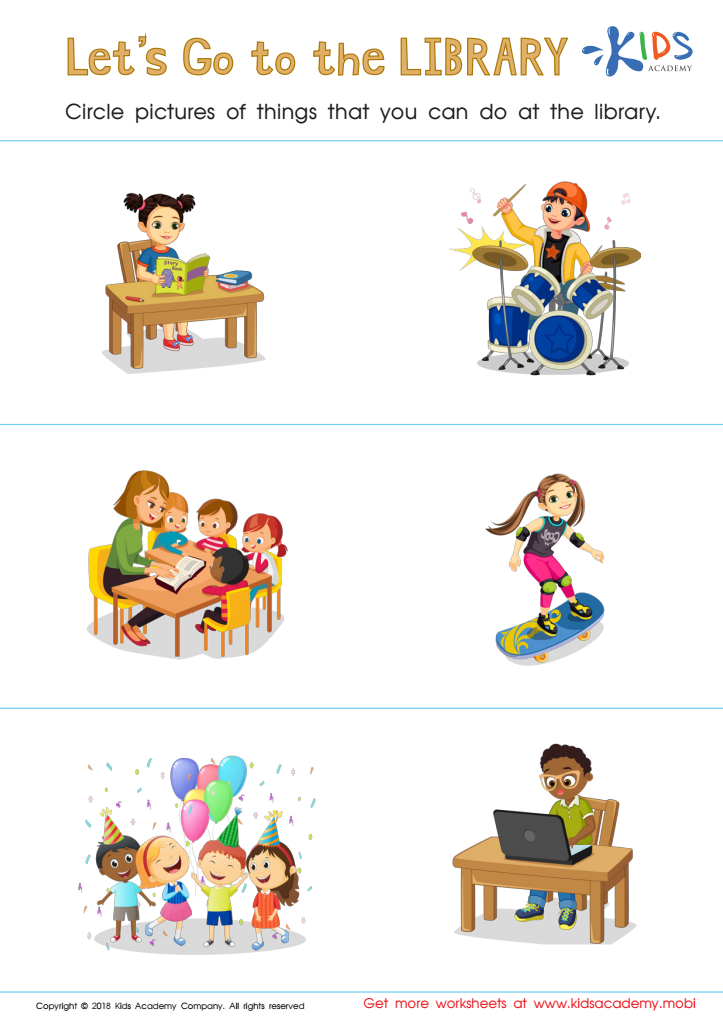
Let's Go to the Library! Worksheet
How often does your child visit the library? If they're a frequent visitor, they'll breeze through this worksheet. It requires them to look at pictures that depict activities done in the library and activities not allowed. Ask them to circle the correct picture. It's a fun way to reinforce library knowledge.
 Assign to My Students
Let's Go to the Library! Worksheet
Worksheet
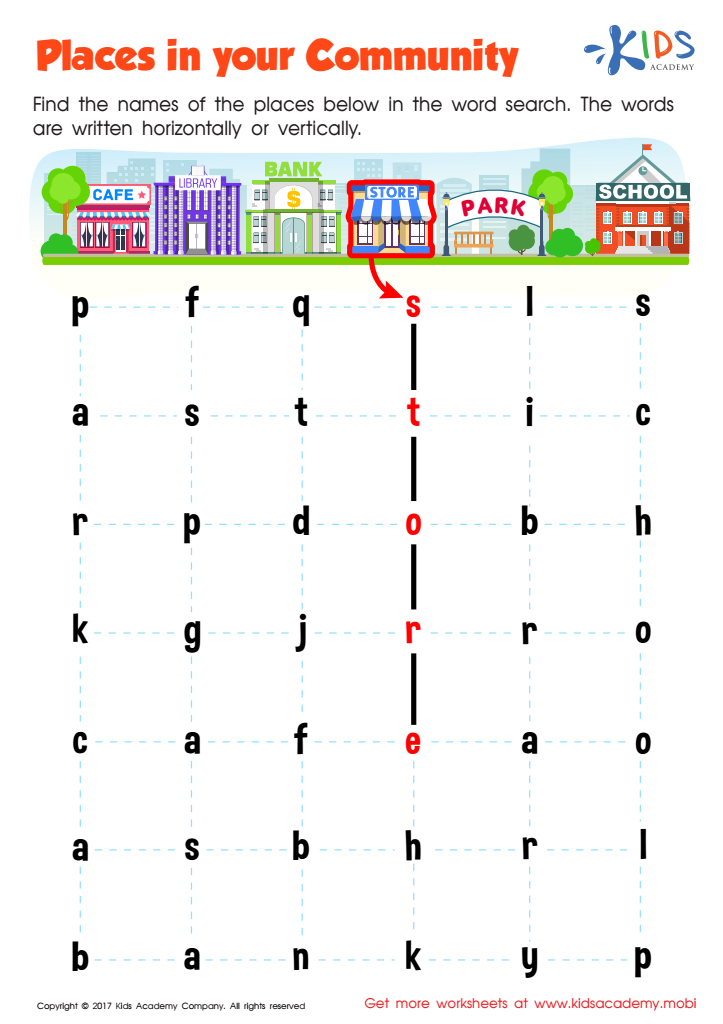
Places in Your Community Worksheet
Find and circle words related to common places in your community, like library, fire station, and more. Practicing vocabulary and spelling, your child will gain a better understanding of their community.
Places in Your Community Worksheet
Worksheet
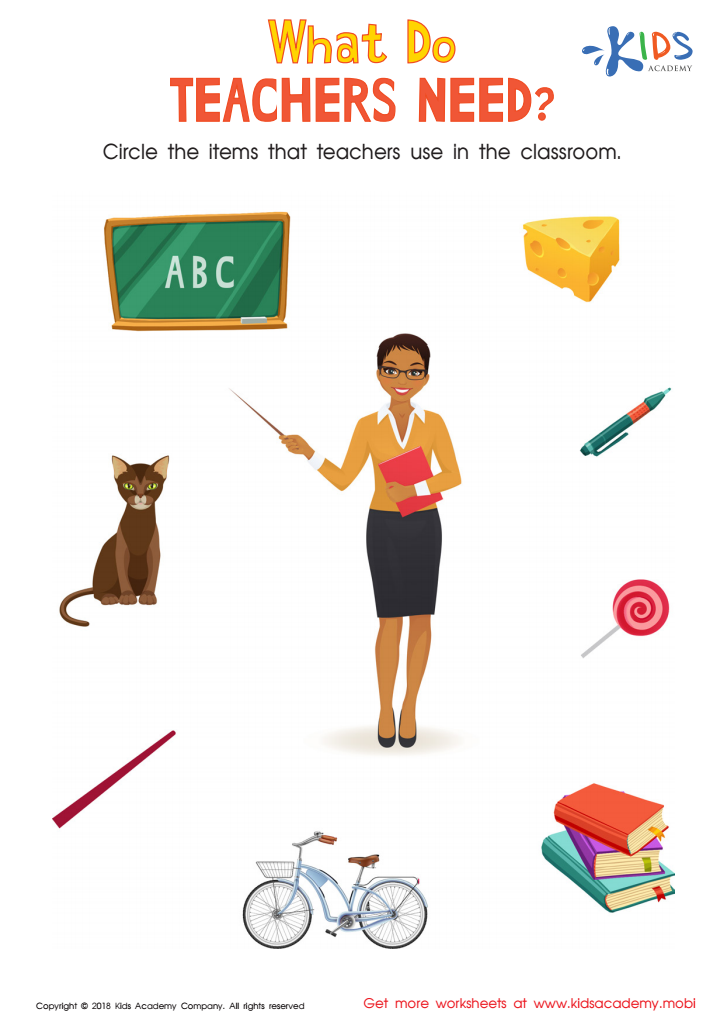
What Do Teachers Need Worksheet
This interactive worksheet tasks kindergarten students with identifying essential items a teacher needs in a classroom. They will be asked to circle items, helping them learn what teachers need to have in their classrooms.
What Do Teachers Need Worksheet
Worksheet
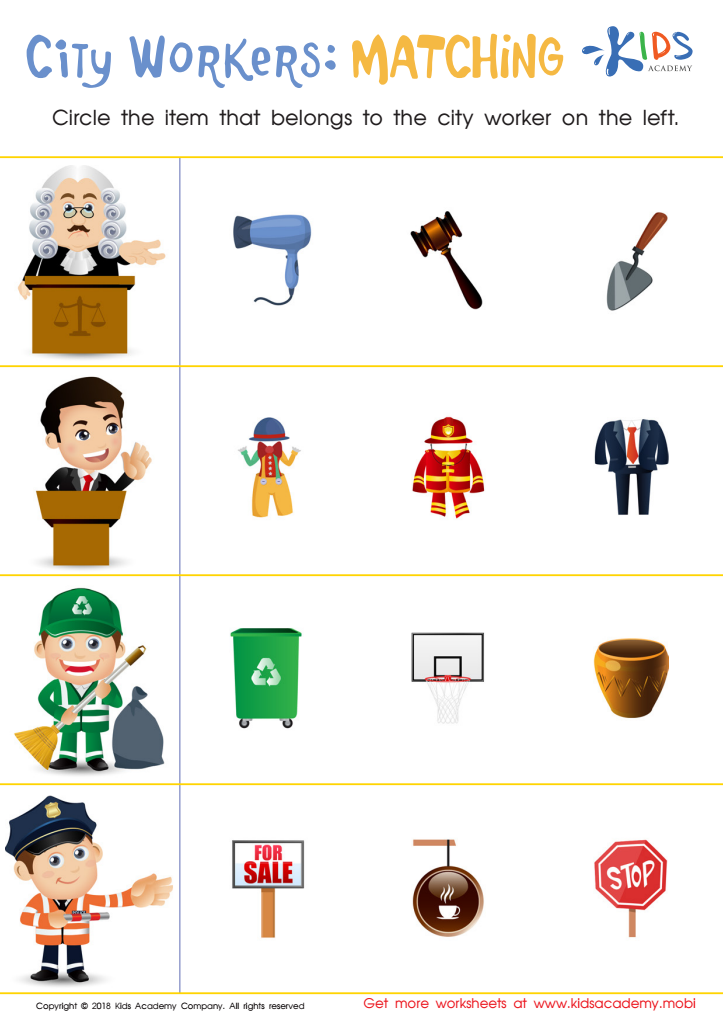
City Workers: Matching Worksheet
Examine the worksheet with your kid. Identify the individuals on the left and their jobs. Have your child circle the correct items on the right that pertain to the city workers. Help your child learn about city workers with this activity.
City Workers: Matching Worksheet
Worksheet
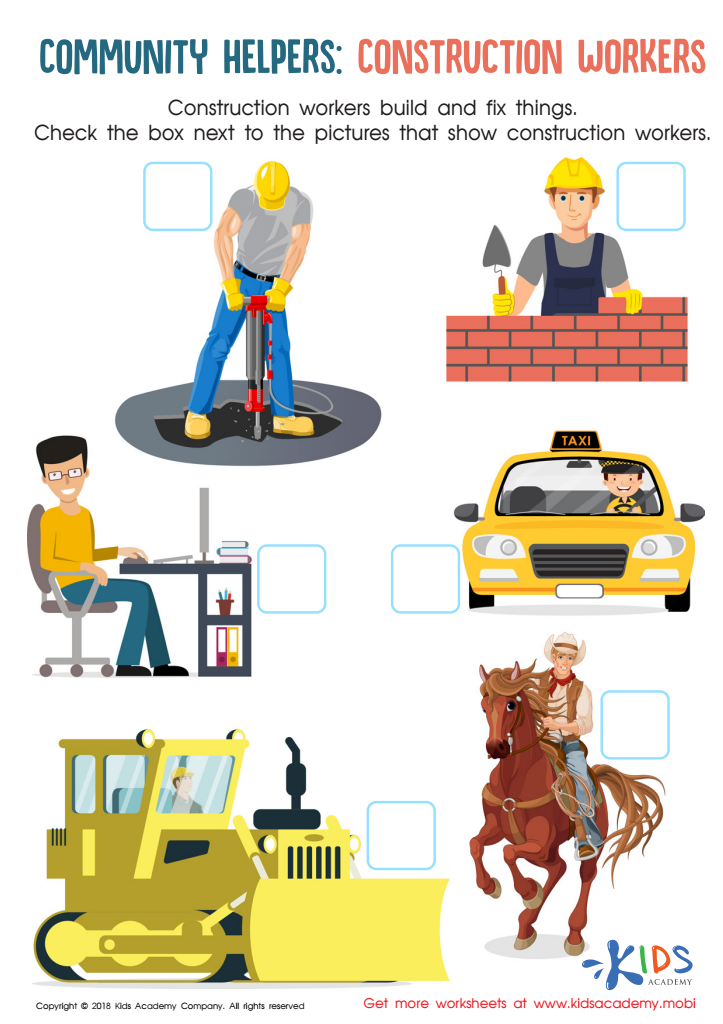
Construction Workers Community Helpers Worksheet
Construction workers build and repair roads, keeping them accessible for the community. Ask your child if they've ever seen one at work, and talk about what they do. Go through the worksheet together and check the pictures that show construction workers in action.
Construction Workers Community Helpers Worksheet
Worksheet
Join Kids Academy for Free
Who is primarily going to use this learning content?








Vocabulary development during the ages of 4 to 8 is crucial for a child's overall growth and learning. At this stage, children begin to understand not just words, but also the concepts, emotions, and relationships they represent. A strong vocabulary is linked to better reading comprehension, improved communication skills, and enhanced critical thinking abilities, all of which are foundational for academic success.
Parents and teachers play significant roles in fostering this development. Engaging children in discussions about books, asking open-ended questions, and introducing new words in context helps deepen their understanding and retention. Additionally, an enriched vocabulary allows children to express themselves more clearly and confidently, aiding in social interactions and emotional intelligence.
Furthermore, in a normal community, nurturing vocabulary can bridge cultural and socio-economic gaps, ensuring that all children have equitable opportunities for learning. When children develop robust vocabularies, they are better equipped to navigate their environments, participate in discussions, and comprehend diverse viewpoints.
Ultimately, strong vocabulary skills empower children to thrive academically and socially, laying the groundwork for lifelong learning and success. By actively participating in this developmental phase, parents and teachers can profoundly impact a child's educational journey.








