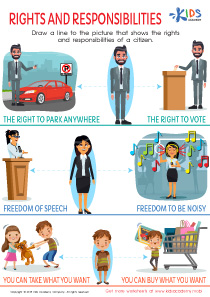
Enhancing Reading Comprehension Normal Governance and Civics Worksheets for Ages 4-8
7 filtered results
-
From - To
Enhance your child’s understanding of governance and civics with our engaging reading comprehension worksheets, specifically designed for ages 4-8. These printable activities promote literacy while teaching basic social studies concepts, encouraging young learners to explore the world of rules, responsibilities, and community roles. Each worksheet is crafted to build reading skills and comprehension through fun, interactive exercises. Our resources provide a foundation for critical thinking and active citizenship, perfect for early growth and educational advancement. Empower your child’s learning journey with tools that make mastering governance and civics an enjoyable experience! Visit the link to explore our worksheets today.
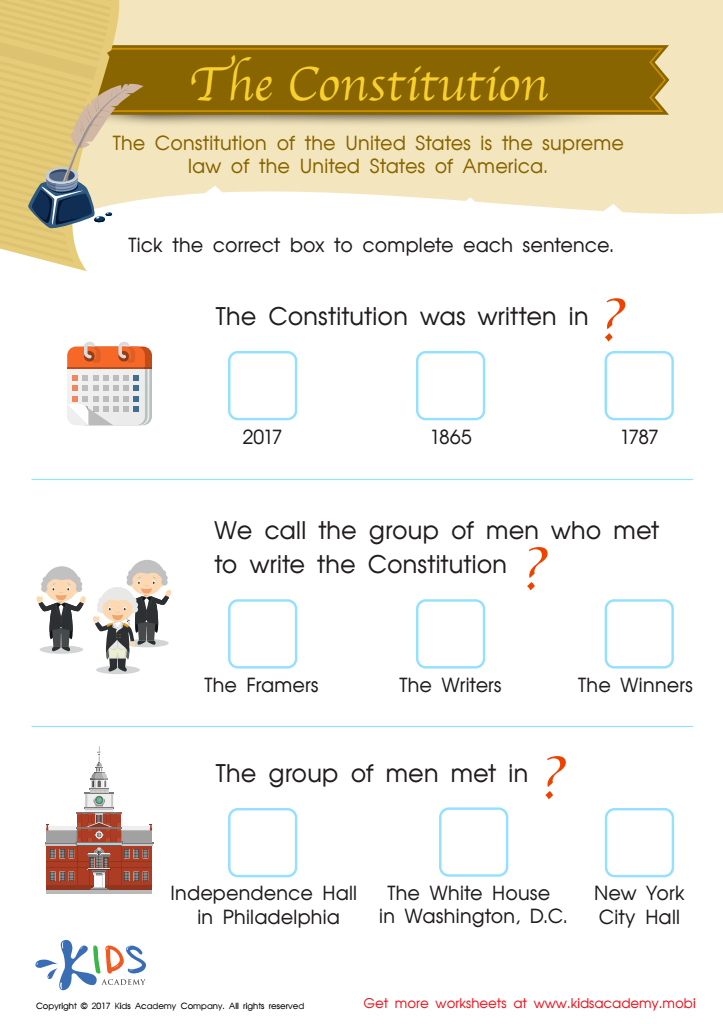
The Constitution Worksheet
 Assign to My Students
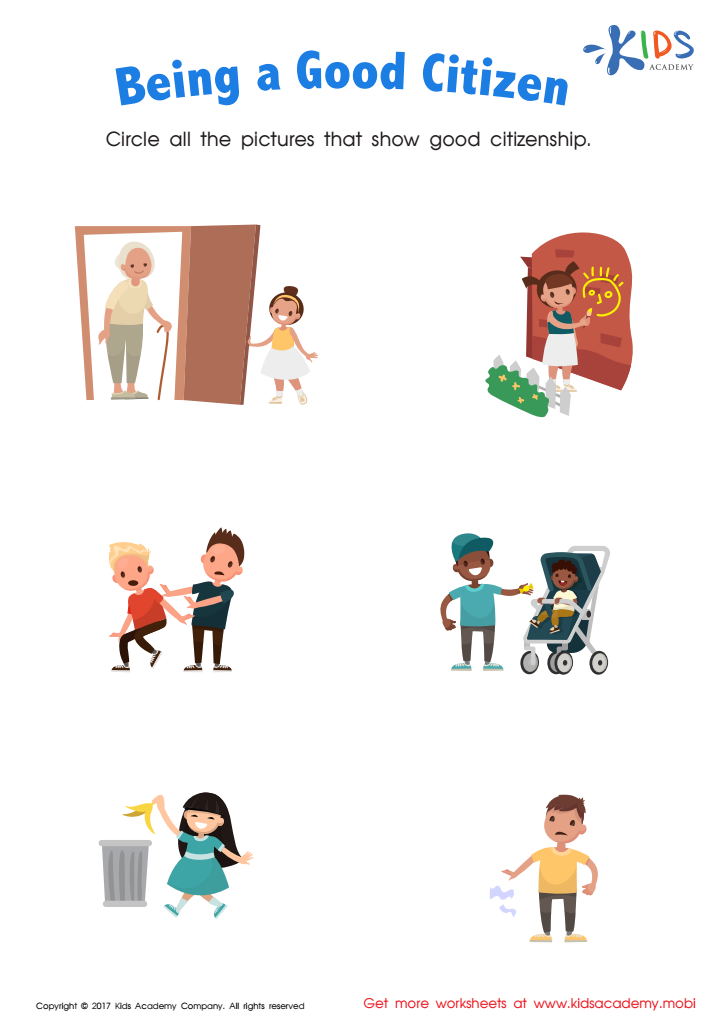
Being a Good Citizen Printable
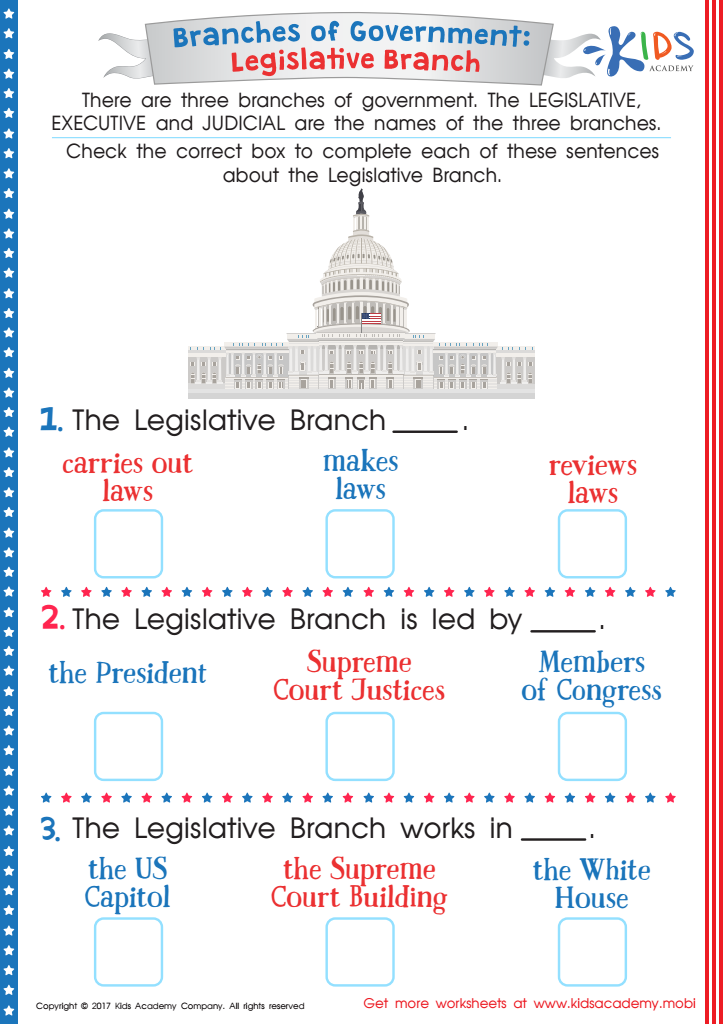
Branches of the Government: Legislative Branch Worksheet
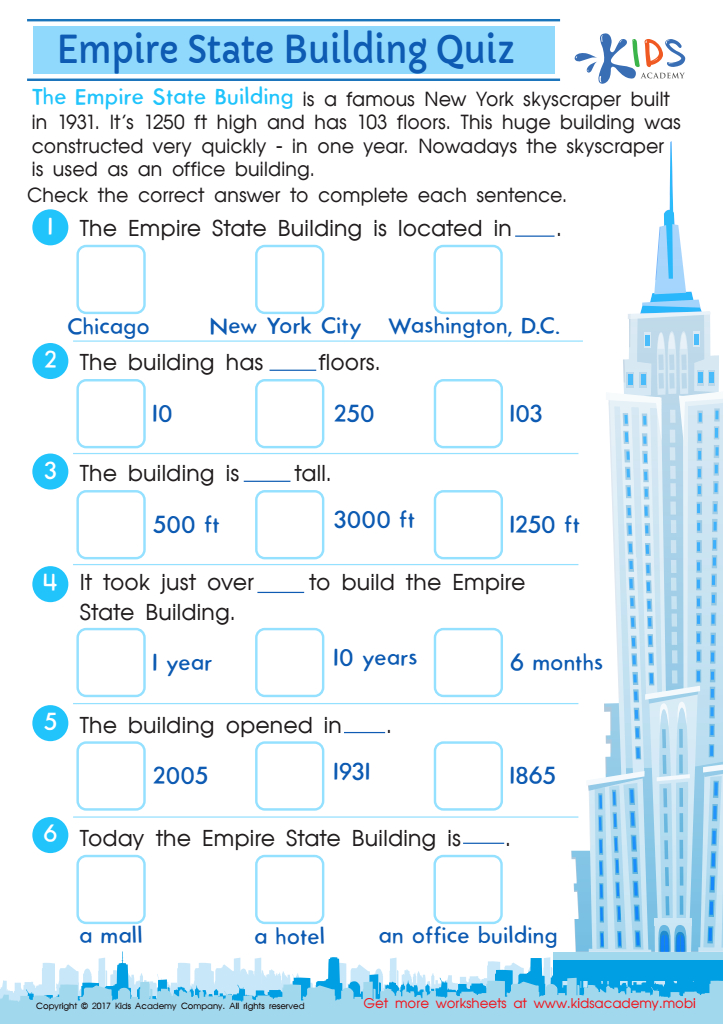
Empire State Building Printable Worksheet
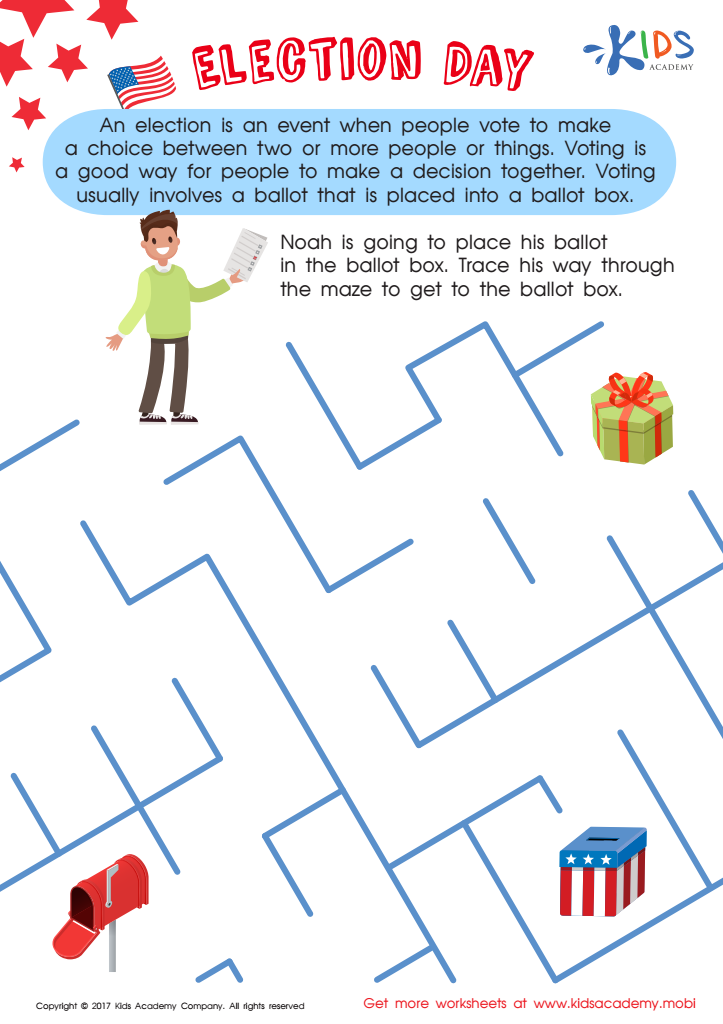
Election Day Worksheet
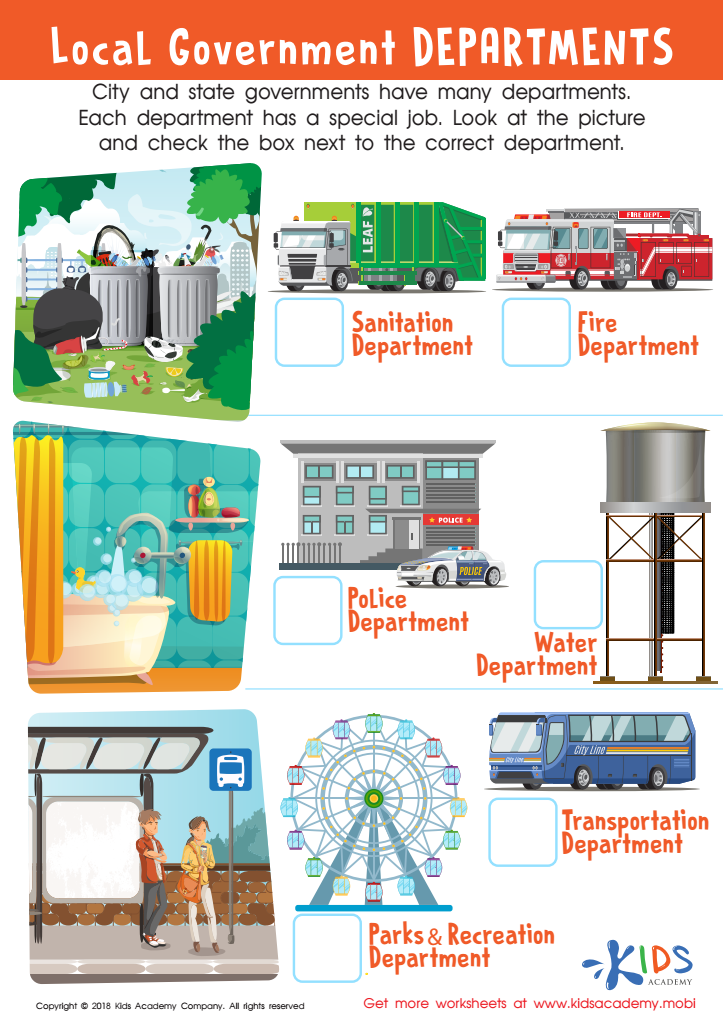
Local Government Departments Worksheet
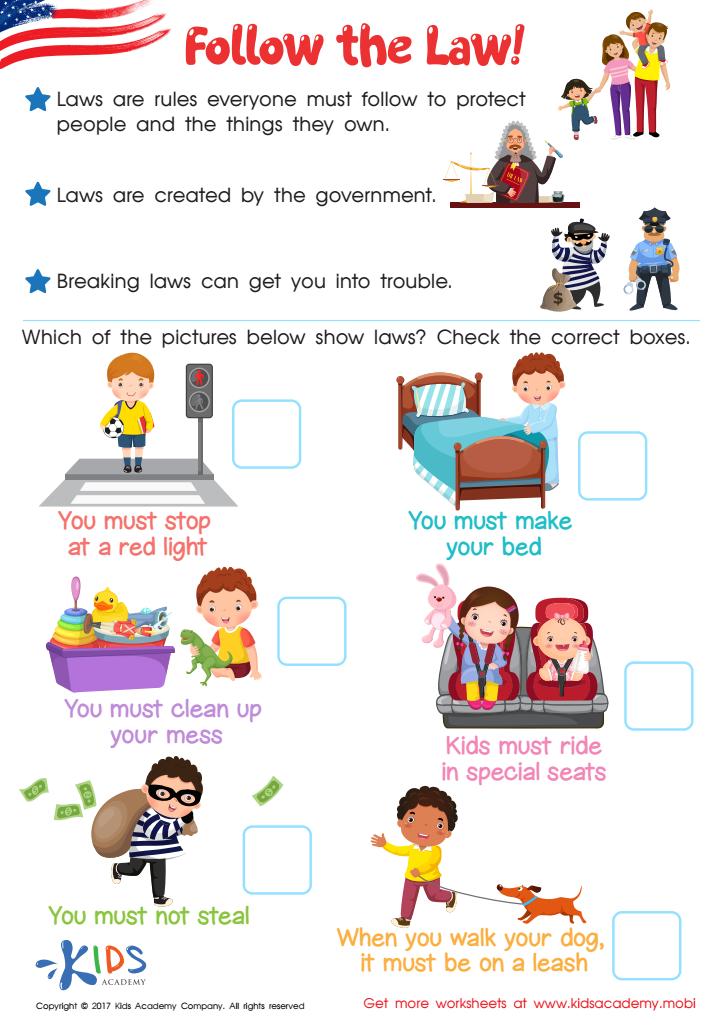
Follow the Law Worksheet


Enhancing reading comprehension, governance, and civic understanding in children aged 4-8 is crucial for their holistic and informed development. At this formative age, children are like sponges, absorbing information and forming foundational skills that will support their lifelong learning. Reading comprehension is not simply about decoding words; it's about understanding and reflecting on the content. Improving this skill ensures that children can grasp stories, follow instructions, and make sense of the world around them, which is essential for academic success and effective communication.
Understanding the basics of governance and civics at a young age fosters a sense of responsibility, community, and empathy. When children are introduced to concepts like rules, fairness, and leadership, they begin to understand how their actions affect others and the importance of contributing positively to society. This early introduction can cultivate engaged, informed citizens who respect and participate in democratic processes.
Furthermore, combining these elements nurtures critical and logical thinking. Children learn to question, evaluate, and make sense of the systems around them, promoting thoughtful decision-making. Parents and teachers play a significant role in guiding young minds by providing resources, creating enriching environments, and setting examples. Together, they can foster well-rounded individuals ready to thrive academically, personally, and as members of a community.