Understanding communities Normal Social Studies Worksheets for Ages 4-8
4 filtered results
-
From - To
"Understanding Communities" provides engaging and age-appropriate social studies worksheets for children aged 4-8. These worksheets are designed to help young learners explore the concept of communities, their roles, and the people within them. Through fun activities, kids can grasp the basics of how communities function and the importance of teamwork and societal roles. Perfect for early elementary students, these exercises also promote critical thinking and problem-solving skills, while adhering to educational standards. Ideal for teachers and parents wishing to support their child's social understanding, these printable resources pave the way for active and informed community members.
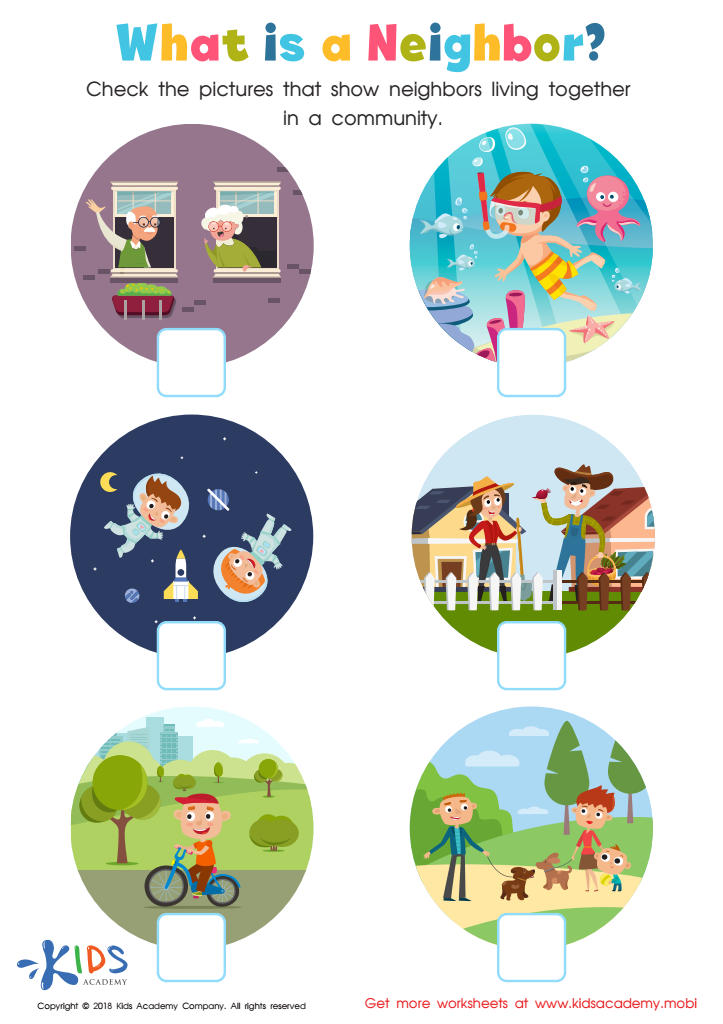
What is a neighbor Worksheet
 Assign to My Students
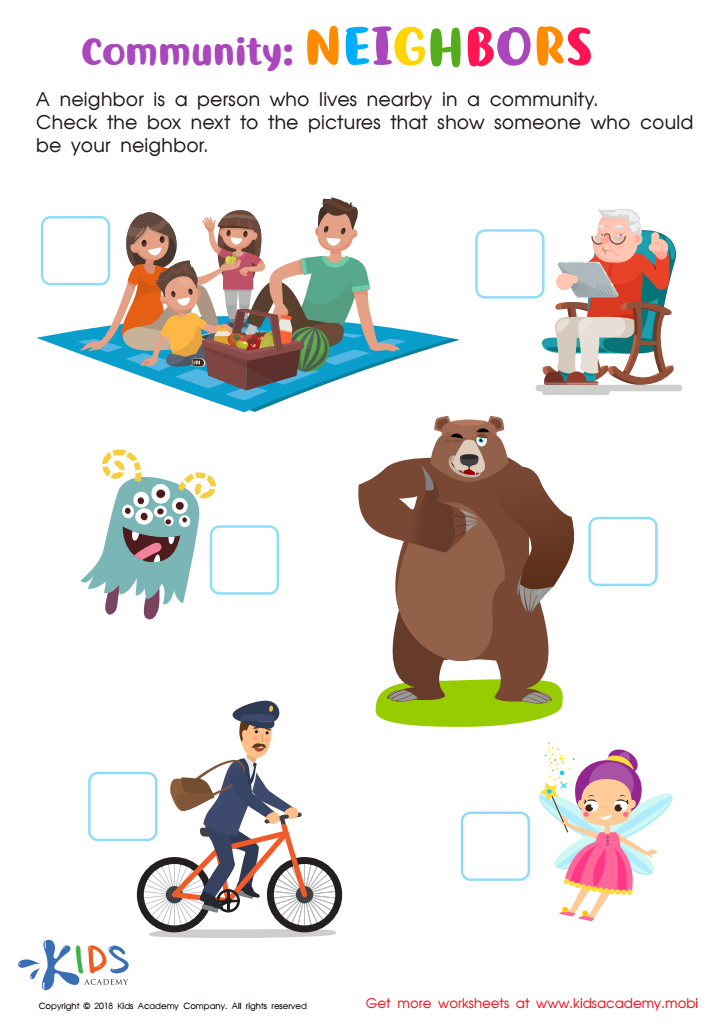
Community: Neighbors Worksheet
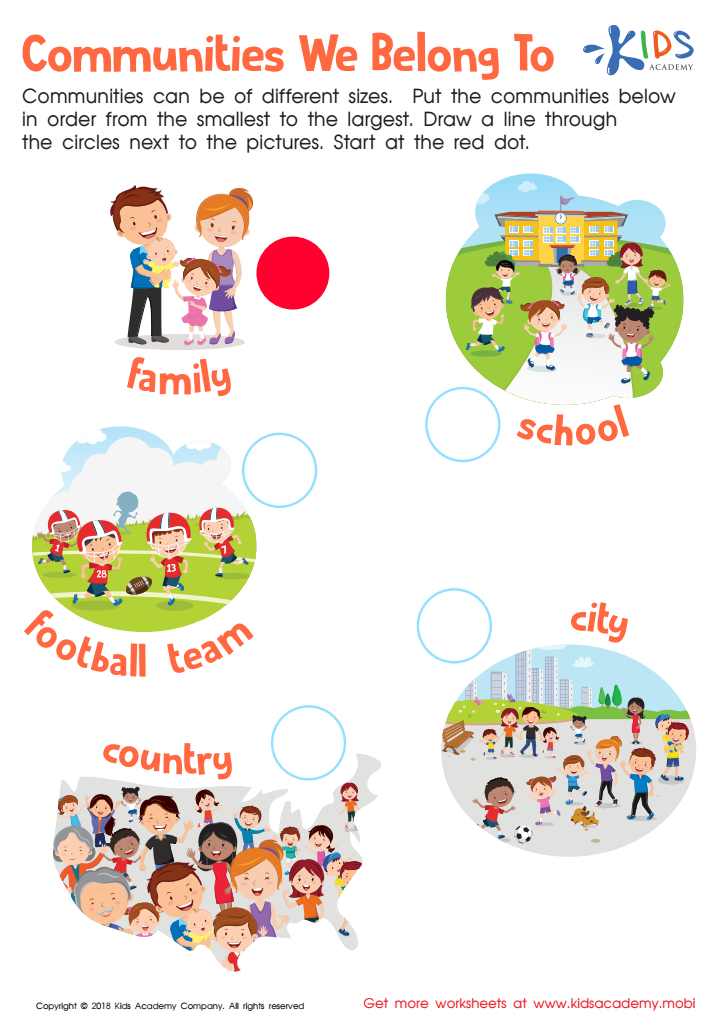
Communities We Belong to Worksheet
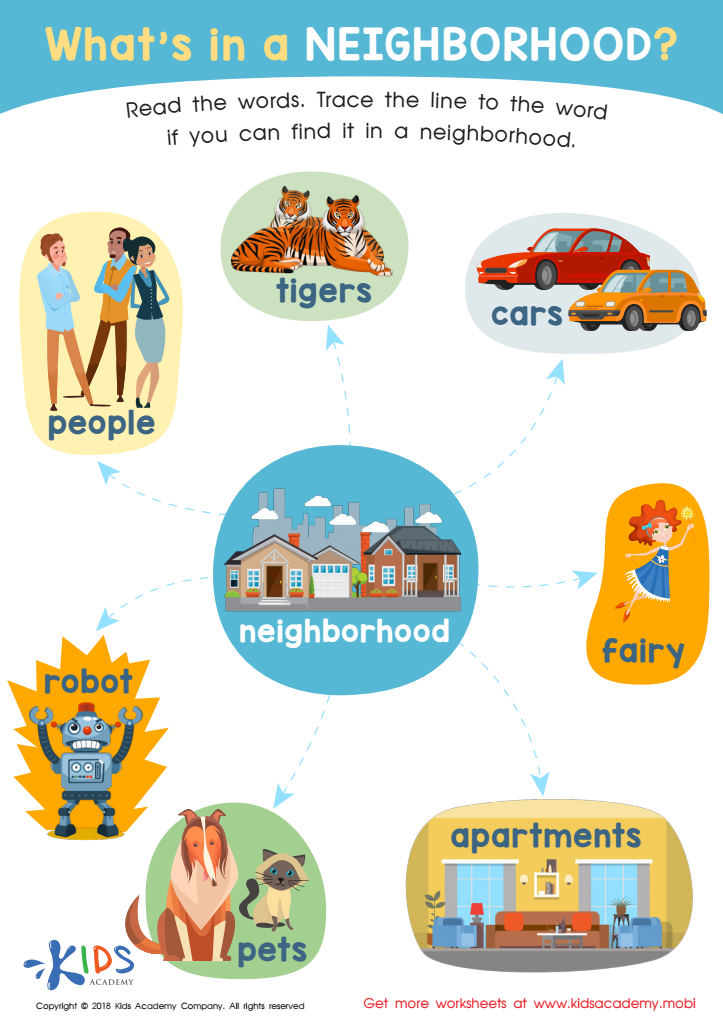
What's in a Neighborhood? Worksheet



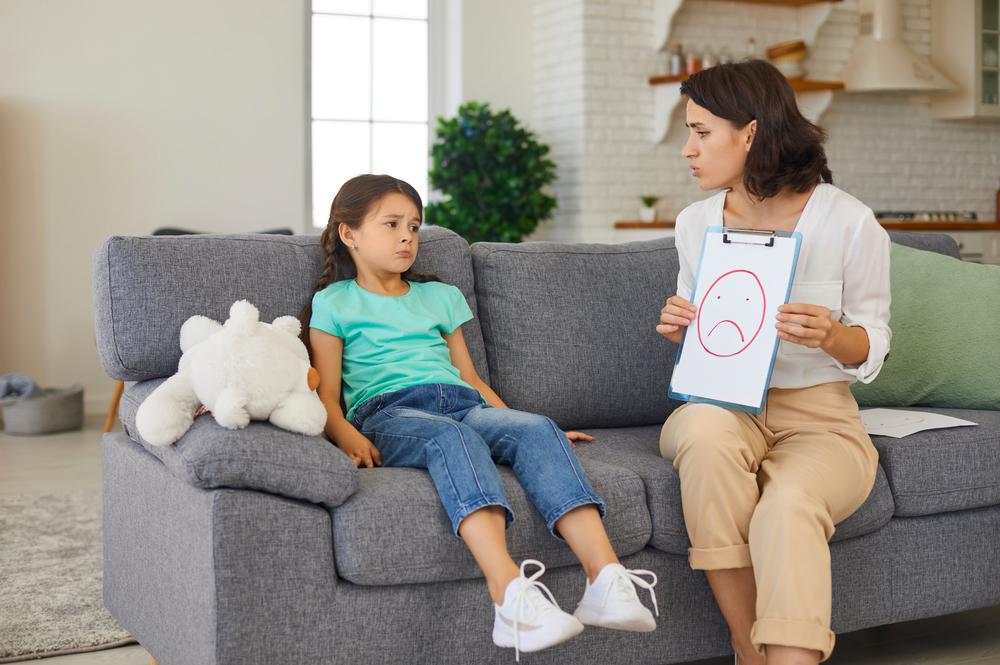

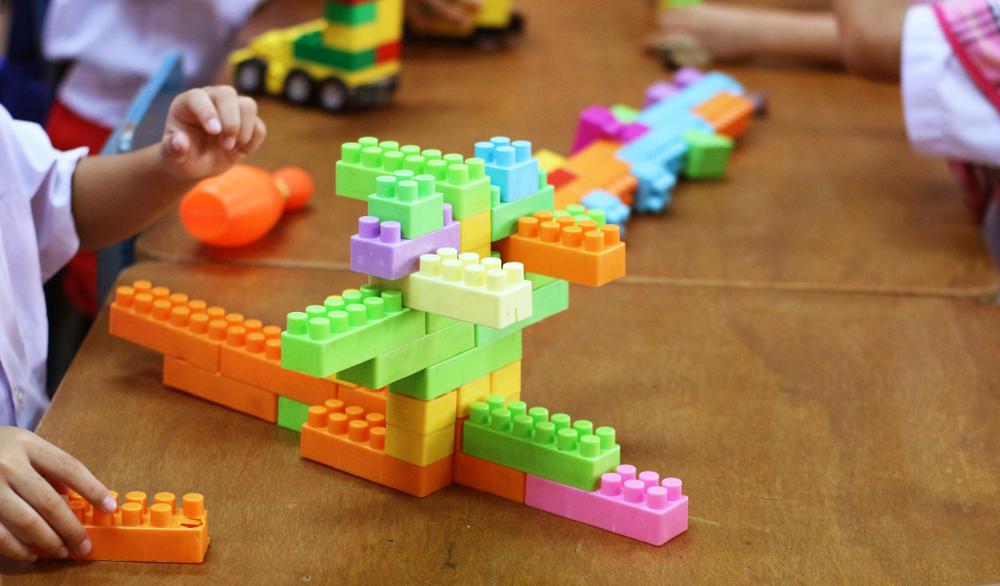

Understanding communities is essential in early childhood education because it helps young children grasp the world they live in. For children aged 4-8, learning about their community helps foster a sense of belonging and identity. It teaches them important social skills, such as cooperation, respect, and kindness, by showing them how people live and work together.
When teachers and parents emphasize the concept of community, they help children understand various roles and jobs people have, building respect for different professions. This helps children appreciate diversity and recognize that everyone has a valuable contribution to make. Children begin to understand shared responsibilities like taking care of public spaces and following rules, which are foundational for good citizenship.
Learning about communities also enhances children’s critical thinking and problem-solving skills. They become curious about how different community services function and start thinking about solutions to improve their surroundings. Discussions about communities provide real-world contexts for reading, writing, and arithmetic, making these subjects more interesting and relevant to young learners.
Most importantly, by understanding communities, children learn empathy. They understand that others' perspectives and experiences may differ from their own, which is key to building harmonious relationships. In essence, a focus on communities lays the groundwork for well-rounded, socially-conscious individuals.